
Cardiocondyla yemeni
- Sci. Name
- Cardiocondyla yemeni
- Tribe
- Crematogastrini
- Subfamily
- Myrmicinae
- Author
- Collingwood & Agosti, 1996
- Distribution
- Found in 2 countries
Introduction
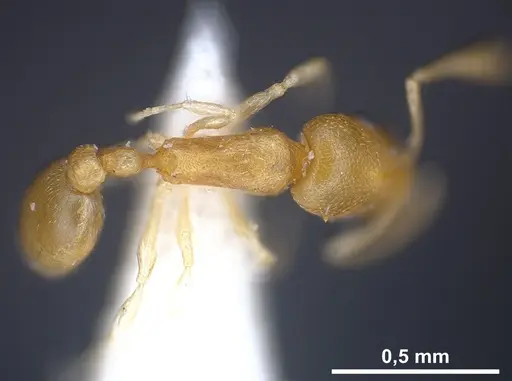
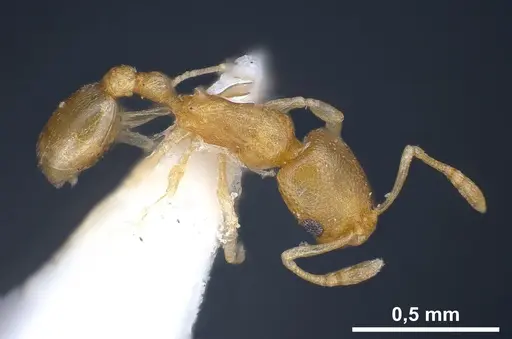
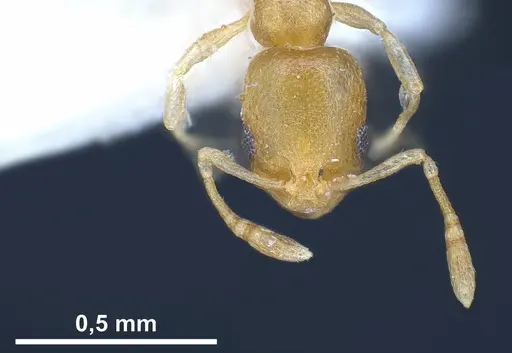
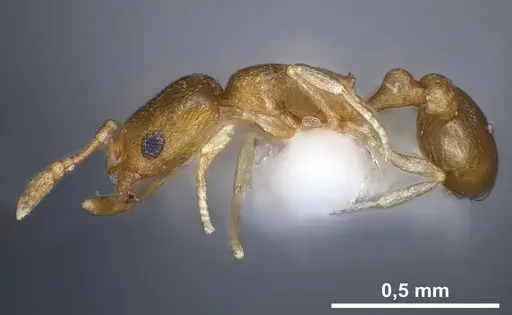
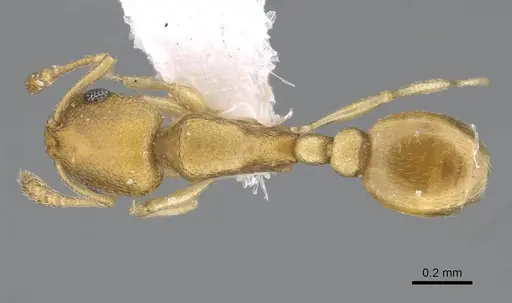
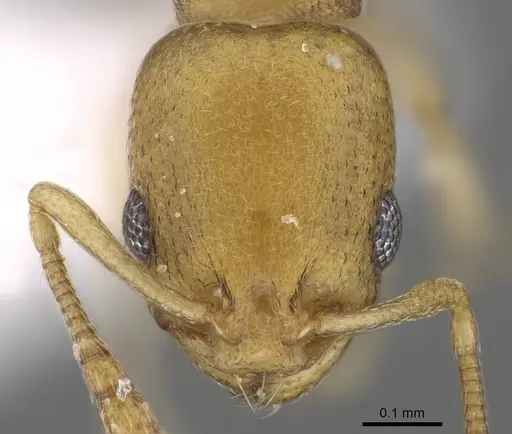
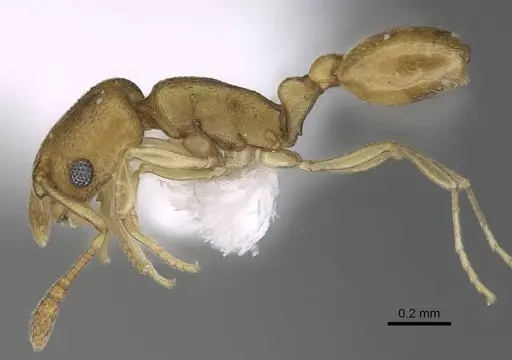
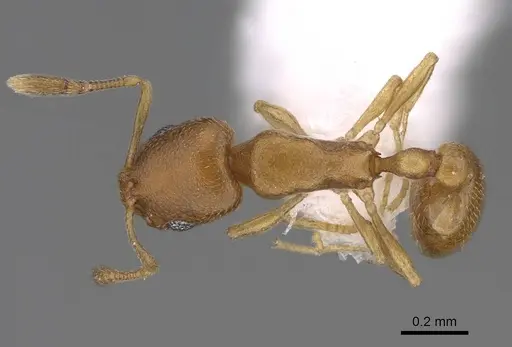
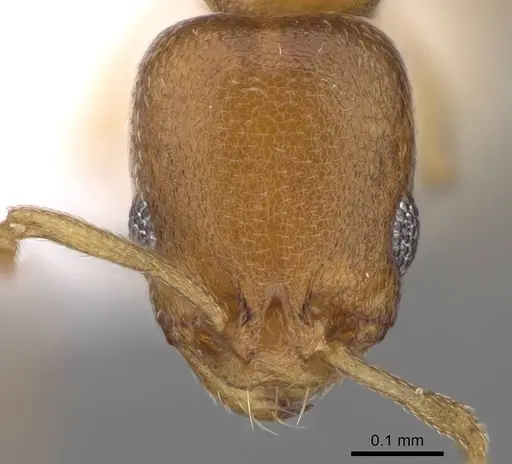
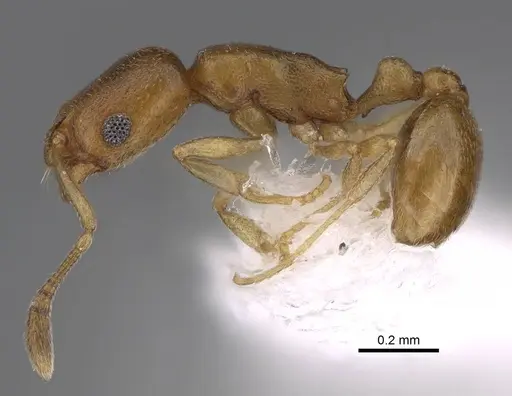
Cardiocondyla yemeni is an extremely tiny ant species, among the smallest in the genus. Workers measure approximately 2.3mm in total length, while queens are slightly larger at approximately 2.7mm [AntWiki]. They have a distinctive appearance: a very long head, extremely short antennae, and short triangular propodeal spines. Their entire body is a uniform yellowish to yellowish-brown color . This species belongs to the Cardiocondyla wroughtonii group and is known only from the Arabian Peninsula, specifically Yemen, Oman, and Saudi Arabia . What makes C. yemeni interesting is how tiny they are - these are not your typical antkeepers' ants. They were discovered in sandy paths and leaf litter in one of the hottest, driest regions on Earth. In the wild, they often share habitat with other Cardiocondyla species like C. shuckardi and C. wroughtonii, sometimes all three species found wandering together in close proximity [AntWiki]. This coexistence suggests they occupy slightly different microhabitats or have different activity patterns to avoid direct competition.
Quick Summary
- Difficulty: Expert
- Origin & Habitat: Arabian Peninsula, Yemen, Oman, and Saudi Arabia. Found in sandy paths in Sanaa, Yemen and in leaf litter under Ziziphus trees in Oman where soil was mixed with sheep and goat feces [3][4]. This is a warm, dry region with temperatures often exceeding 40°C in summer.
- Colony Type: Colony structure is unconfirmed for this species.
- Size & Growth:
- Queen: ~2.7mm, estimated from morphometric data [2]
- Worker: ~2.3mm, among the smallest ants in the world [1]
- Colony: Unknown, no data available on maximum colony size
- Growth: Unknown
- Development: Unconfirmed, no specific development data available for this species (Development timeline has not been studied for this species.)
- Antkeeping:
- Temperature: Keep at 24-30°C, they come from a hot region and likely need warm conditions. A gentle heat gradient allows them to regulate.
- Humidity: Low to moderate, their native habitat in Yemen and Oman is relatively dry. Keep substrate slightly moist but allow drying periods between waterings.
- Diapause: Unknown, likely minimal or no true diapause given their tropical/subtropical origin.
- Nesting: Use very small chambers scaled to their tiny size. A Y-tong (AAC) nest with fine tunnels or a small plaster nest works well. They prefer tight spaces.
- Behavior: These ants are extremely small and docile. Workers are not aggressive and likely forage individually for small prey and honeydew. Escape prevention is critical, their tiny size means they can squeeze through standard barriers. They are ground-nesting and likely prefer to stay within the nest chamber rather than venture far.
- Common Issues: escape prevention is critical, their extremely small size means they can slip through standard barriers that stop larger ants, their tiny size makes them difficult to feed, prey items must be appropriately small, slow colony growth due to their minute size, beginners may lose patience, humidity control is tricky, too wet causes fungal issues, too dry causes desecration, they are rarely available in the antkeeping hobby due to their tiny size and limited distribution
Size and Identification
Cardiocondyla yemeni is one of the smallest ant species in the world, let alone in the genus Cardiocondyla. Workers measure approximately 2.3mm in total length, making them barely visible to the naked eye as more than a moving speck [1]. Queens are slightly larger at approximately 2.7mm [2]. The most distinctive features are their extremely long head (CL/CW ratio of 1.260), very short antennae (scape length only 72% of head length), and short triangular propodeal spines [3]. Their entire body is a uniform yellowish to yellowish-brown color, including the legs and antennae [4]. The postpetiole (the segment behind the waist) is notably narrow, less than twice as broad as the petiole [4]. These morphological features distinguish them from related species like C. wroughtonii and C. obscurior in the same species group.
Natural Habitat and Distribution
This species is known only from the Arabian Peninsula, specifically Yemen (the type locality in Sanaa), Oman, and Saudi Arabia [5][3]. The type locality was a sandy path in Sanaa, Yemen, suggesting they prefer open, dry ground habitats [3]. In Oman, they were collected from leaf litter under Ziziphus trees where the soil was mixed with sheep and goat feces, this organic matter likely provides food resources and maintains moisture [4]. The region experiences extremely hot summers (often above 40°C) and mild winters, with very low annual rainfall. This suggests C. yemeni is well-adapted to warm, relatively dry conditions and likely prefers microhabitats that retain some moisture while being protected from extreme heat.
Temperature and Heating
Given their origin in the hot Arabian Peninsula, C. yemeni likely requires warm conditions to thrive. Keep the nest area at 24-30°C, with a gentle temperature gradient allowing workers to self-regulate. Room temperature in most homes (20-24°C) may be slightly cool, consider using a heating cable or mat on one side of the nest to create a warm zone around 28°C. Avoid temperatures below 20°C for extended periods, as this could slow or stop colony activity. The heating element should be placed on top of the nest, not underneath, to prevent excessive drying and moisture evaporation. Monitor the nest for condensation, some warmth with moderate humidity mimics their natural sandy path habitat.
Housing and Nest Setup
Housing C. yemeni presents unique challenges due to their extreme small size. Standard test tubes and formicarium chambers are far too large, they need tight, miniaturized spaces. A Y-tong (AAC) nest with the smallest available chamber settings works best, or a custom plaster nest with very narrow tunnels (1-2mm diameter). The nest material should retain some moisture but allow for drying, these ants are from relatively dry habitats. Escape prevention is absolutely critical: even standard fine mesh barriers may not contain them. Use multiple barriers, seal all joints with silicone, and consider oil-based barrier products. The outworld should also be small and contained, a small plastic container works better than a large foraging area.
Feeding and Diet
Like other Cardiocondyla species, C. yemeni is likely a generalist that feeds on small insects, honeydew, and nectar. However, their extreme tiny size means prey items must be appropriately small, standard ant food like mealworms are enormous to them. Offer tiny live prey such as springtails, fruit flies, or newly hatched pinhead crickets (appropriately sized). Sugar water or honey water can be offered, but acceptance is uncertain, start with tiny drops and observe. Feed small amounts frequently rather than large prey items that may go uneaten and cause mold issues. Given their small colony size, even a single small prey item per week may be sufficient for a growing colony.
Colony Development and Growth
Colony development in C. yemeni has not been studied. First workers (nanitics) will be extremely tiny, barely visible without magnification. Do not expect rapid growth or large colony sizes. Patience is essential with this species, a founding colony may take many months to produce even a handful of workers. Avoid disturbing the queen during founding.
Frequently Asked Questions
How small are Cardiocondyla yemeni ants?
Workers are extremely tiny at approximately 2.3mm total length, among the smallest ants in the world. Queens are slightly larger at approximately 2.7mm. They are barely visible to the naked eye as more than moving specks [1][2].
Are Cardiocondyla yemeni good for beginners?
No, this species is recommended only for expert antkeepers. Their extreme tiny size makes housing, feeding, and escape prevention extremely challenging. Most antkeepers should start with larger, more established species.
What temperature do Cardiocondyla yemeni need?
Keep them warm at 24-30°C. They come from the hot Arabian Peninsula and likely need temperatures in this range for proper development and activity.
How do I prevent Cardiocondyla yemeni from escaping?
Escape prevention is critical, their tiny size allows them to slip through barriers that stop larger ants. Use multiple barriers, seal all connections with silicone, and consider oil-based products. Even standard fine mesh may not contain them.
What do Cardiocondyla yemeni eat?
Like other Cardiocondyla species, they likely accept small insects and honeydew. Due to their tiny size, prey must be appropriately small, springtails, fruit flies, or very small insect pieces. Sugar water may be accepted.
How long does it take for first workers to emerge?
Development timeline has not been studied for this species. No specific data is available.
Do Cardiocondyla yemeni need hibernation?
Probably not, they come from a tropical/subtropical region with minimal seasonal temperature changes. No true diapause has been documented for this species.
Can I keep multiple queens together?
Not documented for this species. Combining unrelated queens is not recommended as aggression is likely.
Where is Cardiocondyla yemeni found in the wild?
Only from the Arabian Peninsula, Yemen, Oman, and Saudi Arabia. They live in sandy paths and leaf litter in these hot, dry regions [3][4][5].
Do Cardiocondyla yemeni sting?
Given their extreme tiny size, any sting would be negligible to humans. They are not considered dangerous and are completely harmless to keepers.
Report an Issue
The current care sheet is based fully on literature. See inconsistencies, or something that's incorrect? Please , it will be resolved after review from an admin. Contributing to the blogs tab also helps providing information, to make us be able to further improve the caresheets. Thank you for your support!
References

This caresheet is licensed under CC BY-SA 4.0 .
Community Blogs
Literature
Loading distribution map...Loading products...