
Cardiocondyla unicalis
- Sci. Name
- Cardiocondyla unicalis
- Tribe
- Crematogastrini
- Subfamily
- Myrmicinae
- Author
- Seifert, 2003
- Distribution
- Found in 0 countries
Introduction
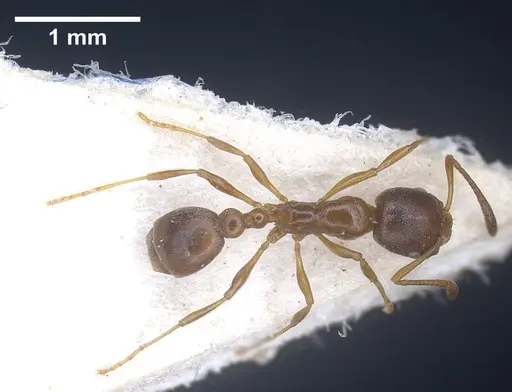
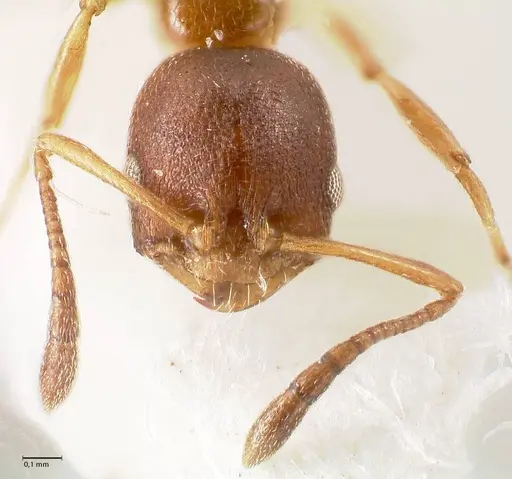
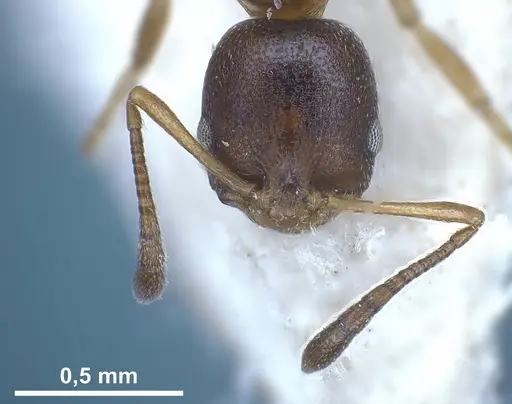
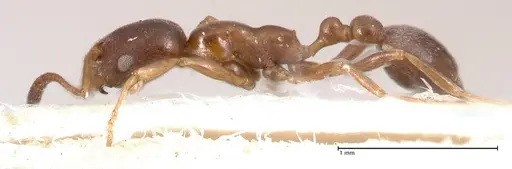
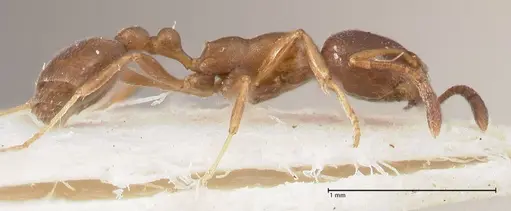
Cardiocondyla unicalis is an extremely small ant species known only from a single worker specimen collected in Loristan, western Iran. Workers have a distinctive appearance with an unusually short head, long antennae, and extremely small eyes - so small that this measurement was the smallest recorded in an entire taxonomic study of Cardiocondyla species. The body is dark brown on the head and gaster, with medium brown on the mesosoma and waist. This species belongs to the Cardiocondyla shuckardi group and is known only from the holotype specimen - absolutely no biological data exists for this species in scientific literature .
Quick Summary
- Difficulty: Unknown
- Origin & Habitat: Loristan region of western Iran. The single known specimen was collected at Ma'amulan (33°20'N,47°54'E) in August 1973. The specific habitat type is unrecorded [1][2][3].
- Colony Type: Unknown, only a single worker specimen has ever been collected. No queens, colonies, or reproductive castes have been documented.
- Size & Growth:
- Queen: Size data unavailable, no queens have been described or collected
- Worker: Approximately 1.5-2mm (inferred from genus patterns, direct total length measurement unavailable)
- Colony: Unknown, no colony has ever been observed
- Growth: Unknown
- Development: Unknown, no development data exists for this species (No brood has ever been documented for this species)
- Antkeeping:
- Temperature: Unknown, no temperature data exists for this species
- Humidity: Unknown, no humidity data exists. The Loristan region is relatively dry, suggesting the species may tolerate moderate to dry conditions, but this is speculative.
- Diapause: Unknown, no seasonal data exists
- Nesting: Unknown, no natural nesting observations exist
- Behavior: Unknown, no behavioral observations exist for this species. Given the extremely small size, any captive colony would require excellent escape prevention.
- Common Issues: no biological data exists, this species cannot be reliably kept, extremely small size means escape prevention must be excellent if a colony is ever found, no information on founding behavior, no information on diet, no information on colony structure, wild-caught colonies may be extremely difficult to establish given lack of knowledge
Why This Species Is Not Recommended for Keeping
Cardiocondyla unicalis is one of the least-known ant species in the world. It has been described from exactly one worker specimen collected in 1973 in Loristan, Iran. No queens, no colonies, no brood, no behavioral observations, no nesting data, no feeding records, nothing. There is quite literally no scientific or hobbyist information about how this species lives, what it eats, how it reproduces, or what conditions it needs. Even the most basic care requirements are completely unknown. For these reasons, C. unicalis should not be targeted by antkeepers. If you are interested in keeping Cardiocondyla, consider instead well-studied species like Cardiocondyla obscurior or Cardiocondyla wroughtoniii, which have documented care requirements and are regularly available in the antkeeping hobby. [1][2][3]
What We Know From the Single Specimen
The holotype worker of Cardiocondyla unicalis provides only morphological data. It is extremely tiny with a very small head and unusually small eyes, the smallest measurement recorded in Seifert's comprehensive taxonomic revision of the genus. The head is unusually short, the postpetiole is very narrow, and the propodeal spines are reduced to mere blunt corners. The body coloration is dark brown on the head and gaster, medium brown on the mesosoma and waist. This specimen was collected on August 6,1973,at Ma'amulan in Loristan province, western Iran. [3]
Taxonomic Position and Relatives
Cardiocondyla unicalis belongs to the C. shuckardi species group, which includes several other small, slender Cardiocondyla species. The most similar described species is Cardiocondyla fajumensis, from which C. unicalis differs in its extremely small head size, weaker sculpture, smaller eyes, shorter antennae, and darker coloration. However, without biological data, these morphological differences tell us nothing about how the two species differ in behavior, diet, or colony structure. [3]
Distribution and Potential Habitat
This species is known only from a single location in Loristan, western Iran. The region has a mountainous climate with hot, dry summers and cool winters. The type locality at Ma'amulan is at approximately 33°N latitude. The absence of records from other locations in Iran suggests either a genuinely restricted distribution or simply that this species has been overlooked due to its tiny size and possible ground-nesting habits that make it difficult to detect. [1][2]
Frequently Asked Questions
Can I keep Cardiocondyla unicalis as a pet ant?
No. This species is not available in the antkeeping hobby and cannot be ethically or practically kept. It is known from a single specimen collected in 1973,and no colony has ever been found. There is no information whatsoever about its biology, diet, or care requirements. Even if you could find a queen, there would be no guidance on how to keep the colony alive.
How big are Cardiocondyla unicalis workers?
Extremely tiny. The only known worker has a head measurement of 0.61mm, making them among the smallest Cardiocondyla ever measured. Based on typical genus proportions, the total body length is estimated at approximately 1.5-2mm, but this is an inference rather than a direct measurement.
Where does Cardiocondyla unicalis live?
Only one specimen has ever been found, in Loristan province, western Iran. The exact habitat is unknown. The region is mountainous with a semi-arid to arid climate.
What do Cardiocondyla unicalis eat?
Unknown, no feeding observations exist for this species. Most Cardiocondyla are generalist foragers that eat small insects, honeydew, and nectar, but this cannot be confirmed for C. unicalis.
How do Cardiocondyla unicalis form colonies?
Unknown. No colony has ever been documented. We do not know if they have one queen or multiple queens, how many workers a colony reaches, or any details about their reproductive biology.
Do Cardiocondyla unicalis ants sting?
Unknown, no behavioral observations exist. Given their extremely small size, any sting would likely be imperceptible to humans, similar to other tiny Cardiocondyla species.
Are there any close relatives of Cardiocondyla unicalis that are kept?
Yes. Several other Cardiocondyla species are kept in captivity, including Cardiocondyla obscurior, Cardiocondyla wroughtoniii, and Cardiocondyla emeryi. These species have documented care requirements and are regularly available. However, C. unicalis itself has never been kept and likely never will be due to its extreme rarity.
Why is so little known about this ant species?
Because only a single worker specimen has ever been collected. The ant was described in 2003 based on a specimen collected in 1973,but no additional specimens have been found since. This is not unusual for many insect species, they are described from limited type material and never encountered again. The species may be genuinely rare, have very small colonies that are hard to find, or live in habitats that are difficult to sample.
Report an Issue
The current care sheet is based fully on literature. See inconsistencies, or something that's incorrect? Please , it will be resolved after review from an admin. Contributing to the blogs tab also helps providing information, to make us be able to further improve the caresheets. Thank you for your support!
References

This caresheet is licensed under CC BY-SA 4.0 .
Community Blogs
FOCOL0737
View on AntWeb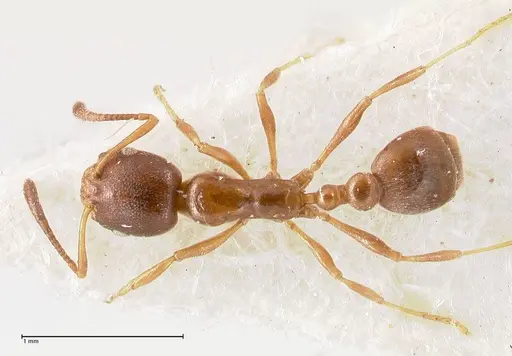
Literature
Loading distribution map...Loading products...