
Cardiocondyla strigifrons
- Sci. Name
- Cardiocondyla strigifrons
- Tribe
- Crematogastrini
- Subfamily
- Myrmicinae
- Author
- Viehmeyer, 1922
- Distribution
- Found in 1 countries
Introduction
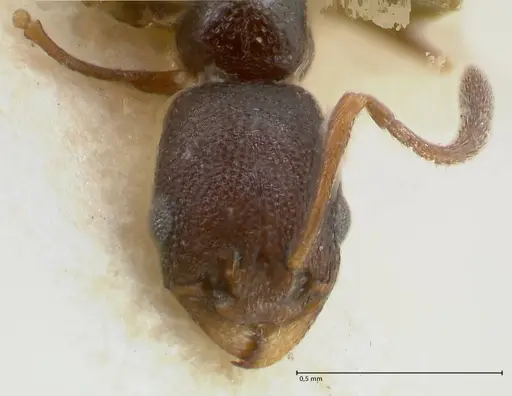
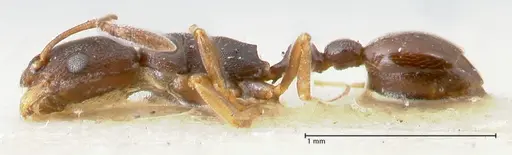
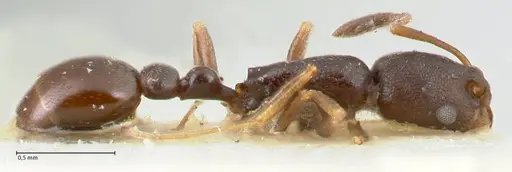
Cardiocondyla strigifrons is a tiny ant species belonging to the nuda species group, native to Southeast Asia and the Indomalayan Archipelago. Workers are small, with body size inferred from the genus Cardiocondyla to be around 2-4 mm, and have a dark brown to blackish body with lighter appendages. The species has notably reduced propodeal spines appearing as blunt dents. C. strigifrons nests in shallow soil in open, disturbed areas with bare or weakly vegetated ground . The most unusual feature is its social structure: colonies contain multiple ergatoid (wingless) males that mate inside the nest with multiple queens, making this a polygynous species with intranidal mating .
Quick Summary
- Difficulty: Medium
- Origin & Habitat: Southeast Asia and the Indomalayan Archipelago, ranging from Thailand through Indonesia, Malaysia, Philippines, Singapore to Papua New Guinea and north to southern Japan. Nests in shallow soil in open, disturbed areas with bare or weakly vegetated ground [1][2][3].
- Colony Type: Polygynous colonies with multiple ergatoid (wingless) males and intranidal mating, queens mate with wingless males inside the nest rather than during nuptial flights [1][2].
- Size & Growth:
- Queen: ~3-5 mm, inferred from Cardiocondyla genus [1][2]
- Worker: ~2-4 mm, inferred from Cardiocondyla genus [1][2]
- Colony: Up to 500 workers, estimated based on related species [3]
- Growth: Moderate
- Development: Estimated 5-8 weeks at 24-28°C, inferred from genus patterns [3] (Development time is estimated from related species in the genus, specific data for C. strigifrons is not available)
- Antkeeping:
- Temperature: Keep at 24-28°C, this is a tropical species from warm regions [3].
- Humidity: Moderate humidity around 50-70%, provide a moist nesting area but ensure ventilation [3].
- Diapause: Unknown, based on tropical range, diapause may not be required, but no specific data [3].
- Nesting: Shallow soil nests in natural setups work well. Use Y-tong or test tube setups with narrow chambers [3].
- Behavior: Workers are calm and non-aggressive. Defense mechanism is smear-based, as typical for Myrmicinae tribe Crematogastrini. Escape prevention is critical due to tiny size, they can squeeze through small gaps. Workers forage quietly and may be slow to discover food.
- Common Issues: escape prevention is critical due to their extremely small size, use fine mesh barriers and tight-fitting lids., colonies may be slow to establish due to multiple queens and competition., tiny workers are easily lost or overlooked when cleaning the outworld., overfeeding can lead to mold issues in small setups., humidity control is important, too wet causes fungal problems, too dry stresses the colony.
Housing and Nest Setup
Cardiocondyla strigifrons requires careful housing due to its extremely small size. Workers are tiny, so use a test tube setup with a reliable water reservoir, or a small Y-tong formicarium with chambers scaled to their size. For the outworld, use a smooth container with a barrier such as fluon or a tight lid. These ants prefer shallow nesting sites in nature, so avoid deep chambers. A small piece of damp cotton or plaster can provide humidity, but ensure it does not flood the colony. The shallow soil preference suggests they do well in low-profile naturalistic setups [1][2][3].
Feeding and Diet
C. strigifrons is an omnivore that accepts small insects, honeydew, and sugar sources. Feed small amounts of sugar water or honey regularly, along with tiny protein sources such as fruit flies or pinhead crickets. Prey items should be appropriately sized for their tiny size. Avoid overfeeding as uneaten prey can mold quickly. Fresh water should always be available [3].
Temperature and Seasonal Care
Maintain temperatures between 24-28°C for optimal colony health. This species comes from tropical regions, so warmth is important. Room temperature in most homes should suffice, but a heating cable can create a gentle gradient if needed. As a tropical species, they likely do not require diapause, but activity may slow in cooler months [3].
Colony Structure and Reproduction
Colonies are polygynous, with multiple queens coexisting peacefully. They have ergatoid males, wingless males that never leave the nest. Mating occurs inside the nest (intranidal mating), so queens do not participate in nuptial flights. This social structure supports steady colony growth [1][2][4].
Behavior and Temperament
Cardiocondyla strigifrons is calm and non-aggressive. Workers are tiny and forage quietly. Defense is smear-based, typical for Myrmicinae. Escape prevention is critical due to their size, use fine mesh and seal all gaps. Workers forage individually, so food discovery may be slow [3].
Frequently Asked Questions
How long does it take for Cardiocondyla strigifrons to produce first workers?
Based on related Cardiocondyla species, expect first workers approximately 5-8 weeks after queen lays eggs, assuming temperatures around 24-28°C. This is an estimate based on genus patterns [3].
Can I keep multiple Cardiocondyla strigifrons queens together?
Yes, this species is naturally polygynous, meaning multiple queens coexist in the same colony [1][2].
Do Cardiocondyla strigifrons ants sting?
No, this species is not known to sting. They are small and non-aggressive, with a smear-based defense mechanism.
Why are the males wingless in Cardiocondyla strigifrons?
Wingless males (ergatoids) have evolved convergently in this lineage, with a high probability of independent evolution. Males never leave the nest and mate inside the colony [4][1][2].
How big do Cardiocondyla strigifrons colonies get?
Colonies likely reach up to several hundred workers at maximum size, based on related species [3].
What should I feed Cardiocondyla strigifrons?
Offer small insects like fruit flies as protein, and sugar water or honey as carbohydrates. Remove uneaten food promptly to prevent mold [3].
Are Cardiocondyla strigifrons good for beginners?
This species is rated medium difficulty due to escape prevention challenges from their tiny size. Beginners should be prepared for careful housing [3].
Do Cardiocondyla strigifrons need hibernation?
Diapause is unknown, based on tropical range, it may not be required, but no specific data exists [3].
When should I move Cardiocondyla strigifrons to a formicarium?
Wait until the colony has at least 20-30 workers before moving. Start in a test tube setup for founding colonies, and use small chambers to prevent workers from getting lost [3].
Why is escape prevention so important for this species?
Workers are extremely small and can squeeze through tiny gaps. Use fine mesh, tight-fitting lids, and check seams regularly to prevent escapes [1][2].
Report an Issue
The current care sheet is based fully on literature. See inconsistencies, or something that's incorrect? Please , it will be resolved after review from an admin. Contributing to the blogs tab also helps providing information, to make us be able to further improve the caresheets. Thank you for your support!
References

This caresheet is licensed under CC BY-SA 4.0 .
Community Blogs
FOCOL1611
View on AntWeb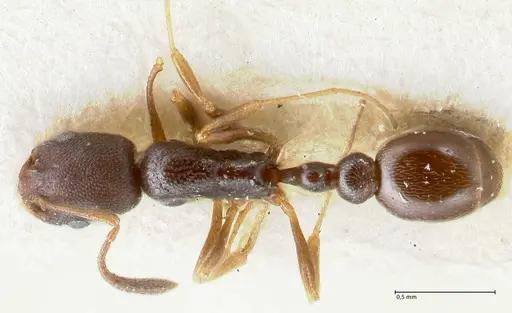
Literature
Loading distribution map...Loading products...