
Cardiocondyla argentea
- Sci. Name
- Cardiocondyla argentea
- Tribe
- Crematogastrini
- Subfamily
- Myrmicinae
- Author
- Seifert, 2023
- Distribution
- Found in 0 countries
Introduction
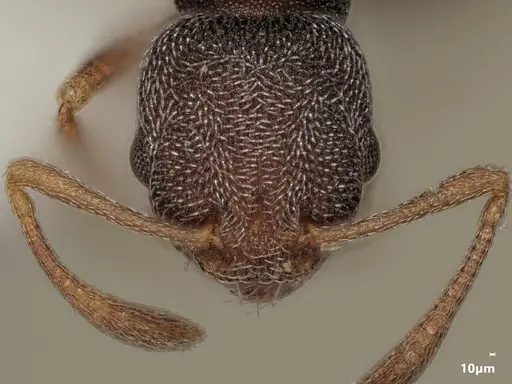
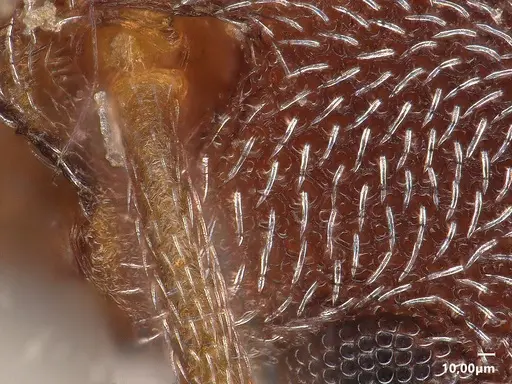
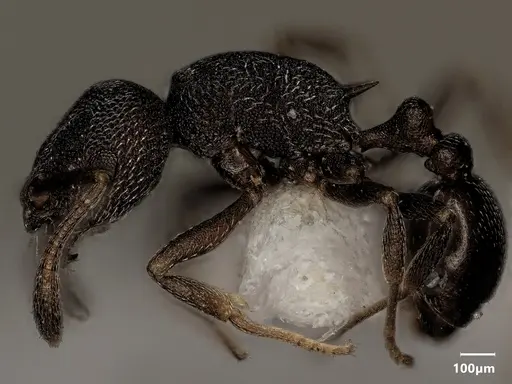
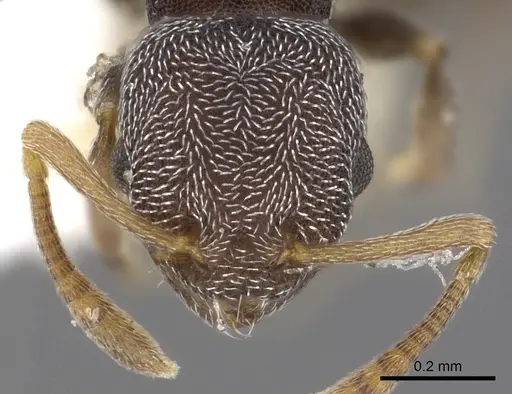
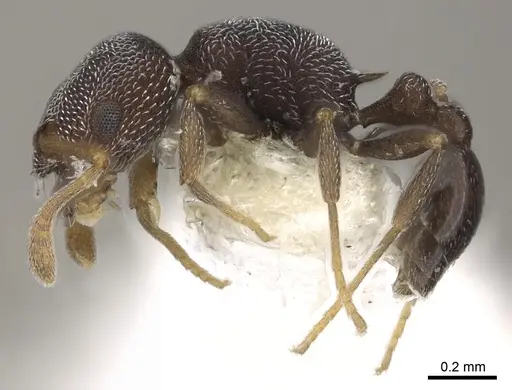
Cardiocondyla argentea is a tiny ant species from the Indonesian islands of Sulawesi and Maluku, east of the Wallace Line [AntWiki]. Workers are approximately 1-1.2mm in total length - inferred from the genus - with an extremely short, wide head and a thickset, hump-backed mesosoma that gives them a distinctive chunky appearance. Their most striking feature is the silvery sheen created by flattened pubescence hairs on the head and mesosoma - these hairs are unusually large at 4 µm diameter compared to the typical 1.7-2 µm in other Cardiocondyla species . The body is dark to medium brown with a matt, densely foveolate surface texture. This species belongs to the Cardiocondyla argentea group and was only formally described in 2022 . Its biology remains unstudied, but being a Cardiocondyla, it shares the fascinating reproductive traits of its genus - particularly the presence of long-lived wingless males and fatal competition between virgin queens for nest inheritance . These are cavity-nesting ants that prefer stable environments.
Quick Summary
- Difficulty: Medium
- Origin & Habitat: Found only in Indonesia, specifically the Banggai Archipelago, North and Central Sulawesi, and Maluku (Seram), from sea level to 800m elevation [1][2]. They nest in stable cavities like rock crevices, soil, or behind tree bark [4].
- Colony Type: Multiple queens per colony, Cardiocondyla colonies typically have multiple queens and single males [3]. Small to medium-sized colonies expected.
- Size & Growth:
- Queen: Approximately 2-3mm estimated (paratype queen exists but exact measurements not published)
- Worker: Approximately 1-1.2mm, inferred from genus [1]
- Colony: Small to medium-sized colonies, typical for the genus [3]
- Growth: Unknown, likely moderate based on genus patterns
- Development: Estimated 6-8 weeks based on related Cardiocondyla species (Direct data unavailable. Temperature-dependent development typical of tropical ants.)
- Antkeeping:
- Temperature: Keep at 24-28°C. Being from tropical Indonesia, they need warm conditions. A gentle gradient allows them to self-regulate.
- Humidity: Moderate to high humidity (60-80%). These are cavity-nesting ants that prefer stable, slightly damp conditions over wet substrate.
- Diapause: No, being a tropical species from Indonesia, they do not require diapause [1]. Slight seasonal slowing may occur in cooler months.
- Nesting: Best kept in test tubes or small nests with tight chambers. Their tiny size means they cannot use standard formicarium setups designed for larger ants. Provide narrow passages and small water reservoirs.
- Behavior: Generally peaceful and non-aggressive, typical of Cardiocondyla. They are shy and spend most of their time inside the nest. Workers are extremely small and slow-moving. Escape prevention is critical due to their minute size, they can squeeze through gaps invisible to the naked eye. Males in Cardiocondyla are wingless and long-lived, which is unusual among ants [3]. Virgin queens engage in fatal fighting for nest inheritance, so introducing multiple queens requires caution [3].
- Common Issues: escape prevention is critical, they are tiny enough to squeeze through standard barrier gaps, small colony size means slow population growth and higher extinction risk from mistakes, test tube setups must have very small water reservoirs to prevent flooding of tiny chambers, cavity-nesting means they need tight, secure spaces, open foraging areas cause stress, limited availability since the species was only described in 2022
Housing and Setup
Cardiocondyla argentea is an extremely tiny ant that requires specialized housing. Test tubes work well for founding colonies, use standard test tubes but with a very small water reservoir to prevent flooding, as these ants are too small to swim if trapped. For established colonies, a small nest with narrow chambers and passages is ideal. The chambers should be sized appropriately for their tiny workers, standard formicarium passages are far too large and can cause stress.
Escape prevention cannot be overstated. These ants are so small that they can walk through gaps invisible to the human eye. Use fluon or another reliable barrier on the edges of any enclosure. Ensure all ventilation holes are covered with fine mesh. Even a tiny crack around a lid will become an escape route.
Provide a small outworld area for foraging. Because they are so tiny, even small prey items like fruit flies or springtails may be too large, consider offering very small insects or protein paste. Keep the nest area humid but the outworld can be drier. [1][3][4]
Feeding and Diet
In the wild, Cardiocondyla species typically feed on small insects, honeydew, and nectar. For this tiny species, you should offer appropriately sized foods. Small live prey like fruit fly adults or very small springtails are ideal protein sources. You can also offer tiny pieces of mealworm, bloodworm, or specialized insect paste.
For sugar, offer a drop of diluted honey water or sugar water, but use only a tiny amount, their colonies are small and the risk of drowning in a large drop is real. A cotton ball soaked in sugar water placed in the outworld works well. Remove uneaten food after 24-48 hours to prevent mold.
Feed every 2-3 days for an established colony, or every few days for founding colonies. Adjust based on how quickly food is consumed. With their tiny size, even a small amount of protein goes a long way. [3]
Temperature and Seasonal Care
Being from tropical Indonesia (Sulawesi and Maluku), Cardiocondyla argentea requires warm temperatures. Keep the nest area at 24-28°C. A slight temperature gradient allows the ants to self-regulate, place the nest on one side of the enclosure and use a very low-output heating cable or heat mat on one end only.
Unlike temperate species, they do not require a true diapause or hibernation. However, if your room temperature drops significantly below 20°C, you may need to provide supplemental heating. These ants are adapted to stable tropical conditions, so avoid temperature fluctuations.
Humidity should be moderate to high (60-80%). Keep the test tube or nest substrate consistently moist but not waterlogged. A small water reservoir in the test tube setup provides humidity through evaporation. Monitor for condensation, some condensation is good, but excessive moisture can drown tiny ants. [1][2]
Understanding Cardiocondyla Biology
Cardiocondyla ants have some of the most unusual reproductive biology in the ant world. Unlike most ants that have winged males that fly to find mates, Cardiocondyla males are wingless and fight each other for mating rights within the nest [3]. These wingless males are also remarkably long-lived, they can survive for over a year, which is virtually unheard of in male ants [3].
Another fascinating trait is that virgin queens engage in fatal fighting for nest inheritance. When a colony's queen dies or when new queens emerge, they fight to the death with only one becoming the new reproductive [3]. This means that in captivity, introducing multiple unrelated queens to a new colony is risky, they may fight to the death.
The genus originated in Southeast Asia and the Wallacean region, with multiple independent evolutions of wingless males [3]. Cardiocondyla argentea was only described in 2022 and belongs to a species group characterized by their silvery pubescence, a unique trait among ants.
Colony Growth and Expectations
Cardiocondyla argentea is a recently described species (2022) that has not yet been widely kept in captivity. Based on genus patterns, expect slow colony growth. Founding colonies may take several months to produce their first workers (nanitics), and the initial worker batch is typically small.
Colony size will likely remain modest, probably under 500 workers even at maturity. This is typical for the genus. The small colony size means each individual is valuable, and you should take extra care not to lose workers to escapes or other accidents.
Be patient with founding colonies. The queen may take 4-8 weeks (or longer) to lay her first eggs, and another 6-10 weeks for those eggs to develop into workers. Do not disturb the colony during this critical period, excessive vibration or light can cause the queen to abandon or eat her brood. [3][1]
Frequently Asked Questions
How long does it take for Cardiocondyla argentea to produce first workers?
The exact timeline is unconfirmed for this species, but based on related Cardiocondyla species, expect 8-14 weeks from founding to first workers. The queen will lay eggs within a few weeks of mating, then the eggs develop through larval and pupal stages before emerging as workers. Patience is essential, do not disturb the colony during founding.
Can I keep multiple Cardiocondyla argentea queens together?
Cardiocondyla colonies are typically polygynous (multiple queens) in the wild, but virgin queens fight fatally for nest inheritance. If you have an established colony with multiple queens that have already sorted out their hierarchy, they may coexist. However, introducing unrelated foundress queens to each other is risky and often results in fighting. It is generally safer to start with a single queen.
What do Cardiocondyla argentea ants eat?
Feed them small live prey appropriate to their tiny size, fruit flies, very small springtails, or tiny pieces of mealworm. They also accept sugar sources like diluted honey water or sugar water. Remove uneaten food after 24-48 hours to prevent mold. Because they are so small, even minimal portions are sufficient.
How do I prevent Cardiocondyla argentea from escaping?
Escape prevention is critical because they are extremely tiny. Use fluon or similar barriers on all edges. Cover ventilation holes with fine mesh. Check all lid seams and connections, if you can see light passing through any gap, they can escape. There is no such thing as too much prevention with these tiny ants.
What temperature do Cardiocondyla argentea need?
Keep them warm at 24-28°C. Being from tropical Indonesia, they need consistent warmth. A slight temperature gradient allows them to self-regulate. Avoid temperatures below 20°C or above 30°C. Room temperature in most homes is often suitable, but monitor with a thermometer.
Do Cardiocondyla argentea ants sting?
Being a Myrmicinae, they do have a stinger, but at their tiny size, it is far too small to penetrate human skin. They are completely harmless to humans. Their primary defense is fleeing or hiding, not stinging.
Are Cardiocondyla argentea good for beginners?
This species is not ideal for complete beginners due to their tiny size and specific escape prevention needs. However, if you have experience keeping other small Myrmicinae like Temnothorax or Strumigenys, this species is manageable. The main challenges are escape prevention and providing appropriately sized food.
How big do Cardiocondyla argentea colonies get?
Based on genus patterns, colonies likely reach several hundred workers at maximum. They are not large colony builders. Expect modest colony sizes even in established nests. The small size makes each worker valuable, so take care not to lose them.
Do Cardiocondyla argentea need hibernation?
No, they do not require hibernation. Being a tropical species from Indonesia, they are adapted to year-round warm conditions. However, slight seasonal slowing may occur if room temperatures drop significantly in winter. No special winter care is needed beyond maintaining normal temperatures.
When should I move Cardiocondyla argentea to a formicarium?
Wait until the colony has at least 20-30 workers before moving to a formicarium. The test tube is perfectly adequate for smaller colonies. When moving, use a gentle transfer method, these tiny ants are easily lost or crushed. Ensure the new enclosure has appropriately sized chambers and excellent escape prevention.
Report an Issue
The current care sheet is based fully on literature. See inconsistencies, or something that's incorrect? Please , it will be resolved after review from an admin. Contributing to the blogs tab also helps providing information, to make us be able to further improve the caresheets. Thank you for your support!
References

This caresheet is licensed under CC BY-SA 4.0 .
Community Blogs
ANTWEB1048503
View on AntWeb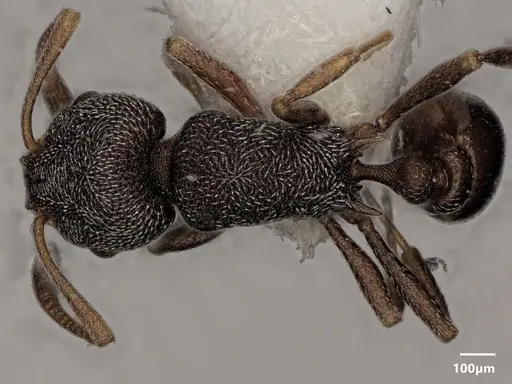
CASENT0901762
View on AntWeb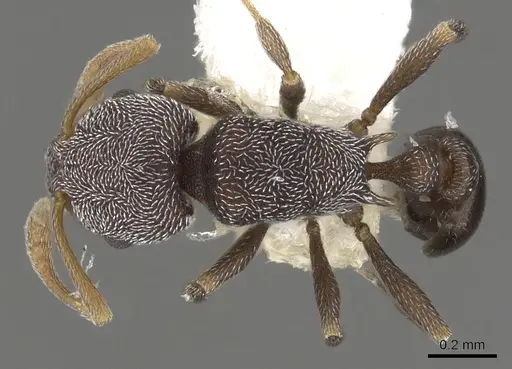
Literature
Loading distribution map...Loading products...