
Camponotus wasmanni
- Sci. Name
- Camponotus wasmanni
- Subgenus
- Orthonotomyrmex
- Tribe
- Camponotini
- Subfamily
- Formicinae
- Author
- Emery, 1893
- Distribution
- Found in 2 countries
Introduction
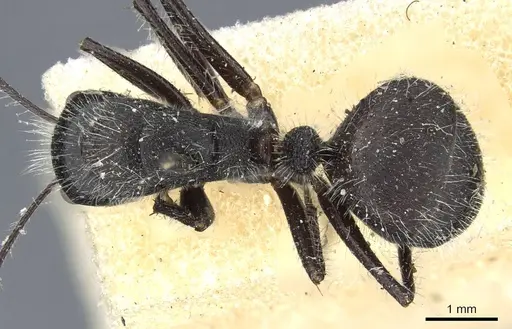
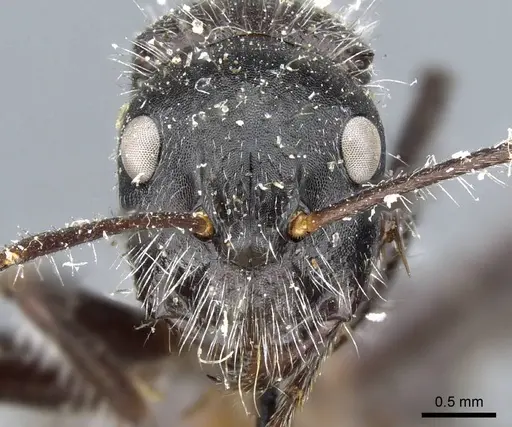
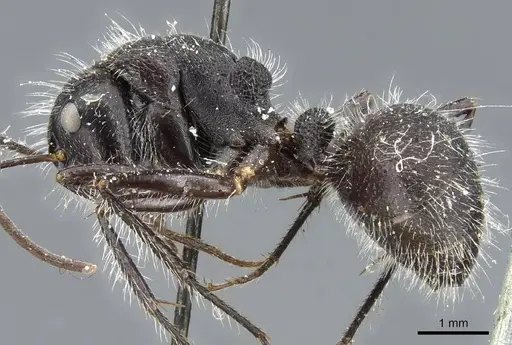
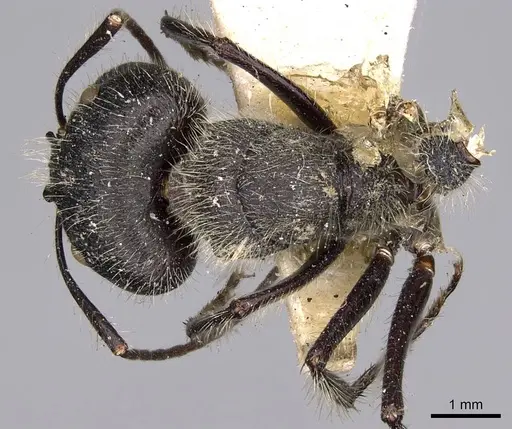
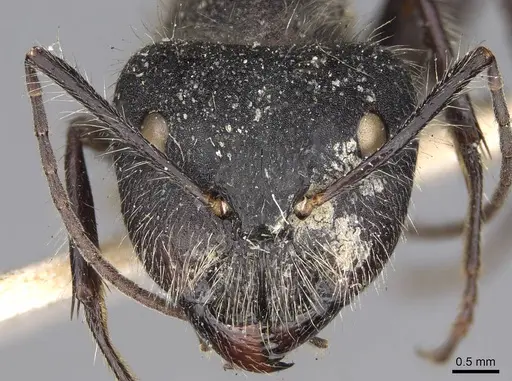
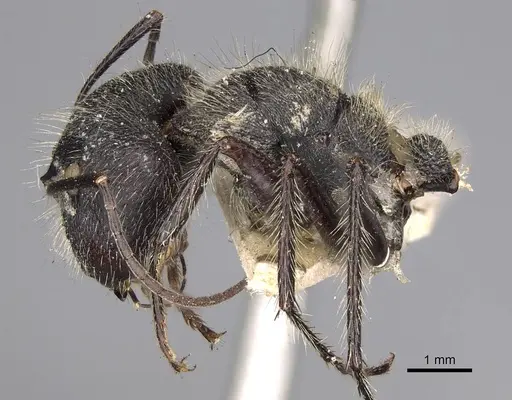
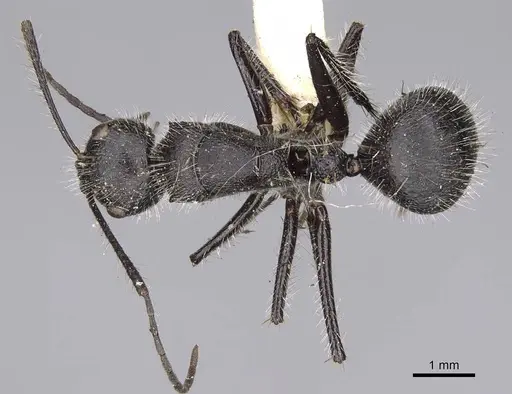
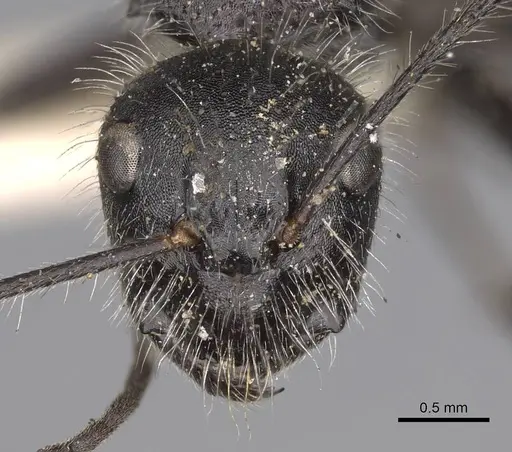
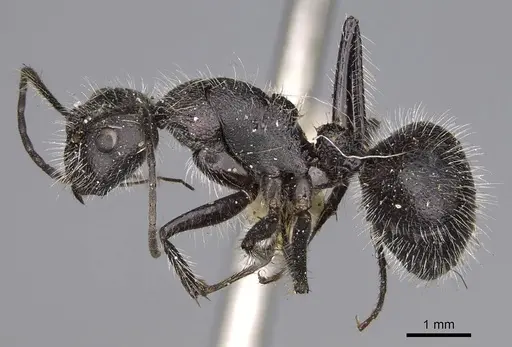
Camponotus wasmanni is a large carpenter ant species native to the Himalayan region of India, China, and Myanmar. Workers measure 11-13mm and are black in color, thickly covered with erect hoary white pubescence. Their mandibles are a distinctive bright reddish color. This is a polymorphic species, meaning workers come in different sizes within the same colony - larger major workers and smaller minor workers . They are found across eastern India (Sikkim, Meghalaya, Assam, West Bengal), parts of China, and Myanmar, typically at elevations up to 1200 meters . In nature, they nest in tree trunks and agricultural soil, where they help increase soil porosity and nutritive value . This species is a subordinate member of the Camponotini functional group .
Quick Summary
- Difficulty: Medium
- Origin & Habitat: Himalayan region of India, China, and Myanmar. Found at elevations up to 1200 meters in Indo-Malaya region [2][3]. They nest in tree trunks and agricultural soil [4].
- Colony Type: Colony structure is unconfirmed. Camponotus species are typically single-queen colonies, but specific data for this species is unavailable.
- Size & Growth:
- Queen: Size data unavailable, no specific measurements found in research context
- Worker: 11-13mm [1]
- Colony: Colony size data unavailable
- Growth: Growth rate data unavailable
- Development: Development time unconfirmed for this species (Development time depends on temperature, warmer conditions within range may accelerate development)
- Antkeeping:
- Temperature: Keep at 24-26°C. A heating cable on one side of the nest creates a gentle gradient. They can tolerate slightly cooler conditions down to around 20°C based on Himalayan origin
- Humidity: Maintain moderate to high humidity. Keep the nest substrate consistently moist but not waterlogged. These ants prefer conditions similar to their natural habitat in tree trunks and soil, damp but with good ventilation to prevent mold based on nesting behavior [4]
- Diapause: Yes, based on their Himalayan origin, they will need a winter rest period. Reduce temperature to around 10-15°C for 2-3 months during winter. This mimics the seasonal conditions of their native mountains based on geographic origin
- Nesting: Provide a nesting setup that mimics their natural tree-trunk and soil nesting. Y-tong (AAC) nests work well, or a naturalistic setup with wood pieces and moist soil substrate. They need chambers large enough for their 11-13mm workers. Ensure nesting material can hold moisture without becoming moldy based on nesting behavior [4]
- Behavior: Generally calm and non-aggressive temperament. They are not particularly defensive and rarely bite. As large ants, they are easy to contain, escape prevention is straightforward compared to tiny species. They are primarily nocturnal foragers in the wild based on typical Camponotus behavior patterns.
- Common Issues: colonies may fail during founding if the queen is disturbed or conditions are unstable, mold growth can be problematic if humidity is too high without adequate ventilation, overheating can kill colonies, avoid temperatures above 30°C, winter die-off if diapause conditions are not provided or if temperature drops too suddenly, large colony size means they need expanding enclosure space over time
Nest Preferences
Camponotus wasmanni naturally nests in tree trunks and agricultural soil in the wild [4]. In captivity, they adapt well to various nest types. Y-tong (AAC) nests are excellent because they hold moisture well and provide the dark, enclosed spaces these ants prefer. You can also use wooden formicariums or naturalistic setups with soil and wood pieces. The key is providing chambers large enough for their 11-13mm workers. Since they come from the Himalayan region, they appreciate a nest that maintains stable humidity without drying out. Place the nest in a quiet area away from direct sunlight and vibrations. A water tube attached to the nest helps maintain humidity over time.
Feeding and Diet
Like other carpenter ants, Camponotus wasmanni is omnivorous. They accept protein sources like mealworms, crickets, and other small insects. Sugar water, honey, or diluted jam provides essential carbohydrates for energy. In the wild, they forage at night and consume honeydew from aphids, along with insects and plant matter. Feed them a varied diet: protein insects 2-3 times per week, and keep a constant sugar source available. Remove uneaten prey after 24-48 hours to prevent mold. Larger major workers can handle bigger prey items, while minor workers prefer smaller pieces. Fresh water should always be available.
Temperature and Seasonal Care
These ants come from the Himalayan region where temperatures vary with altitude and seasons. Keep them at 24-26°C for optimal brood development. A heating cable on one side of the nest creates a temperature gradient so workers can self-regulate. During winter, they require a diapause period, reduce temperatures to 10-15°C for 2-3 months. This mimics their natural seasonal cycle and helps maintain colony health. You can achieve this by moving the colony to a cooler room or cellar during winter. Do not feed during deep diapause. Resume normal feeding and warming gradually in spring. Sudden temperature changes can stress or kill colonies. [2]
Behavior and Colony Dynamics
Camponotus wasmanni is a calm species with a non-aggressive temperament. Colonies are polymorphic, meaning you will see both large major workers and smaller minor workers [4]. Major workers serve as soldiers and food processors, while minor workers handle brood care and foraging. They are primarily nocturnal foragers, so you may see more activity in the evening hours. The queen lays eggs continuously once established, and the colony grows steadily over several years. Major workers typically appear after the colony reaches several hundred workers. These ants communicate through chemical signals and pheromone trails, typical of carpenter ants. They are not known for escaping, their larger size makes containment straightforward compared to tiny ant species.
Frequently Asked Questions
How long does it take for Camponotus wasmanni to produce first workers?
Development time is unconfirmed for this species. Expect first workers (nanitics) to emerge in several months, depending on temperature. Warmer conditions within the recommended range (24-26°C) will speed up development.
What temperature do Camponotus wasmanni need?
Keep them at 24-26°C for best development. They can tolerate 20-24°C but growth will be slower. A heating cable on one side of the nest creates a gradient. Avoid temperatures above 30°C as this can kill the colony.
Do Camponotus wasmanni need hibernation?
Yes, they need a winter diapause period. Reduce temperature to 10-15°C for 2-3 months during winter. This mimics their natural Himalayan seasonal cycle and helps maintain colony health. Do not feed during deep diapause.
Can I keep multiple queens together?
Colony structure is unconfirmed for this species. Camponotus species are typically single-queen, but specific data for C. wasmanni is not available. Combining unrelated queens is not recommended as they will likely fight.
What do Camponotus wasmanni eat?
They are omnivorous. Feed protein insects (mealworms, crickets) 2-3 times per week and provide constant sugar water or honey. They also accept fresh fruit and will scavenge on small insects. Remove uneaten food to prevent mold.
When should I move them to a formicarium?
Keep founding colonies in a test tube setup until they have 20-30 workers. Once the colony outgrows the test tube or outworld, transfer to a Y-tong nest or naturalistic setup. Camponotus colonies can stay in test tubes longer than many species due to their larger size.
How big do Camponotus wasmanni colonies get?
Colony size data is unavailable for this species. They are polymorphic, so you will see both major and minor workers. Growth is moderate, expect several years to reach large colony sizes.
Are Camponotus wasmanni good for beginners?
They are a medium-difficulty species. They are more forgiving than tropical species because they can tolerate cooler conditions and have straightforward care requirements. Their larger size makes them easier to handle and observe than tiny ants. However, their multi-year development timeline requires patience.
What humidity do Camponotus wasmanni need?
Maintain moderate to high humidity in the nest. Keep the substrate consistently moist but not waterlogged. Good ventilation is important to prevent mold. They naturally nest in tree trunks and soil which provide humid microclimates [4].
Report an Issue
The current care sheet is based fully on literature. See inconsistencies, or something that's incorrect? Please , it will be resolved after review from an admin. Contributing to the blogs tab also helps providing information, to make us be able to further improve the caresheets. Thank you for your support!
References

This caresheet is licensed under CC BY-SA 4.0 .
Community Blogs
Literature
Loading distribution map...Loading products...