
Camponotus trifasciatus
- Sci. Name
- Camponotus trifasciatus
- Subgenus
- Myrmespera
- Tribe
- Camponotini
- Subfamily
- Formicinae
- Author
- Santschi, 1926
- Distribution
- Found in 1 countries
Introduction
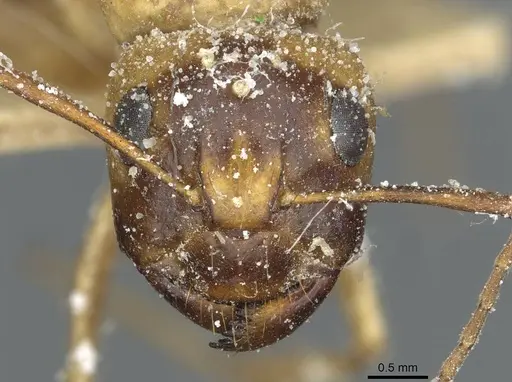
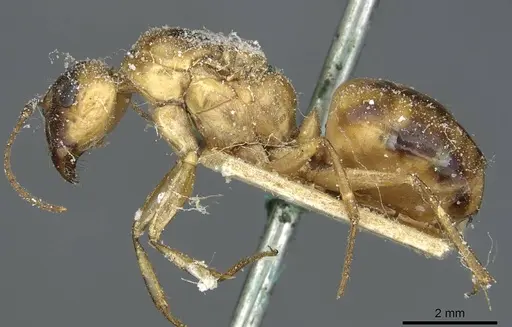
Camponotus trifasciatus is a carpenter ant species originally described from Java, Indonesia . Workers are polymorphic, with major workers larger and more robust, while minor workers are smaller. The species name 'trifasciatus' means 'three-banded' in Latin, referring to the distinctive banding pattern on the abdomen. Queens are significantly larger than workers, as is typical for Camponotus species. This is a tropical species from the Indonesian archipelago, suggesting it prefers warm, humid conditions. As with all Formicinae ants, this species lacks a functional sting and instead defends by biting and spraying formic acid from the acidopore into the wound.
Quick Summary
- Difficulty: Medium
- Origin & Habitat: Java, Indonesia, tropical forest environment [1]. Based on typical Camponotus nesting preferences, they likely nest in rotting wood or under stones in shaded, humid areas.
- Colony Type: Colony structure is unconfirmed. Most Camponotus species are monogyne, but specific data for this species is unavailable.
- Size & Growth:
- Queen: Size data unavailable, inferred from typical Camponotus queen size range (~12-15mm)
- Worker: Size data unavailable, inferred from typical Camponotus worker size range (~6-12mm polymorphic)
- Colony: Up to several hundred workers at maturity, typical for Camponotus genus
- Growth: Moderate, Camponotus species typically grow steadily but not rapidly
- Development: Estimated 6-8 weeks at optimal temperature, inferred from Camponotus genus patterns (Development time depends on temperature, warmer conditions within acceptable range speed development)
- Antkeeping:
- Temperature: Keep around 24-28°C, tropical species requiring warm conditions. A heating cable on one side of the nest creates a gradient allowing ants to regulate their temperature.
- Humidity: Keep substrate consistently moist but not waterlogged. Tropical forest ants need humidity around 60-80%. Mist occasionally and provide a water tube.
- Diapause: No true diapause required, tropical species may slow down slightly in cooler months but don't require hibernation like temperate species.
- Nesting: Y-tong (AAC) nests or plaster nests work well. They prefer dark, enclosed spaces. Provide a test tube setup for founding colonies, then transition to a formicarium as the colony grows.
- Behavior: Generally calm and non-aggressive for a carpenter ant. Workers are active foragers but not particularly aggressive toward keepers. They can bite and spray formic acid if threatened but rarely do so. Escape risk is moderate, they are medium-sized ants but can climb smooth surfaces. Major workers are too large to escape through standard test tube barriers, but minor workers may squeeze through gaps. Use standard escape prevention measures.
- Common Issues: tropical species may struggle in cool rooms, keep warm to prevent sluggishness or colony decline, colonies can stall if humidity drops too low, monitor substrate moisture regularly, slow founding phase can worry beginners, claustral queens seal themselves in and don't emerge until first workers hatch, test tube setups can flood if water reservoirs are overfilled, fill only 1/3 to 1/2 of the tube, major workers are heavy and may fall from smooth surfaces, provide textured climbing surfaces
Nest Preferences and Housing
In the wild, Camponotus trifasciatus likely nests in rotting wood or under stones in the tropical forests of Java, based on typical genus nesting preferences. For captive care, a Y-tong (AAC) nest or plaster nest works well because they provide the dark, enclosed environment these ants prefer. The nest chambers should be appropriately sized, not too large for a small colony, but with room to expand as the colony grows. For founding colonies, a simple test tube setup with a water reservoir works perfectly. The queen will seal herself into a chamber and remain there until her first workers (nanitics) emerge. Avoid exposing the nest to direct sunlight, as this can cause temperature fluctuations and stress the colony. [1]
Feeding and Diet
Camponotus ants are omnivorous and accept a wide variety of foods. In captivity, offer protein sources like mealworms, small crickets, or other insects roughly twice per week. Sugar sources are important for energy, offer sugar water, honey, or diluted honey water in a small container. Fresh fruits occasionally are also accepted. Remove uneaten prey after 24-48 hours to prevent mold. A constant supply of clean water is essential. Since this is a tropical species, they may have higher humidity requirements for food storage, keep protein offerings fresh and remove quickly if mold appears.
Temperature and Seasonal Care
As a tropical species from Java, Camponotus trifasciatus requires warm conditions to thrive. Keep the nest area at 24-28°C for optimal brood development. A heating cable placed on top of the nest (never underneath where it could dry out the substrate) creates a gentle temperature gradient. Room temperature may be too cool, especially in winter or air-conditioned spaces. Unlike temperate species, they do not require a true hibernation period, but colony activity may slow slightly during cooler months. Avoid sudden temperature changes, as these can stress the colony and potentially cause queen death during the founding phase.
Behavior and Colony Dynamics
This species exhibits typical Camponotus behavior, generally calm workers that focus on foraging and brood care. Workers are polymorphic, with larger major workers that can crack seeds or defend the nest, and smaller minor workers that handle brood care and detailed tasks. The colony will grow steadily over time, with the queen continuously laying eggs. Major workers typically appear once the colony reaches a moderate size. Workers may exhibit territorial behavior near the nest but are not particularly aggressive toward keepers. They are moderate climbers, so standard barrier methods like fluon on test tube rims work well for escape prevention.
Frequently Asked Questions
How long does it take for Camponotus trifasciatus to have first workers?
Expect first workers (nanitics) to emerge around 6-8 weeks after the queen lays eggs, assuming temperatures around 24-28°C. The exact timing depends on temperature, warmer conditions within the acceptable range speed development, while cooler temperatures slow it down.
What do Camponotus trifasciatus ants eat?
They are omnivorous. Offer protein (insects like mealworms, crickets) twice weekly and provide constant access to sugar water or honey. They also occasionally accept fresh fruit. Remove uneaten food within 24-48 hours to prevent mold.
Can I keep multiple Camponotus trifasciatus queens together?
This is not recommended unless you have specific information that this species accepts multiple queens. Most Camponotus species are monogyne, but the colony structure for this specific species is unconfirmed. Combining unrelated queens would likely result in fighting. Start with one queen per colony.
What temperature do Camponotus trifasciatus need?
Keep them warm at 24-28°C. This tropical species does not tolerate cool conditions well. Use a heating cable on one side of the nest to create a gradient if your room temperature is below this range.
Do Camponotus trifasciatus need hibernation?
No, they do not require hibernation. As a tropical species from Java, they are active year-round. You may notice slightly reduced activity during cooler months, but no special winter treatment is needed.
How big do Camponotus trifasciatus colonies get?
Mature colonies likely reach several hundred workers. Growth is moderate, it takes several months to a year or more to reach significant numbers from a founding queen.
When should I move Camponotus trifasciatus to a formicarium?
Move from a test tube setup to a formicarium once the colony reaches roughly 30-50 workers and the test tube setup becomes crowded. Make sure the formicarium has appropriately sized chambers and adequate humidity control.
Are Camponotus trifasciatus good for beginners?
They are rated as medium difficulty. The main challenges are maintaining proper temperature and humidity (tropical requirements) and being patient through the slow founding phase. If you can keep them warm and humid, they are rewarding ants to keep.
Why is my Camponotus trifasciatus colony not growing?
Common causes include: temperature too low (below 24°C), humidity too low (dry substrate), insufficient protein food, or the queen may have died during founding. Check all parameters and ensure you're offering varied, fresh food. If the queen appears inactive or dead, the colony may not recover.
Report an Issue
The current care sheet is based fully on literature. See inconsistencies, or something that's incorrect? Please , it will be resolved after review from an admin. Contributing to the blogs tab also helps providing information, to make us be able to further improve the caresheets. Thank you for your support!
References

This caresheet is licensed under CC BY-SA 4.0 .
Community Blogs
CASENT0911713
View on AntWeb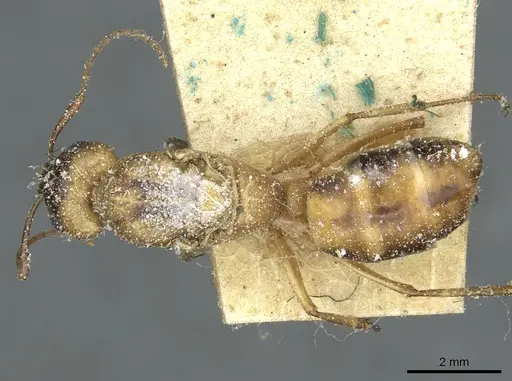
Literature
Loading distribution map...Loading products...