
Camponotus toussainti
- Sci. Name
- Camponotus toussainti
- Subgenus
- Myrmeurynota
- Tribe
- Camponotini
- Subfamily
- Formicinae
- Author
- Wheeler & Mann, 1914
- Distribution
- Found in 1 countries
Introduction
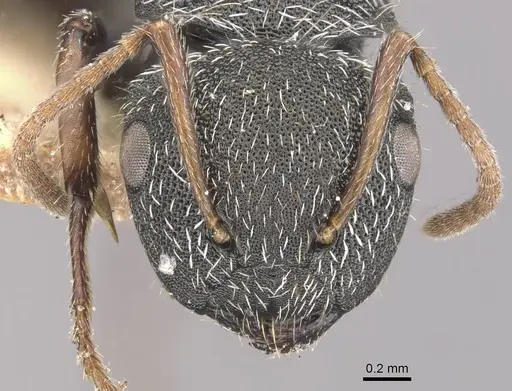
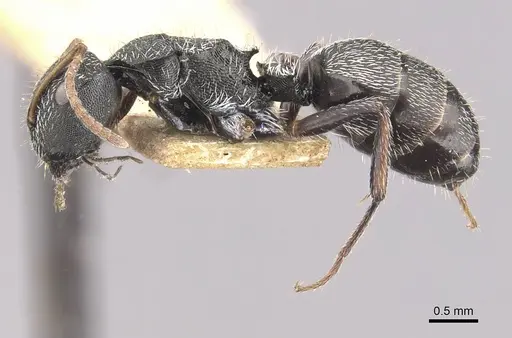
Camponotus toussainti is a small, dark ant species endemic to the highlands of Haiti. Minor workers measure 4-5 mm and are mostly black with distinctive red antennae, tibiae, and tarsi . The head is trapezoidal, and the body is densely punctate with a matte appearance. These ants were originally described from specimens found running on leaves in the mountains north of Jacmel and near Petionville, at elevations between 1,829-2,134 meters . This is a high-elevation species, which is unusual among Caribbean ants and suggests they prefer cooler, more temperate conditions than typical tropical ants. Unfortunately, almost nothing is known about their nesting habits, colony structure, or behavior in the wild, the original collectors could not find any nests .
Quick Summary
- Difficulty: Unknown
- Origin & Habitat: Endemic to the highlands of Haiti (Hispaniola), specifically found at Petionville and the mountains north of Jacmel at elevations of 1,829-2,134 meters [2][3]. Workers were observed running on leaves in these mountainous areas.
- Colony Type: Unconfirmed, colony structure and queen number have not been documented. As a Camponotus species, they may form single-queen colonies, but this is unconfirmed.
- Size & Growth:
- Queen: Unknown, no queen specimens have been described in the scientific literature
- Worker: 4-5 mm (minor workers) [1]
- Colony: Unknown, no colony size data available
- Growth: Unknown
- Development: Unknown, no direct development data exists. Based on typical Camponotus patterns, a reasonable estimate is 6-10 weeks at warm temperatures, but this is unconfirmed. (Development timeline is unconfirmed for this species. Related Caribbean Camponotus species typically develop in 6-8 weeks at optimal temperatures.)
- Antkeeping:
- Temperature: Based on their high-elevation origin (1,829-2,134 m), these ants likely prefer cooler conditions than typical tropical ants. Start around 20-24 °C and observe colony activity. If workers are sluggish, slightly warmer, if they avoid heat sources, reduce temperature. Avoid overheating, they come from mountains where temperatures are moderate [2][3].
- Humidity: No specific data exists. As a Haitian highland species, they likely tolerate moderate humidity. Keep nest substrate lightly moist with some dry areas available. Monitor for mold as a sign of excessive moisture.
- Diapause: Unknown, no data on overwintering requirements. Their high-elevation origin suggests they may tolerate or even need cooler winter temperatures. Consider providing a cool period (15-18 °C) during winter months if the colony shows reduced activity.
- Nesting: No natural nesting data exists, original collectors could not find nests. As a Camponotus, they likely nest in rotting wood, under stones, or in soil cavities. In captivity, standard Camponotus setups should work well: Y-tong (AAC) nests, plaster nests, or test tube setups with a water reservoir. Provide a dark, quiet nesting area.
- Behavior: Behavior is unconfirmed. As a Camponotus species, they likely exhibit typical carpenter ant behavior: moderate activity levels, workers that forage individually, and a diet of sugary liquids and protein. Like other Camponotus, they lack a functional sting and instead spray formic acid from their abdomen when threatened. This is not dangerous to humans but can be irritating to sensitive skin. Their small size (4-5 mm) means you need to be careful with escape prevention, they can squeeze through small gaps. No aggression data is available, but Camponotus species are generally less aggressive than some other genera. They were found running on leaves, suggesting they may forage on vegetation as well as the ground.
- Common Issues: almost no biological data exists, keepers must rely on genus-level estimates, colony size and growth rate are unknown, making progress tracking difficult, nesting preferences are unconfirmed, may take experimentation to find preferred setup, high-elevation origin means they may not tolerate typical tropical room temperatures, queen size and founding behavior are completely unknown, cannot confirm claustral vs semi-claustral
Housing and Nest Setup
Since no natural nesting data exists for this species, you should use standard Camponotus housing. A test tube setup works well for founding colonies, use a small test tube with a water reservoir (cotton ball) at one end, providing humidity without flooding. For established colonies, Y-tong (AAC) or plaster nests with narrow chambers suit their small worker size. Keep the nest area dark and quiet, as these ants originated from quiet mountain habitats. The outworld should include some climbing structures since they were found running on leaves, small twigs or artificial plants allow natural foraging behavior. Because workers are only 4-5 mm, check that connections between nest and outworld have no gaps [1].
Feeding and Diet
No specific diet data exists for this species. As a Camponotus, they likely have typical carpenter ant omnivorous preferences. Offer sugar water or honey as a constant energy source, most Camponotus readily accept sweet liquids. For protein, offer small insects like fruit flies, small mealworms, or cricket pieces. Since they were found running on leaves, they may also scavenge or tend honeydew from aphids if available. Feed protein 2-3 times per week and keep sugar water available at all times. Remove uneaten prey after 24-48 hours to prevent mold.
Temperature and Seasonal Care
This is where the limited data becomes most relevant. Their origin in Haitian highlands at 1,829-2,134 m elevation suggests they prefer cooler conditions than most tropical ants [2][3]. Unlike lowland Caribbean species that thrive at 26-30 °C, these ants likely do best in the 20-24 °C range. Avoid placing their setup in direct sunlight or near heat sources that would push temperatures above 26 °C. Watch for behavioral cues: if workers cluster away from heat sources, the setup is too warm. During winter, consider providing a cool period around 15-18 °C if the colony naturally slows down. This mimics their high-elevation seasonal temperature swings.
Challenges and What We Don't Know
This is one of the least-studied ant species in the hobby. The original description from 1914 noted that collectors could not find any nests, and subsequent research has added almost no biological data [1]. This creates significant challenges for keepers: we don't know their exact temperature preferences, humidity needs, colony size potential, or founding behavior. The best approach is to start with reasonable Camponotus care parameters and adjust based on colony response. Document your observations carefully, any colony data you gather would be genuinely valuable for understanding this poorly known species. Consider this a species for patient keepers who enjoy the process of learning alongside their colony.
Frequently Asked Questions
How long does it take for Camponotus toussainti to produce first workers?
The egg-to-worker timeline is unconfirmed for this species, no scientific data exists. Based on typical Camponotus development, a reasonable estimate is 6-10 weeks at warm temperatures (around 22-24 °C). Related species in the genus typically produce first workers (nanitics) in 6-8 weeks under good conditions.
What temperature should I keep Camponotus toussainti at?
Since they come from high elevations in Haiti (1,829-2,134 m), they likely prefer cooler conditions than typical tropical ants. Start around 20-24 °C and observe your colony. If workers are active and foraging, the temperature is suitable. If they cluster away from any heat or seem sluggish, try slightly warmer conditions. Avoid temperatures above 26 °C [2][3].
How big do Camponotus toussainti colonies get?
Colony size is completely unknown, no scientific data exists on maximum colony size. As a small Camponotus (workers 4-5 mm), colonies may be moderate-sized compared to larger carpenter ants that can reach thousands of workers, but this is only an inference from related species [1].
Can I keep multiple Camponotus toussainti queens together?
Colony structure is unconfirmed, no data exists on whether they are single-queen (monogyne) or multi-queen (polygyne). As a Camponotus, they are most likely monogyne. Do not combine unrelated foundress queens unless you have specific evidence they can found colonies together.
What do Camponotus toussainti eat?
Diet is unconfirmed, but they likely accept typical carpenter ant foods. Offer sugar water or honey as a constant energy source. For protein, provide small insects like fruit flies, small mealworms, or cricket pieces. Remove uneaten prey after 24-48 hours.
Is Camponotus toussainti a good species for beginners?
This is difficult to recommend for beginners precisely because we know so little about their care requirements. While Camponotus as a genus are generally beginner-friendly, this specific species has almost no documented biology. Beginners may prefer species with established care protocols. However, patient keepers who enjoy experimentation may find this an interesting challenge.
Do Camponotus toussainti need hibernation or diapause?
Diapause requirements are completely unknown. Their high-elevation origin suggests they may experience seasonal temperature changes and could benefit from a cool winter period. Consider providing temperatures around 15-18 °C during winter months if the colony shows reduced activity. More observation is needed to confirm whether true diapause occurs [2][3].
How do I start a Camponotus toussainti colony?
If you obtain a founding queen, use a standard test tube setup with a water reservoir. Since founding behavior is unconfirmed, assume claustral (queen seals herself in and lives off stored fat) as this is typical for Camponotus. Keep the setup dark, quiet, and at stable temperatures around 20-24 °C. Do not disturb the queen or offer food until the first workers emerge.
Where is Camponotus toussainti found naturally?
This species is endemic to Haiti, meaning it is found nowhere else in the world naturally. It is known from two locations: Petionville and the mountains north of Jacmel, at high elevations between 1,829-2,134 meters [2][3].
Report an Issue
The current care sheet is based fully on literature. See inconsistencies, or something that's incorrect? Please , it will be resolved after review from an admin. Contributing to the blogs tab also helps providing information, to make us be able to further improve the caresheets. Thank you for your support!
References

This caresheet is licensed under CC BY-SA 4.0 .
Community Blogs
CASENT0910748
View on AntWeb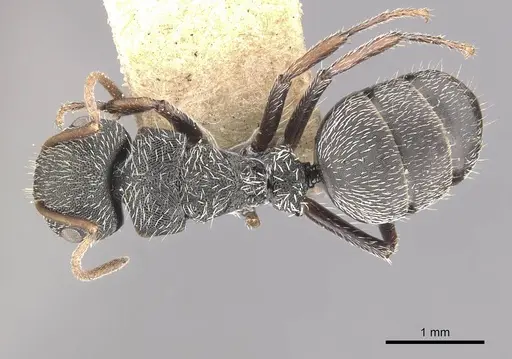
Literature
Loading distribution map...Loading products...