
Camponotus tol
- Sci. Name
- Camponotus tol
- Tribe
- Camponotini
- Subfamily
- Formicinae
- Author
- Gibson & Clouse, 2016
- Distribution
- Found in 1 countries
Introduction
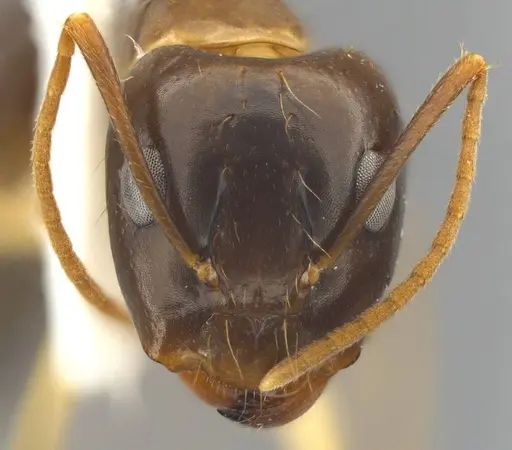
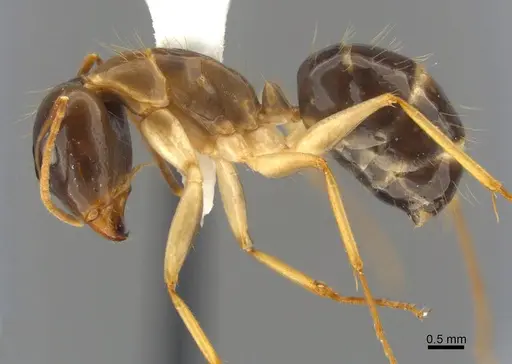
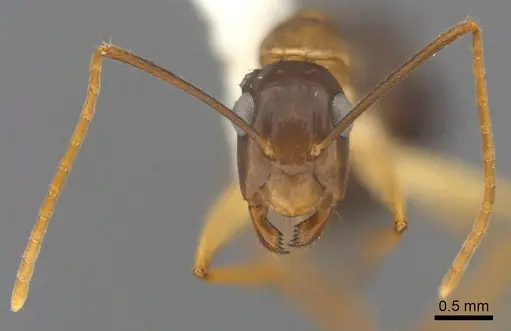
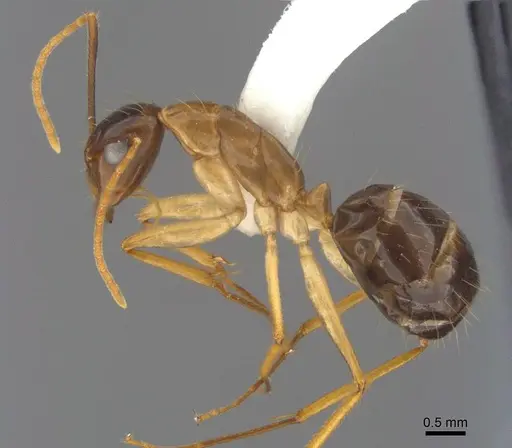
Camponotus tol is a small carpenter ant endemic to Tol Island in Chuuk, Federated States of Micronesia. It has a distinctive bicoloration with a glossy brown head and gaster, and a uniform light yellow-brown mesosoma. The species is characterized by a double row of long hairs on the front of the head and standing hairs on the propleuron and hind femur, which helps distinguish it from similar species like Camponotus micronesicus . It is approximately 75% the size of Camponotus kubaryi, but specific body size measurements are not available . This species was described in 2016 and is found in low-elevation mixed agroforest at about 120 meters altitude . As an endemic species to a small Pacific island, Camponotus tol is adapted to warm, humid conditions and is less abundant than its relative Camponotus micronesicus on Tol Island .
Quick Summary
- Difficulty: Medium
- Origin & Habitat: Endemic to Tol Island, Chuuk State, Federated States of Micronesia (Pacific Ocean). Found in low-elevation mixed agroforest at 120 meters altitude [1][3].
- Colony Type: Based on Camponotus patterns, likely monogyne (single-queen colonies).
- Size & Growth:
- Queen: Size data unavailable, inferred from Camponotus genus as typical for small carpenter ants.
- Worker: Size data unavailable, inferred from Camponotus genus as small species.
- Colony: Unknown, no specific colony size data available.
- Growth: Moderate, inferred from genus patterns.
- Development: Estimated 8-12 weeks based on typical Camponotus development at warm temperatures[3]. (Development time may vary with temperature, tropical species may develop faster in warm conditions.)
- Antkeeping:
- Temperature: Keep at warm temperatures, roughly 24-28°C, based on the species' tropical habitat [1][3].
- Humidity: Maintain moderate humidity, as the species is found in low-elevation agroforest [1][3].
- Diapause: No diapause required, as this is a tropical species.
- Nesting: In nature, likely nests in rotting wood or under stones, in captivity, use Y-tong (AAC) or plaster nests[3].
- Behavior: Typical Camponotus temperament, generally calm and not aggressive[3]. Escape risk is moderate due to small size, use standard barriers like Fluon.
- Common Issues: tropical species may struggle if temperatures drop below 20°C for extended periods [1]., small colony size means founding colonies are fragile and require careful monitoring., wild-caught colonies may carry parasites or diseases not yet understood in captivity., moderate escape risk, standard barriers recommended due to small size., limited availability since the species is newly described and rarely available in the antkeeping hobby [1].
Housing and Nest Setup
Camponotus tol is a small species, so nest chambers should be appropriately sized. A Y-tong (AAC) nest works well for this species, the narrow chambers help maintain humidity while allowing you to observe the colony. Alternatively, a plaster formicarium with built-in water chamber maintains stable humidity. For the outworld, a standard plastic container with a barrier of Fluon around the rim prevents escapes. Provide a test tube filled with water as a water source, secured with a cotton plug. Since they are a tropical species, avoid placing the setup near air conditioning or drafty areas [1][3].
Feeding and Diet
Like most Camponotus species, C. tol is omnivorous. They accept sugar sources readily, offer diluted honey water or sugar water 2-3 times per week. For protein, provide small insects like fruit flies, small mealworms, or cricket pieces. Feed protein 1-2 times per week, adjusting based on colony size. Remove uneaten prey after 24-48 hours to prevent mold. Fresh water should always be available[3].
Temperature and Seasonal Care
As a tropical species from Micronesia, Camponotus tol requires warm conditions year-round. Keep the nest area at 24-28°C. A small heating cable placed on top of the nest creates a gentle warmth gradient. During cooler months, you can reduce temperatures slightly to around 20-22°C to match natural seasonal changes, but avoid true hibernation temperatures. This species does not experience cold winters in its native habitat, so a full diapause is not necessary [1][3].
Colony Founding and Growth
Founding behavior is unconfirmed for this species. In general, Camponotus queens may seal themselves in a chamber to raise the first brood, but this has not been documented for C. tol. After the first workers emerge, growth is moderate, expect several months to reach significant numbers. Patience is key as this species is not a fast grower[3].
Behavior and Temperament
Camponotus tol has a typical carpenter ant temperament, generally peaceful and not prone to aggression toward keepers. Workers are active foragers, searching for both sugar sources and protein throughout the outworld. The species is not known for stinging, making them suitable for keepers who want to observe their colonies without defensive concerns. Standard observation and feeding tongs are sufficient for colony maintenance[3].
Frequently Asked Questions
How long does it take for Camponotus tol to produce first workers?
Expect 8-12 weeks from egg to first worker at optimal temperature (around 26°C). This is based on typical Camponotus development patterns, as specific development data for C. tol has not been documented[3].
What temperature do Camponotus tol ants need?
Keep them at warm temperatures, roughly 24-28°C, based on their tropical habitat [1][3].
What do Camponotus tol ants eat?
They are omnivorous. Offer sugar water or honey regularly, plus small insects like fruit flies, small mealworms, or cricket pieces for protein. Remove uneaten food after 24-48 hours[3].
Is Camponotus tol good for beginners?
This is a medium-difficulty species. They are more challenging than common temperate species like Lasius because they require warm temperatures year-round and are less commonly available. However, their peaceful temperament makes them rewarding once established[3].
How big do Camponotus tol colonies get?
Colony size is not well documented, and no specific data is available. Growth is moderate, but maximum size is unknown [1].
Do Camponotus tol need hibernation?
No. As a tropical species from the Pacific islands, they do not require true hibernation. You may reduce temperatures slightly during winter months, but full diapause is not necessary [1][3].
Can I keep multiple Camponotus tol queens together?
Not recommended. Camponotus species are typically single-queen (monogyne) colonies. Combining unrelated queens has not been documented for this species and would likely result in aggression[3].
What makes Camponotus tol different from other Camponotus?
This is a newly described species (2016) endemic only to Tol Island in Micronesia. It is notably smaller than related Pacific species (about 75% the size of Camponotus kubaryi) and has a distinctive double row of long hairs on the front of the head. Its bicoloration, brown head and gaster with yellow-brown mesosoma, also helps identify it [1][2].
When will Camponotus tol be available in the antkeeping hobby?
This species was only described in 2016 and is endemic to a small Pacific island. It is rarely collected and not commonly available in the antkeeping hobby. Availability may increase as more collectors become aware of the species, but it remains uncommon [1].
Report an Issue
The current care sheet is based fully on literature. See inconsistencies, or something that's incorrect? Please , it will be resolved after review from an admin. Contributing to the blogs tab also helps providing information, to make us be able to further improve the caresheets. Thank you for your support!
References

This caresheet is licensed under CC BY-SA 4.0 .
Community Blogs
ANTWEB1008905
View on AntWeb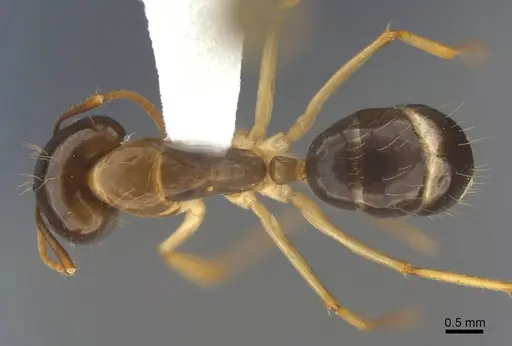
ANTWEB1008906
View on AntWeb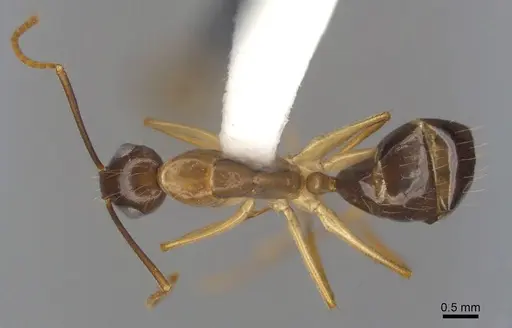
Literature
Loading distribution map...Loading products...