
Camponotus piliventris
- Sci. Name
- Camponotus piliventris
- Tribe
- Camponotini
- Subfamily
- Formicinae
- Author
- Smith, 1858
- Distribution
- Found in 1 countries
Introduction
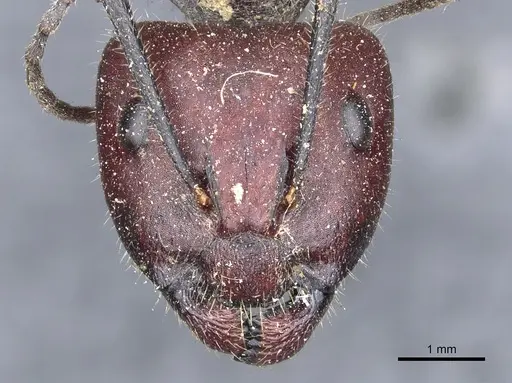
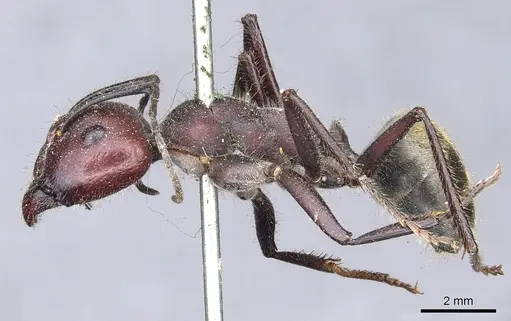
Camponotus piliventris is a large carpenter ant species native to Australia, specifically found in South Australia and inland south-eastern regions . Workers measure approximately 11mm in total length, making them a substantial species . The coloration is highly variable - some colonies appear nearly black while others have reddish tones on the head and thorax, or red legs, with the abdomen sometimes showing a copper-like sheen . This variability makes them visually interesting, as color patterns can differ significantly between colonies. This species has been studied in the context of visual navigation and miniaturization in ants, with researchers examining their eye structure and navigational capabilities. Studies show they possess approximately 613 facets per eye, which is moderate for their size . For antkeepers, this translates to a species that is active and forages effectively.
Quick Summary
- Difficulty: Medium
- Origin & Habitat: Native to Australia, specifically South Australia and inland south-eastern regions [1][2][3]. Found in arid to semi-arid inland areas.
- Colony Type: Likely monogyne based on typical Camponotus patterns, single queen colonies.
- Size & Growth:
- Queen: ~15-18mm, inferred from Camponotus genus patterns
- Worker: ~11mm [4]
- Colony: Up to several thousand workers at maturity, estimated from typical Camponotus growth patterns
- Growth: Moderate
- Development: 6-10 weeks estimated based on typical Camponotus development (Development time is temperature-dependent within safe ranges)
- Antkeeping:
- Temperature: Keep nest area at 20-25°C. Australian species can tolerate warmer conditions but avoid temperatures above 30°C. Room temperature around 22°C is typically suitable.
- Humidity: Moderate humidity around 50-60%. Provide a water tube as a moisture source. Being an inland Australian species, they prefer drier conditions compared to tropical ants.
- Diapause: Yes, Australian temperate species require a winter rest period. Reduce temperature to 10-15°C for 2-3 months during winter.
- Nesting: Y-tong (AAC) nests work well, or a naturalistic setup with soil and flat stones. Test tube setups are suitable for founding colonies. Provide chambers scaled to their 11mm worker size, passages should be at least 12-15mm wide to accommodate major workers comfortably.
- Behavior: Generally docile and non-aggressive toward keepers. Workers are active foragers that readily search for sugar sources and protein prey. They may bite if threatened but are not particularly aggressive. Escape risk is moderate, at 11mm they are large enough to be contained with standard barriers, but ensure enclosures are secure. They are primarily nocturnal or crepuscular foragers in the wild.
- Common Issues: queen mortality during founding, claustral queens sometimes fail if disturbed or if fat reserves are insufficient, slow initial growth, first workers may take 6-10 weeks, which can test beginner patience, escape through small gaps, despite their size, they can squeeze through surprisingly small openings if motivated, mold in nests from overwatering, being an inland species, they prefer drier conditions and excess moisture causes problems, winter mortality if diapause is not provided, keeping them warm year-round can stress colonies and reduce lifespan
Nest Preferences and Setup
Camponotus piliventris is an Australian inland species found in arid to semi-arid regions. In captivity, they adapt well to various nest types. Y-tong (AAC) nests provide excellent visibility and work well for this species. Alternatively, you can use a naturalistic setup with a soil-filled container and flat stones on top for them to nest under. Test tube setups are also suitable for founding colonies, use a test tube with a water reservoir separated by a cotton plug, placed in a dark container to simulate a nest chamber. Regardless of nest type, ensure chambers are appropriately sized, passages should be at least 12-15mm wide to accommodate their 11mm workers comfortably, especially major workers. Avoid overly humid conditions, this species prefers drier nesting substrate compared to tropical ants. A small water tube connected to the nest provides constant moisture without saturating the nesting area.
Feeding and Diet
Like all Camponotus species, C. piliventris is omnivorous with a preference for sugar sources and protein. Provide a constant supply of sugar water or honey diluted with water. They readily accept honeydew if you have access to aphid colonies, though sugar water is more practical. For protein, offer small insects like fruit flies, small crickets, mealworms, or other appropriately-sized prey. Feed protein 2-3 times per week, removing any uneaten prey after 24 hours to prevent mold. During founding, the claustral queen does not need food, she relies entirely on stored fat reserves. Once workers emerge, they will begin foraging and can be offered food. Observe your colony's preferences, some colonies are more enthusiastic about certain foods than others. Avoid overfeeding sugar sources as excess sticky residue can trap and kill ants.
Temperature and Seasonal Care
Maintain nest temperatures between 20-25°C for optimal colony development. Being an Australian species from temperate regions, they can tolerate slightly warmer conditions but should be kept below 30°C. Room temperature of approximately 22°C is typically ideal. A heating cable on one side of the nest can create a temperature gradient, allowing ants to self-regulate by moving between warmer and cooler areas. Place the heating element on top of the nest rather than underneath to avoid excessive drying. During winter, provide a diapause period, reduce temperatures to 10-15°C for 2-3 months. This mimics their natural seasonal cycle in south-eastern Australia and is essential for long-term colony health. Do not keep them warm year-round as this can stress colonies and reduce queen lifespan. The diapause period also often triggers reproductive behavior the following spring.
Colony Founding and Early Development
When you acquire a founding queen, place her in a test tube setup with a water reservoir. The queen will seal herself into the chamber (claustral founding) and remain there while she lays eggs and raises the first workers. Do not disturb her during this period, checking too frequently can stress her and cause her to abandon or eat her brood. She relies entirely on stored fat reserves for energy and does not need food. After 2-4 weeks, you should see eggs, these develop through larval and pupal stages. First workers (nanitics) will emerge smaller than normal workers but will immediately begin caring for the queen and subsequent brood. Once nanitics are present, you can begin offering tiny amounts of sugar water near the nest entrance. The colony will grow slowly at first, expect 6-10 weeks to first workers, then several months to reach 20-30 workers. Be patient during this founding phase as this is when colonies are most vulnerable.
Behavior and Temperament
Camponotus piliventris is known for its relatively docile temperament compared to many ant species. Workers are not particularly aggressive and are unlikely to bite unless directly threatened. They are active foragers, particularly during evening and nighttime hours, reflecting their natural nocturnal foraging behavior. Workers communicate through chemical trails and will recruit nestmates to food discoveries. Their vision is moderate, studies show they have approximately 613 eye facets, which is adequate for navigation but not as acute as some related species [5]. They are not strong climbers and are less likely to escape than smaller species, but still ensure enclosures are secure. Major workers develop in mature colonies and are larger with proportionally larger heads, these are impressive specimens that make this species particularly appealing to antkeepers who appreciate size variation within colonies.
Frequently Asked Questions
How long does it take for Camponotus piliventris to have first workers?
Expect 6-10 weeks from egg to first worker at optimal temperature (around 22-25°C). This is typical for Camponotus species. The exact timing depends on temperature, warmer conditions within safe ranges speed development while cooler temperatures slow it down.
What do Camponotus piliventris ants eat?
They need a balanced diet of sugar and protein. Offer sugar water or honey constantly, and protein (small insects like fruit flies, mealworms, or crickets) 2-3 times per week. Remove uneaten protein after 24 hours to prevent mold.
Do Camponotus piliventris ants need hibernation?
Yes, they require a winter diapause. Reduce temperatures to 10-15°C for 2-3 months during winter. This mimics their natural seasonal cycle in south-eastern Australia and is important for colony health and longevity.
Are Camponotus piliventris good for beginners?
They are rated as medium difficulty. They are more forgiving than some species but require patience during the founding phase (6-10 weeks to first workers). Their docile temperament and larger size make them easier to observe and handle than tiny species.
What size nest do I need for Camponotus piliventris?
Use a nest with chambers at least 12-15mm wide to accommodate their 11mm workers comfortably. Y-tong nests, test tube setups, or naturalistic setups with soil and stones all work well. Ensure passages are wide enough for major workers.
How big do Camponotus piliventris colonies get?
Mature colonies can reach up to several thousand workers based on typical Camponotus growth patterns. Major workers develop in established colonies and can be impressively large.
Can I keep multiple Camponotus piliventris queens together?
No, this is likely a monogyne species with single-queen colonies based on typical Camponotus patterns. Combining unrelated queens is not recommended and will likely result in fighting. Only keep one queen per colony.
What temperature is best for Camponotus piliventris?
Keep nest areas at 20-25°C. Room temperature around 22°C is typically ideal. Avoid temperatures above 30°C. A heating cable on one side of the nest can create a gradient for self-regulation.
Why is my Camponotus piliventris queen not laying eggs?
Possible causes include: she was disturbed during founding and abandoned brood, temperatures are too cold (below 18°C), or she died during the founding process (which is common). Ensure the setup is in a dark, quiet location and temperatures are within range. If she was recently caught, give her 2-4 weeks to settle before expecting eggs.
How often should I feed Camponotus piliventris?
Provide sugar water constantly, check and refill every few days. Offer protein 2-3 times per week. Remove any uneaten prey after 24 hours. Adjust feeding based on colony size, larger colonies consume more.
When should I move my colony to a formicarium?
Wait until the colony has at least 50-100 workers before moving to a formicarium. Moving too early can stress the colony. Ensure the formicarium has appropriately sized chambers and a connected outworld for foraging.
Report an Issue
The current care sheet is based fully on literature. See inconsistencies, or something that's incorrect? Please , it will be resolved after review from an admin. Contributing to the blogs tab also helps providing information, to make us be able to further improve the caresheets. Thank you for your support!
References

This caresheet is licensed under CC BY-SA 4.0 .
Community Blogs
CASENT0903547
View on AntWeb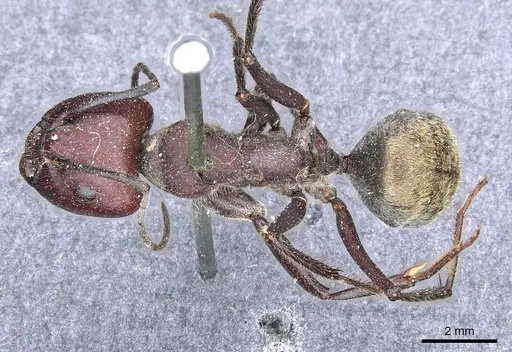
Literature
Loading distribution map...Loading products...