
Camponotus philwardi
- Sci. Name
- Camponotus philwardi
- Tribe
- Camponotini
- Subfamily
- Formicinae
- Author
- McArthur, 2008
- Distribution
- Found in 1 countries
Introduction
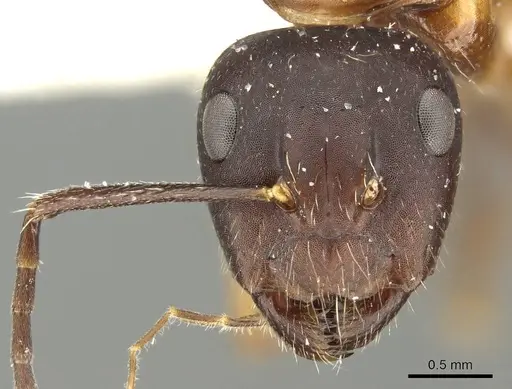
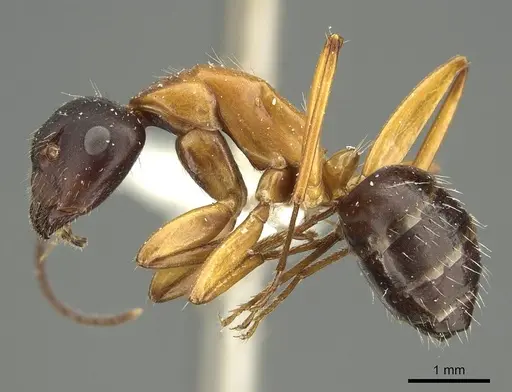
Camponotus philwardi is a carpenter ant native to southeastern Australia, described in 2008 by A.J. McArthur. Workers are brownish-yellow with brown head and gaster, and feature a distinctive concave shape on the front of the clypeus. This species belongs to the Camponotus ephippium group, which includes several Australian carpenter ants. The species was named after P.S. Ward, a prominent myrmecologist, in recognition of his contributions to ant research . This is a ground-nesting species found across southeastern Australia, from New South Wales through Victoria and into the Australian Capital Territory. They nest in soil and rotting wood, particularly in rotten logs. Like other Camponotus species, they are generalist foragers that collect honeydew and insects. This is a newly described species with limited captive breeding experience.
Quick Summary
- Difficulty: Medium
- Origin & Habitat: Southeastern Australia, including New South Wales, Victoria, and Australian Capital Territory. Found in temperate forest environments, typically nesting in soil and rotting wood [1][2].
- Colony Type: Colony structure is unconfirmed, likely monogyne based on typical Camponotus patterns, but no specific documentation exists for this species.
- Size & Growth:
- Queen: Size data unavailable, no total length measurements exist for this species. Inferred from Camponotus genus to be approximately 9-11mm.
- Worker: Size data unavailable, the research provides head measurements (HL, HW) but not total body length. Minor workers appear similar in size to related Australian Camponotus species.
- Colony: Colony size data unavailable for this species. Based on typical Camponotus patterns, colonies likely reach several hundred workers at maturity.
- Growth: Moderate, typical for Camponotus genus
- Development: Development timeline is unconfirmed for this species. Based on typical Camponotus patterns, first workers typically emerge in 6-10 weeks under optimal conditions. (Development time depends heavily on temperature. Warmer conditions within safe range accelerate development.)
- Antkeeping:
- Temperature: Keep nest area at 20-26°C. Australian temperate species can tolerate a range but prefer warmth. A heating cable on one side of the nest creates a gradient allowing ants to self-regulate.
- Humidity: Moderate humidity. These ants prefer slightly drier conditions than many tropical species, reflecting their temperate Australian habitat. Keep nest substrate moist but not waterlogged, with some drier areas available.
- Diapause: Yes, Australian temperate ants require a winter rest period. Reduce temperature to 10-15°C for 2-3 months during winter.
- Nesting: Ground-nesting species that does well in Y-tong (AAC) nests, plaster nests, or naturalistic setups with soil substrate. They accept test tubes for founding but will need more space as the colony grows. Provide a moisture gradient so ants can choose their preferred humidity zone [1].
- Behavior: Generally calm and non-aggressive for a Camponotus species. Workers are active foragers that search for honeydew, nectar, and small insects. They are not particularly defensive and rarely sting. Major workers are larger and may defend the nest or help with food processing. Escape risk is moderate, use standard barriers like fluon on nest edges. They are primarily nocturnal or crepuscular foragers in the wild.
- Common Issues: colonies often struggle if kept too cold, maintain warmth above 20°C for proper development, ground-nesting species needs proper substrate moisture, too wet causes fungal problems, too dry kills brood, newly described species means less keeper experience to draw from, start with conservative care parameters, hibernation failure is common, ensure proper cooling period during winter months, queen claustral founding takes time without foraging, do not disturb or feed during this period
Nest Preferences and Housing
Camponotus philwardi is a ground-nesting species that naturally nests in soil and rotting wood. The type specimens were collected from a rotten log in New South Wales [1][2]. In captivity, they do well in Y-tong (AAC) nests, plaster nests, or naturalistic setups with a soil substrate. For founding colonies, a simple test tube setup works well, the queen will seal herself into a chamber and remain there until her first workers emerge. Once the colony reaches 20-30 workers, you can transition them to a larger formicarium. Provide a moisture gradient within the nest so ants can regulate their own humidity by moving between wetter and drier areas. A layer of moist cotton or sand in one section of a test tube works for founding, while commercial nests usually have built-in water reservoirs. Avoid overly compact substrates as they need some space to move brood around.
Feeding and Diet
Like other Camponotus species, C. philwardi is a generalist feeder. In the wild, workers forage for honeydew from aphids and scale insects, nectar from flowers, and small insects and arthropods. In captivity, offer a varied diet: sugar water or honey (always available), protein sources like mealworms, crickets, or other small insects 2-3 times per week, and occasional treats like fruit. Major workers can handle larger prey items and will often dismember and process food for the colony. Remove uneaten prey after 24-48 hours to prevent mold. During claustral founding, do NOT feed the queen, she has sufficient fat reserves to survive until her first workers emerge. Once workers are present, begin regular feeding. [2]
Temperature and Seasonal Care
Maintain nest temperatures between 20-26°C for optimal brood development. Australian temperate ants like C. philwardi can tolerate temperatures toward the cooler end of this range, but development slows significantly below 20°C. A simple way to provide warmth is using a heating cable or heating mat placed on one side of the nest (never directly under it, place on top to warm gradually). This creates a temperature gradient that ants can move along to self-regulate. During winter months, these ants require a diapause period. Reduce temperatures to 10-15°C for 2-3 months. In the Southern Hemisphere, this corresponds to June-August, in the Northern Hemisphere, keepers typically simulate this during November-February. Do not feed during diapause and reduce (but don't eliminate) water moisture. Sudden temperature drops can be harmful, always transition gradually over 1-2 weeks. [2]
Behavior and Colony Dynamics
Camponotus philwardi exhibits typical carpenter ant behavior. Colonies likely grow through claustral founding where the queen seals herself in a chamber, lays eggs, and raises the first brood entirely on her own body reserves. The first workers (nanitics) are typically smaller than mature workers but will quickly be replaced by normal-sized workers as the colony grows. Workers are primarily crepuscular or nocturnal, foraging during cooler evening hours in the wild. In captivity, they will adjust their activity patterns to the light cycle you provide. Major workers develop in larger colonies and assist with food processing and colony defense. This species is not particularly aggressive and rarely stings, making them suitable for keepers who want a larger ant without extreme defensiveness. They communicate through chemical trails and will quickly exploit consistent food sources. [2]
Frequently Asked Questions
How long does it take for Camponotus philwardi to produce first workers?
Development timeline is unconfirmed for this species. Based on typical Camponotus patterns, expect first workers in 6-10 weeks after the queen lays eggs, assuming temperatures around 24-26°C. Cooler temperatures significantly slow development. The queen is likely claustral, she seals herself in and does not forage during founding, so do not disturb or feed until workers emerge.
Can I keep multiple Camponotus philwardi queens together?
Not recommended. This species likely has single-queen colonies like most Camponotus species, though this is not directly documented. Combining unrelated queens typically results in fighting and colony loss. If you catch multiple founding queens, house them separately.
What should I feed Camponotus philwardi?
Offer sugar water or honey constantly (they need carbohydrates for energy), plus protein sources like mealworms, small crickets, or other insects 2-3 times per week. Remove uneaten prey after 24-48 hours to prevent mold. They are generalists and will accept most standard ant foods.
When should I move Camponotus philwardi from a test tube to a formicarium?
Move them once the colony reaches 20-30 workers and you see the test tube becoming crowded. Make sure the new nest has appropriate moisture levels and a dark covering, ants prefer dark, humid spaces for brood-rearing areas.
Do Camponotus philwardi need hibernation?
Yes. As an Australian temperate species, they require a winter rest period. Reduce temperature to 10-15°C for 2-3 months annually. Gradually transition into and out of diapause over 1-2 weeks to avoid temperature shock.
How big do Camponotus philwardi colonies get?
Colony size data is unavailable for this specific species. Based on typical Camponotus patterns, mature colonies likely reach several hundred workers. Growth is moderate, expect several years to reach full colony size. Larger colonies will have distinct major workers that assist with food processing.
Is Camponotus philwardi good for beginners?
This species is rated as medium difficulty. They are more forgiving than some tropical species but require proper temperature management and a hibernation period. The main challenge is that this is a newly described species with limited captive breeding experience, so less keeper knowledge is available to draw from compared to more common species.
What temperature is ideal for Camponotus philwardi?
Keep nest temperatures between 20-26°C, with 24-26°C being optimal for rapid brood development. A heating cable on one side of the nest creates a gradient. Avoid temperatures above 30°C or below 15°C for extended periods.
Why is my Camponotus philwardi colony declining?
Common causes include: temperatures too cold (below 20°C slows development), improper humidity (too wet causes mold, too dry kills brood), disturbance during claustral founding, or poor nutrition. Also check for mites or other parasites. Review each parameter and adjust gradually.
Report an Issue
The current care sheet is based fully on literature. See inconsistencies, or something that's incorrect? Please , it will be resolved after review from an admin. Contributing to the blogs tab also helps providing information, to make us be able to further improve the caresheets. Thank you for your support!
References

This caresheet is licensed under CC BY-SA 4.0 .
Community Blogs
CASENT0915768
View on AntWeb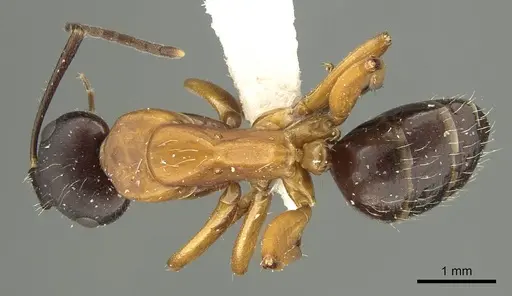
Literature
Loading distribution map...Loading products...