
Camponotus personatus
- Sci. Name
- Camponotus personatus
- Subgenus
- Myrmaphaenus
- Tribe
- Camponotini
- Subfamily
- Formicinae
- Author
- Emery, 1894
- Distribution
- Found in 2 countries
Introduction
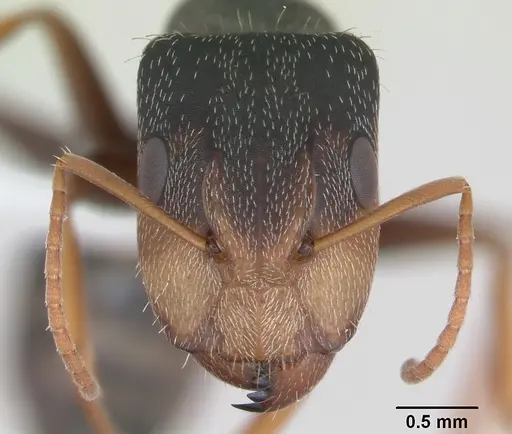
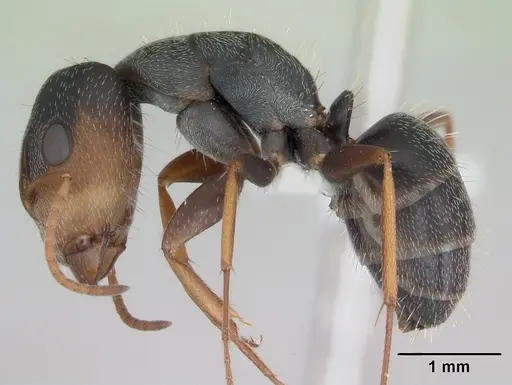
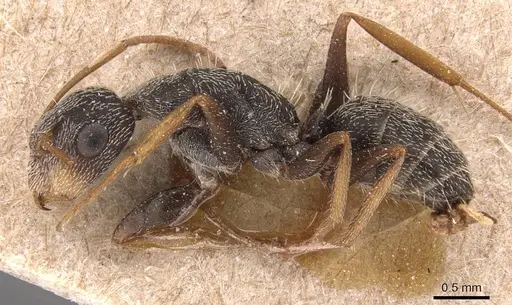
Camponotus personatus is a medium-sized Neotropical carpenter ant native to Argentina, Brazil, and Paraguay . Workers measure approximately 5-9mm, with major workers being larger than minors. This species is a ground-dwelling ant found primarily in Cerrado ecosystems and surrounding habitats, including Eucalyptus plantations . The species shows distinctive diurnal foraging patterns and is associated with extrafloral nectaries on plants like Crotalaria pallida and Croton sarcopetalus, where it participates in ant-guard mutualisms . What makes C. personatus interesting is its role as a Subordinate Camponotini species - these ants are typically less aggressive and more submissive compared to dominant carpenter ants, often avoiding conflict with more territorial species . This makes them a peaceful addition to ant collections, though it also means they may be outcompeted for resources if housed with more aggressive species.
Quick Summary
- Difficulty: Easy
- Origin & Habitat: Native to the Neotropical region, Argentina, Brazil, and Paraguay. Found in Cerrado tropical savanna ecosystems, Pantanal wetlands, and surrounding agricultural areas including Eucalyptus plantations [2][3]. Ground-dwelling species that nests in soil or decaying wood.
- Colony Type: Single-queen colonies following typical Camponotus structure. Colonies reach moderate sizes of several hundred workers.
- Size & Growth:
- Queen: ~10-12mm, inferred from Camponotus genus patterns
- Worker: ~5-9mm (majors 8-9mm, minors 5-6mm), inferred from Camponotus genus patterns
- Colony: Up to ~500 workers at maturity
- Growth: Moderate
- Development: Estimated 6-8 weeks at optimal temperature based on typical Camponotus development (Development time is typical for subgenus Myrmaphaenus, relatively slower than some faster-growing Camponotus species)
- Antkeeping:
- Temperature: Keep at 24-28°C. This is a tropical species from Brazil/Paraguay so they need warm conditions year-round [3]. A heating cable on one side of the nest creates a gradient they can regulate themselves.
- Humidity: Moderate humidity around 50-60%. These Cerrado ants are adapted to seasonal dry conditions but appreciate a moist nest chamber. Keep the nest substrate slightly damp but allow portions to dry between waterings.
- Diapause: No true diapause required. Since they're from tropical/subtropical regions, they don't need hibernation. However, a slight reduction in temperature during winter months (down to 20-22°C) may be beneficial if you're mimicking natural seasonal cues.
- Nesting: Ground-dwelling species that prefers soil-based nests. A naturalistic setup with soil/sand mix works well, or a Y-tong/plaster nest with moisture chambers. They don't need rot wood, they nest in soil cavities and under stones in the wild.
- Behavior: This is a calm, non-aggressive species that fits well in ant collections. Workers are active during the day (diurnal preference) [3] and will readily forage for protein and sugar sources. They are not aggressive defenders and rarely bite. Escape risk is moderate, they're not particularly small but can climb smooth surfaces. Use standard barrier methods. They form moderate-sized colonies over 1-2 years.
- Common Issues: colonies may grow slowly compared to faster Camponotus species, don't overfeed trying to speed them up, ground-dwelling nature means they need proper substrate depth for nesting, tropical species are sensitive to cold, keep above 22°C year-round, may be outcompeted by larger/more aggressive ants if housed in mixed setups, wild-caught colonies may carry parasites, quarantine and observe before adding to collection
Nest Preferences and Housing
Camponotus personatus is a ground-dwelling species that naturally nests in soil cavities and under stones in Cerrado and forest edge habitats [2][7]. In captivity, they do well in naturalistic setups with a soil/sand substrate at least 2-3cm deep, or in Y-tong/plaster nests designed for ground-dwelling ants. Unlike some Camponotus that prefer rot wood, this species favors soil nests. Provide a moisture chamber or water tube connected to the nest area to maintain moderate humidity. Since they're from tropical regions, avoid letting the nest dry out completely, these ants need consistent but not excessive moisture.
Feeding and Diet
Like most Camponotus, C. personatus is omnivorous with a preference for protein and sugar. In the wild, they forage for extrafloral nectar [4][5] and likely hunt small invertebrates. Offer protein sources like mealworms, small crickets, or freeze-dried shrimp 2-3 times per week. Sugar can be provided through honey water, sugar water, or commercial ant sweets. Given their diurnal foraging pattern [3], place food in the outworld during daylight hours for best acceptance. Fresh fruit can also be offered occasionally. Remove uneaten protein within 24 hours to prevent mold.
Temperature and Seasonal Care
As a Neotropical species from Brazil, Paraguay, and Argentina, C. personatus requires warm temperatures year-round. Keep the nest area between 24-28°C for optimal brood development. A heating cable placed on one end of the nest creates a temperature gradient that allows workers to regulate their exposure. Unlike temperate species, they don't require true hibernation, but you can simulate natural seasonal cycles by reducing temperatures slightly to 20-22°C during winter months. Never let temperatures drop below 18°C for extended periods, this species is not cold-tolerant and prolonged cold can weaken or kill colonies. [3][6]
Behavior and Colony Dynamics
This species is classified as a Subordinate Camponotini, meaning it's less aggressive and more submissive compared to dominant ant species [6]. In the ant community, subordinate species typically avoid direct competition and may be excluded from prime foraging areas by more aggressive ants. In captivity, this translates to a peaceful, manageable species that won't stress out keepers with aggressive biting or escape attempts. Workers are active during the day (diurnal) [3] and form moderate-sized colonies over 1-2 years. The colony will establish a queen chamber deep in the nest where the queen lays eggs, with workers tending brood in adjacent chambers.
Growth and Development
Camponotus personatus follows typical carpenter ant development patterns. The claustral queen seals herself in a chamber and survives on stored fat reserves while raising the first brood. First workers (nanitics) are typically smaller than mature workers and appear after 6-8 weeks at optimal temperature. After the first workers emerge, the colony enters a growth phase where population increases gradually. Major workers (soldiers) develop as the colony matures, typically appearing when the colony reaches 100+ workers. Full colony maturity of several hundred workers takes 1-2 years under good conditions. Growth is moderate, faster than some slow-growing Camponotus but not as rapid as tropical species like some Crematogaster.
Frequently Asked Questions
How long does it take for Camponotus personatus to produce first workers?
First workers (nanitics) typically emerge in 6-8 weeks after the queen lays eggs, assuming temperatures are kept at optimal 24-28°C. This is typical for Camponotus species in the Myrmaphaenus subgenus.
Is Camponotus personatus good for beginners?
Yes, this is a good beginner species. They're peaceful, don't require hibernation, and are straightforward to care for. The main requirements are warm temperatures (24-28°C) and moderate humidity. Their moderate growth rate also means they're forgiving of minor care mistakes.
What do Camponotus personatus ants eat?
They eat typical ant fare: protein (insects like mealworms, crickets) 2-3 times weekly, and sugar sources (honey water, sugar water) constantly available. They also occasionally accept fresh fruit.
Can I keep multiple Camponotus personatus queens together?
No, this is likely a single-queen species. Unlike some ants that can form multi-queen colonies, C. personatus colonies should be started with one queen. Introducing additional queens will result in fighting.
What temperature do Camponotus personatus need?
Keep them warm at 24-28°C year-round. This is a tropical species from Brazil and Paraguay that doesn't tolerate cold well. Use a heating cable on one side of the nest to maintain warmth.
Do Camponotus personatus need hibernation?
No, they don't require true hibernation. As a Neotropical species, they don't experience the cold winters that temperate ants do. You can provide a slight temperature reduction in winter (down to 20-22°C) but it's not necessary.
How big do Camponotus personatus colonies get?
Mature colonies reach approximately up to 500 workers. This is moderate size for a Camponotus species, not as large as some that can reach thousands, but substantial enough to be interesting.
What type of nest is best for Camponotus personatus?
A naturalistic setup with soil/sand substrate works best since they're ground-dwelling. Y-tong or plaster nests with moisture chambers are also suitable. They don't need rot wood like some other Camponotus, they prefer soil cavities.
Are Camponotus personatus aggressive?
No, they're quite peaceful. As a Subordinate Camponotini species, they're less aggressive than typical carpenter ants. They won't bite readily and are calm to handle. This makes them excellent for those who want an interactive ant that won't cause problems.
Report an Issue
The current care sheet is based fully on literature. See inconsistencies, or something that's incorrect? Please , it will be resolved after review from an admin. Contributing to the blogs tab also helps providing information, to make us be able to further improve the caresheets. Thank you for your support!
References

This caresheet is licensed under CC BY-SA 4.0 .
Community Blogs
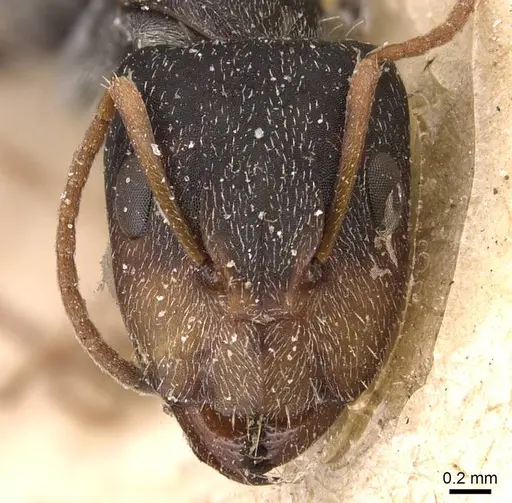
CASENT0173436
View on AntWeb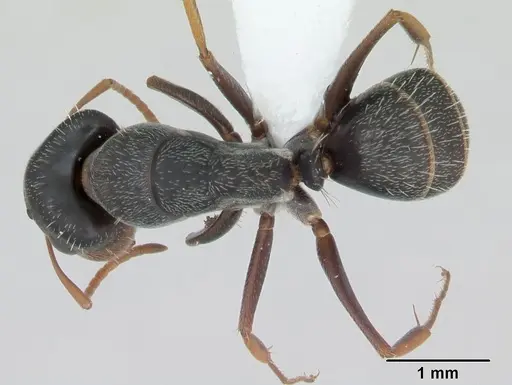
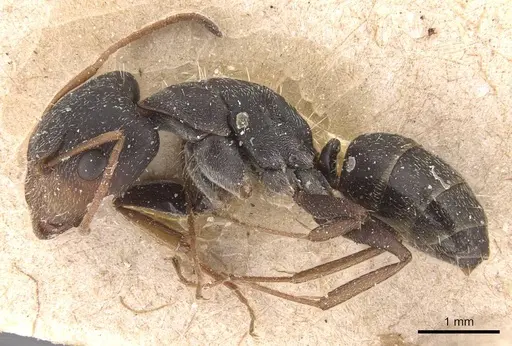
CASENT0905488
View on AntWeb
CASENT0905489
View on AntWeb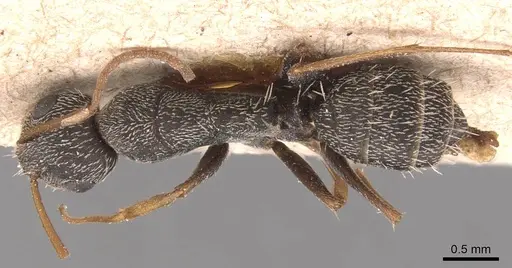
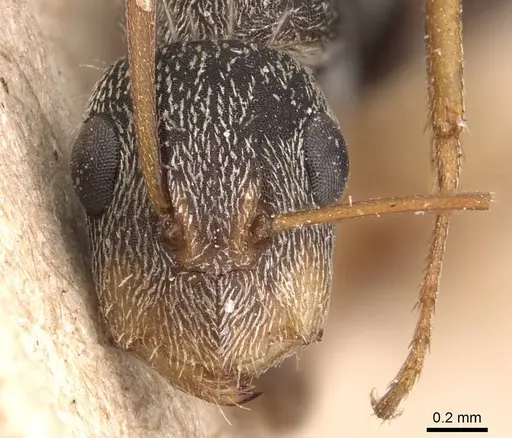
CASENT0923545
View on AntWeb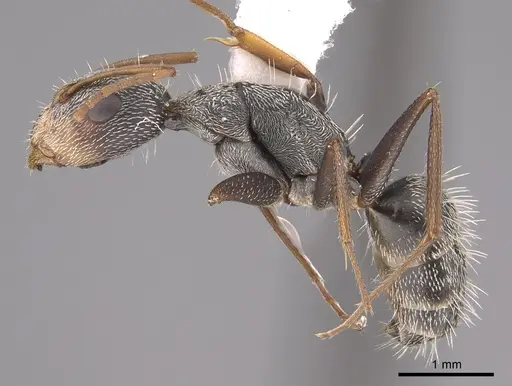
Literature
Loading distribution map...Loading products...