
Camponotus orthocephalus
- Sci. Name
- Camponotus orthocephalus
- Subgenus
- Pseudocolobopsis
- Tribe
- Camponotini
- Subfamily
- Formicinae
- Author
- Emery, 1894
- Distribution
- Found in 5 countries
Introduction
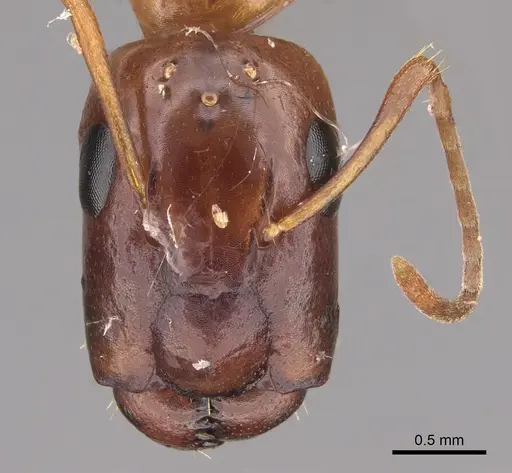
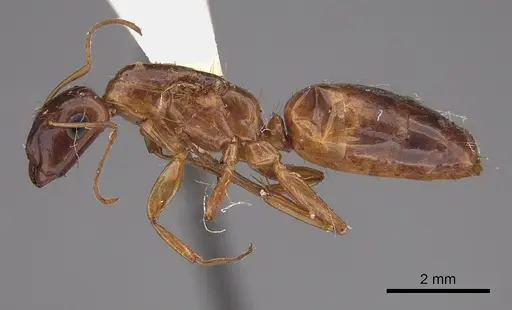
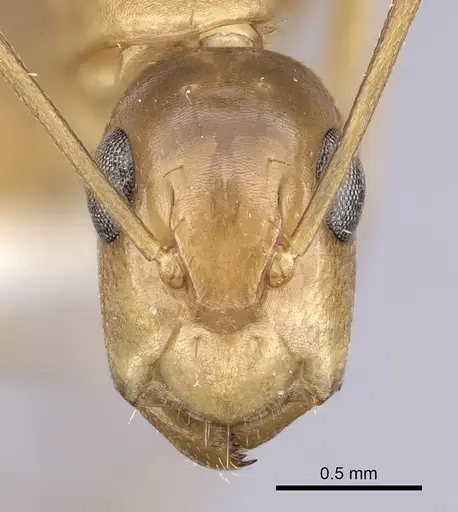
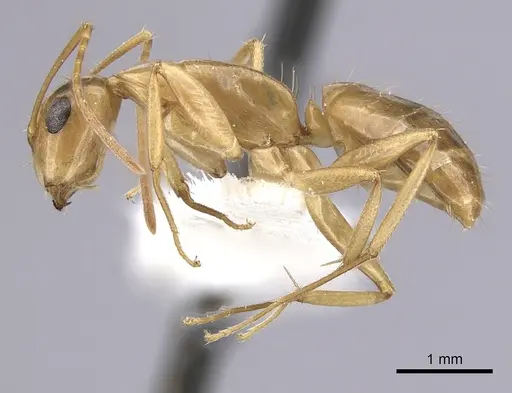
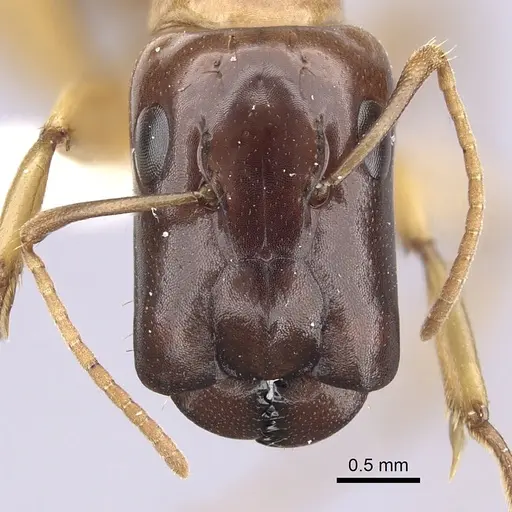
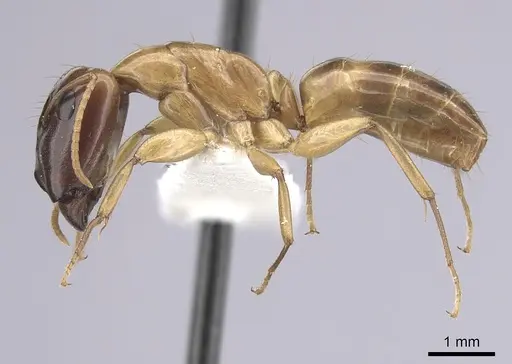
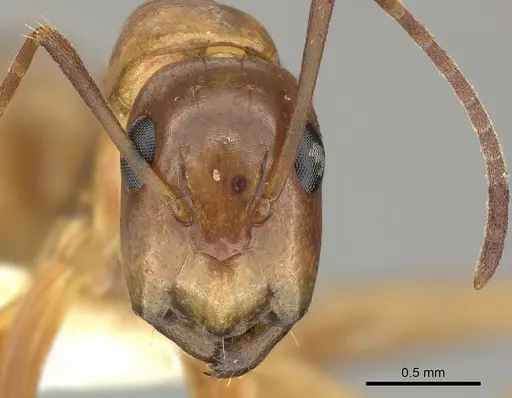
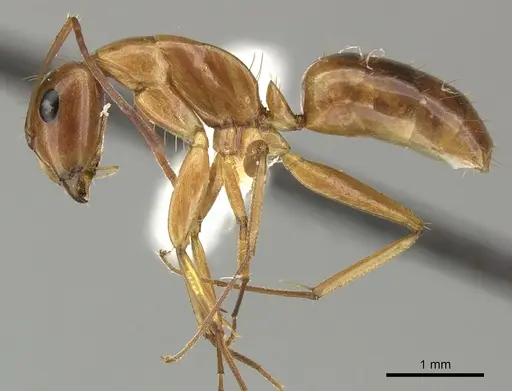
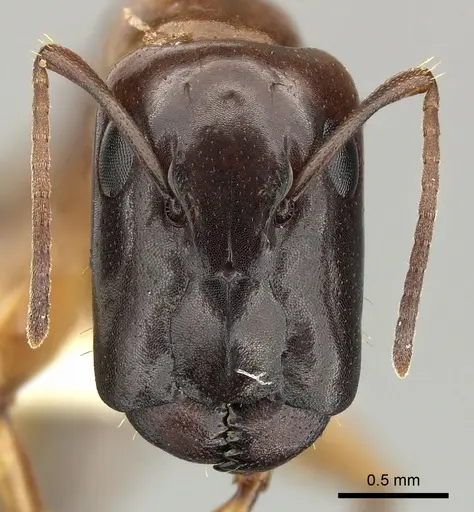
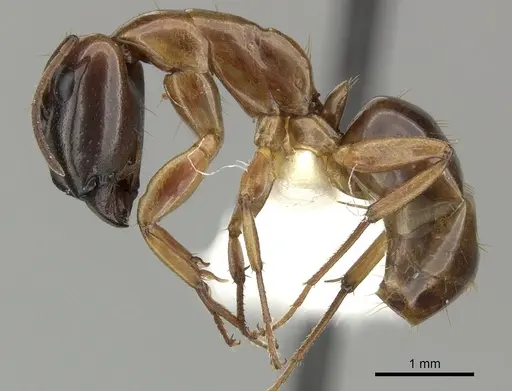
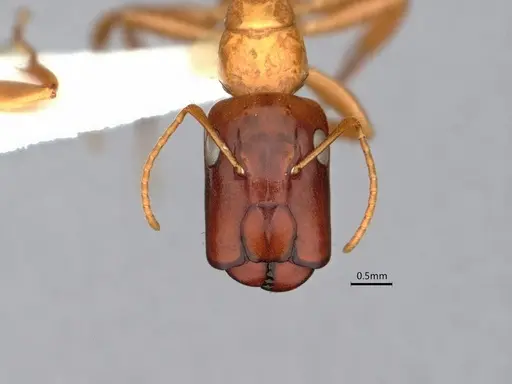
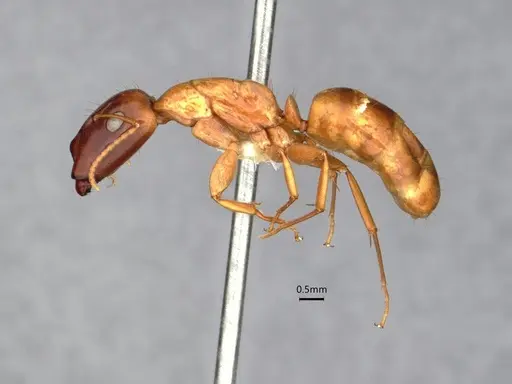
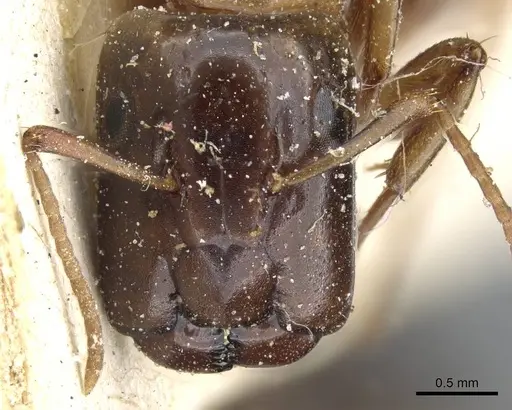
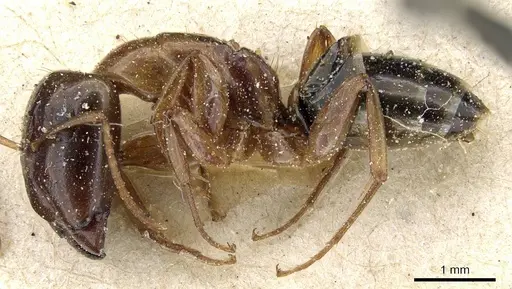
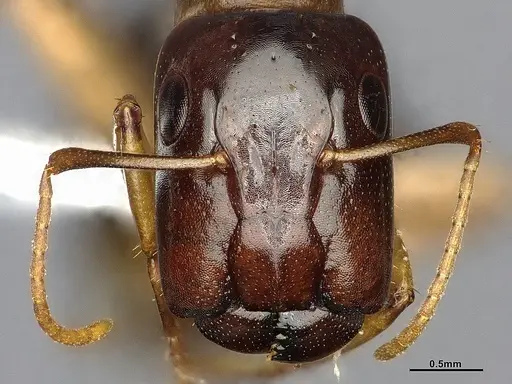
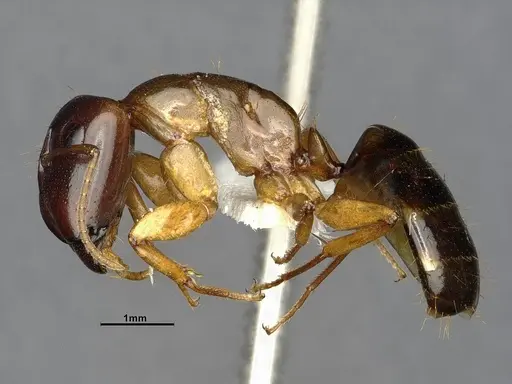
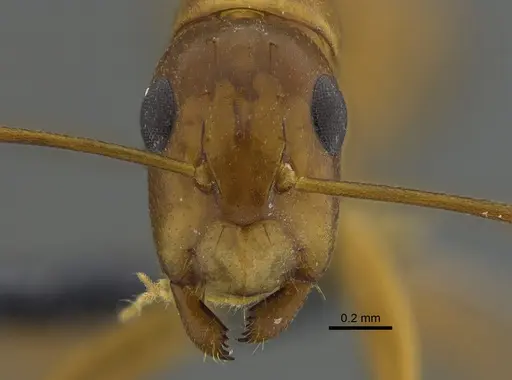
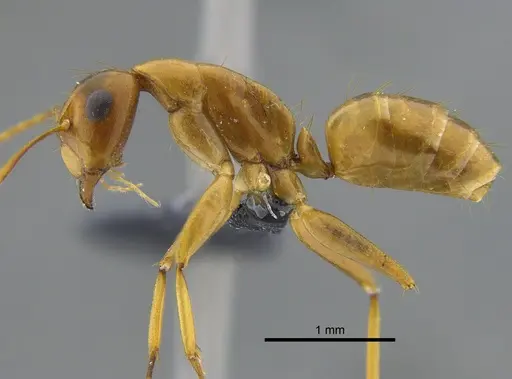
Camponotus orthocephalus is a medium-sized Neotropical ant known for its remarkably elongated head, which gives the species its name. Workers have a distinctive convex clypeus that rises sharply above the cheeks, creating a unique profile. The head is dark brown, the mesosoma medium brown, and the gaster displays alternating dark and light brown transverse bands. This species belongs to the Pseudocolobopsis subgenus and is found across northern South America, from Costa Rica down through Colombia, Ecuador, Peru, Bolivia, Brazil, and into northern Argentina. They nest in hollow stems and branches within forest environments .
Quick Summary
- Difficulty: Medium
- Origin & Habitat: Neotropical forests from Costa Rica to Argentina, including Brazil, Colombia, Peru, Bolivia, Ecuador, and French Guiana. Found at elevations up to 980m in Colombia, typically in secondary and primary forest habitats [2][1][3].
- Colony Type: Single-queen colonies, inferred from typical Camponotus patterns.
- Size & Growth:
- Queen: size data unavailable, inferred from Camponotus genus (~10-12mm)
- Worker: 5-7mm, inferred from Camponotus genus [1]
- Colony: up to several thousand workers (estimated based on genus patterns)
- Growth: Moderate
- Development: 6-8 weeks (inferred from typical Camponotus development patterns) (Development time is estimated based on genus-level data for Camponotus species in warm climates)
- Antkeeping:
- Temperature: Keep at 24-28°C. As a Neotropical species, they prefer warm conditions. A heating cable on one side of the nest creates a suitable gradient [1].
- Humidity: Moderate to high humidity (60-80%). Forest-dwelling species need moisture but avoid waterlogging. Keep nest substrate consistently moist but not saturated.
- Diapause: No, being a Neotropical species from tropical and subtropical regions, they do not require hibernation. Maintain warm temperatures year-round [3].
- Nesting: Natural nesting: hollow stems and branches in forest environments [1]. Captive housing: Y-tong (AAC) nests or plaster nests work well. Provide narrow chambers scaled to their size. Avoid dry conditions, they need access to moisture.
- Behavior: This species belongs to the Subordinate Camponotini functional group, meaning they are relatively peaceful and not aggressive [3]. Workers are moderate foragers, typical of Camponotus. They do not have a functional sting but may bite and spray formic acid, typical of Formicinae ants. Escape risk is moderate, use standard Camponotus escape prevention (fluon on container edges, tight-fitting lids).
- Common Issues: colonies may fail if temperatures drop below 20°C, keep them warm year-round, dry conditions cause colony decline, monitor humidity closely, wild-caught colonies may have parasites that kill them in captivity, slow initial growth can lead to overfeeding by impatient keepers, nests in hollow branches mean they prefer vertical spaces, horizontal-only nests may be underutilized
Housing and Nest Setup
Camponotus orthocephalus naturally nests in hollow stems and branches within forest environments [1]. For captive care, Y-tong (AAC) nests or plaster nests work well because they allow you to maintain proper humidity while providing dark, enclosed chambers. Place the nest in a quiet area away from direct sunlight and vibrations. An outworld for foraging should connect to the nest, a simple plastic container works where workers can find food and water.
Feeding and Diet
Like most Camponotus species, these ants are omnivorous. They accept sugar sources (honey water, sugar water) and protein (insects like mealworms, crickets, fruit flies). In the wild, they likely forage for honeydew from aphids and scale insects, plus small arthropods. Feed them a drop of sugar water 2-3 times per week and protein prey once or twice weekly. Remove uneaten prey after 24-48 hours to prevent mold. Workers will store food in their social stomachs and share with nestmates.
Temperature and Seasonal Care
As a Neotropical species from Costa Rica to Argentina, Camponotus orthocephalus needs warm temperatures year-round. Keep the nest area between 24-28°C. A heating cable placed on top of the nest (never underneath, which causes moisture evaporation) helps maintain warmth, especially in cooler rooms. They do not require hibernation or diapause, maintaining consistent warm conditions is key. Avoid temperatures below 20°C as this can slow development and weaken the colony. Room temperature in heated homes (around 22-24°C) is often suitable, but monitor with a thermometer. [1][3]
Colony Founding
Founding behavior is unconfirmed for this species. Like many Camponotus species, queens may be claustral, sealing themselves in a chamber and raising first workers alone using stored fat reserves. After mating, the queen would find a suitable nesting site (in nature, this would be a hollow stem or branch cavity) and seal the entrance. The founding period likely takes 6-8 weeks at optimal temperature before first workers emerge, though this is inferred from genus patterns.
Behavior and Temperament
This species belongs to the Subordinate Camponotini functional group, which means they are relatively peaceful and non-aggressive compared to some other ant species [3]. Workers are moderate foragers, they will send scouts to find food and recruit nestmates through chemical trails. They do not have a functional sting but may bite and spray formic acid, which is the typical defense mechanism for Formicinae ants. Their most distinctive feature is the remarkably elongated head with a convex clypeus, this is not just cosmetic but serves their ecological role in the forest ecosystem. They are primarily nocturnal or crepuscular foragers, so you may see more activity in the evening hours.
Growth and Development
Colony growth follows typical Camponotus patterns. After the founding period (likely 6-8 weeks), the first nanitic workers emerge and begin foraging. The colony then grows exponentially as the queen continues laying eggs and more workers mature. A mature colony may contain up to several thousand workers. Growth rate is moderate, not as fast as some tropical species but faster than cold-climate Camponotus. The distinctive elongated head becomes more pronounced in major workers (soldiers) as the colony matures, which typically occurs when the colony reaches several hundred workers.
Frequently Asked Questions
How long does it take for Camponotus orthocephalus to produce first workers?
Expect 6-8 weeks from egg to first worker at optimal temperature (24-28°C). This is typical for Camponotus species in warm conditions.
What temperature do Camponotus orthocephalus ants need?
Keep them at 24-28°C. As a Neotropical species, they need warm conditions year-round. Avoid temperatures below 20°C.
Do Camponotus orthocephalus ants need hibernation?
No. Being a Neotropical species from tropical and subtropical regions, they do not require hibernation. Maintain warm temperatures year-round.
What do Camponotus orthocephalus ants eat?
They are omnivorous. Feed sugar water or honey regularly and protein (insects like mealworms, crickets, fruit flies) 1-2 times per week.
Are Camponotus orthocephalus good for beginners?
They are intermediate in difficulty. They need warm temperatures and moderate humidity, which is manageable for someone with basic antkeeping experience.
How big do Camponotus orthocephalus colonies get?
Mature colonies likely reach up to several thousand workers, typical for Camponotus species.
What type of nest is best for Camponotus orthocephalus?
Y-tong (AAC) nests or plaster nests work well. They naturally nest in hollow stems and branches, so provide enclosed chambers with good humidity control.
Can I keep multiple Camponotus orthocephalus queens together?
Not recommended. This species is likely monogyne (single queen). Combining unrelated queens has not been documented and queens would likely fight.
Why is the head of Camponotus orthocephalus so unusual?
The extremely elongated head with a convex clypeus is a distinctive morphological feature of this species. It belongs to the Pseudocolobopsis subgenus, characterized by this trait. No other species in Colombia has these characteristics [1].
Report an Issue
The current care sheet is based fully on literature. See inconsistencies, or something that's incorrect? Please , it will be resolved after review from an admin. Contributing to the blogs tab also helps providing information, to make us be able to further improve the caresheets. Thank you for your support!
References

This caresheet is licensed under CC BY-SA 4.0 .
Community Blogs
CASENT0217681
View on AntWeb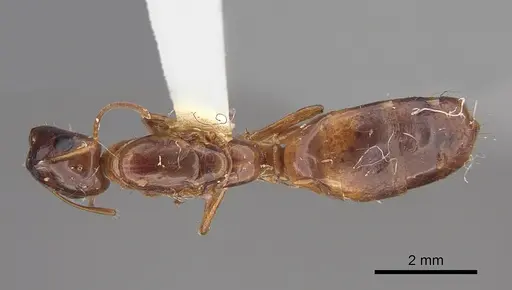
CASENT0249392
View on AntWeb
CASENT0249393
View on AntWeb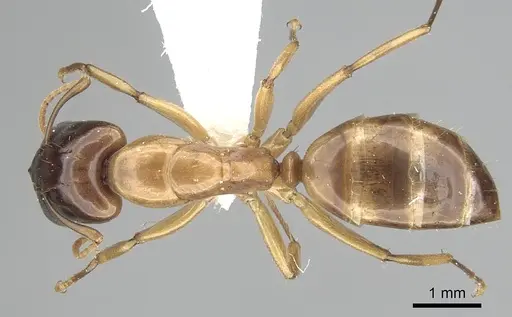
CASENT0249604
View on AntWeb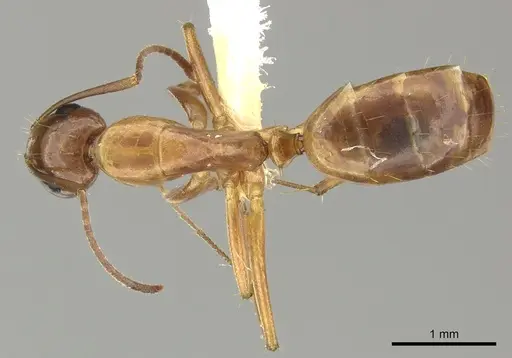
CASENT0619235
View on AntWeb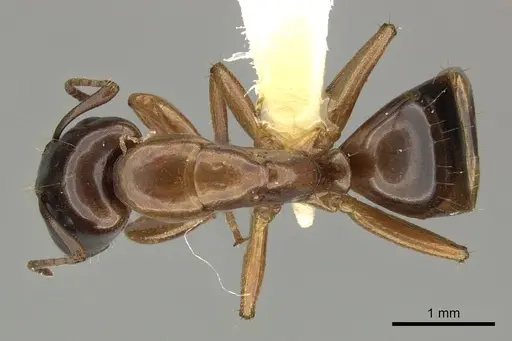
CASENT0886720
View on AntWeb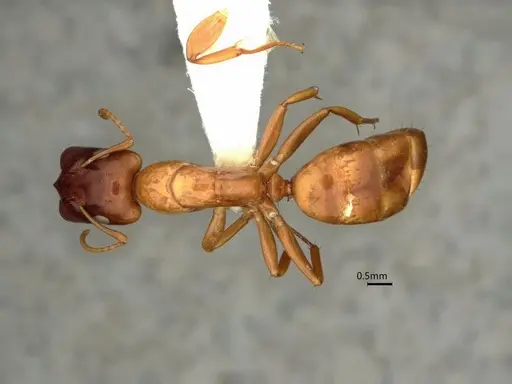
CASENT0905498
View on AntWeb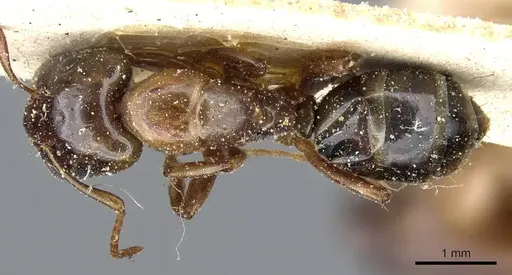
CASENT4032239
View on AntWeb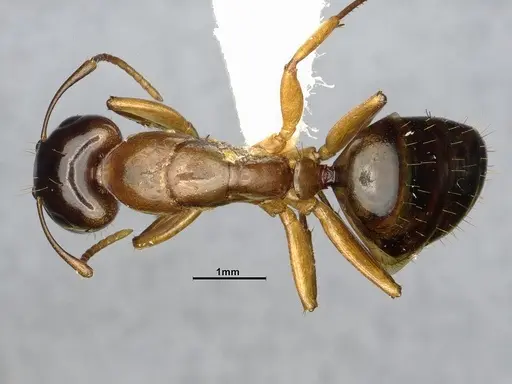
CBUMAGENT41811
View on AntWeb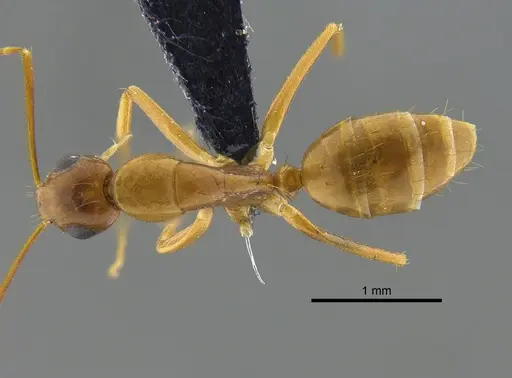
Literature
Loading distribution map...Loading products...