
Camponotus maintilany
- Sci. Name
- Camponotus maintilany
- Subgenus
- Mayria
- Tribe
- Camponotini
- Subfamily
- Formicinae
- Author
- Rasoamanana & Fisher, 2022
- Distribution
- Found in 1 countries
Introduction
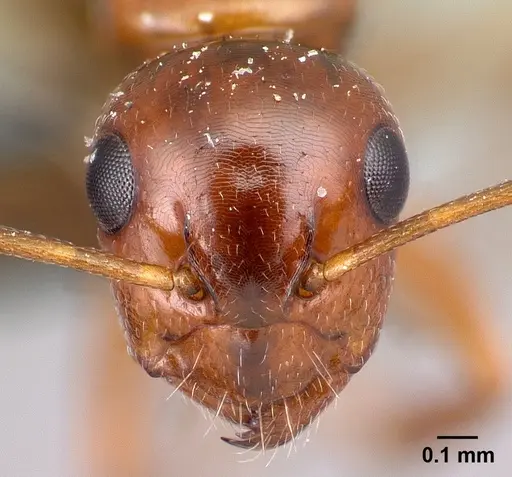
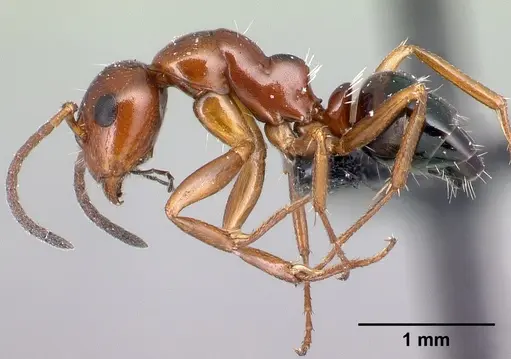
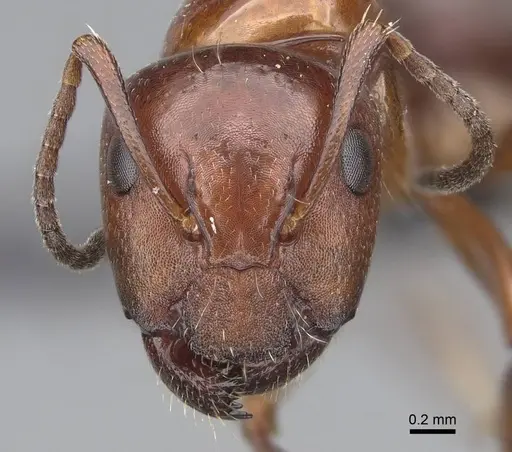
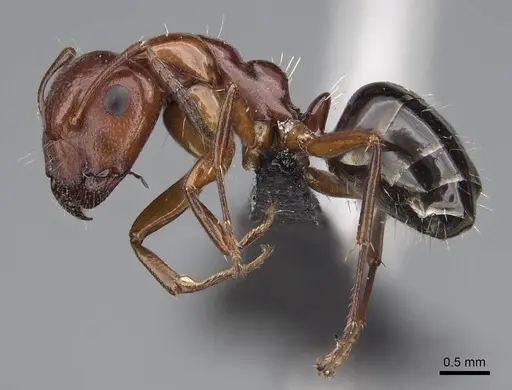
Camponotus maintilany is a medium-sized ant species endemic to Madagascar, recently described in 2022. Workers are bicolored with a reddish-brown head and mesosoma contrasting against a dark brown to black gaster. This species belongs to the Camponotus ellioti species group within the Mayria subgenus. The most distinctive morphological features are the dome-shaped pronotum and mesonotum, plus the whitish spatulate hairs on the propodeum and petiole. They inhabit montane environments in Madagascar's central highlands at elevations between 1300-1987 meters .
Quick Summary
- Difficulty: Medium
- Origin & Habitat: Native to Madagascar, specifically the central highlands in the Antananarivo province (Ankalalahana). They live in montane environments at 1300-1987m elevation, preferring Uapaca forest or woodland but also found in savanna grassland and eucalyptus plantations [1][2].
- Colony Type: Colony structure is unconfirmed for this species. Based on typical Camponotus patterns, they are likely single-queen (monogyne) colonies.
- Size & Growth:
- Queen: Size data unavailable, queen measurements have not been documented in scientific literature.
- Worker: Minor workers: approximately 6-8mm total length (inferred from Camponotus genus). Major workers: larger, approximately 9-12mm total length (inferred from Camponotus genus).
- Colony: Colony size data unavailable for this newly described species.
- Growth: Moderate, based on typical Camponotus development patterns.
- Development: Estimated 6-10 weeks based on typical Camponotus genus development at optimal temperature. (Development time is estimated from related species, direct measurements for this species are not available.)
- Antkeeping:
- Temperature: Keep around 22-26°C. The montane highland origin suggests they can tolerate cooler conditions than typical tropical ants, but avoid temperatures below 18°C or above 30°C.
- Humidity: Moderate humidity around 50-70%. They inhabit montane forests with some moisture. Keep the nest substrate lightly moist but not waterlogged. Provide a water source in the outworld.
- Diapause: Likely not required. Being from Madagascar at high elevation (1300-1987m), they may experience mild seasonal variation but probably do not need a true hibernation. However, a slight cooling period during winter months (dropping to 18-20°C) may be beneficial.
- Nesting: Ground-nesting species collected by digging in soil. Test tubes or Y-tong nests work well. Provide moist substrate for the nest chamber.
- Behavior: These ants are moderate foragers that can be attracted to protein baits like tuna fish in the wild [1]. Workers are reasonably active and will explore the outworld for food. Major workers serve as soldiers and may help process larger prey. Escape risk is moderate, they are not tiny ants but still require standard barrier precautions. They are not known to be particularly aggressive but will defend their colony if threatened. As Formicinae, they spray formic acid as their primary defense mechanism.
- Common Issues: limited availability, this is a newly described species and may be difficult to find from suppliers, no established captive breeding lines yet, wild-caught colonies are the primary source, temperature management is important, avoid both cold drafts and overheating, growth rate is moderate and may test beginner patience, diapause requirements are uncertain, observe colony behavior to determine seasonal needs, queen size and colony size data are completely unavailable, this is a newly described species
Housing and Nest Setup
Camponotus maintilany can be housed in standard ant-keeping setups. Test tube setups work well for founding colonies, use a test tube with a water reservoir separated by a cotton plug, providing a dark, humid chamber for the queen. Once the colony reaches 20-30 workers, you can transition to a formicarium. Y-tong nests or plaster nests work well. The key is maintaining moderate humidity in the nest area while providing a dry outworld for foraging. Since they are ground-nesting ants from montane forest, include some soil or substrate in the nesting chamber that can hold moisture. A small water test tube should always be available in the outworld. [1]
Feeding and Diet
In the wild, these ants have been collected using baited tuna fish and sardines, confirming they scavenge and accept protein sources [1]. As with most Camponotus species, they accept a varied diet including sugar sources (honey, sugar water), protein (insects like mealworms, crickets, bloodworms), and possibly seeds. Feed them a drop of honey or sugar water 2-3 times per week, and offer protein prey items once or twice weekly. Remove uneaten prey after 24-48 hours to prevent mold. The major workers will help process larger prey items for the colony.
Temperature and Seasonal Care
Being from Madagascar's central highlands at 1300-1987m elevation, this species experiences a milder climate than typical tropical lowland ants. Aim for temperatures between 22-26°C during the active season. A slight temperature drop in winter months (to around 18-20°C) may help simulate their natural seasonal cycle, but a true hibernation is likely not required. Avoid keeping them in rooms that get cold in winter or that overheat in summer. A small heating cable on one side of the nest can create a temperature gradient if your room temperature runs cool. Monitor colony activity, if workers become sluggish and cluster together, slightly increase temperature. [1]
Colony Development
As a newly described species (2022), there is no captive breeding data available yet. Based on typical Camponotus patterns, expect claustral founding where the queen seals herself in a chamber and raises the first brood alone using stored fat reserves. The first workers (nanitics) will be smaller than normal workers. Growth rate is moderate, expect 6-10 weeks from egg to first worker at optimal temperature. Colonies will likely grow steadily over several years, with major workers appearing once the colony reaches a certain size. Be patient with founding colonies, they are vulnerable and need stability. [1]
Handling and Temperament
Camponotus maintilany workers are not particularly aggressive but will defend their colony if threatened. They have the typical Formicinae defense mechanism, they spray formic acid from their acidopore and may bite if provoked. For most keepers, this species is easy to work with as they are not hyperactive or particularly defensive. When moving or observing colonies, go slow and avoid sudden movements. Use standard escape prevention (Fluon on test tube rims, barrier tape) as you would with any ant species. Major workers can be impressive and are fun to watch as they help process food.
Frequently Asked Questions
How long does it take for Camponotus maintilany to produce first workers?
Based on typical Camponotus development, expect 6-10 weeks from egg to first worker at optimal temperature (around 24°C). This is an estimate since this newly described species has no captive data yet.
What do Camponotus maintilany ants eat?
They accept protein baits like tuna fish in the wild, so offer insects (mealworms, crickets, bloodworms) and sugar sources (honey, sugar water). Feed protein 1-2 times weekly and keep sugar water available.
Do Camponotus maintilany ants need hibernation?
Probably not. Being from Madagascar's highlands, they likely do not require a true hibernation. A slight temperature reduction in winter (to 18-20°C) may be beneficial but is not mandatory.
Are Camponotus maintilany good for beginners?
This species is rated Medium difficulty. While the care is similar to other Camponotus, this is a newly described species (2022) that may be difficult to acquire. Beginners may want to start with more common species.
What temperature should I keep Camponotus maintilany at?
Aim for 22-26°C. The highland origin suggests they can tolerate cooler conditions than typical tropical ants, but avoid temperatures below 18°C or above 30°C.
How big do Camponotus maintilany colonies get?
Colony size is unknown for this species. Based on typical Camponotus, they likely reach several hundred to a few thousand workers over several years.
Can I keep multiple queens together?
The colony structure is unconfirmed for this species. Most Camponotus are single-queen (monogyne). Combining unrelated queens is not recommended unless you observe successful pleometrosis in this species.
When will this species be available from ant suppliers?
Camponotus maintilany was only described in 2022 and is endemic to Madagascar. It may take time before established breeding lines reach the hobby. Check with specialty suppliers or consider joining waiting lists.
What makes Camponotus maintilany special?
This species belongs to the Mayria subgenus and the Camponotus ellioti species group, making it a unique addition for antkeepers. Its distinctive features include the dome-shaped pronotum and mesonotum, plus whitish spatulate hairs on the propodeum and petiole. Being newly described, keeping this species contributes to understanding its biology.
Report an Issue
The current care sheet is based fully on literature. See inconsistencies, or something that's incorrect? Please , it will be resolved after review from an admin. Contributing to the blogs tab also helps providing information, to make us be able to further improve the caresheets. Thank you for your support!
References

This caresheet is licensed under CC BY-SA 4.0 .
Community Blogs
CASENT0120678
View on AntWeb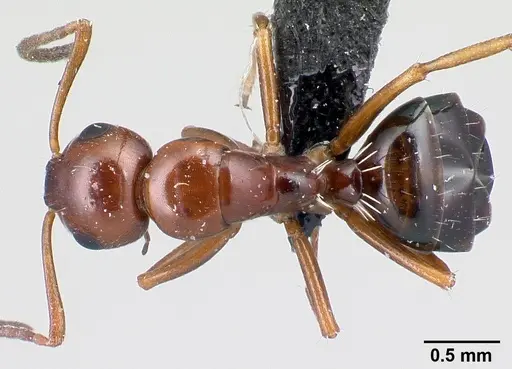
CASENT0245156
View on AntWeb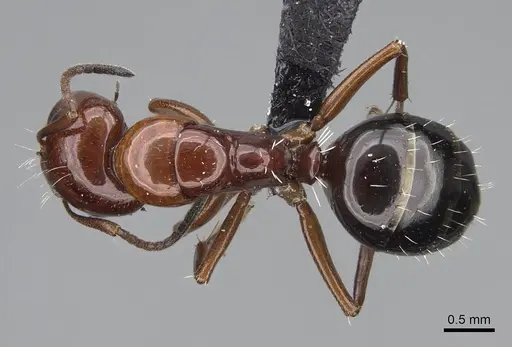
Literature
Loading distribution map...Loading products...