
MacCook's Carpenter Ant
Camponotus maccooki
- Sci. Name
- Camponotus maccooki
- Subgenus
- Tanaemyrmex
- Tribe
- Camponotini
- Subfamily
- Formicinae
- Author
- Forel, 1879
- Common Name
- MacCook's Carpenter Ant
- Distribution
- Found in 3 countries
Introduction
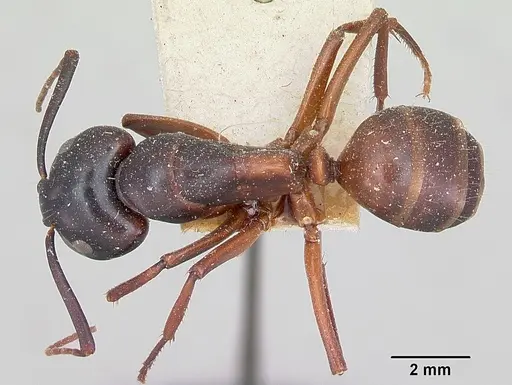
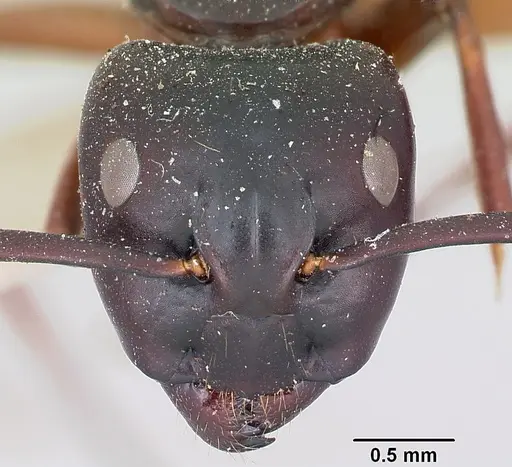
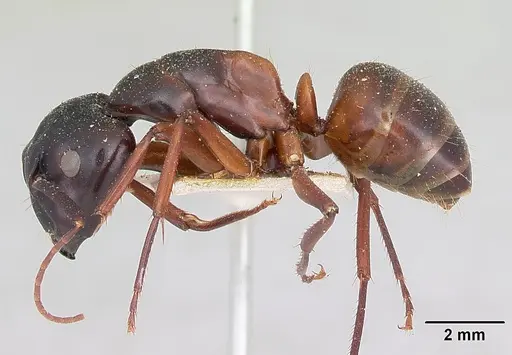
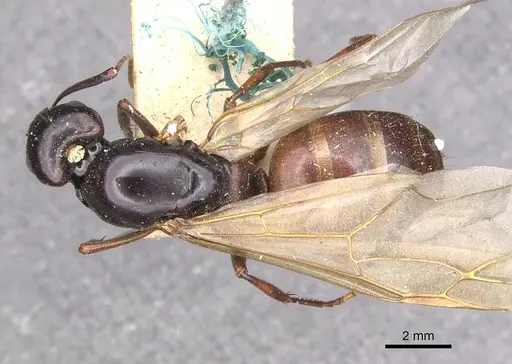
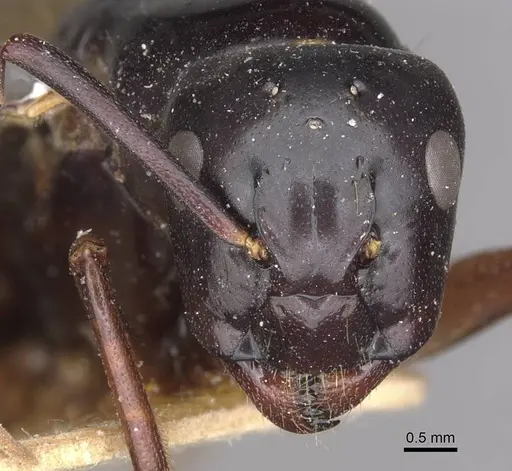
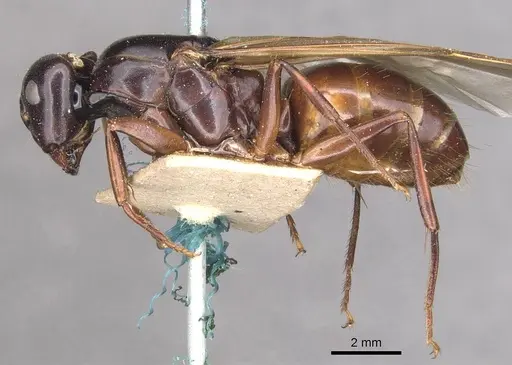
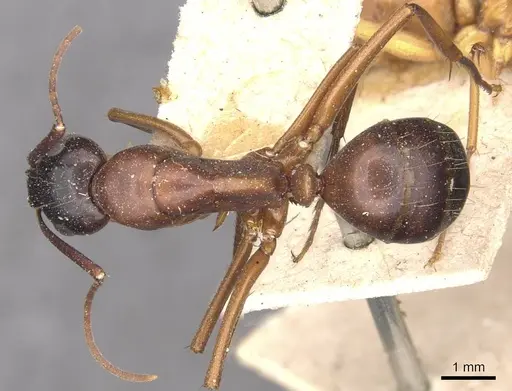
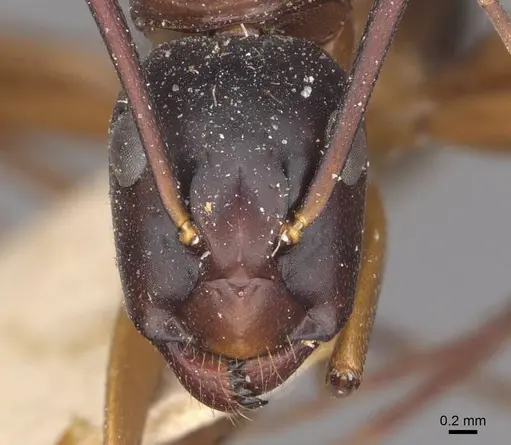
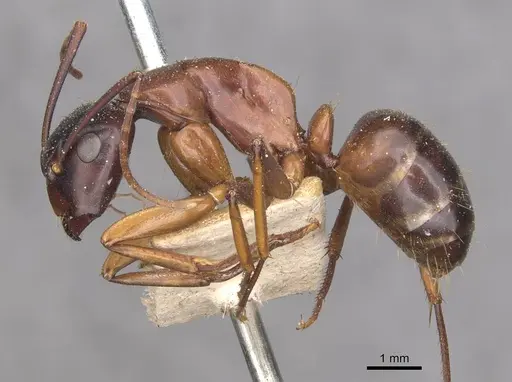
Camponotus maccooki is a large carpenter ant native to western North America, ranging from Oregon and Washington south through California into Baja California, Mexico. Workers come in two sizes: majors measure 10-13mm with a distinctive reddish-brown head and black thorax, while minors are smaller at 6-8mm. Queens reach 12-14mm. This species closely resembles Camponotus vicinus but can be identified by the small rounded lobe at the base of their antennae. As a member of the Tanaemyrmex subgenus, they are active foragers with moderate growth rates.
Quick Summary
- Difficulty: Easy
- Origin & Habitat: Western North America, primarily the Pacific coast states (Oregon, Washington, California) and Baja California, Mexico. Found on Isla Guadalupe off the coast of Baja California. Inhabits diverse environments from coastal areas to mountain regions, typically nesting in wood or under stones [1][2][3].
- Colony Type: Likely monogyne (single queen colonies), which is typical for most Camponotus species.
- Size & Growth:
- Queen: 12-14mm [4]
- Worker: Major: 10-13mm, Minor: 6-8mm [4]
- Colony: Up to several thousand workers
- Growth: Moderate, Camponotus species typically take 2-3 months for first workers at optimal temperature
- Development: 8-12 weeks at optimal temperature (around 24-26°C), typical for Camponotus genus (Development is temperature-dependent, cooler conditions slow growth significantly)
- Antkeeping:
- Temperature: Keep nest area at 22-26°C with a slight gradient. Western US species can tolerate room temperature (20-24°C) but grow faster with gentle warmth. Avoid temperatures above 30°C.
- Humidity: Moderate humidity (50-60%). Carpenter ants prefer slightly drier conditions than tropical species. Provide a water tube but avoid overly damp nests.
- Diapause: Yes, this temperate species requires a winter rest period. Reduce temperature to 10-15°C for 2-3 months during winter months (roughly November-February in the Northern Hemisphere).
- Nesting: Y-tong (AAC) nests work well, or plaster/formicarium setups. They prefer wood-based or acrylic nests. Provide a water tube for humidity.
- Behavior: Generally calm and non-aggressive compared to some other carpenter ants. Majors are impressive-looking but rarely bite unless threatened. Foragers are active and will readily explore outworlds. Escape risk is moderate, use standard barriers. They are primarily nocturnal but will forage during the day.
- Common Issues: colonies may stall if temperatures drop too low during active season, winter diapause is essential, skipping hibernation can weaken colonies over time, test tube setups work for founding but colonies need space to expand after first workers emerge, wild-caught colonies may have parasites, quarantine and observe new colonies
Nest Preferences
Camponotus maccooki naturally nests in decaying wood, under stones, and in soil cavities across their western North American range. In captivity, they adapt well to various nest types. Y-tong (AAC) nests work excellently for this species, providing good visibility and humidity control. Plaster nests are also suitable, especially if you want to maintain slightly more moisture. For founding colonies, a simple test tube setup with a water reservoir works fine, the queen will seal herself into a chamber and remain there until her first workers emerge. Once the colony reaches established numbers, consider moving them to a larger formicarium. They do not require extremely tight chambers like some tiny species, but appreciate passages sized appropriately to their worker size. [4]
Feeding and Diet
Like other carpenter ants, Camponotus maccooki is omnivorous. They readily accept sugar sources (honey water, sugar water, ripe fruit) and protein foods (dead insects, mealworms, small crickets). In the wild, they forage for honeydew from aphids and scale insects, plus dead arthropods. For captive colonies, offer a constant sugar source (a small dish with diluted honey or sugar water) and protein prey 2-3 times per week. Remove uneaten prey after 24-48 hours to prevent mold. Major workers can tackle larger prey items than minors. During colony founding, the claustral queen needs no food, she survives entirely on stored fat reserves until her first workers emerge. [4]
Temperature and Seasonal Care
This western North American species thrives at moderate temperatures. Keep the nest area at 22-26°C during the active season (spring through fall). A temperature gradient allows ants to self-regulate, place a heating cable on one side of the nest set to around 27°C while leaving the other side at room temperature. During winter, this species requires a diapause period. Reduce temperatures to 10-15°C (a cellar, unheated garage, or refrigerator works) for 2-3 months. Do not feed during diapause and minimize disturbance. Skipping hibernation can cause colony decline over time as the brood cycle becomes disrupted. Resume normal feeding and temperatures when you bring them out in spring. [4]
Behavior and Temperament
Camponotus maccooki is one of the more docile carpenter ant species, making it an excellent choice for keepers new to the genus. They are not particularly aggressive and rarely bite, though majors may pinch if handled roughly. Workers are active foragers that will explore outworlds thoroughly in search of food. They are primarily nocturnal in the wild but adjust to your light cycle in captivity. This species shows typical carpenter ant behavior: they excavate wood cavities in nature (though they don't actually eat wood, just nest in it). Colonies communicate through chemical trails, you may see foragers following the same path once food is discovered. Majors serve as defenders and can crack larger prey items with their powerful mandibles. [4]
Growth and Development
Like all Camponotus species, C. maccooki has a relatively slow development compared to smaller ants. From egg to first worker (nanitic), expect 8-12 weeks at optimal temperature (around 24-26°C). The first workers are typically smaller than normal workers but will immediately begin foraging to support the colony. Growth rate is moderate, a well-fed colony will expand over time. The queen can live 15-25 years, so this is a long-term commitment. Major workers appear as the colony grows larger. [4]
Frequently Asked Questions
How long does it take for Camponotus maccooki to raise first workers?
Expect 8-12 weeks from egg to first worker at optimal temperature (24-26°C). Cooler temperatures will significantly slow development.
What temperature do Camponotus maccooki need?
Keep them at 22-26°C during the active season. A slight gradient allows the colony to self-regulate. They also require a winter diapause at 10-15°C.
Can I keep Camponotus maccooki in a test tube?
Yes, test tubes work perfectly for founding colonies. Once the colony reaches established numbers, upgrade to a larger formicarium like a Y-tong nest.
Do Camponotus maccooki need hibernation?
Yes, this temperate species requires a winter rest period. Reduce temperature to 10-15°C for 2-3 months during winter.
What do Camponotus maccooki eat?
They are omnivorous. Offer sugar sources (honey water, sugar water) constantly and protein (dead insects, mealworms) 2-3 times per week.
How big do Camponotus maccooki colonies get?
Colonies can reach up to several thousand workers over several years. Queens can live 15-25 years.
Are Camponotus maccooki good for beginners?
Yes, this is an excellent beginner species. They are docile, easy to care for, and adapt well to captivity.
When should I move Camponotus maccooki to a formicarium?
Move them once the test tube becomes crowded or the water reservoir runs low. A Y-tong or plaster nest works well.
Why is my Camponotus maccooki colony not growing?
Check temperature (too cold slows development), feeding (insufficient protein or sugar), and humidity. Also ensure they are not in diapause mode.
Report an Issue
The current care sheet is based fully on literature. See inconsistencies, or something that's incorrect? Please , it will be resolved after review from an admin. Contributing to the blogs tab also helps providing information, to make us be able to further improve the caresheets. Thank you for your support!
References

This caresheet is licensed under CC BY-SA 4.0 .
Community Blogs
Literature
Loading distribution map...Loading products...