
Hairless Smooth Carpenter Ant
Camponotus laevigatus
- Sci. Name
- Camponotus laevigatus
- Tribe
- Camponotini
- Subfamily
- Formicinae
- Author
- Smith, 1858
- Common Name
- Hairless Smooth Carpenter Ant
- Distribution
- Found in 3 countries
Introduction
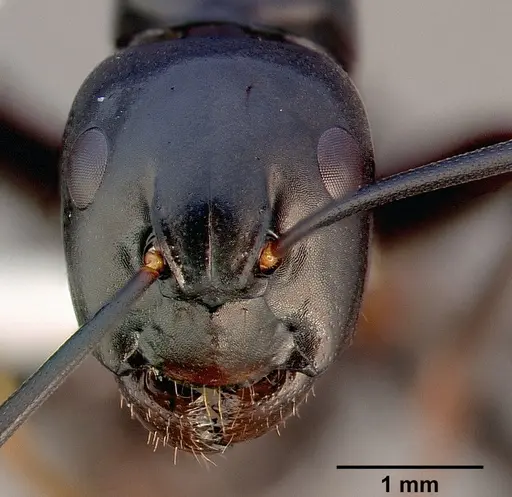
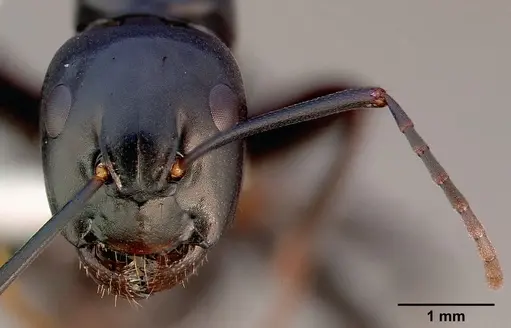
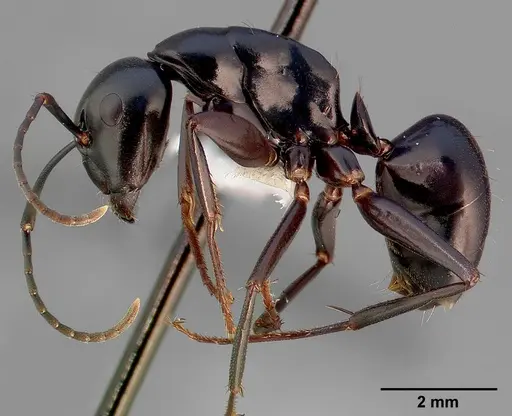
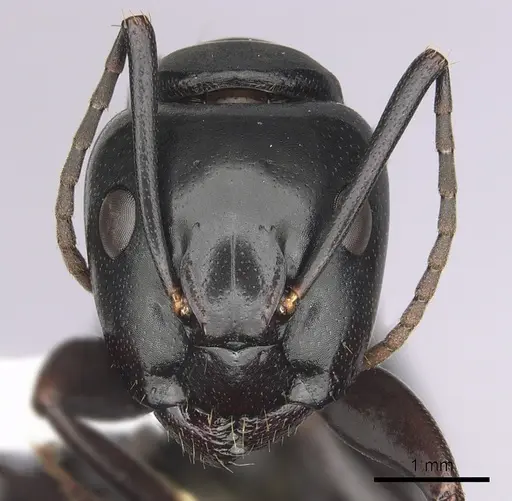
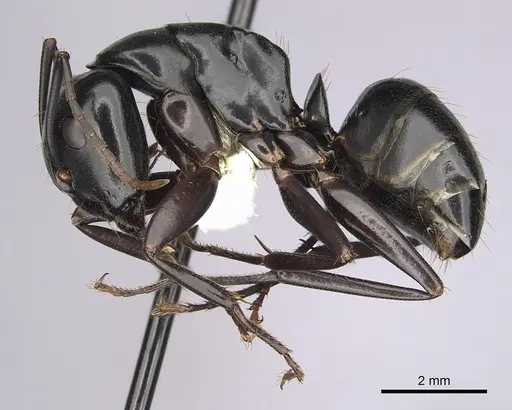
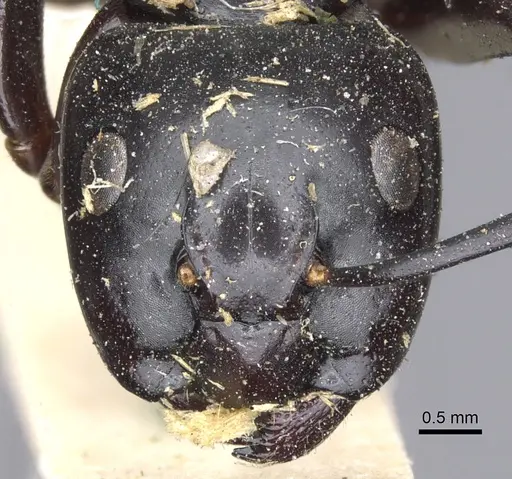
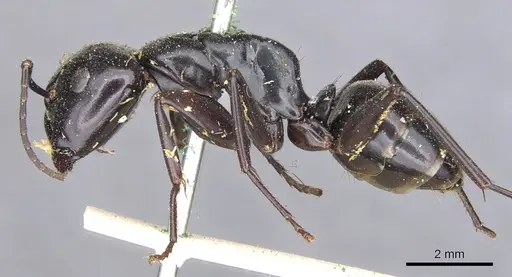
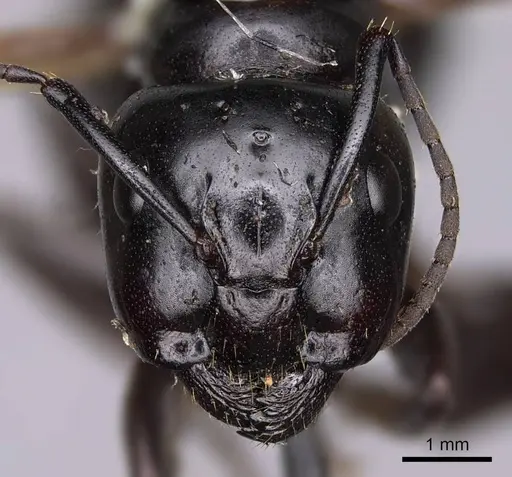
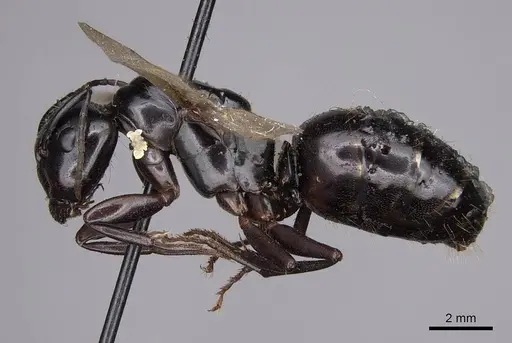
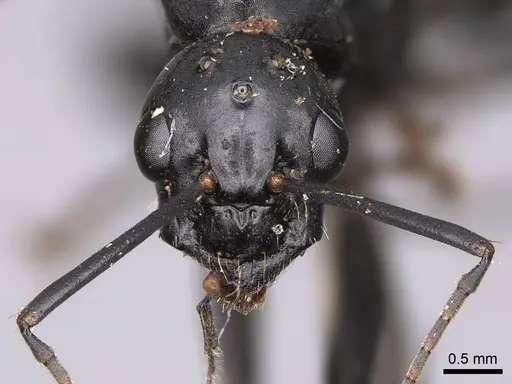
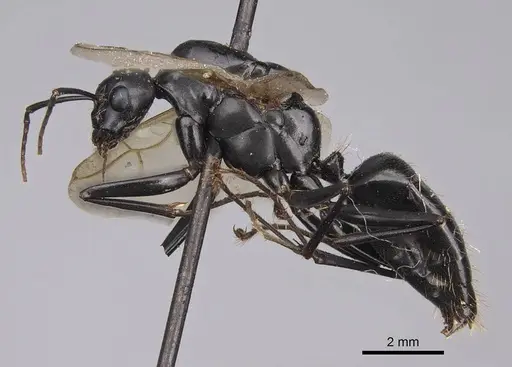
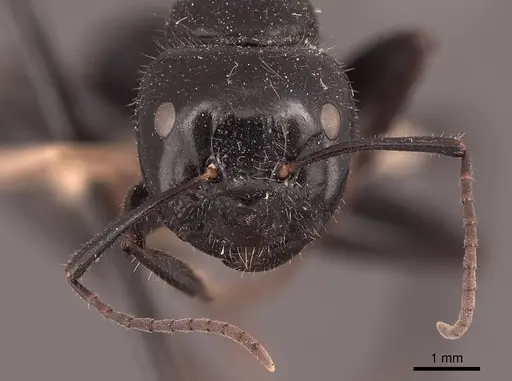
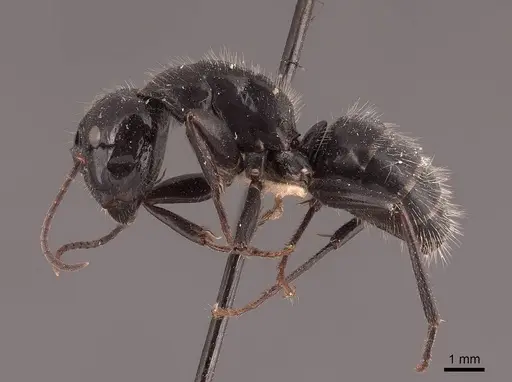
Camponotus laevigatus is a jet-black carpenter ant native to California and the western United States. These ants are entirely concolorous black with smooth, glossy surfaces - both majors and minors are predominantly black, with minors having slightly darker brown appendages. They are an arboreal species that nests in dead branches and trunks of oak trees (Quercus species), making them unique among carpenter ants. This species was previously known as Camponotus quercicola until taxonomic revisions in 2021 confirmed it as the same species . They are the dominant ant in many California oak woodlands and can be found at elevations from 4,000 to 11,000 feet . They are primarily nocturnal, with foragers active at night feeding on tree exudates, honeydew, and insects [AntWiki]. What makes C. laevigatus stand out is their arboreal lifestyle - unlike many carpenter ants that nest in wood at ground level, these ants specifically inhabit the branches and trunks of oak trees. They feed on tree exudates, honey baits, living insects, and have even been observed collecting bird droppings. This species is probably polygynous (multiple queens per colony), which is somewhat unusual for carpenter ants [AntWiki].
Quick Summary
- Difficulty: Medium
- Origin & Habitat: California oak woodlands and Jeffrey pine forests in the western United States, ranging from Montana and New Mexico to British Columbia and Mexico [2][4]. They nest arboreally in dead branches and trunks of oak trees (Quercus wislizenii and other Quercus species) [1][3].
- Colony Type: Probably polygynous (multiple queens), colonies likely have several egg-laying queens working together [3]. Multiple queens may coexist in the same nest.
- Size & Growth:
- Queen: Approximately 15-18mm, inferred from genus patterns (Camponotus queens typically 15-20mm)
- Worker: Majors: approximately 12-15mm, Minors: approximately 9-11mm (converted from Weber's length measurements)
- Colony: Likely several thousand workers at maturity (typical for Camponotus)
- Growth: Moderate, slower than some carpenter ants due to arboreal lifestyle
- Development: 6-8 weeks at optimal temperature (inferred from typical Camponotus development) (Development time is temperature-dependent, warmer conditions speed development)
- Antkeeping:
- Temperature: Keep at room temperature (20-24°C). They tolerate a range from 18°C to 28°C. A gentle temperature gradient allows workers to choose their preferred zone.
- Humidity: Moderate humidity (50-60%). As an arboreal species, they prefer drier conditions than ground-nesting ants. Allow the nest to dry out between water additions.
- Diapause: Yes, these are temperate ants that benefit from a winter rest period. Reduce temperature to 10-15°C for 2-3 months during winter.
- Nesting: Arboreal setup works best, cork, oak branches, or a Y-tong/plaster nest with dry conditions. They prefer narrow chambers and tunnels. Test tubes can work for founding colonies but may need to transition to more naturalistic setups as the colony grows.
- Behavior: These ants are primarily nocturnal, so you'll see most activity in the evening and night hours. They are not particularly aggressive but will defend their nest if threatened. Workers are medium-sized and can deliver a mild bite combined with formic acid spray (typical of Formicinae subfamily). Escape risk is moderate, use standard barrier methods. They are attracted to sweet foods and will readily take sugar water or honey.
- Common Issues: nocturnal activity may seem like colony inactivity during the day, arboreal nature means they prefer drier nests, overwatering causes problems, Argentine ants (Linepithema humile) are a major threat in the wild and can invade captive setups if near windows/doors, colonies may be slow to establish compared to ground-nesting carpenter ants, test tube setups need careful water management, too much moisture leads to mold
Nest Preferences and Housing
Camponotus laevigatus is an arboreal species that naturally nests in dead oak branches and tree trunks. In captivity, they do well in cork nests, oak branch setups, or Y-tong/plaster formicaria with narrow chambers. The key is providing dry conditions, these ants prefer less humidity than ground-nesting carpenter ants. For founding colonies, a test tube setup works fine, but monitor moisture carefully and avoid condensation buildup. As the colony grows, consider transitioning to a more naturalistic arboreal setup that mimics their natural oak tree habitat. They will excavate soft materials if given the opportunity. [1][3]
Feeding and Diet
In the wild, C. laevigatus feeds on tree exudates (sap and other plant secretions), honeydew from aphids and scale insects, living insects they capture, and even bird droppings. In captivity, they readily accept sugar water, honey, or maple syrup as their primary energy source. For protein, offer dead insects like mealworms, crickets, or fruit flies. They are nocturnal foragers, so place food in the outworld in the evening and remove uneaten portions after 24-48 hours. Fresh protein should be offered 2-3 times per week depending on colony size. Avoid overfeeding, excess food leads to mold problems in their dry nest environment. [3]
Temperature and Seasonal Care
Keep your colony at room temperature (20-24°C) for optimal activity and growth. They can tolerate temperatures from 18°C to 28°C, but avoid extremes. During the winter months, these temperate ants benefit from a diapause period, reduce temperatures to 10-15°C for 2-3 months. This mimics their natural seasonal cycle and helps maintain colony health long-term. You can accomplish this by moving the colony to a cooler location like an unheated garage or basement (if temperatures stay above freezing). Do not feed during diapause and minimize disturbance. Return to normal temperatures gradually in spring. [2]
Behavior and Colony Dynamics
This species is primarily nocturnal, meaning you'll see the most activity from your workers during evening and night hours. This can be surprising for keepers expecting daytime activity. They are not particularly aggressive but will protect their nest if threatened, majors can deliver a mild bite combined with formic acid spray (they lack a functional sting but can spray formic acid from their acidopore). The colony structure appears to be polygynous (multiple queens), which is somewhat unusual for carpenter ants. This means multiple egg-laying queens may coexist in the same nest. Workers vary in size with distinct major and minor castes, majors have enlarged heads for cutting and defending, while minors handle most foraging and brood care. They are dominant ants in their native California oak communities and compete successfully with other ant species. [3][4]
Growth and Development
Camponotus laevigatus colonies grow at a moderate pace typical of carpenter ants. A newly mated queen will seal herself in a chamber and lay eggs after a few weeks. The first workers (nanitics) will emerge in about 6-8 weeks under warm conditions. These initial workers are smaller than normal workers but will begin foraging and caring for subsequent brood. Growth accelerates as more workers hatch, but overall development is slower than many ground-nesting species. A mature colony may reach several thousand workers over several years. Patience is key with this species, they are not fast growers but can become long-lived colonies.
Common Problems and Solutions
The biggest challenge with C. laevigatus is their nocturnal nature, beginners may think their colony is dying when they're simply resting during the day. They are arboreal by nature, so keeping them too humid leads to mold and colony failure. Always allow the nest to dry between water additions. Argentine ants (Linepithema humile) are a major competitor in the wild and should be kept away from your ant room. Test tube setups can flood if the water reservoir is too large, use small cotton plugs and check regularly. Finally, these ants are skilled climbers and can escape through tiny gaps, always use proper barrier methods like fluon on test tube rims. [3]
Frequently Asked Questions
How long does it take for Camponotus laevigatus to produce first workers?
Expect first workers (nanitics) in about 6-8 weeks after the queen lays eggs, assuming temperatures around 24°C. This is typical for Camponotus species. The queen will remain claustrated (sealed in) until her first brood emerges.
Are Camponotus laevigatus good for beginners?
They are moderate difficulty, not the easiest but not challenging either. Their nocturnal activity and arboreal nature (preference for dry conditions) require some adjustment from typical ant care. If you're comfortable with basic carpenter ant care, this species is manageable.
What do Camponotus laevigatus eat?
They primarily need sugar sources (honey, sugar water, maple syrup) for energy. For protein, offer small dead insects like mealworms, crickets, or fruit flies. They will also collect bird droppings in the wild, but this isn't necessary in captivity.
Do Camponotus laevigatus need hibernation?
Yes, they benefit from a winter rest period. Reduce temperatures to 10-15°C for 2-3 months during winter. This diapause period mimics their natural seasonal cycle in California mountains and helps maintain long-term colony health.
Can I keep multiple queens together?
This species is probably polygynous (multiple queens) in the wild, but combining unrelated foundress queens in captivity is risky and not well documented. It's generally safer to house each queen separately until she establishes a colony, then consider merging only if the colony is thriving and you have experience.
Why is my Camponotus laevigatus colony so inactive?
They are primarily nocturnal! Most activity happens in the evening and night hours. During the day, workers typically rest inside the nest. This is normal behavior, not a sign of problems. Check on them after sunset to see them moving about.
What humidity level do Camponotus laevigatus need?
Keep humidity moderate (50-60%) and lean toward the drier side. As an arboreal species, they prefer drier conditions than ground-nesting ants. Allow the nest to dry between water additions and avoid condensation buildup.
When should I move my colony to a formicarium?
Move from test tube to a proper nest when the colony reaches several hundred workers and you notice workers avoiding the test tube setup. For C. laevigatus, this is typically after 1-2 years. A cork nest or Y-tong works well for this arboreal species.
Are Camponotus laevigatus invasive?
No, they are native to the western United States and northern Mexico. They are not considered invasive and are actually native to California oak woodlands. However, never release ant colonies into the wild outside their natural range.
Report an Issue
The current care sheet is based fully on literature. See inconsistencies, or something that's incorrect? Please , it will be resolved after review from an admin. Contributing to the blogs tab also helps providing information, to make us be able to further improve the caresheets. Thank you for your support!
References

This caresheet is licensed under CC BY-SA 4.0 .
Community Blogs
CASENT0005349
View on AntWeb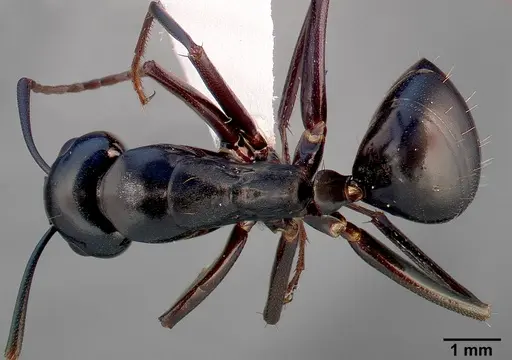
CASENT0280018
View on AntWeb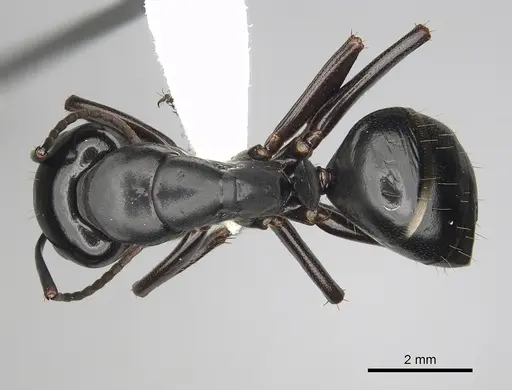
CASENT0903603
View on AntWeb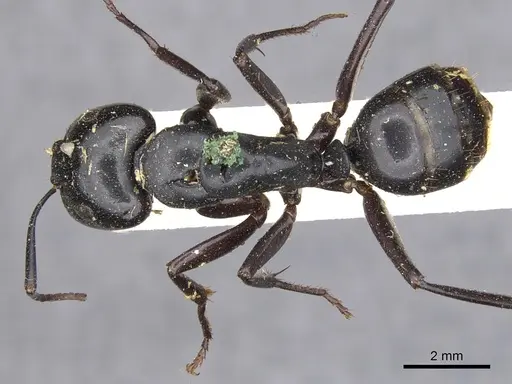
CASENT0923033
View on AntWeb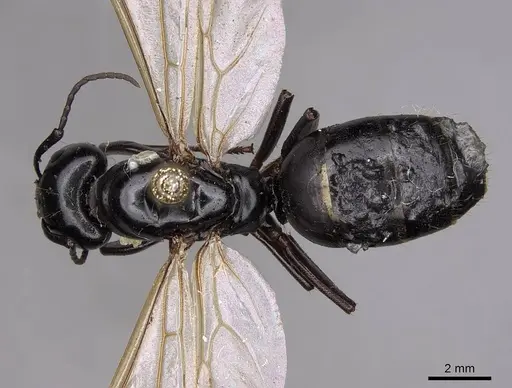
CASENT0923034
View on AntWeb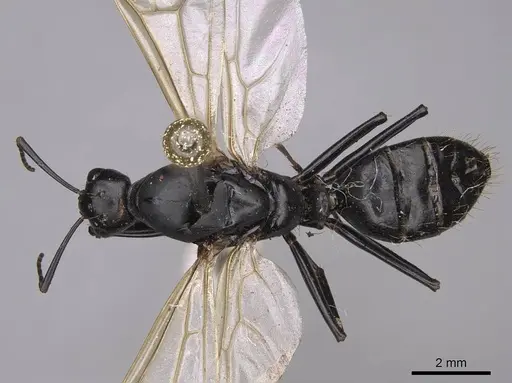
FMNHINS0000045786
View on AntWeb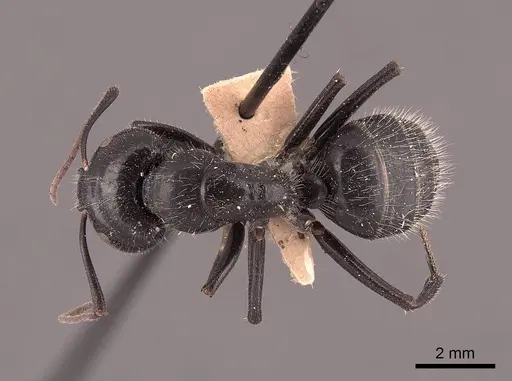
Literature
Loading distribution map...Loading products...