
Camponotus jodina
- Sci. Name
- Camponotus jodina
- Subgenus
- Myrmosaga
- Tribe
- Camponotini
- Subfamily
- Formicinae
- Author
- Rasoamanana <i>et al.</i>, 2017
- Distribution
- Found in 1 countries
Introduction
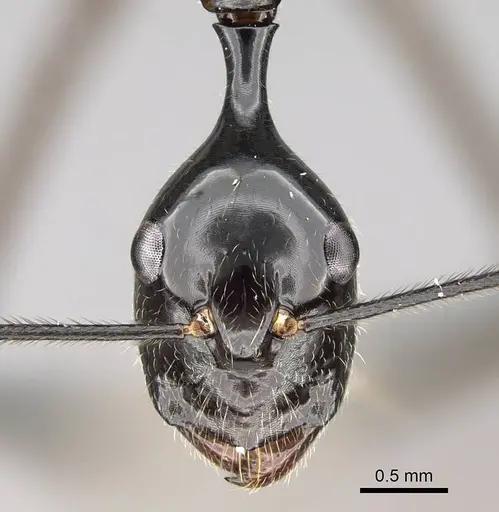
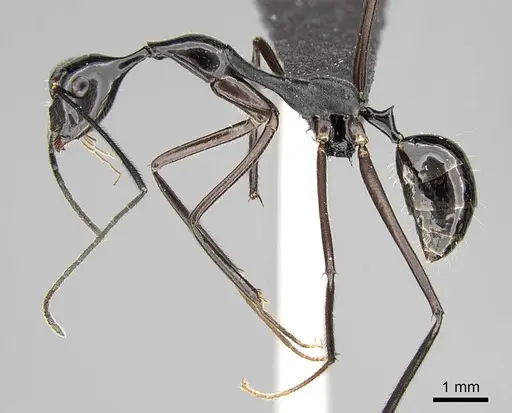
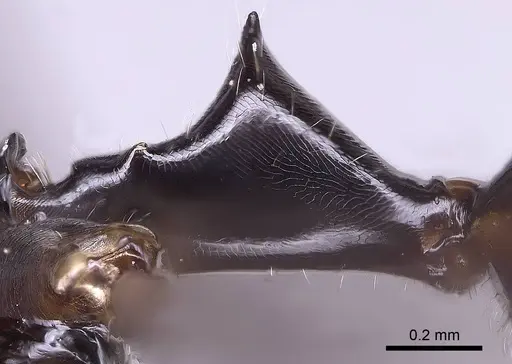
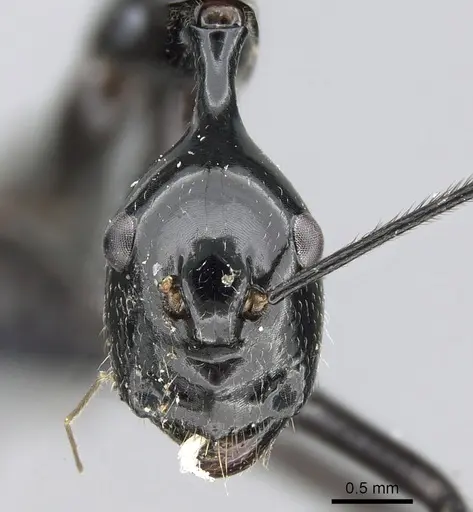
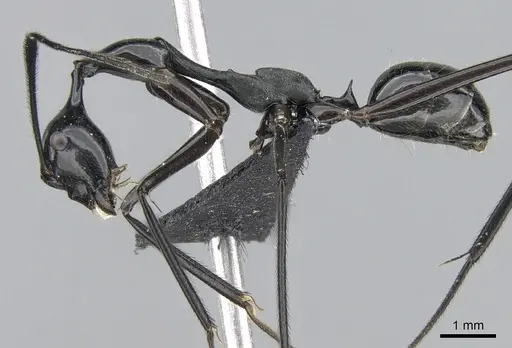
Camponotus jodina is an extremely rare rainforest ant from northeastern Madagascar, known only from two worker specimens collected in Parc National de Zahamena . Workers are dark brown throughout, with a distinctive long neck extending from the head and a petiole that tapers to a blunt upward-pointing spine - this feature inspired their name, as 'jodina' means 'directed upward' in Malagasy . These ants were found foraging on low vegetation in rainforest habitat at elevations around 765-780m . What makes C. jodina particularly interesting is Batesian mimicry - it copies the appearance and behavior of the aggressive Aphaenogaster swammerdami group, allowing it to forage safely alongside these more aggressive ants .
Quick Summary
- Difficulty: Expert
- Origin & Habitat: Parc National de Zahamena, northeastern Madagascar, rainforest habitat at 765-780m elevation [1]
- Colony Type: Unknown, only two workers have ever been collected, and no queens or colony structure have been documented [1]
- Size & Growth:
- Queen: Unknown, queen caste has not been described [1]
- Worker: Size data unavailable, only head measurements exist (CS 1.84mm), not total body length [1]
- Colony: Unknown, only two workers ever collected [1]
- Growth: Unknown
- Development: Unknown, no breeding or development data exists for this species (This is a pure estimate based on genus-level patterns, not species-specific data)
- Antkeeping:
- Temperature: Temperature requirements are unconfirmed. As a tropical rainforest species from Madagascar, they likely prefer warm conditions. Start around 22-26°C and observe colony behavior.
- Humidity: Humidity requirements are unconfirmed. As a rainforest species, they likely need higher humidity. Keep the nest substrate consistently moist but not waterlogged.
- Diapause: Unknown, no data on overwintering requirements. As a tropical rainforest species, they likely do not require a true diapause.
- Nesting: Nesting preferences are unconfirmed. In the wild, they were found foraging on low vegetation in rainforest. In captivity, a small Y-tong (AAC) nest with appropriately scaled chambers would be suitable.
- Behavior: Behavior is poorly documented. Workers were found foraging on low vegetation in the wild, suggesting they are active foragers. As Camponotus (Formicinae subfamily), they lack a functional sting and instead may bite and spray formic acid as defense. Their small size means escape prevention is critical. The mimicry behavior suggests they are bold foragers that may travel alongside Aphaenogaster models [2].
- Common Issues: very limited data means care recommendations are largely inferred from genus patterns, not species-specific evidence, tiny worker size requires excellent escape prevention, use fine mesh and tight-fitting lids, no information on founding behavior or queen requirements, obtaining a colony may be impossible as this species is rarely collected, mimicry behavior suggests they may be bold foragers that explore widely, increasing escape risk, only two specimens have ever been documented, making this one of the least-known ant species in the world
Why This Species Is Special
Camponotus jodina is one of the rarest and least-studied ants in the world. It belongs to the subgenus Myrmopytia, a group of carpenter ants endemic to Madagascar that have evolved to mimic other ant species. This is called Batesian mimicry, the harmless Camponotus copies the appearance of the aggressive Aphaenogaster swammerdami group to gain protection from predators. Four Camponotus species in Madagascar exhibit this mimicry, including C. jodina, C. karaha, C. longicollis, and C. imitator. These mimics are often found foraging right alongside their Aphaenogaster models [2]. The species name 'jodina' comes from the Malagasy word meaning 'directed upward, ' referring to the distinctive upward-pointing spine on their petiole [1]. This makes them morphologically unique even among their mimic relatives.
Housing and Nest Setup
Because this species is known only from rainforest specimens collected at 765-780m elevation, aim to replicate those conditions in captivity [1]. Use a small nest scaled to their tiny worker size, a Y-tong (AAC) nest with narrow chambers works well. The nest should have tight-fitting connections to the outworld since these small ants are excellent escape artists. Maintain moderate to high humidity inside the nest area. Provide a water tube for drinking water. Since workers foraged on low vegetation in the wild, include some climbing structures in the outworld.
Feeding and Diet
As a Camponotus species, C. jodina likely has a typical carpenter ant diet: they probably consume honeydew (offer sugar water or diluted honey), small insects for protein, and occasionally seeds or fruit. However, no direct feeding observations exist for this species. The mimicry behavior suggests they are active foragers that likely discover food sources readily. Feed small prey items appropriate to their tiny size. Offer sugar water constantly via a cotton ball or feeder.
Temperature and Seasonal Care
Temperature requirements are unconfirmed for this species. As a tropical rainforest species from Madagascar, they likely prefer warm conditions. A slight temperature gradient allows workers to regulate their own conditions. Avoid extreme temperatures. As a tropical species, they likely do not require a true hibernation diapause. The key is consistency, rainforest ants do not tolerate temperature swings well.
Challenges and Considerations
This is an expert-level species to keep primarily because almost no captive care information exists. Everything we know comes from just two worker specimens collected in 2009, no queens, no majors, no colony samples, and no breeding observations have ever been documented [1]. This means you will be pioneering husbandry techniques based on inference from related Camponotus species and general rainforest ant requirements. Obtaining a colony may be nearly impossible since this species is rarely collected and likely has limited distribution. If you do acquire wild-caught specimens, quarantine them carefully as parasites or pathogens from the wild can devastate captive colonies. The tiny worker size also demands excellent escape prevention, even small gaps in tubing or nest connections can allow escape.
Frequently Asked Questions
How long does it take for Camponotus jodina to go from egg to worker?
This is unknown, no development data exists for this species.
What do Camponotus jodina ants eat?
No direct feeding observations exist for this species. Based on typical Camponotus diet, they likely accept sugar sources (honey, sugar water) and small protein prey (fruit flies, tiny crickets). Offer a varied diet and remove uneaten prey within 24 hours to prevent mold.
Are Camponotus jodina good for beginners?
No. This species is not recommended for beginners. It is one of the least-studied ants in the world with virtually no captive husbandry information. Additionally, their tiny size demands excellent escape prevention, and their rainforest humidity requirements are challenging to maintain consistently. Only experienced antkeepers comfortable with pioneering care for rare species should attempt this.
How big do Camponotus jodina colonies get?
Unknown, only two workers have ever been collected, so colony size in the wild is unrecorded. Major workers have never been documented for this species.
Can I keep multiple Camponotus jodina queens together?
Unknown, queen caste and colony structure have never been documented for this species. Do not attempt combining unrelated queens without evidence they can coexist. Most Camponotus start as single-queen colonies.
What temperature should I keep Camponotus jodina at?
Temperature requirements are unconfirmed. As a tropical rainforest species, they likely prefer warm conditions. Start around 22-26°C and observe colony behavior. A slight gradient allowing workers to choose their preferred temperature is ideal.
Do Camponotus jodina need hibernation?
Unknown, no data exists on overwintering requirements. As a tropical rainforest species from Madagascar, they likely do not require a true diapause. If anything, maintain warm temperatures year-round.
What is the best nest type for Camponotus jodina?
Use a small nest scaled to their tiny worker size, a Y-tong (AAC) nest with narrow chambers works well. The key is tight chambers appropriate for very small ants and excellent escape prevention. Maintain moderate humidity inside the nest.
Why does Camponotus jodina look like a different ant species?
This is Batesian mimicry, C. jodina has evolved to copy the appearance and behavior of the aggressive Aphaenogaster swammerdami group. This protects the harmless Camponotus from predators that avoid the aggressive models. Four Malagasy Camponotus species exhibit this mimicry, and they are often found foraging alongside their Aphaenogaster models.
Report an Issue
The current care sheet is based fully on literature. See inconsistencies, or something that's incorrect? Please , it will be resolved after review from an admin. Contributing to the blogs tab also helps providing information, to make us be able to further improve the caresheets. Thank you for your support!
References

This caresheet is licensed under CC BY-SA 4.0 .
Community Blogs
CASENT0152090
View on AntWeb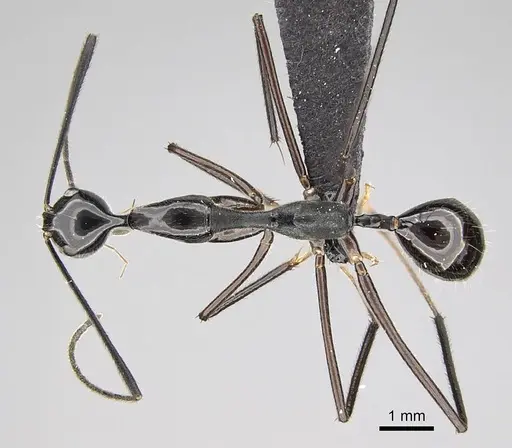
CASENT0231116
View on AntWeb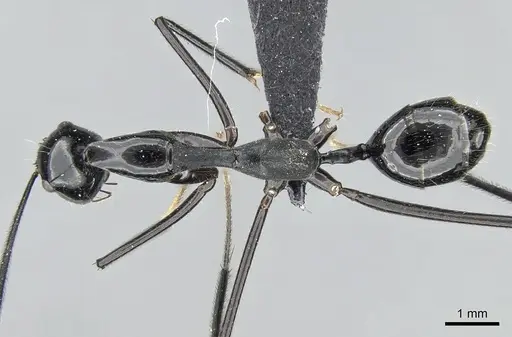
Literature
Loading distribution map...Loading products...