
Camponotus integellus
- Sci. Name
- Camponotus integellus
- Subgenus
- Myrmaphaenus
- Tribe
- Camponotini
- Subfamily
- Formicinae
- Author
- Forel, 1899
- Distribution
- Found in 5 countries
Introduction
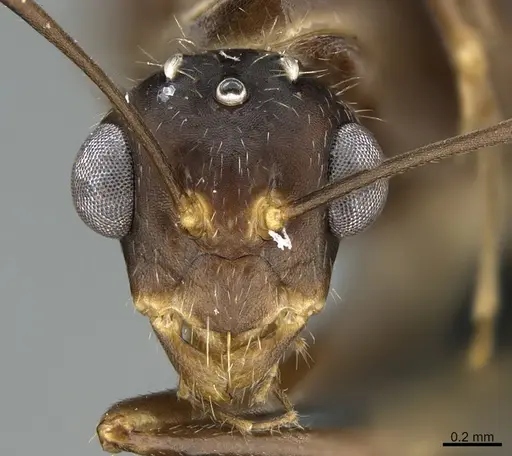
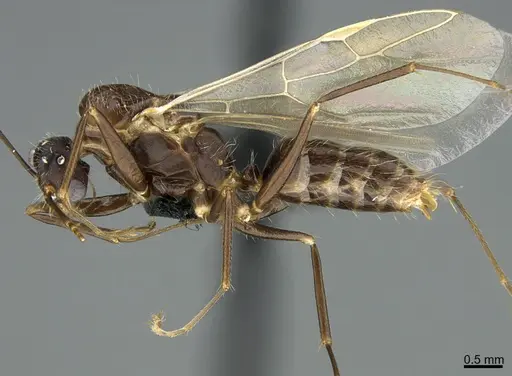
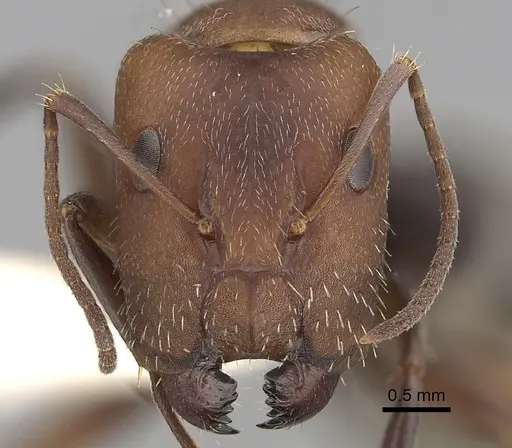
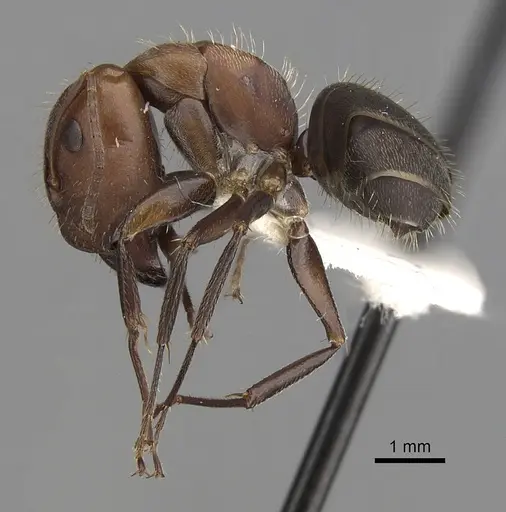
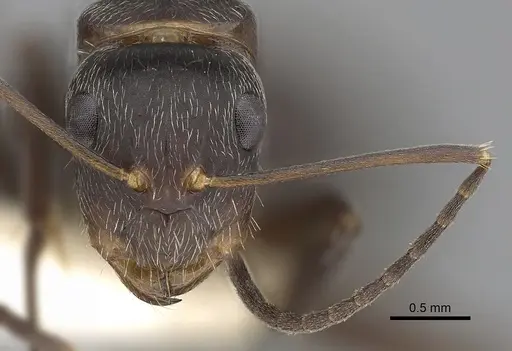
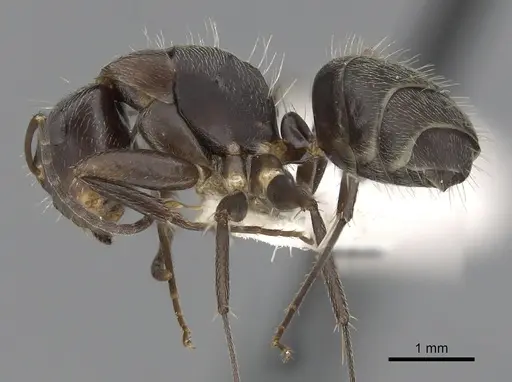
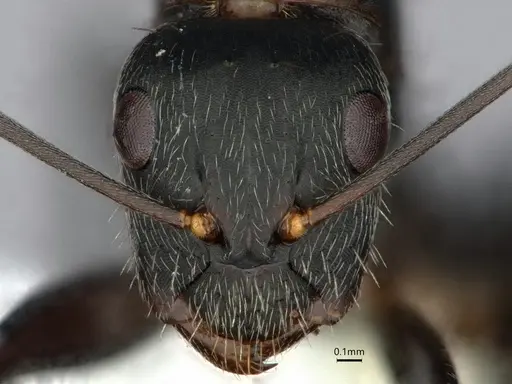
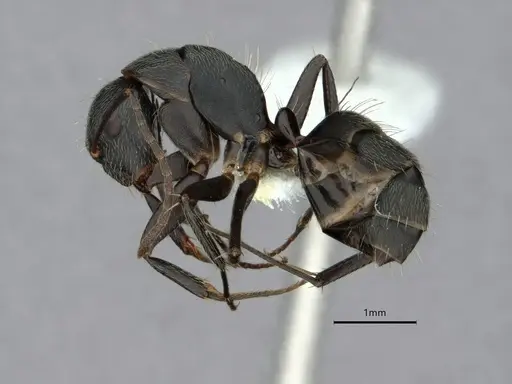
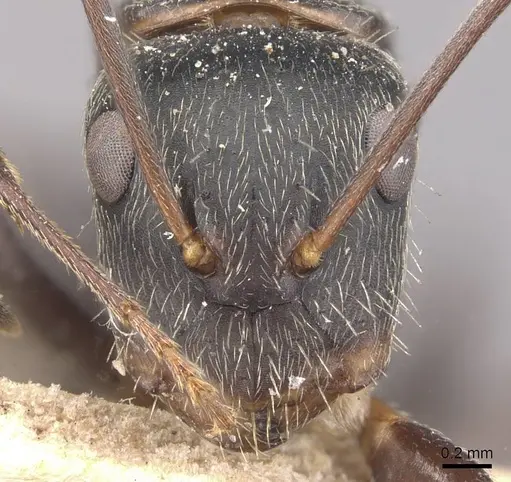
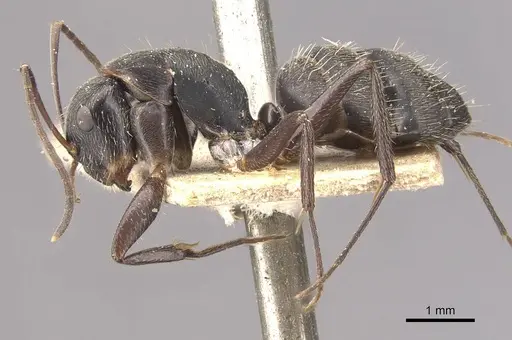
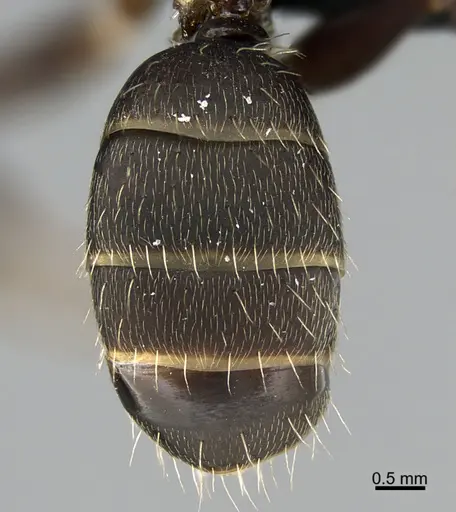
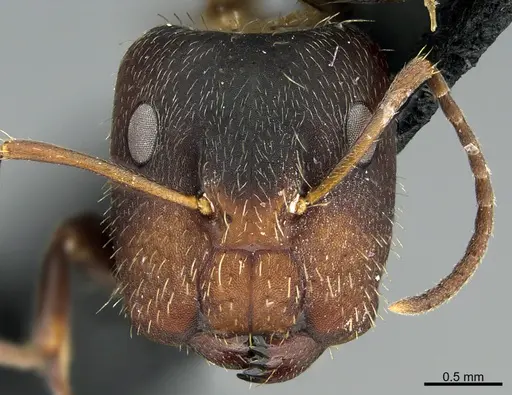
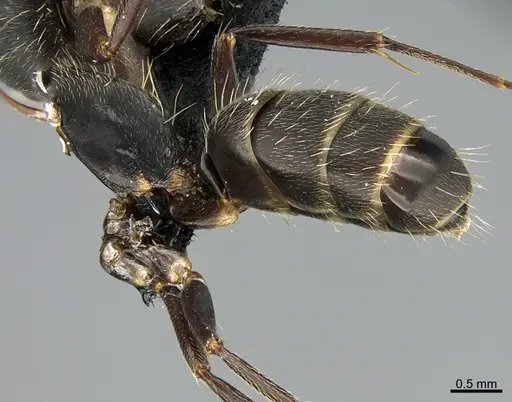
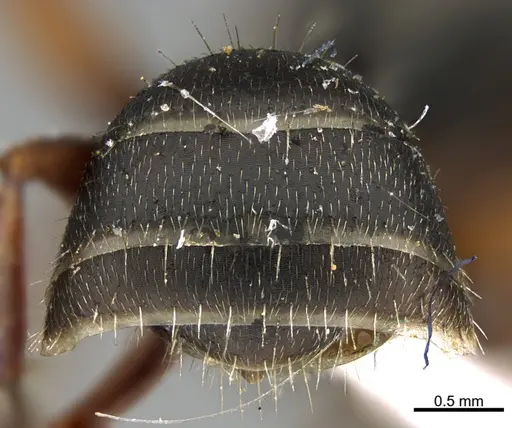
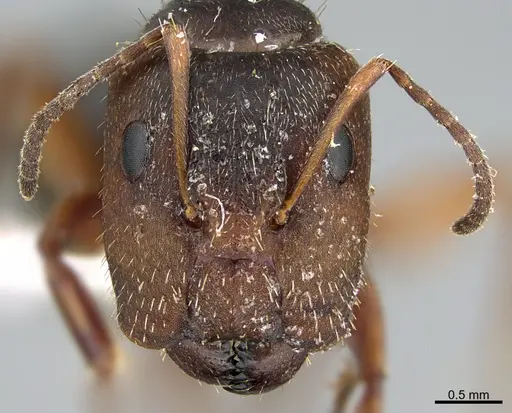
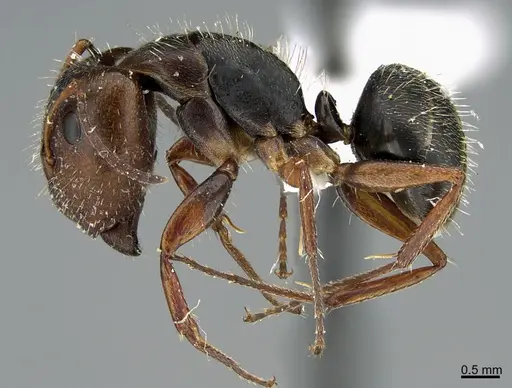
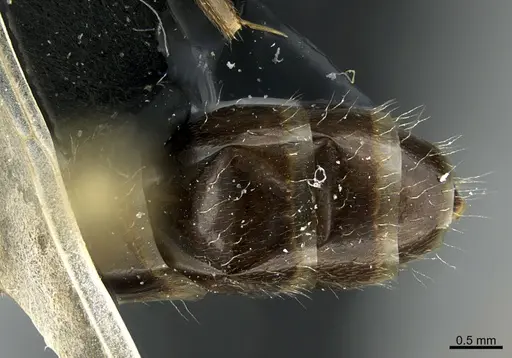
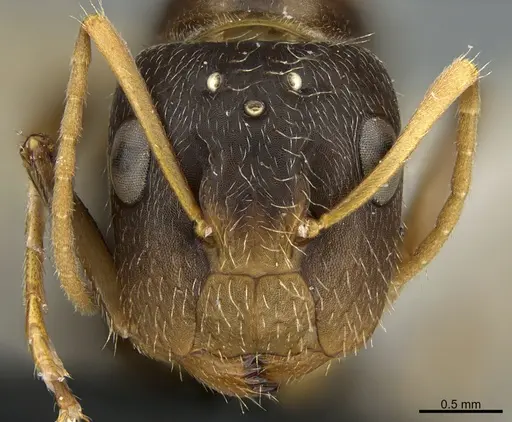
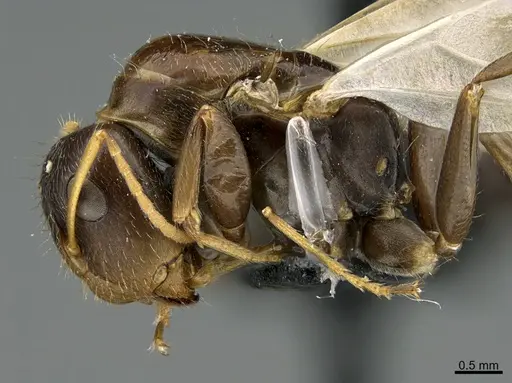
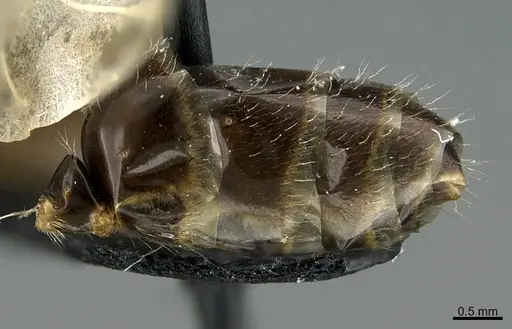
Camponotus integellus is a Neotropical carpenter ant found throughout Central and South America, from Mexico down to Brazil. Workers are polymorphic - major workers reach about 6mm total length with a distinctive square-shaped head, while minor workers are smaller at 3.5-4.8mm. The ants have a dark reddish-black coloration with lighter ferruginous areas on the head, and can be recognized by the swollen region behind their eyes and the pronounced swelling on the pronotal shoulder, especially in minor workers. Their body is covered with abundant erect hairs and golden pubescence. Queens are around 8mm total length and males approximately 6mm . This species is notable for its arboreal nesting habits - unlike many carpenter ants that nest in wood, C. integellus commonly nests in Cecropia trees and in the tree canopy, making it a true tree-dwelling ant. They tend leafhoppers during the day in Costa Rica and serve as a bioindicator species for environmental studies, meaning their presence or absence can indicate ecosystem health .
Quick Summary
- Difficulty: Medium
- Origin & Habitat: Neotropical region, found from Mexico through Central America to Brazil, including Belize, Colombia, Costa Rica, Ecuador, Guatemala, Honduras, Nicaragua, Panama, Peru, Trinidad, and Venezuela. They inhabit lowland tropical rainforests and nest in rotten logs, Cecropia trees, and the tree canopy [1][2].
- Colony Type: Colony type unconfirmed, specific literature on queen number is lacking for this species.
- Size & Growth:
- Queen: 8mm total length [1]
- Worker: Major workers ~6mm total length, minor workers 3.5-4.8mm total length [1]
- Colony: Unknown for this species
- Growth: Moderate
- Development: 6-8 weeks (estimated from typical Camponotus development patterns) (Development time is estimated from genus-level data since species-specific timing has not been documented.)
- Antkeeping:
- Temperature: Keep at 24-28°C, being a Neotropical lowland species, they prefer warm conditions. A heating cable on one side of the nest creates a temperature gradient allowing the ants to self-regulate.
- Humidity: Moderate to high (60-80%). These rainforest ants need moisture but not saturation. Keep the nest substrate consistently damp but not waterlogged, with some drier areas available.
- Diapause: No, as a tropical species, they do not require hibernation.
- Nesting: Arboreal preferences, they naturally nest in Cecropia trees and rotting logs in the canopy. In captivity, a Y-tong (AAC) nest or plaster nest works well. Provide climbing structures and bark pieces since they are accustomed to elevated nesting sites.
- Behavior: Generally calm and non-aggressive for a large carpenter ant. They are arboreal and spend time tending leafhoppers for honeydew. Workers are active foragers during the day. As with other Formicinae ants, they lack a functional sting and instead spray formic acid from their acidopore when threatened, this is a defensive spray, not a sting. They are not escape artists compared to tiny ants, but standard escape prevention is still recommended.
- Common Issues: tropical species may struggle in cool, dry environments, keep warm and humid, arboreal nesting means they need climbing structures and vertical space in their outworld, colonies grow slowly in the first year, do not overfeed, wild-caught colonies may have parasites that can devastate captive populations, major workers are heavy and can damage lightweight nest materials if they try to burrow
Housing and Nest Setup
Camponotus integellus is an arboreal species, so the setup should reflect their natural preference for elevated nesting sites. A Y-tong (AAC) acrylic nest or plaster formicarium works well, these provide the dark, humid conditions they prefer while allowing observation of the colony. Add climbing structures in the outworld like cork bark, twigs, or artificial plants since they are accustomed to the tree canopy. A test tube setup works for founding colonies, use a water tube for humidity and keep it in a warm, dark location. Once the colony reaches 20-30 workers, move them to a proper formicarium. They do best with moderate humidity (around 60-80%) and temperatures in the mid-to-high 20s Celsius. [1][2]
Feeding and Diet
Like other Camponotus species, C. integellus is omnivorous. They tend leafhoppers in the wild to collect honeydew, so sugar sources are important. Offer sugar water, honey, or diluted maple syrup regularly, this should be available at all times once workers emerge. For protein, provide insects like fruit flies, small crickets, mealworms, or wax moths. Feed protein 2-3 times per week, adjusting based on colony size. Remove any uneaten prey after 24 hours to prevent mold. During the founding stage, the queen does not eat, she survives entirely on stored fat reserves. Once workers arrive, they will collect food and the colony's consumption will increase steadily. [1]
Temperature and Seasonal Care
As a Neotropical species from lowland tropical forests, C. integellus prefers warm conditions. Keep the nest area at 24-28°C, this range supports normal activity and brood development. A heating cable placed on one end of the nest creates a temperature gradient so ants can move to their preferred spot. They do not require hibernation since they are adapted to year-round warm conditions in the tropics. However, avoid temperatures above 30°C as this can stress the colony. Room temperature in most homes (20-24°C) may be slightly cool, consider using a small heat mat or placing the nest near a warm spot. Watch for behavioral cues: if workers cluster near the heat source, increase temperature slightly, if they avoid it and seem sluggish, the area may be too warm. [1]
Colony Development and Growth
C. integellus follows typical Camponotus development patterns. The queen seals herself in a chamber and does not leave to forage, she survives on stored body fat until her first workers emerge. From egg to first worker (nanitic), expect approximately 6-8 weeks at optimal temperature, though this is estimated from genus-level data since species-specific timing has not been documented. The first workers (nanitics) are typically smaller than normal minor workers and may take several weeks to fully harden. Growth is moderate, do not expect rapid expansion. A healthy founding colony might reach 30-50 workers in the first year. Major workers appear as the colony grows, typically when the population reaches 100+ workers. These larger workers have the distinctive square-shaped head and swollen areas behind the eyes that help identify this species. Full colony maturity takes several years. [1]
Behavior and Temperament
This is a relatively calm carpenter ant compared to some more aggressive Camponotus species. Workers are day-active foragers and will readily explore the outworld in search of food. They communicate through chemical trails, once a worker finds a food source, others will follow. As a Formicinae ant, they lack a sting but will spray formic acid from their acidopore when threatened. They are not particularly aggressive toward keepers and usually only defend when the nest is directly threatened. Their arboreal nature means they are comfortable climbing and may explore vertical spaces readily. The species is known for tending leafhoppers, in the setup, they may show interest in sweet liquids similar to how they would tend aphids or leafhoppers in the wild. Standard containment with Fluon on container edges is still recommended. [1][2]
Frequently Asked Questions
Can I keep Camponotus integellus in a test tube?
Yes, test tubes work perfectly for founding colonies. Use a water tube for humidity and keep the tube in a warm, dark location. Once the colony reaches 20-30 workers, transfer to a proper formicarium like a Y-tong or plaster nest.
How long does it take for Camponotus integellus to produce first workers?
Expect 6-8 weeks from egg to first worker at optimal temperature (24-28°C). This is estimated from typical Camponotus development patterns since species-specific timing has not been documented. The first workers (nanitics) will be smaller than normal workers.
What do Camponotus integellus eat?
They are omnivorous. Offer sugar water, honey, or maple syrup constantly once workers emerge. For protein, feed insects like fruit flies, small crickets, or mealworms 2-3 times per week. They naturally tend leafhoppers for honeydew in the wild.
Are Camponotus integellus good for beginners?
They are rated Medium difficulty. They are more forgiving than some tropical species but do require warm temperatures (24-28°C) and moderate humidity. Their slower growth compared to some ants may test beginner patience.
Do Camponotus integellus need hibernation?
No, as a Neotropical species they do not require hibernation. Keep them warm year-round (24-28°C). They may show slightly reduced activity during cooler periods but will not enter true diapause.
When should I move Camponotus integellus to a formicarium?
Move from test tube to a proper nest when the colony reaches 20-30 workers. A Y-tong (AAC) or plaster nest works well. Provide climbing structures in the outworld since they are arboreal ants.
How big do Camponotus integellus colonies get?
Exact colony size is not documented for this species. Camponotus colonies typically reach several thousand workers over several years. Major workers appear when the colony reaches around 100+ workers.
Why is my Camponotus integellus colony dying?
Common causes include: temperatures below 24°C (keep them warm), too dry conditions (maintain humidity), mold from overwatering, or parasites from wild-caught colonies. Check temperature and humidity first.
Can I keep multiple Camponotus integellus queens together?
Colony type is unconfirmed for this species. Combining unrelated queens will likely result in fighting. Only keep one queen per colony unless specific research confirms they can be polygynous.
Report an Issue
The current care sheet is based fully on literature. See inconsistencies, or something that's incorrect? Please , it will be resolved after review from an admin. Contributing to the blogs tab also helps providing information, to make us be able to further improve the caresheets. Thank you for your support!
References

This caresheet is licensed under CC BY-SA 4.0 .
Community Blogs
ANTWEB1041564
View on AntWeb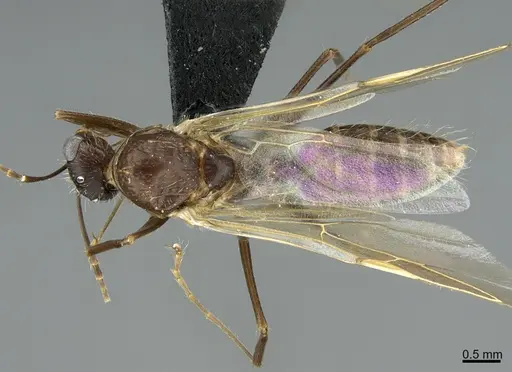
CASENT0280068
View on AntWeb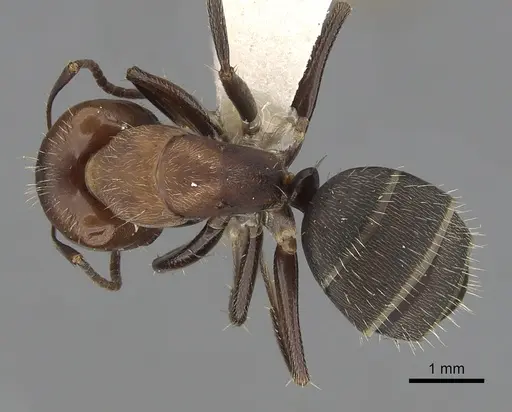
CASENT0280069
View on AntWeb
CASENT0882053
View on AntWeb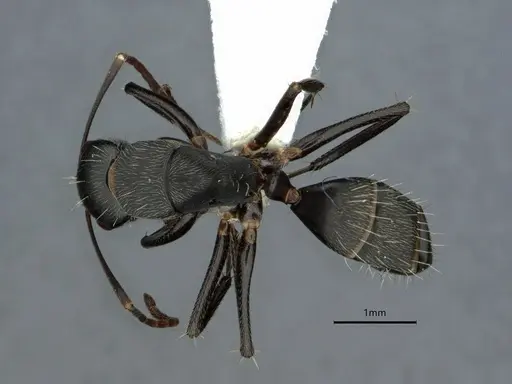
CASENT0910632
View on AntWeb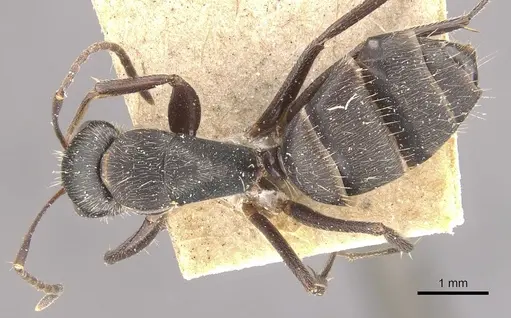
UTEPENTO26085
View on AntWeb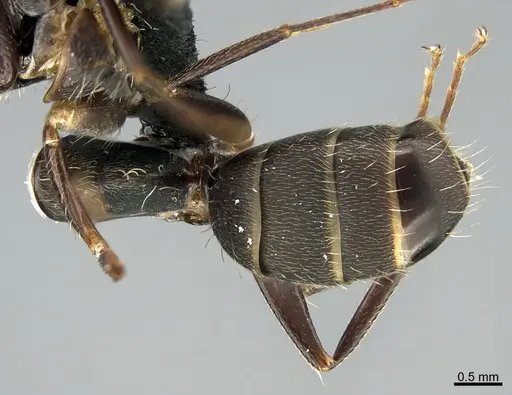
UTEPENTO26086
View on AntWeb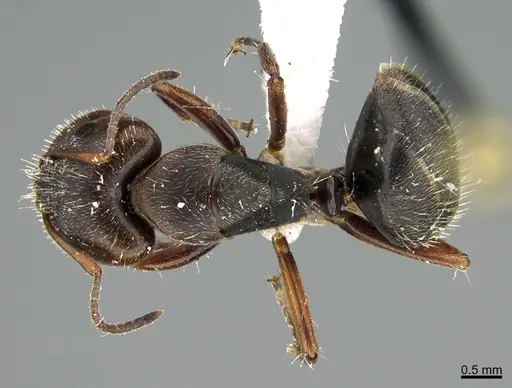
UTEPENTO26087
View on AntWeb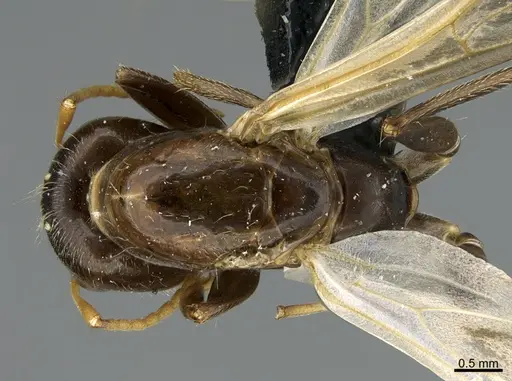
Literature
Loading distribution map...Loading products...