
Australian Honeypot Ant
Camponotus inflatus
- Sci. Name
- Camponotus inflatus
- Subgenus
- Myrmophyma
- Tribe
- Camponotini
- Subfamily
- Formicinae
- Author
- Lubbock, 1880
- Common Name
- Australian Honeypot Ant
- Distribution
- Found in 1 countries
Introduction
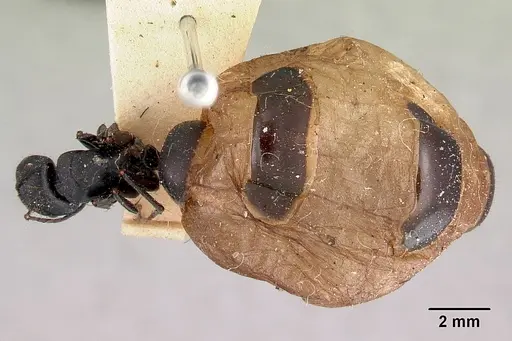
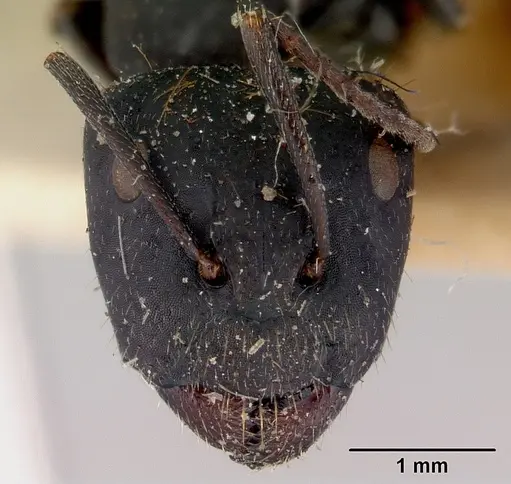
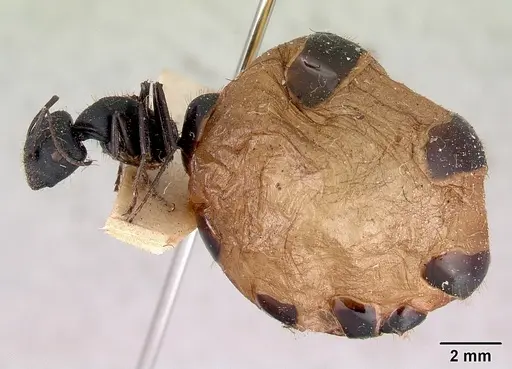
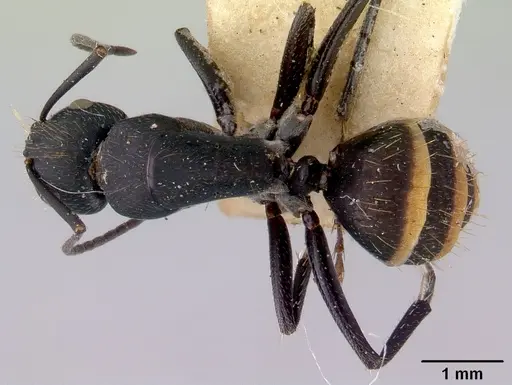
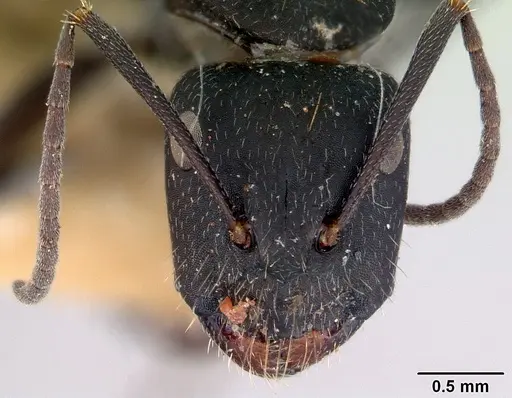
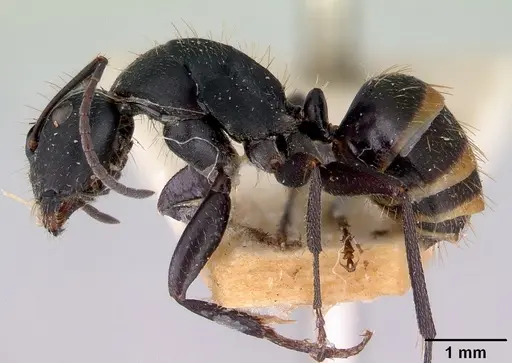
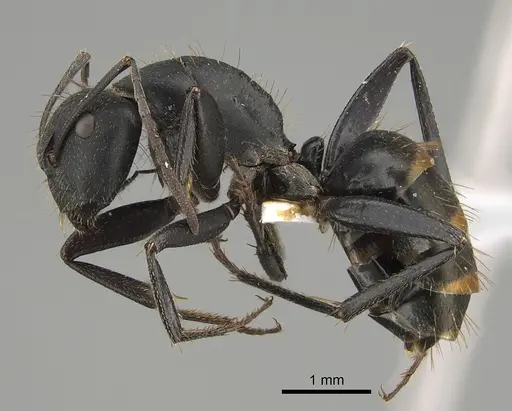
Camponotus inflatus is a large, black ant native to central and South Australia, found around Uluru, the Musgrave Ranges, and across South Australia . Major workers and repletes reach about 16.5 mm in length, with black bodies, pale legs, and a heart-shaped petiole . They live in sandy mulga scrub, nesting deep underground where they tend aphids on mulga roots and visit extrafloral nectaries . These ants have a specialized 'replete' caste - worker ants that store liquid food in their abdomens until they become translucent and immobile, hanging from the nest ceiling . Aboriginal Australians have harvested these 'honey ants' for thousands of years, calling them 'Yarumpa' .
Quick Summary
- Difficulty: Medium
- Origin & Habitat: Central and South Australia, mulga woodland and sandy plains [1][3][2]
- Colony Type: Colony structure is unconfirmed in available research, likely monogyne based on Camponotus patterns
- Size & Growth:
- Antkeeping:
- Temperature: Keep warm, roughly 22-25°C, based on arid habitat [3][1]
- Humidity: Provide a humidity gradient, mostly dry nest with one small moist area, as they nest deep underground [1][3]
- Diapause: Unknown
- Nesting: Deep vertical nests required, use tall Y-tong, plaster, or soil nests with overhead space for repletes to hang [1]
- Behavior: Workers forage for nectar and honeydew, repletes remain immobile [4]. Large size makes escape prevention easy. Temperament is docile, but they can spray formic acid if threatened.
- Common Issues: repletes require vertical hanging space, if they fall and cannot right themselves, they may die., shallow nests cause stress due to their deep-burrowing instincts in nature., excessive humidity promotes mold in desert-adapted species., repletes may burst if handled roughly due to distended abdomens., colonies may refuse food if repletes are already full, monitor storage ant activity.
The Replete Caste: Living Storage Tanks
Camponotus inflatus is famous for its repletes, specialized worker ants that serve as living food storage. These workers drink large quantities of sugar-rich liquid until their abdomens distend, becoming translucent and golden-brown [5][8]. Repletes become largely immobile and hang from nest ceilings, acting as a 'living pantry' for the colony [4][6]. Workers feed repletes via trophallaxis, and during scarcity, repletes regurgitate stored honey [4]. In captivity, provide sugar water or diluted honey so workers can fill repletes. Ensure nests have smooth ceilings or vertical surfaces for repletes to suspend themselves.
Nest Design for Deep Burrowers
In nature, Camponotus inflatus constructs nests with vertical shafts descending 1.5-2 meters deep, with horizontal side chambers leading to replete rooms [1]. The entrance is a simple slit in the sand with no mound [1]. Captive colonies need height over width. Use tall Y-tong, plaster, or naturalistic setups with deep chambers. The nest must have chambers tall enough for repletes to hang from the roof, avoid shallow, flat setups. Provide a deep substrate layer that stays moderately moist while allowing digging.
Feeding Liquid Sugars and Protein
Wild colonies rely on honeydew from aphids on mulga roots and nectar from mulga, black corkwood, and native fuchsia flowers [4][3]. Liquid sugars are stored in repletes for dry season survival. In captivity, offer constant sugar water (10-20%) or diluted honey, plus protein sources like mealworms or crickets twice weekly. Workers need protein for brood and liquid sugar for repletes. Monitor repletes, when full, reduce sugar offerings slightly.
Temperature and Seasonal Care
These ants come from arid Australia with hot days and cool nights. Keep nest area around 22-25°C with a gentle gradient, based on their habitat [3][1]. Deep wild nests buffer temperature extremes, so avoid overheating the surface. Winter requirements are unknown, central Australian winters are mild. If colony slows in winter, reduce feeding and maintain moderate temperatures.
Behavior and Foraging
Unlike many ants, Camponotus inflatus does not carry debris into the nest [1]. Workers forage for liquid nutrition and prey. Repletes remain immobile in the nest, tapped by hungry nestmates for regurgitation [4]. Workers are likely active during the day. They are not aggressive but can bite and spray formic acid if threatened.
Frequently Asked Questions
Can I keep Camponotus inflatus in a test tube?
Test tubes are suitable for founding queens temporarily, but move the colony to a tall formicarium quickly. These ants need vertical space for repletes to hang, and their deep-nesting instincts make long-term test tube housing unsuitable.
How long until first workers for Camponotus inflatus?
Exact timelines are unconfirmed. Based on typical Camponotus development, expect roughly 8-12 weeks from egg to worker at 25-28°C, but this is an inference from genus patterns.
What are repletes in Camponotus inflatus?
Repletes are specialized worker ants that store liquid food in their abdomens until they become translucent and marble-sized. They hang from the nest ceiling and act as living food storage tanks for the colony during scarce times [5][4].
How big do Camponotus inflatus colonies get?
Maximum colony size is unknown in research. Based on Camponotus genus patterns, they may reach several thousand workers, but growth may be slow initially.
What do Camponotus inflatus eat?
They primarily collect honeydew from aphids on mulga roots and nectar from mulga trees, black corkwood, and native fuchsia [4]. In captivity, feed sugar water or diluted honey plus protein insects like mealworms or crickets.
Do Camponotus inflatus need hibernation?
Their exact winter requirements are unknown. They come from central Australia where winters are mild. They likely slow down in cooler months but may not require a true diapause. Reduce feeding if activity decreases in winter.
How do I set up a nest for Camponotus inflatus repletes?
Provide tall chambers with smooth ceilings where repletes can hang vertically. Y-tong or plaster nests work well if they have height. Avoid horizontal layouts where repletes would lie on the floor, they need to hang to survive properly [1][4].
Are Camponotus inflatus good for beginners?
They are medium difficulty. While large and easy to contain, they require specialized nest design for repletes and deep nesting behavior. Beginners might find easier success with other Camponotus species before attempting honey-pot ants.
Can I keep multiple Camponotus inflatus queens together?
Combining multiple queens is not recommended. The exact colony structure is unconfirmed, but most Camponotus species are monogyne (single-queen). Pleometrosis has not been documented for this species.
Report an Issue
The current care sheet is based fully on literature. See inconsistencies, or something that's incorrect? Please , it will be resolved after review from an admin. Contributing to the blogs tab also helps providing information, to make us be able to further improve the caresheets. Thank you for your support!
References

This caresheet is licensed under CC BY-SA 4.0 .
Community Blogs
Literature
Loading distribution map...Loading products...