
Camponotus ihazofotsy
- Sci. Name
- Camponotus ihazofotsy
- Subgenus
- Mayria
- Tribe
- Camponotini
- Subfamily
- Formicinae
- Author
- Rasoamanana & Fisher, 2022
- Distribution
- Found in 1 countries
Introduction
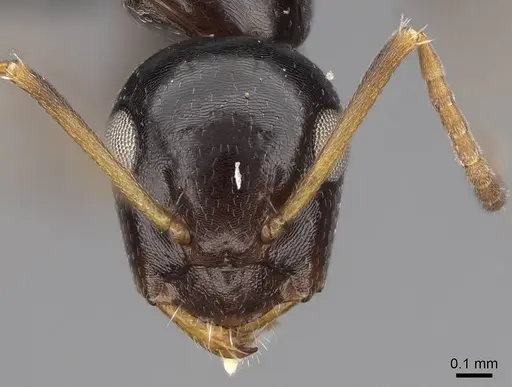
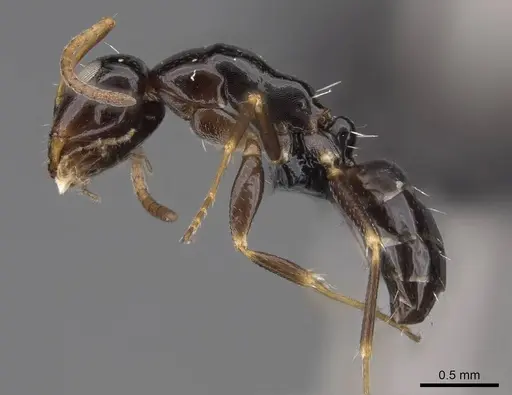
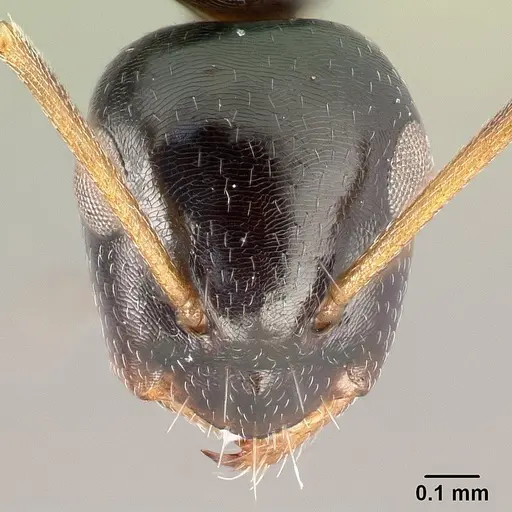
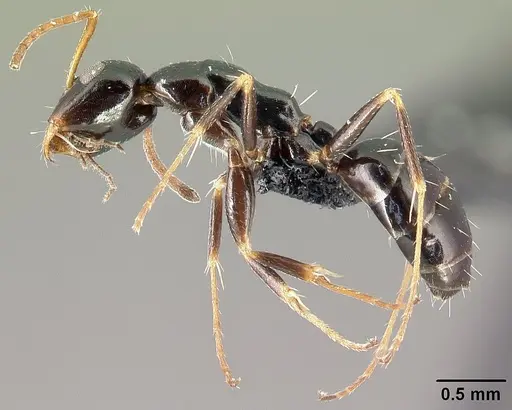
Camponotus ihazofotsy is a small ant species recently described from the dry forests of southern Madagascar. Workers have a shiny black body with reddish-brown head and mesosoma, and a distinctive cuboidal petiole (the segment between the thorax and abdomen) that sets them apart from the similar Camponotus tsimelahy . This species belongs to the Camponotus repens species group and the subgenus Mayria, which is endemic to Madagascar . All known specimens have been collected from Malaise traps set in the canopy, suggesting they are arboreal nesters in their natural habitat . The dry forest environment experiences hot days and cooler nights with seasonal rainfall patterns typical of southern Madagascar.
Quick Summary
- Difficulty: Medium
- Origin & Habitat: Madagascar, specifically the dry forests of Tsimanapetsotsa and Andohaela National Park at around 80m elevation. The habitat is tropical dry forest in the transition zone between spiny and dry deciduous forests [1].
- Colony Type: Unconfirmed, no specific data on colony structure for this species.
- Size & Growth:
- Queen: Size data unavailable, no measurements documented in the original description [1].
- Worker: Very small, inferred from Camponotus genus patterns (~3-5mm). The original description only provides head measurements (cephalic size 0.75-0.81mm), not total body length [1].
- Colony: Unknown, no colony size data available for this species [1].
- Growth: Unknown, no captive observation data available for this species.
- Development: Unconfirmed, no specific development data available for this species. (Development timing is unknown. For small Camponotus species, development typically takes several months from egg to worker, but exact timing varies by temperature and species.)
- Antkeeping:
- Temperature: Keep at 22-26°C. These are tropical ants from Madagascar, so they need warmth. A heating cable on one side of the nest creates a temperature gradient they can regulate themselves.
- Humidity: Moderate humidity around 50-60%. As arboreal nesters from dry forest, they likely prefer drier conditions than ground-nesting species. Allow the nest to partially dry between water additions.
- Diapause: Likely no true diapause, Madagascar has mild winters. However, reduce feeding and slightly lower temperatures (18-20°C) during winter months to simulate seasonal slowdown.
- Nesting: Arboreal species, they likely nest in hollow twigs, branches, or under bark in the wild. In captivity, a Y-tong (AAC) nest works well because it provides narrow, dark chambers that mimic tree hollows. Avoid overly damp substrates.
- Behavior: Not directly studied. Based on Camponotus genus patterns, workers are likely moderately active foragers, collecting honeydew and small prey. Their small size means escape prevention is important, use fine mesh barriers. They are probably not aggressive but will defend their nest if threatened. As arboreal ants, they likely explore vertical spaces.
- Common Issues: small worker size means escape prevention must be excellent, they can squeeze through tiny gaps, arboreal nature means they may not accept traditional test tube setups, consider vertical nest options, limited data means colony development in captivity is not well-documented, humidity management is tricky, too wet can be fatal for this dry forest species, wild-caught colonies may have parasites or disease that affect captive survival, no specific development or colony size data available, be prepared for unknowns
Housing and Nest Setup
Camponotus ihazofotsy is an arboreal species, meaning they naturally nest in elevated locations like hollow twigs, branches, or under bark in trees. In captivity, replicate this preference rather than using typical ground-nesting setups. A Y-tong (AAC) nest works well because it provides narrow, dark chambers that mimic tree hollows. Avoid overly moist substrates, these ants come from dry forests and prefer conditions that are noticeably drier than most captive ant setups. A small water reservoir for humidity is sufficient. If using a naturalistic setup, include vertical elements like cork bark or wooden structures they can explore and nest under. [1]
Feeding and Diet
Like other Camponotus species, C. ihazofotsy is an omnivore that accepts both sugar sources and protein. Feed them sugar water (1:3 ratio sugar to water) or honey diluted with water. For protein, offer small insects like fruit flies, small mealworms, or cricket legs. Since workers are very small, prey items should be appropriately sized. Feed protein 2-3 times per week, and keep a sugar source available at all times. Remove uneaten prey after 24-48 hours to prevent mold. In the wild, they likely forage for honeydew from sap-sucking insects and small arthropods in the forest canopy. [1]
Temperature and Seasonal Care
As a Madagascar species from dry forest habitat, C. ihazofotsy needs warm conditions year-round. Maintain temperatures between 22-26°C during the active season. A heating cable placed on one end of the nest creates a gradient that allows workers to regulate their own temperature by moving between warmer and cooler areas. During winter months, you can reduce temperatures slightly to around 18-20°C and reduce feeding frequency. This simulates their natural seasonal cycle, though Madagascar's winters are mild so they may not enter true diapause. Do not let temperatures drop below 15°C for extended periods. [1]
Colony Development and Growth
No specific data exists for colony development in captivity. The founding queen behavior is unconfirmed for this species. First workers will likely be smaller than normal minor workers (nanitics) and may take several months to emerge at optimal temperature. After the nanitics mature, the colony typically grows steadily with each subsequent brood cycle. Since minor workers are very small, the colony may appear slow to expand initially. Be patient, small Camponotus species often have extended founding phases. [1]
Handling and Observation
These are small, delicate ants that are best observed rather than handled. Their small size makes them quick and capable of squeezing through very small gaps, always use fine mesh on any ventilation holes and ensure all connections are tight. Workers are not particularly aggressive but will bite if threatened. Since they are arboreal by nature, they may be more active on vertical surfaces and may not display the typical ground-foraging behavior seen in many other ant species. Watching them navigate through a naturalistic setup with branches or cork bark can be particularly rewarding. [1]
Frequently Asked Questions
How long does it take for Camponotus ihazofotsy to raise their first workers?
Unknown, no specific development data is available for this species. For small Camponotus species, development from egg to worker typically takes 2-3 months at optimal temperature, but exact timing is unconfirmed.
What size nest should I use for Camponotus ihazofotsy?
Use a small nest with tight chambers scaled to their tiny size. A Y-tong (AAC) nest or small acrylic formicarium works well. Since they are arboreal, avoid deep soil setups, they prefer narrow, dark chambers that mimic tree hollows.
How often should I feed Camponotus ihazofotsy?
Offer protein (small insects) 2-3 times per week. Keep sugar water or honey water available at all times. Remove uneaten prey after 24-48 hours to prevent mold.
Are Camponotus ihazofotsy good for beginners?
This species is rated as Medium difficulty. The limited captive data and arboreal nature may require more attention to setup than common ground-nesting species. Experienced antkeepers should have success, beginners may find the specific humidity and nesting requirements challenging.
Do Camponotus ihazofotsy need hibernation?
No true hibernation is required. These are tropical ants from Madagascar where winters are mild. Simply reduce feeding and lower temperatures slightly (to around 18-20°C) during winter months if you wish to simulate seasonal patterns.
Why are my Camponotus ihazofotsy escaping?
Their very small worker size means they can escape through tiny gaps. Use fine mesh (at least 0.5mm) on all ventilation, check all connection points for gaps, and ensure lid seals are tight. Inspect your setup regularly.
Can I keep multiple queens together?
Not recommended. Camponotus species are typically single-queen (monogyne) colonies, though colony type is unconfirmed for this specific species. Combining unrelated queens has not been documented for this species and would likely result in fighting.
What do Camponotus ihazofotsy eat in the wild?
In their natural habitat, they likely forage in the canopy for honeydew from sap-sucking insects and small arthropods. Replicate this in captivity with sugar water and small insects.
When should I move Camponotus ihazofotsy to a formicarium?
Wait until the colony has at least 20-30 workers before moving to a formicarium. For founding colonies, a simple setup like a test tube with a small outworld works until the colony grows larger. The arboreal nature of this species means they may accept formicarium setups earlier than ground-nesting species.
Report an Issue
The current care sheet is based fully on literature. See inconsistencies, or something that's incorrect? Please , it will be resolved after review from an admin. Contributing to the blogs tab also helps providing information, to make us be able to further improve the caresheets. Thank you for your support!
References

This caresheet is licensed under CC BY-SA 4.0 .
Community Blogs
CASENT0062267
View on AntWeb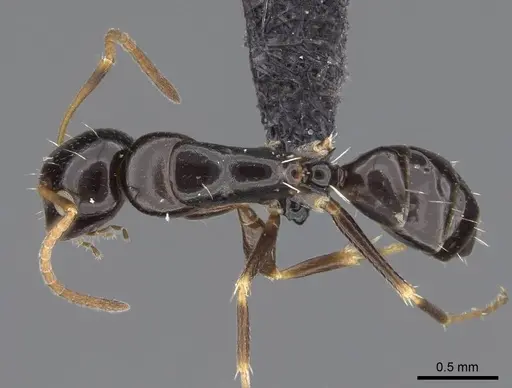
CASENT0062675
View on AntWeb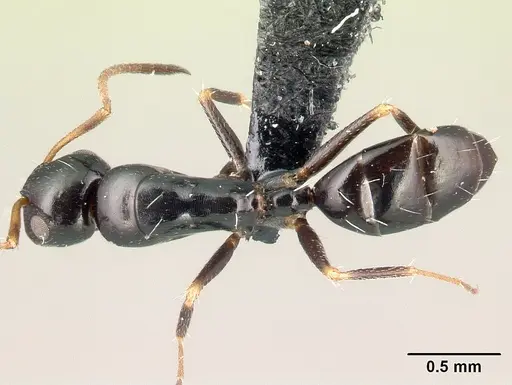
Literature
Loading distribution map...Loading products...