
Camponotus heidrunvogtae
- Sci. Name
- Camponotus heidrunvogtae
- Tribe
- Camponotini
- Subfamily
- Formicinae
- Author
- Seifert, 2019
- Distribution
- Found in 2 countries
Introduction
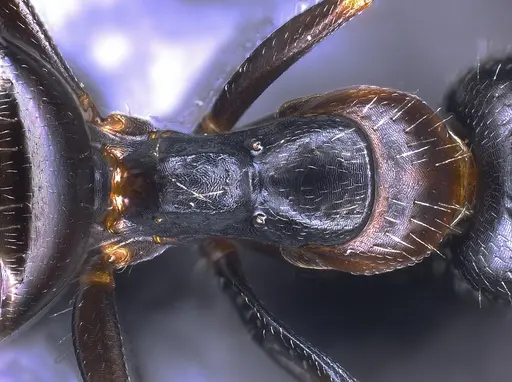
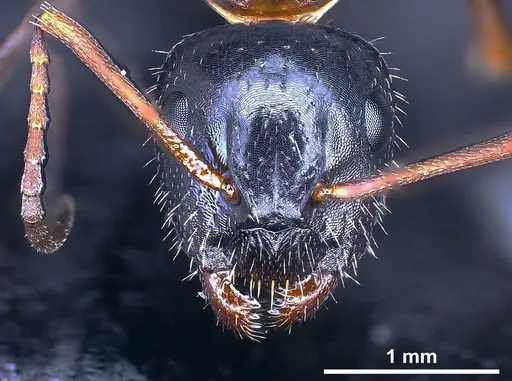
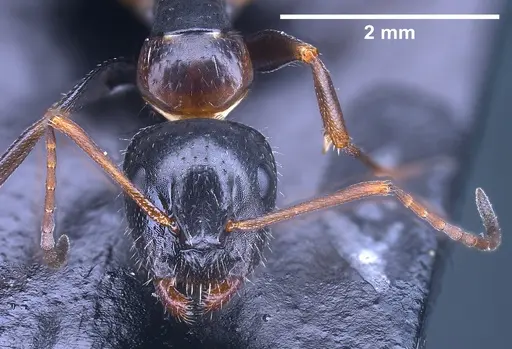
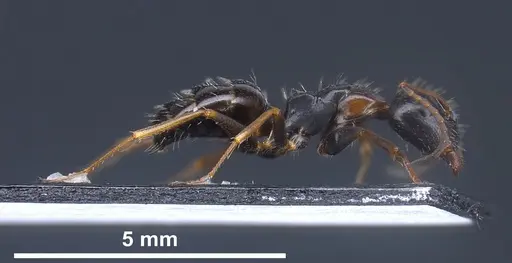
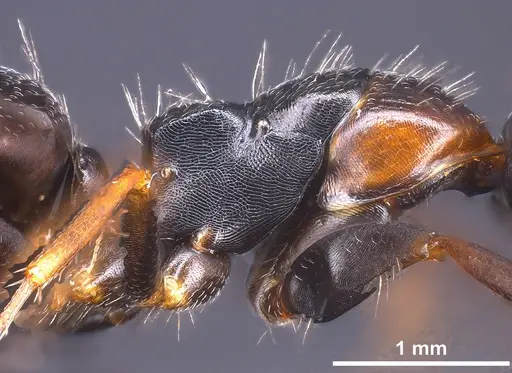
Camponotus heidrunvogtae is a recently described carpenter ant from the Balkans, first identified in 2019. It belongs to the Camponotus lateralis species group and is the largest member of that group. The species is easily recognized by its very long antennae (scape) and nearly black body, sometimes with a reddish patch on the pronotum. Workers have distinctive long erect hairs covering their head, mesosoma, and gaster . This ant is restricted to the Western Balkans, found only in Bosnia & Herzegovina, Croatia, Greece, and Montenegro. It prefers warm, dry, rocky habitats and is more heat-loving than related species. Nests are built under stones or in soil, often in sunny spots within deciduous forests of oak, hornbeam, and ash .
Quick Summary
- Difficulty: Medium
- Origin & Habitat: Western Balkans (Bosnia & Herzegovina, Croatia, Greece, Montenegro). Found in open xerothermous habitats with rock or scree coverage, and in sunny spots within broad-leaved forest (Quercus, Carpinus, Fraxinus). All sites are below 1000m elevation [1].
- Colony Type: Single-queen colonies (monogyne), typical for Camponotus species.
- Size & Growth:
- Queen: ~12-15mm, inferred from Camponotus genus patterns for large species
- Worker: Minor workers: ~4-6mm. Major workers: ~6-8mm, the largest of the C. lateralis group, inferred from genus patterns [1][2]
- Colony: Up to several hundred workers, estimated from related species in the lateralis group
- Growth: Moderate, typical for Camponotus species
- Development: 6-10 weeks at optimal temperature, inferred from typical Camponotus development (Development time is temperature-dependent. Warmer conditions within acceptable range accelerate development.)
- Antkeeping:
- Temperature: Warm conditions required, this is a thermophilic species. Keep nest area at 24-28°C, with a slight gradient allowing cooler areas. Avoid temperatures below 20°C [1].
- Humidity: Low to moderate, prefers dry to moderately damp conditions. Allow substrate to dry between waterings. Avoid overly humid conditions that can cause mold.
- Diapause: Yes, likely requires winter dormancy. Based on temperate Balkans origin, provide 2-3 months at 10-15°C during winter.
- Nesting: Y-tong (AAC) nests work well for this species. The long scapes mean they need appropriately scaled chambers. Plaster nests are also suitable. Provide a dry to moderately humid nest chamber with some moisture gradient.
- Behavior: Generally calm and non-aggressive for a Camponotus species. Workers are moderately active foragers. Major workers are significantly larger than minors and serve as soldiers or heavy-lifters. Escape risk is moderate, use standard Camponotus escape prevention (fluon on container edges). The species does not sting, it may bite if provoked.
- Common Issues: escape prevention, use fluon barriers as majors can still squeeze through small gaps, overheating, being thermophilic, they can overheat if temperatures exceed 30°C, mold from excessive humidity, keep nest substrate on the drier side, slow founding, queens can take weeks to seal in and longer to produce first workers, wild-caught colonies may have parasites that cause colony failure in captivity
Nest Preferences
In the wild, Camponotus heidrunvogtae nests under stones or directly in soil, often in warm, sunny locations with rock or scree coverage. They prefer open xerothermous habitats but also occupy sunny spots within broad-leaved forests dominated by oak, hornbeam, and ash trees [1].
For captive care, Y-tong (AAC) nests work well because you can control humidity precisely. Plaster nests are another good option, these ants prefer drier conditions than many other carpenter ants, so a plaster nest with moderate moisture is ideal. The nest chambers should be appropriately sized for their body size. Provide a small outworld connected to the nest for foraging. Ensure excellent escape prevention, especially around lid edges and connection points.
Feeding and Diet
Like other Camponotus species, these ants are omnivorous. They accept sugar sources (honey water, sugar water) and protein foods. In the wild, they likely forage for honeydew from aphids and hunt small insects.
For captive colonies, offer a constant sugar source (honey water or sugar water in a test tube with a cotton ball) and protein 2-3 times per week. Suitable protein includes small insects like fruit flies, pinhead crickets, mealworms, or other small arthropods. Remove uneaten protein after 24-48 hours to prevent mold. Major workers can handle larger prey items than minors due to their larger size. Feed more frequently during colony growth phases and reduce feeding during winter dormancy.
Temperature and Seasonal Care
This is a thermophilic species, they prefer warmer conditions than many European ants. Keep the nest area at 24-28°C, with a gentle gradient allowing workers to self-regulate by moving between warmer and cooler areas. A heating cable or heating mat on one side of the nest can provide warmth, but always create a temperature gradient so ants can escape heat if needed.
During winter (roughly November-February in the Northern Hemisphere), reduce temperature to 10-15°C for a dormancy period. This mimics their natural seasonal cycle in the Balkans. Reduce or stop feeding during this period. Do not keep them warm year-round, the winter dormancy is important for colony health and may trigger reproductive behavior in spring. Return to normal temperatures gradually in spring. [1]
Behavior and Colony Structure
Camponotus heidrunvogtae forms single-queen colonies (monogyne), which is typical for the genus. The colony contains both minor and major workers, majors are significantly larger and serve as soldiers or for heavy-duty tasks. The species is not particularly aggressive and does not sting, though majors may bite if the colony is threatened.
Workers are moderately active and will forage for food in the outworld. They establish foraging trails and can be observed searching for sugar sources and prey. The species shows typical Camponotus behavior, relatively calm compared to more aggressive genera like Formica or fire ants. Colonies grow gradually over several years, with the queen producing workers continuously after the founding phase. [1]
Growth and Development
As a recently described species (2019), specific development data for C. heidrunvogtae is limited. Based on typical Camponotus patterns, expect 6-10 weeks from egg to first worker (nanitic) at optimal temperature. The founding queen seals herself in a claustral chamber and raises the first brood alone, living off stored fat reserves. This founding phase can take 4-8 weeks before eggs appear, then another 4-8 weeks for workers to emerge.
Nanitic (first) workers are typically smaller than normal minor workers. After the first workers emerge, the colony enters a growth phase. Growth rate is moderate, expect the colony to reach 50-100 workers within the first year under good conditions, with continued growth over subsequent years. Major workers appear once the colony reaches a certain size threshold, typically when the colony has several dozen workers. [1]
Acclimation and Handling
When acquiring a colony (either wild-caught or from another keeper), give them time to settle. Avoid disturbing the nest for the first 1-2 weeks. If transferring to a new nest, wait until the colony is actively foraging in the outworld before attempting the move.
These ants are not dangerous to handle, but they can bite. Major workers have strong mandibles and may pinch if grabbed. Wash hands before handling to avoid transferring chemicals. When moving colonies, use gentle tapping or darkness to encourage workers into a test tube rather than shaking or forcing them.
Frequently Asked Questions
How long does it take for Camponotus heidrunvogtae to produce first workers?
Expect 6-10 weeks from egg to first worker at optimal temperature (24-28°C). The founding phase adds additional time, queens seal themselves in and may take 4-8 weeks before laying eggs, then another 6-10 weeks for the first workers to emerge. Total time from founding to first workers is typically 10-18 weeks.
What temperature do Camponotus heidrunvogtae ants need?
Keep the nest at 24-28°C. This is a thermophilic species that prefers warm conditions. Use a heating cable or mat on one side of the nest to create a gradient, allowing workers to regulate their own temperature. Avoid temperatures below 20°C for extended periods.
How big do Camponotus heidrunvogtae colonies get?
The maximum colony size is not documented for this specific species, but based on related species in the lateralis group, expect up to several hundred workers. Major workers are the largest of any species in the C. lateralis group.
Can I keep multiple Camponotus heidrunvogtae queens together?
No, this is a monogyne (single-queen) species. Multiple unrelated queens will fight. Only keep one queen per colony. If you find multiple dealate queens near each other, they should not be housed together as they will likely attack each other.
What do Camponotus heidrunvogtae ants eat?
They are omnivorous. Offer a constant sugar source (honey water or sugar water) and protein 2-3 times per week. Suitable protein includes small insects like fruit flies, pinhead crickets, or mealworms. Remove uneaten food after 24-48 hours to prevent mold.
Do Camponotus heidrunvogtae ants need hibernation?
Yes, based on their temperate Balkans origin, they require a winter dormancy period. Reduce temperature to 10-15°C for 2-3 months during winter (roughly November-February). Reduce feeding during this period. This rest is important for colony health and may trigger spring reproduction.
Are Camponotus heidrunvogtae good for beginners?
This species is rated as Medium difficulty. While not as challenging as some exotic species, they have specific temperature requirements (they need warmth) and require winter dormancy. Beginners should be comfortable with basic antkeeping concepts before attempting this species. Their recently described status (2019) also means less keeper experience is documented compared to more common species.
What size nest do Camponotus heidrunvogtae need?
Y-tong (AAC) nests work well for this species. Choose a nest with chambers appropriately sized for their body size. Plaster nests are also suitable. Provide a small outworld for foraging. The species prefers drier conditions than many other carpenter ants.
Why is my Camponotus heidrunvogtae colony dying?
Common causes include: too low temperature (below 20°C), excessive humidity causing mold, poor escape prevention, parasites from wild-caught colonies, or stress from excessive disturbance. Review your temperature, humidity, and feeding practices. Wild-caught colonies often carry parasites that can wipe out colonies, consider obtaining from reputable keepers instead.
Report an Issue
The current care sheet is based fully on literature. See inconsistencies, or something that's incorrect? Please , it will be resolved after review from an admin. Contributing to the blogs tab also helps providing information, to make us be able to further improve the caresheets. Thank you for your support!
References

This caresheet is licensed under CC BY-SA 4.0 .
Community Blogs
ANTWEB1041242
View on AntWeb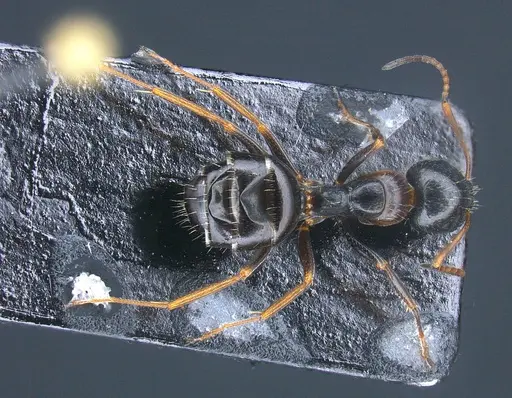
Literature
Loading distribution map...Loading products...