
Camponotus haereticus
- Sci. Name
- Camponotus haereticus
- Subgenus
- Myrmotrema
- Tribe
- Camponotini
- Subfamily
- Formicinae
- Author
- Santschi, 1914
- Distribution
- Found in 4 countries
Introduction
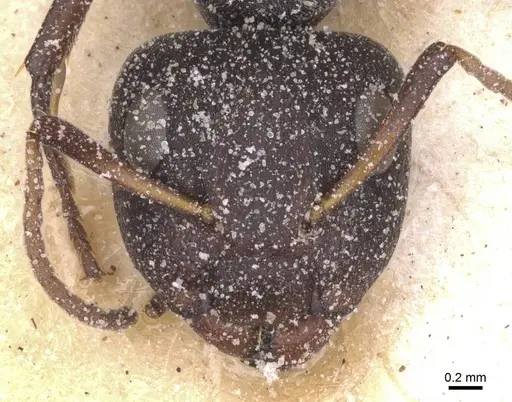
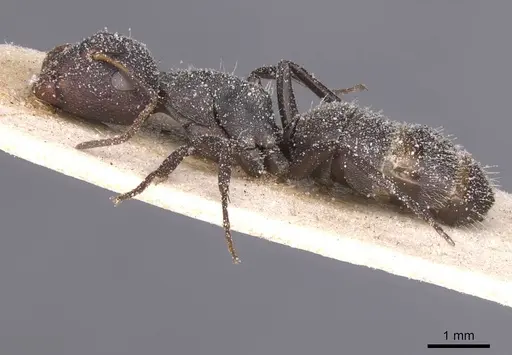
Camponotus haereticus is a medium-sized ant species native to West Africa, found in Benin, the Democratic Republic of Congo, Ghana, and Nigeria . Workers are polymorphic, with major workers developing larger heads for defense and brood care, while minors handle foraging and general colony tasks. This species is commonly found in agricultural areas like cocoa farms and mango orchards . The species was originally described by Santschi in 1914 and was previously classified as Camponotus foraminosus dorsalis before being raised to species status . These ants serve as prey for Oecophylla longinoda (weaver ants), indicating they occupy similar arboreal and agricultural habitats . The species is surface-active, with workers commonly seen foraging on surfaces without requiring extensive digging . Size data is unavailable for this species.
Quick Summary
- Difficulty: Medium
- Origin & Habitat: West Africa (Benin, Democratic Republic of Congo, Ghana, Nigeria), found in cocoa farms, mango orchards, and agricultural areas [3]
- Colony Type: Colony structure is unconfirmed for this specific species
- Size & Growth:
- Queen: Size data unavailable, inferred from Camponotus genus patterns to be approximately 12-16mm
- Worker: Major workers approximately 8-12mm, minor workers approximately 4-7mm, inferred from genus patterns
- Colony: Likely reaches several hundred workers based on typical Camponotus colony sizes
- Growth: Moderate, based on typical Camponotus development patterns
- Development: Estimated 6-8 weeks at optimal temperature based on typical Camponotus genus development (Development time is estimated from related Camponotus species, specific data for C. haereticus is unavailable)
- Antkeeping:
- Temperature: Keep at 24-28°C. A heating cable on one side of the nest creates a temperature gradient allowing ants to self-regulate. This species originates from warm West African climates.
- Humidity: Moderate humidity. Keep the nest substrate slightly moist but allow some drying areas. Being from agricultural areas in West Africa, they benefit from a moisture gradient.
- Diapause: No, this is a tropical species from West Africa where temperatures remain warm year-round
- Nesting: Y-tong (AAC) nests or plaster nests work well. In nature they likely nest in soil or rotting wood in agricultural areas. Provide a dark, secure nesting area with narrow chambers scaled to their size. Test tube setups work for founding colonies.
- Behavior: These ants are generally moderate in temperament, not particularly aggressive but will defend their colony if threatened. Workers are active foragers, commonly seen on surfaces [4]. They show typical Camponotus behavior with major workers defending the nest and minors handling foraging. Escape risk is moderate, use standard barriers and ensure the outworld is escape-proof. They accept sugar sources (honey, sugar water) and protein (insects) based on typical genus diet.
- Common Issues: limited data means care requirements are estimated from genus patterns rather than species-specific research, tropical species may struggle if temperatures drop below 22°C for extended periods, wild-caught colonies may carry parasites or diseases that can affect captive populations, moderate growth rate may test beginner patience during the founding phase, agricultural origin means they may be sensitive to pesticides or contaminated food sources
Housing and Nest Setup
For founding colonies, a standard test tube setup works well. Fill a test tube with water and plug the wet end with cotton, providing a humidity chamber. Place the queen in a dark location and leave her alone for 2-3 weeks until eggs appear. Once the first workers (nanitics) emerge, you can begin offering small amounts of food. For established colonies, Y-tong (AAC) nests or plaster nests are excellent choices. These provide the dark, secure environment Camponotus species prefer. The nest should have chambers narrow enough that workers can touch the walls on both sides, this helps them feel secure. An outworld (foraging area) should be connected to the nest via tubing, allowing you to feed and observe the colony. Ensure all connections are secure as workers can squeeze through small gaps. [4]
Feeding and Diet
Camponotus haereticus accepts a typical carpenter ant diet. Offer sugar water (1:3 ratio sugar to water) or honey as a constant energy source. For protein, provide small insects like fruit flies, small mealworms, or cricket pieces. Feed protein 2-3 times per week, removing any uneaten prey after 24 hours. This species is surface-active and workers will readily forage in the outworld [4]. Remove sugar water if it becomes contaminated or evaporates. Fresh fruit like apple slices can also be offered occasionally. Being from agricultural areas in West Africa, they may have access to honeydew from aphids in their natural habitat, sugar sources are likely well-accepted.
Temperature and Heating
As a West African tropical species, Camponotus haereticus requires warm conditions. Keep the nest area at 24-28°C for optimal brood development. A heating cable placed on top of the nest (never under it, as direct heat can kill the colony) creates a gentle warmth that ants will gravitate toward. Room temperature may be sufficient if your home stays in the low-to-mid 20s°C range. If temperatures drop below 22°C for extended periods, colony activity may slow and brood development can stall. Monitor colony behavior, if workers cluster near the heated side, they're seeking warmth. If they avoid the heated area entirely, the temperature may be too high. Avoid temperature fluctuations and keep the nest in a location away from drafts, air conditioning vents, and direct sunlight.
Growth and Development
The founding phase is the most critical period. After mating, the queen seals herself in a small chamber and lays eggs. She survives entirely on her stored fat reserves (this is claustral founding, typical of Camponotus). Eggs hatch into larvae, which the queen feeds and tends until they pupate. The first workers (nanitics) are typically smaller than normal workers and may take 6-8 weeks to emerge at optimal temperature. Once nanitics arrive, the colony enters a growth phase. The queen stops foraging and focuses entirely on egg-laying while workers take over all other tasks. Growth rate is moderate, expect several months before you see significant colony expansion. Major workers (soldiers) typically appear once the colony reaches several dozen workers. These larger workers assist with brood care, defense, and cracking harder food items. Patience is essential during the first few months as the colony establishes itself.
Behavior and Temperament
Camponotus haereticus displays typical carpenter ant behavior. Workers are active foragers, commonly seen moving along surfaces in search of food [4]. The colony will have a clear division of labor with minor workers handling most foraging and major workers defending the nest and assisting with larger food items. These ants are not particularly aggressive toward keepers but will bite if the nest is threatened. Their bite is mild compared to some other ant species. Workers may spray formic acid as a defense mechanism, though this is typically harmless to humans. They are not known for being escape artists, but ensure all connections between nest and outworld are secure. Workers can be quite bold when foraging and will readily explore new areas in search of sugar or protein sources.
Frequently Asked Questions
How long does it take for Camponotus haereticus to produce first workers?
Based on typical Camponotus development, expect 6-8 weeks from egg to first worker at optimal temperature (24-28°C). The queen will remain sealed in her chamber until nanitics emerge. This timeline may vary slightly based on temperature and conditions.
What do Camponotus haereticus ants eat?
They accept sugar sources (honey, sugar water) and protein (small insects like fruit flies, mealworms, cricket pieces). Offer sugar water constantly and protein 2-3 times per week. Remove uneaten food after 24 hours.
Do Camponotus haereticus ants need hibernation?
No, this is a tropical West African species and does not require hibernation. Keep them warm year-round at 24-28°C. Temperatures below 22°C for extended periods may slow or stall colony development.
Are Camponotus haereticus good for beginners?
This species is rated as medium difficulty. While not the most challenging species, the limited species-specific data means keepers should have basic antkeeping experience. Understanding typical Camponotus care is helpful. Beginners should be prepared for the relatively slow founding phase.
How big do Camponotus haereticus colonies get?
Based on typical Camponotus patterns, colonies likely reach several hundred workers. Major workers can reach approximately 8-12mm, while minors are approximately 4-7mm. Full colony development takes several months to a year from founding.
What temperature is best for Camponotus haereticus?
Keep nest temperatures at 24-28°C. A heating cable on top of the nest can provide warmth and create a gradient. Room temperature in the low-to-mid 20s°C is often sufficient. Avoid temperatures below 22°C for extended periods.
When should I move my Camponotus haereticus colony to a formicarium?
Keep the colony in a test tube setup through the founding phase and until the colony has 20-30 workers. Once the colony is established and actively foraging in an outworld, you can transition to a Y-tong or plaster nest. Make the transition gradual by connecting the test tube to the new nest and allowing workers to explore before removing the tube.
Can I keep multiple Camponotus haereticus queens together?
This is not recommended. While colony structure is not confirmed for this species, Camponotus are typically monogyne (single queen). Combining unrelated queens may result in fighting. If you start with multiple foundresses, house them separately.
Why is my Camponotus haereticus colony not growing?
Check temperature first, they need 24-28°C for proper brood development. Also verify humidity is adequate (nest should have moisture but not be waterlogged). Poor nutrition can also slow growth. Ensure you're offering varied protein sources and constant sugar. If the queen has died, the colony will not produce new workers.
Report an Issue
The current care sheet is based fully on literature. See inconsistencies, or something that's incorrect? Please , it will be resolved after review from an admin. Contributing to the blogs tab also helps providing information, to make us be able to further improve the caresheets. Thank you for your support!
References

This caresheet is licensed under CC BY-SA 4.0 .
Community Blogs
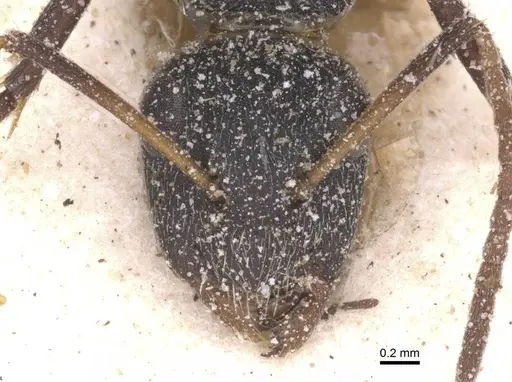
CASENT0911838
View on AntWeb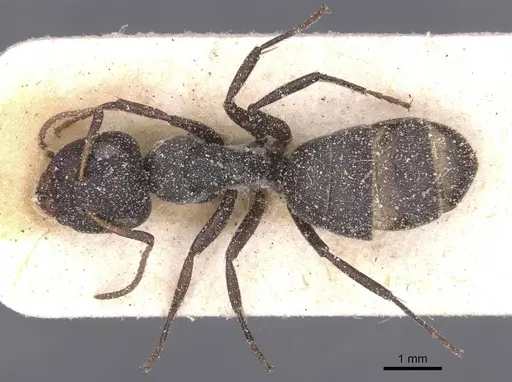
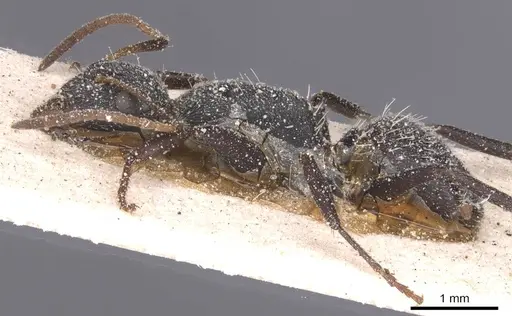
CASENT0911839
View on AntWeb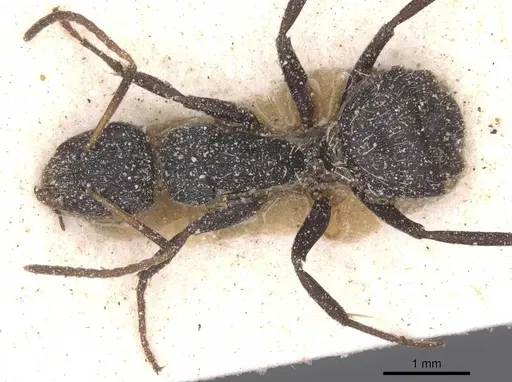
Literature
Loading distribution map...Loading products...