
Camponotus flavicomans
- Sci. Name
- Camponotus flavicomans
- Tribe
- Camponotini
- Subfamily
- Formicinae
- Author
- Clouse, 2007
- Distribution
- Found in 2 countries
Introduction
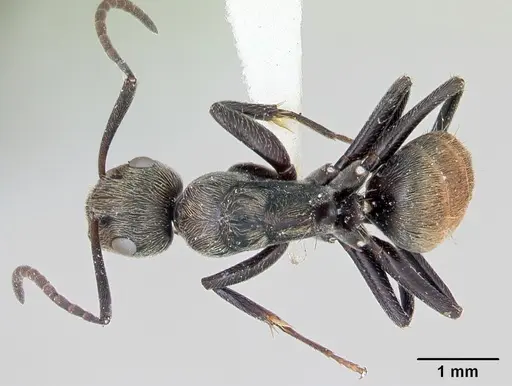
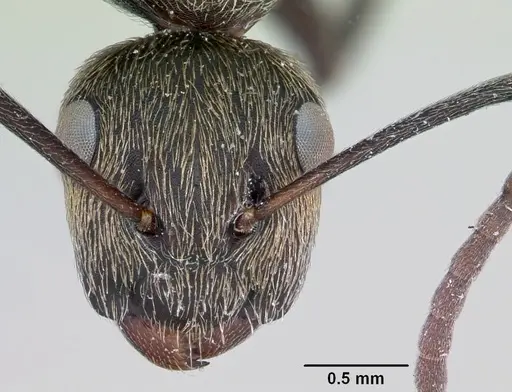
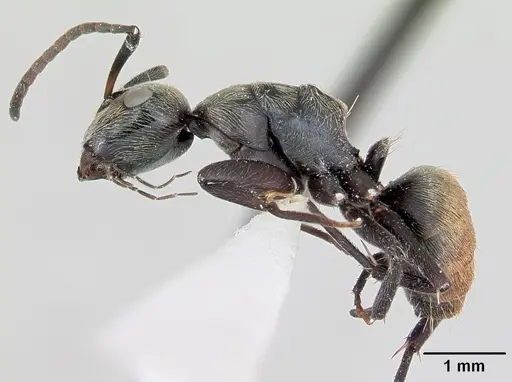
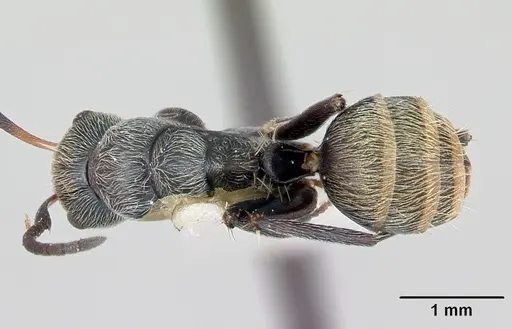
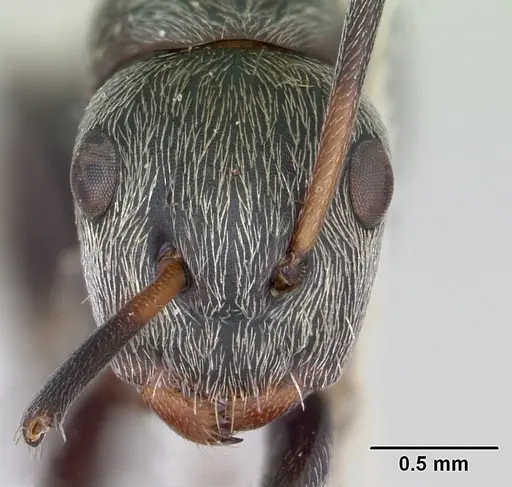
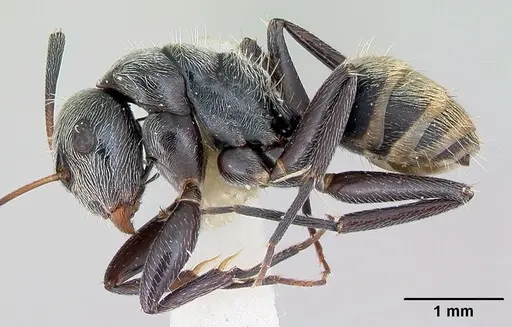
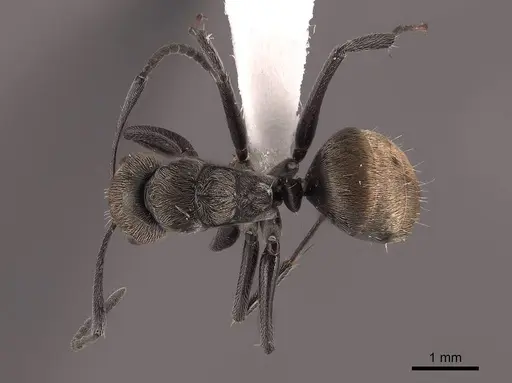
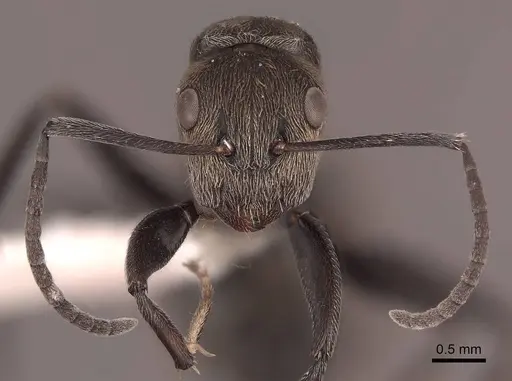
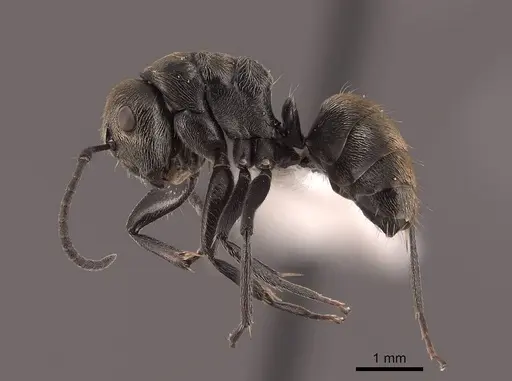
Camponotus flavicomans is a small carpenter ant species native to the Palau Islands in the Western Pacific. Workers measure up to 4.5mm and feature the distinctive golden-haired appearance that gave the species its name - flavicomans is Latin for 'golden haired'. The body is uniformly black with striking golden to silver hairs covering the dorsal surfaces, particularly dense on the gaster. The head has orange mandibles and scapes, while the gaster displays subtle grey stripes from whitish clear strips along the posterior of each tergite. This species was described in 2007 and remains one of the least-studied ants in the hobby with virtually no published biological data. The genus Camponotus is one of the largest ant genera globally, known for larger colony sizes and characteristic carpenter ant morphology.
Quick Summary
- Difficulty: Unknown, likely Medium due to limited data
- Origin & Habitat: Palau Islands (Babelthuap and Koror), Western Pacific, tropical island environment [1][2]
- Colony Type: Unconfirmed, typical Camponotus patterns suggest single-queen colonies
- Size & Growth:
- Queen: size data unavailable
- Worker: up to 4.5mm [1]
- Colony: Unknown, likely reaches several hundred workers based on genus patterns
- Growth: Unconfirmed
- Development: Unconfirmed (Development time is unstudied for this species, estimates based on genus patterns for tropical Camponotus species may not be accurate)
- Antkeeping:
- Temperature: Keep warm at 24-28°C, Palau is tropical with year-round warm temperatures
- Humidity: Maintain moderate to high humidity (60-80%), island environment
- Diapause: No, tropical species does not require hibernation
- Nesting: Based on typical Camponotus preferences, likely nests in rotting wood or under stones. In captivity, a Y-tong (AAC) or plaster nest works well. Keep nest substrate slightly moist.
- Behavior: Behavior is unstudied. Based on typical Camponotus patterns, they are generally non-aggressive toward keepers. Workers are small (under 5mm), so escape prevention is important, use fine mesh barriers and tight-fitting lids. They are likely nocturnal or crepuscular foragers like most Camponotus species. As Formicinae, they lack a functional sting but can bite and spray formic acid.
- Common Issues: almost no biological data exists, keepers must rely on genus-level inferences, small size means escape prevention is critical despite being a Camponotus, tropical species may be sensitive to temperature drops, wild-caught colonies may be difficult to obtain since the species has limited range, growth rate and colony size are unconfirmed
Appearance and Identification
Camponotus flavicomans is a distinctive small carpenter ant. Workers measure up to 4.5mm, making them smaller than many common Camponotus species. The most striking feature is the dense covering of golden to silver hairs that give the ant a fuzzy or 'combed' appearance, this is the 'golden haired' meaning of flavicomans. The body is uniformly black, with orange mandibles and the basal half of the scapes. The gaster has subtle grey stripes created by whitish clear strips along the posterior portion of each tergite. The head is somewhat rounded to square when viewed from the front, tapering toward the mandibles. The mesosoma slopes gently before dropping steeply at the propodeum, creating a concave posterior surface. These ants are only known from Palau, making them a rare and unusual species in antkeeping. [1][2]
Natural History and Distribution
This species is endemic to the Palau Islands in the Western Pacific, specifically Babelthuap Island and nearby Koror Island. The type specimens were collected between 1938 and 1946, and the species was formally described in 2007. Nothing has been published about their biology, behavior, or colony structure in the scientific literature. As a tropical island species, they likely experience warm temperatures year-round with high humidity. In their natural habitat, they probably nest in rotting wood, under stones, or in soil, similar to other Camponotus species. The limited distribution makes wild collection difficult, and most antkeepers will not encounter this species. [1][2]
Temperature and Housing
Since this species comes from tropical Palau, keep them warm at 24-28°C. A heating cable on one side of the nest can create a temperature gradient, allowing the ants to regulate their own conditions. Room temperature within this range works well for tropical species. For humidity, aim for 60-80%, the island environment suggests they prefer moderately humid conditions. Keep the nest substrate slightly moist but not waterlogged. Use a nest setup that retains humidity well, such as a Y-tong (AAC) formicarium or a plaster nest. Because workers are under 5mm, use fine mesh and tight-fitting lids to prevent escapes, small Camponotus can squeeze through gaps that larger species cannot.
Feeding and Diet
Like other Camponotus species, these ants likely accept a typical ant diet: sugar sources (honey water, sugar water) for energy, and protein sources (insects, mealworms, crickets) for colony growth. Feed protein 2-3 times per week and keep a sugar source available at all times. Remove uneaten prey after 24-48 hours to prevent mold. Since nothing specific is known about this species' dietary preferences, start with standard Camponotus feeding protocols and adjust based on colony acceptance.
Colony Development
Colony development is unconfirmed for this species. Based on typical Camponotus patterns, claustral founding is likely, the queen seals herself in a chamber and lives off stored fat reserves until her first workers (nanitics) emerge. Initial worker batches are typically small as the queen invests heavily in a few well-fed offspring rather than many small ones. Growth rate is unconfirmed, colonies may take several months to reach 50 workers and a year or more to reach larger sizes. As the colony grows, larger chambers become important for brood development. Unlike some tropical ants, this species likely does not require a diapause period.
Frequently Asked Questions
How long does it take for Camponotus flavicomans to produce first workers?
The egg-to-worker timeline is unconfirmed for this species. Based on typical Camponotus development, expect several months at optimal temperature (around 26°C). The first workers will be nanitics (smaller than normal workers) and may take several more weeks to reach full size.
What temperature do Camponotus flavicomans need?
Keep them warm at 24-28°C. As a tropical Palau species, they prefer consistent warmth year-round. A heating cable on part of the nest creates a gradient they can regulate themselves.
Do Camponotus flavicomans need hibernation?
No. As a tropical species from Palau, they do not require hibernation or diapause. Keep them at warm temperatures year-round.
How big do Camponotus flavicomans colonies get?
Colony size is unconfirmed. Based on typical Camponotus patterns, colonies likely reach several hundred workers over time. The small worker size (up to 4.5mm) suggests moderate colony sizes.
Are Camponotus flavicomans good for beginners?
This species is not recommended for beginners due to the lack of any published care information. Almost nothing is known about their biology, so keepers must rely on genus-level guesses. This makes troubleshooting difficult when problems arise.
What do Camponotus flavicomans eat?
Likely the same diet as other Camponotus: sugar sources (honey water, sugar water) and protein (insects, mealworms, crickets). Feed protein 2-3 times per week with sugar always available.
How do I house Camponotus flavicomans?
Use a Y-tong (AAC) or plaster formicarium that retains humidity well. Keep the nest substrate slightly moist. Because workers are under 5mm, ensure excellent escape prevention with fine mesh barriers and tight-fitting lids.
Can I keep multiple queens together?
Colony structure is unconfirmed for this species. Most Camponotus are monogyne (single queen), but polygyny has been documented in some species. Without specific data, keeping a single queen is the safest approach.
Where is Camponotus flavicomans found?
This species is endemic to the Palau Islands in the Western Pacific, specifically Babelthuap Island and Koror Island. It is one of the rarest species in the antkeeping hobby due to its limited natural range.
Report an Issue
The current care sheet is based fully on literature. See inconsistencies, or something that's incorrect? Please , it will be resolved after review from an admin. Contributing to the blogs tab also helps providing information, to make us be able to further improve the caresheets. Thank you for your support!
References

This caresheet is licensed under CC BY-SA 4.0 .
Community Blogs
Literature
Loading distribution map...Loading products...