
Camponotus fasciatellus
- Sci. Name
- Camponotus fasciatellus
- Subgenus
- Tanaemyrmex
- Tribe
- Camponotini
- Subfamily
- Formicinae
- Author
- Dalla Torre, 1892
- Distribution
- Found in 2 countries
Introduction
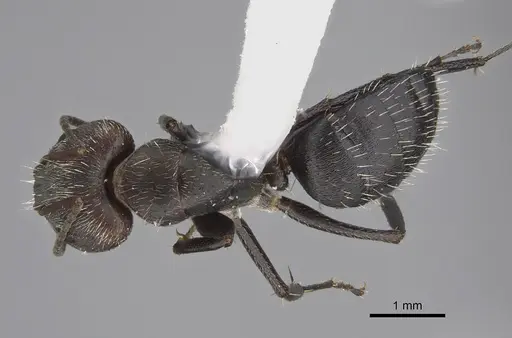
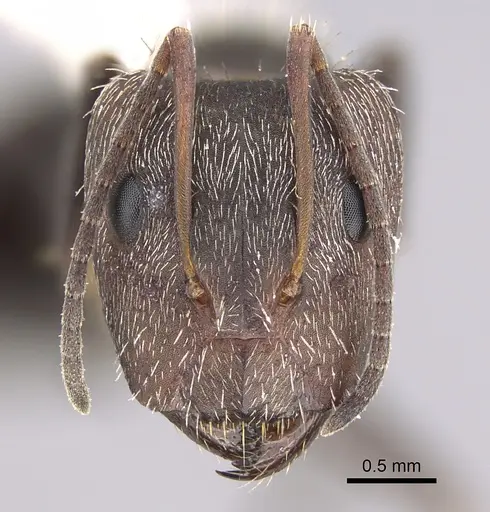
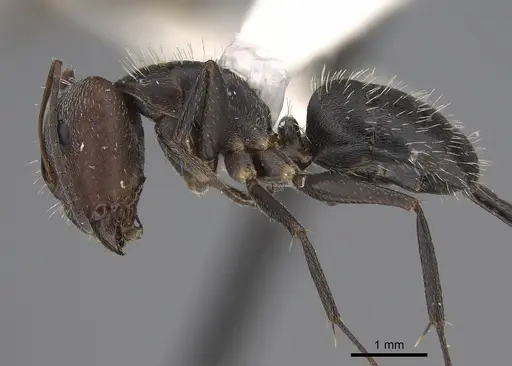
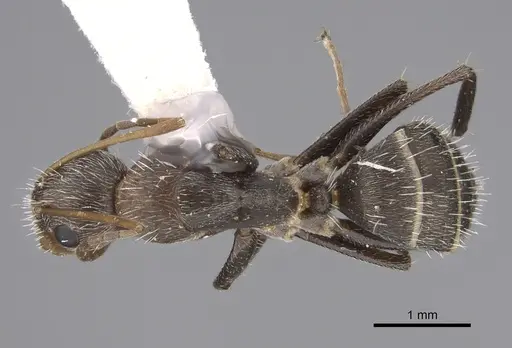
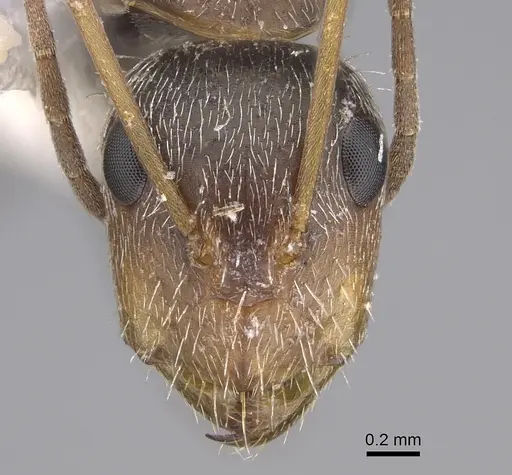
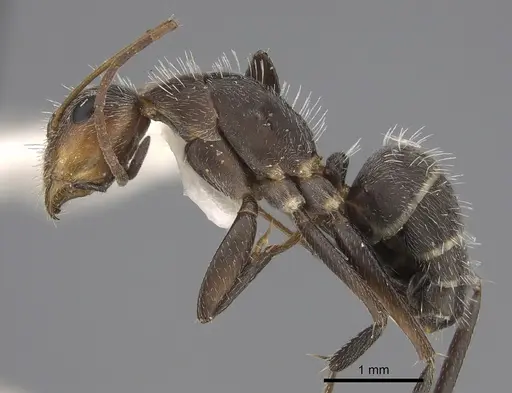
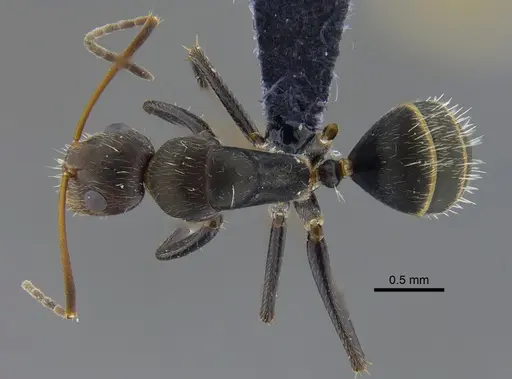
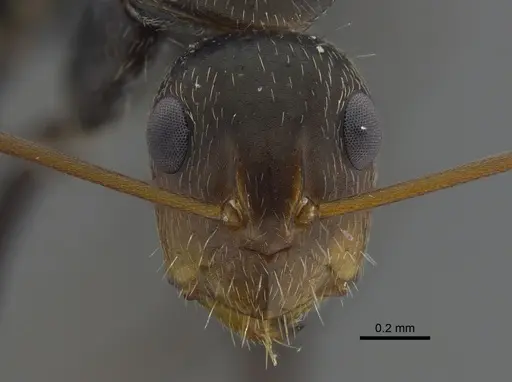
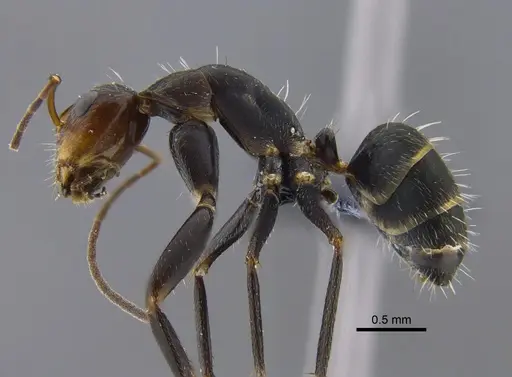
Camponotus fasciatellus is a Neotropical carpenter ant found from Mexico to Bolivia, including Colombia, Brazil, Guyana, French Guiana, and Suriname . It inhabits dry forests and is an arboreal omnivore, foraging in trees and shrubs while feeding on honeydew, small insects, and plant matter . Size data for this species is unavailable from current research. A distinctive feature is the white or translucent band across the rear edge of each abdominal segment, giving workers a striped appearance when viewed from above .
Quick Summary
- Difficulty: Medium
- Origin & Habitat: Neotropical region from Mexico to Bolivia, found in dry forests at various elevations [1][2][3][4].
- Colony Type: Unconfirmed, no specific literature on queen number or colony structure.
- Size & Growth:
- Queen: Size data unavailable
- Worker: Size data unavailable
- Colony: Unknown, no data on colony size
- Growth: Moderate, inferred from Camponotus genus patterns
- Development: Unknown, no specific data for this species (Development time likely similar to other Camponotus, but unconfirmed)
- Antkeeping:
- Temperature: Keep warm, roughly 24-28°C, based on Neotropical patterns. Provide a temperature gradient.
- Humidity: Keep nest substrate consistently moist but not waterlogged, as they are from dry forests.
- Diapause: No diapause required for Neotropical species.
- Nesting: Y-tong nests work well. Provide vertical space for arboreal foraging. Avoid acrylic nests, use plaster or soil nests if preferred.
- Behavior: Workers are moderately aggressive when defending their nest but not particularly territorial. They use mandibles and formic acid spray for defense, as typical for Formicinae. They are moderate escape artists, use barriers on outworld rims.
- Common Issues: colonies may decline if kept too cold, maintain warm temperatures year-round, escape prevention is important, workers can climb smooth surfaces easily, overfeeding can lead to mold problems in the nest, remove uneaten food promptly, wild-caught colonies may have parasites that cause colony collapse in captivity
Housing and Nest Setup
Camponotus fasciatellus adapts well to various captive setups. Y-tong nests are ideal because they provide dark, enclosed spaces while allowing observation. The colony needs a water tube connected to a cotton reservoir for humidity. For the outworld, use a container with a textured rim coated with Fluon or another barrier to prevent escapes. These ants are arboreal foragers, so provide climbing structures like twigs in the outworld. A test tube setup works for founding colonies until the first workers hatch.
Feeding and Diet
As an arboreal omnivore, Camponotus fasciatellus accepts a varied diet. Offer sugar water or honey as a constant energy source. For protein, provide small insects like fruit flies or mealworms [5]. Feed protein sources 2-3 times per week, removing uneaten prey after 24 hours to prevent mold.
Temperature and Seasonal Care
Maintain temperatures between 24-28°C for optimal colony development, based on Neotropical patterns. A heating cable on top of the nest creates a thermal gradient. Avoid temperatures below 18°C, which can slow brood development.
Colony Development and Growth
A newly mated queen may seal herself in a chamber and lay eggs, raising the first workers on her stored reserves. Growth is moderate, but specific timelines are unknown for this species.
Behavior and Temperament
Camponotus fasciatellus workers are moderately active and establish foraging trails. They defend the nest using mandibles and formic acid spray. Workers can climb smooth surfaces, so escape prevention is important [1].
Frequently Asked Questions
How long does it take for Camponotus fasciatellus to produce first workers?
No specific data is available for this species. Development time is likely similar to other Camponotus, but unconfirmed.
What do Camponotus fasciatellus ants eat?
They are arboreal omnivores. Offer sugar water or honey constantly, and feed protein sources like small insects 2-3 times per week [5].
What temperature do Camponotus fasciatellus colonies need?
Keep them warm at roughly 24-28°C, based on Neotropical patterns. Avoid temperatures below 18°C.
Are Camponotus fasciatellus good for beginners?
They are rated as medium difficulty. They require warmer temperatures than temperate ants but are manageable.
How big do Camponotus fasciatellus colonies get?
No data on colony size is available for this species.
Do Camponotus fasciatellus need hibernation?
No, they do not require diapause, as they are Neotropical species.
When should I move my colony to a formicarium?
Move the colony once it becomes crowded in the test tube, typically after the first workers hatch. Use Y-tong or plaster nests.
Why are my Camponotus fasciatellus dying?
Common causes include temperatures too cold, excessive humidity leading to mold, or parasites from wild-caught colonies. Check temperature and ventilation first.
Can I keep multiple Camponotus fasciatellus queens together?
This is not recommended, as queen number is unconfirmed for this species. Combining queens may result in fighting.
Report an Issue
The current care sheet is based fully on literature. See inconsistencies, or something that's incorrect? Please , it will be resolved after review from an admin. Contributing to the blogs tab also helps providing information, to make us be able to further improve the caresheets. Thank you for your support!
References

This caresheet is licensed under CC BY-SA 4.0 .
Community Blogs
Literature
Loading distribution map...Loading products...