
Camponotus claveri
- Sci. Name
- Camponotus claveri
- Subgenus
- Mayria
- Tribe
- Camponotini
- Subfamily
- Formicinae
- Author
- Rasoamanana & Fisher, 2022
- Distribution
- Found in 1 countries
Introduction
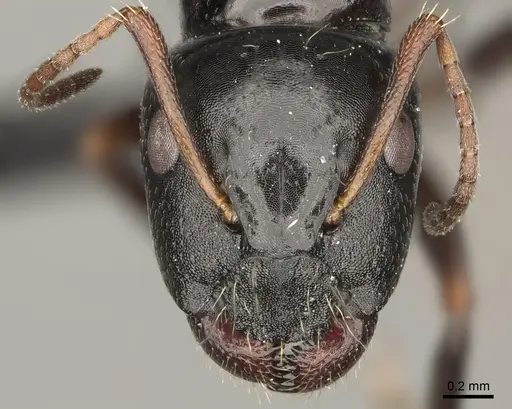
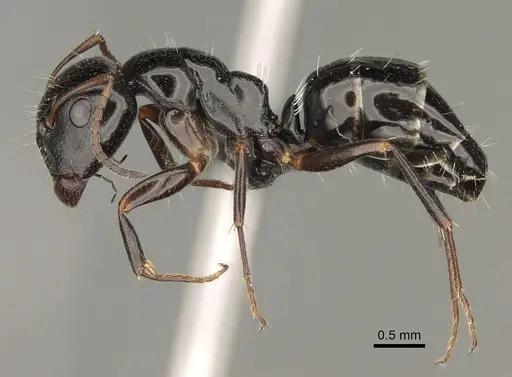
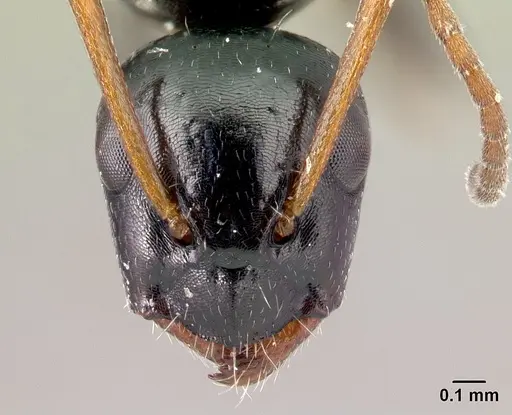
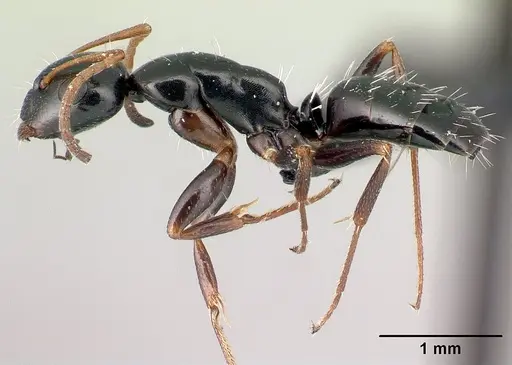
Camponotus claveri is a medium-sized ant species endemic to Madagascar, recently described in 2022. This species belongs to the Camponotus repens species group within the subgenus Mayria. Workers have a shiny black body with reddish-brown head and mesosoma. The species is found only in Madagascar, where it nests in soil, under stones, and on the ground at elevations between 830-1987 meters. Camponotus claveri occupies two distinct habitat types: montane rainforest and open habitats including Uapaca woodland, eucalyptus plantations, shrubland, deciduous dry forest, and urban areas. The species was named in honor of collector Claver Marotafika Randrianandrasana.
Quick Summary
- Difficulty: Medium
- Origin & Habitat: Madagascar, found in montane rainforest and open habitats including Uapaca woodland, eucalyptus plantation, shrubland, and deciduous dry forest, plus urban areas. Nests in soil, under stones, and on the ground at elevations of 830-1987m [1][2].
- Colony Type: Colony structure is unconfirmed. Based on typical Camponotus patterns, likely single-queen colonies (monogyne).
- Size & Growth:
- Queen: Size data unavailable, queen measurements have not been documented
- Worker: Minors: approximately 4-6mm, Majors: approximately 7-9mm, inferred from Camponotus genus size ranges
- Colony: Colony size data unavailable for this species
- Growth: Moderate, typical for Camponotus genus
- Development: Development time is unconfirmed for this species. Based on typical Camponotus patterns, expect approximately 6-10 weeks from egg to first worker at optimal temperature. (Development timing estimated from genus-level data, specific data for this species has not been directly studied.)
- Antkeeping:
- Temperature: Based on montane habitat (830-1987m elevation), these ants prefer cooler conditions than typical tropical ants. Aim for 18-24°C with a gentle gradient. They likely tolerate temperatures from 15°C to 28°C given their high-elevation range.
- Humidity: Moderate to high humidity. Montane rainforest origin suggests 60-80% relative humidity. Keep nest substrate consistently moist but not waterlogged, with some drier areas available.
- Diapause: Diapause requirements are unconfirmed for this species. Madagascar has less extreme seasonal variation than temperate regions, but the high elevation suggests some seasonal adjustment may be beneficial. Monitor colony activity patterns.
- Nesting: Natural nesting in soil, under stones, and on the ground. In captivity, a Y-tong (AAC) nest or plaster nest works well. Provide a moisture reservoir and keep the nest area humid. Given their montane origin, avoid overheating.
- Behavior: Typical Camponotus temperament, generally calm and not overly aggressive. Workers are moderately active foragers. Majors serve as repletes (living food storage) and help with colony defense. Escape risk is moderate due to their medium size, standard escape prevention measures are sufficient. They are primarily nocturnal or crepuscular foragers. As Formicinae ants, they lack a functional sting and instead bite and spray formic acid from their acidopore.
- Common Issues: high elevation origin means they can overheat easily, avoid temperatures above 28°C, wild-caught colonies may carry parasites that can devastate captive colonies, slow initial colony growth during founding phase can lead to overfeeding or disturbance, test tube setups must have adequate moisture without flooding, montane species need stable humidity, this is a recently described species (2022) with limited available care information, monitor your colony closely and adjust care as needed
Nest Preferences and Setup
In the wild, Camponotus claveri nests in soil, under stones, and directly on the ground surface. This tells us they prefer nest sites with some moisture access and protection from extreme conditions. For captive care, a Y-tong (AAC) nest or plaster nest works well, both hold humidity consistently and allow you to monitor the colony. Test tube setups can work for founding colonies, but monitor moisture levels carefully as montane species are sensitive to both drying out and flooding. Provide a water tube or moisture reservoir, and consider adding a small outworld for foraging. Avoid nests that overheat easily, place them away from direct sunlight and heating elements that could create hot spots. [1][2]
Feeding and Diet
Camponotus claveri is a typical Camponotus species, they need a balanced diet of sugars and protein. Offer sugar water, honey, or diluted maple syrup as a constant carbohydrate source. For protein, provide insects like fruit flies, small crickets, mealworms, or other appropriately-sized prey. They will likely accept most standard ant foods. Feed protein 2-3 times per week, and keep sugar available at all times. Remove uneaten prey after 24-48 hours to prevent mold. Given their montane origin, they may have slightly lower metabolic demands than lowland tropical species, do not overfeed.
Temperature and Seasonal Care
This is one of the most important aspects of keeping Camponotus claveri successfully. Their natural habitat at 830-1987m elevation in Madagascar means they prefer cooler conditions than most ant species. Keep the nest area at 18-24°C, with a slight gradient allowing workers to choose their preferred temperature. They can tolerate brief periods down to around 15°C and up to 28°C, but prolonged exposure to higher temperatures can be fatal. Use a heating cable only if your room temperature falls below 18°C, and place it on the top of the nest (not underneath) to avoid evaporating moisture too quickly. Room temperature in most homes is likely suitable. Watch for workers clustering near or avoiding heat sources to fine-tune their ideal spot. [1]
Behavior and Colony Dynamics
Camponotus claveri shows typical Camponotus behavior, they are generally peaceful, with majors serving as repletes (living food storage) and defenders. Workers are moderately active, primarily foraging during cooler hours (evening, night, or early morning). The colony will establish a clear division of labor with minors handling most foraging and brood care, while majors defend the nest and store food. Majors are significantly larger than minors, giving them a distinctive appearance. Colonies grow moderately, expect gradual growth over the first year. They are not aggressive toward keepers. As Formicinae ants, they lack a functional sting but can bite and spray formic acid as a defense mechanism. [1]
Growth and Development
As a recently described species (2022), specific development data for Camponotus claveri is not available. However, based on typical Camponotus patterns, you can expect eggs to develop through larval and pupal stages over several weeks. The exact timing depends on temperature, around 6-10 weeks from egg to first worker at optimal temperature (around 20-22°C). The founding queen will seal herself into a claustral chamber and not leave to forage, she lives entirely on stored fat reserves until her first workers emerge. These first workers (nanitics) will be smaller than normal workers. Growth is moderate, do not expect rapid colony expansion. Focus on providing stable conditions rather than trying to speed up development with higher temperatures, as overheating is a greater risk than slow growth.
Frequently Asked Questions
How long does it take for Camponotus claveri to have first workers?
Development time is unconfirmed for this species. Based on typical Camponotus development, expect approximately 6-10 weeks from egg to first worker at optimal temperature (around 20-22°C). The exact timing depends on temperature stability and feeding.
What temperature do Camponotus claveri need?
Keep them at 18-24°C. Their high-elevation montane habitat means they prefer cooler conditions than typical tropical ants. Avoid temperatures above 28°C.
Are Camponotus claveri good for beginners?
They are rated Medium difficulty. Their temperature requirements are specific (cool-loving), but otherwise they are fairly typical Camponotus ants to keep. Beginners should monitor temperatures carefully.
What do Camponotus claveri eat?
Feed them sugar water, honey, or similar carbohydrates constantly. Offer protein sources like fruit flies, small crickets, or mealworms 2-3 times per week.
How big do Camponotus claveri colonies get?
Colony size data is unavailable for this species. Based on typical Camponotus growth patterns, colonies can grow to several thousand workers over several years with proper care.
Can I keep multiple Camponotus claveri queens together?
This has not been studied for this species. Based on typical Camponotus behavior, single-queen colonies are most common. Combining unrelated queens is not recommended.
What humidity do Camponotus claveri need?
Aim for 60-80% relative humidity. Keep the nest substrate consistently moist but not waterlogged. Montane species need stable humidity without drying out.
When should I move Camponotus claveri to a formicarium?
Keep them in a test tube or small setup for the founding phase (first 6-12 months). Move to a larger nest (Y-tong, plaster, or naturalistic setup) when the colony reaches 30-50 workers or the test tube becomes cramped.
Do Camponotus claveri need hibernation?
Diapause requirements are unconfirmed for this species. Madagascar has less extreme seasonal variation than temperate regions, but the high elevation suggests some seasonal adjustment may be beneficial. Monitor your colony's activity patterns, a slight cool period (15-18°C) during winter months may be appropriate.
Report an Issue
The current care sheet is based fully on literature. See inconsistencies, or something that's incorrect? Please , it will be resolved after review from an admin. Contributing to the blogs tab also helps providing information, to make us be able to further improve the caresheets. Thank you for your support!
References

This caresheet is licensed under CC BY-SA 4.0 .
Community Blogs
CASENT0168788
View on AntWeb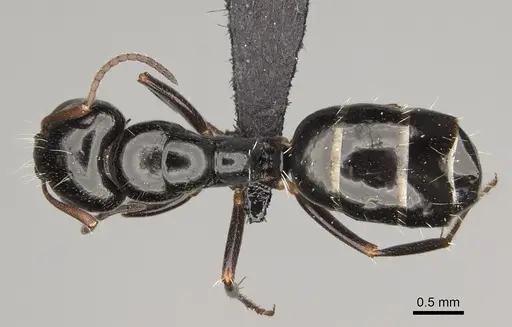
CASENT0490618
View on AntWeb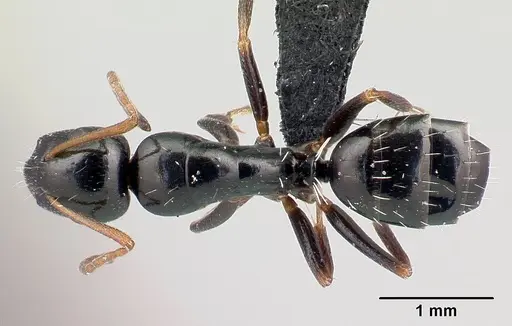
Literature
Loading distribution map...Loading products...