
Camponotus cheesmanae
- Sci. Name
- Camponotus cheesmanae
- Subgenus
- Myrmobrachys
- Tribe
- Camponotini
- Subfamily
- Formicinae
- Author
- Donisthorpe, 1932
- Distribution
- Found in 1 countries
Introduction
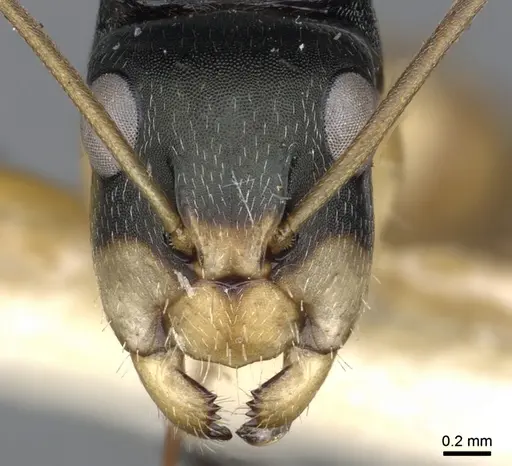
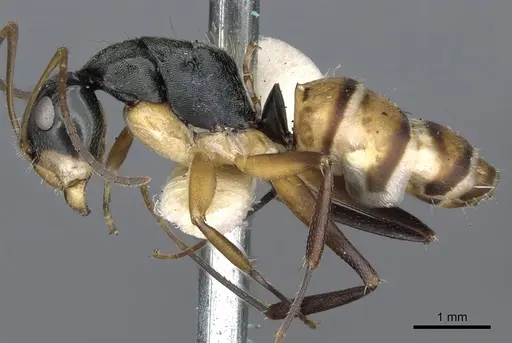
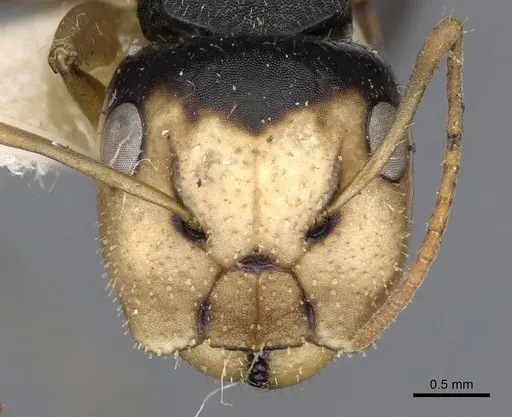
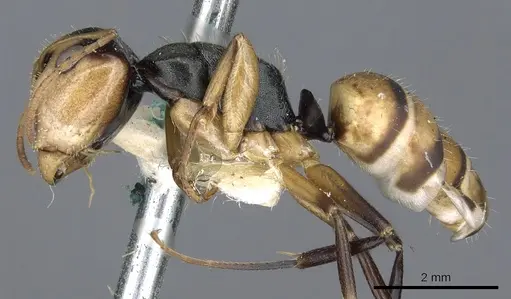
Camponotus cheesmanae is a striking ant from the Myrmobrachys subgenus, known only from Gorgona Island off the Pacific coast of Colombia . Workers are easy to identify: most of the head and legs are yellow, the mesosoma and petiole are black, and the gaster is yellow with brown transverse bands . The head has a distinctive oblique truncation covered with flattened hairs . This species was described in 1932 from three major and twenty-eight minor worker syntypes . Biology is almost entirely undocumented; the only field observation places them next to a stream .
Quick Summary
- Difficulty: Hard
- Origin & Habitat: Restricted to Gorgona Island, Cauca, Colombia [1][2]. The only known specimen was collected next to a stream, suggesting a preference for humid, shaded microhabitats [2].
- Colony Type: Unknown – no colony structure data exists for this species. Based on typical patterns in Camponotus (Myrmobrachys), it is likely monogyne (single queen) but this is unconfirmed.
- Size & Growth:
- Queen: size data unavailable
- Worker: size data unavailable
- Colony: Unknown – based on Camponotus patterns, potentially up to several hundred workers, but no documented observations.
- Growth: Moderate (estimated from Camponotus genus)
- Development: 6–10 weeks at 24–26°C (estimated from typical Camponotus development, no species-specific data) (Development time is inferred from genus-level data. Actual timing may vary based on temperature and conditions.)
- Antkeeping:
- Temperature: Keep nest area at 24–26°C, based on typical tropical Camponotus requirements. Avoid dropping below 20°C. Use a gentle gradient if possible.
- Humidity: Moderate to high humidity – keep nest substrate consistently moist but not waterlogged, inferred from stream-side habitat [2].
- Diapause: No – this tropical species from near the equator does not require hibernation. Maintain warm, stable conditions year-round.
- Nesting: Likely nests in rotting wood or under stones near streams. In captivity, Y-tong (AAC) or plaster nests with good humidity control are suitable. Provide shaded, humid nest chambers.
- Behavior: Based on Camponotus genus, likely calm and non‑aggressive, with moderate foraging activity. Not known to be escape artists, but standard prevention (Fluon on rims) is advised. No species-specific observations exist [2].
- Common Issues: very limited distribution – wild colonies are rarely available and this species is not commonly kept, lack of documented care information – keepers must rely on genus-level guidance, tropical humidity requirements can lead to mold issues if ventilation is poor, unknown founding behavior – may require specific conditions not yet described
Nest Preferences
The only field record for Camponotus cheesmanae places it next to a stream on Gorgona Island [2]. This suggests a preference for humid, shaded microhabitats. Like many members of the Myrmobrachys subgenus, it likely nests in rotting wood or under stones near water. In captivity, use Y-tong (AAC) or plaster nests that allow you to maintain consistent moisture. Keep the substrate damp but not waterlogged, and avoid dry environments. Chamber sizes should be large enough for free movement, though exact worker sizes are undocumented. Covering the nest with a dark cloth or placing it in a low‑light area may help the colony feel secure.
Feeding and Diet
No direct dietary data exists for Camponotus cheesmanae, but typical Camponotus are omnivorous. Offer a constant source of sugar (honey, sugar water) and provide protein prey (small insects, mealworms, fruit flies) 2–3 times per week. Remove uneaten prey after 24–48 hours to prevent mold. Because the species is tropical, ensure food items don't dry out quickly. Avoid feeding large prey until the colony has a decent worker force.
Temperature and Care
As a tropical island species, Camponotus cheesmanae needs stable warmth. Aim for 24–26°C in the nest area, slower growth likely below 24°C. Use a heating cable on one side to create a gradient so workers can self‑regulate. Avoid temperatures above 30°C for prolonged periods. No hibernation is required – keep conditions consistent year‑round. Room humidity should be moderate to high, if your home is dry, consider covering part of the outworld to retain moisture. [2]
Behavior and Temperament
Given the lack of direct observation, behavior must be inferred from the Camponotus genus. Workers are expected to be calm, non‑aggressive, and primarily active during dusk or night. They communicate via chemical trails. Major workers, if present, may help defend the colony but are unlikely to bite without provocation. Escape risk is low due to their modest size, but standard precautions (Fluon or talc on rims) are still recommended. No data exists on foraging range or recruitment in this species.
Frequently Asked Questions
How long does it take for Camponotus cheesmanae to raise first workers?
No species‑specific data exists. For typical Camponotus kept at 24–26°C, the first workers emerge within 6–10 weeks from egg laying. Be patient and minimize disturbance during founding, as the queen will not forage until her first workers appear.
What temperature do Camponotus cheesmanae ants need?
Keep the nest at 24–26°C based on typical tropical Camponotus requirements. Avoid dropping below 20°C. A heating cable on one side can provide a beneficial temperature gradient.
Is Camponotus cheesmanae a good species for beginners?
This species is rated Hard because almost nothing is known about its biology. Without species‑specific care data, you must rely on general Camponotus husbandry. Invasive or protected status does not apply here, but the extreme rarity of this ant makes it unsuitable for beginners. Consider a well‑documented species first.
What do Camponotus cheesmanae ants eat?
Based on Camponotus genus, they accept sugar water or honey for energy and small insects (mealworms, fruit flies, crickets) for protein. Feed sugar constantly and protein 2–3 times per week. Remove uneaten prey after a day to prevent mold.
Do Camponotus cheesmanae ants need hibernation?
No. This is a tropical species from near the equator where temperatures are stable year‑round. Maintain warm conditions continuously, no diapause is required.
How big do Camponotus cheesmanae colonies get?
Colony size is undocumented. Based on typical Camponotus patterns, they may reach several hundred workers at maturity, but this is an estimate. No specific measurements for worker size exist.
Can I keep multiple Camponotus cheesmanae queens together?
Probably not – the genus Camponotus is predominantly monogyne (single queen). There is no evidence that this species is polygyne. Keeping multiple queens together risks fighting and colony loss. Start with one queen per colony.
What humidity do Camponotus cheesmanae ants need?
Aim for moderate to high humidity (the nest substrate should feel damp but not waterlogged). This is inferred from their stream‑side habitat [2]. Avoid dry environments, use a plaster or Y‑tong nest to help maintain moisture.
Where is Camponotus cheesmanae found in the wild?
Only on Gorgona Island, Cauca, Colombia [1][2]. It has not been recorded anywhere else. This extremely restricted range makes it a rare species.
When will my Camponotus cheesmanae colony be ready to move to a formicarium?
Wait until the colony has at least 10–15 workers before moving from a test tube to a formicarium. This typically takes a few months after the first workers appear. Ensure the new nest provides stable humidity and temperature.
Why is my Camponotus cheesmanae colony growing slowly?
Slow growth is commonly caused by temperatures below 24°C, insufficient protein, or low humidity. Make sure the nest is warm and the substrate is moist. If you are unsure about founding type, avoid disturbing the queen during the first weeks.
Report an Issue
The current care sheet is based fully on literature. See inconsistencies, or something that's incorrect? Please , it will be resolved after review from an admin. Contributing to the blogs tab also helps providing information, to make us be able to further improve the caresheets. Thank you for your support!
References

This caresheet is licensed under CC BY-SA 4.0 .
Community Blogs
CASENT0903638
View on AntWeb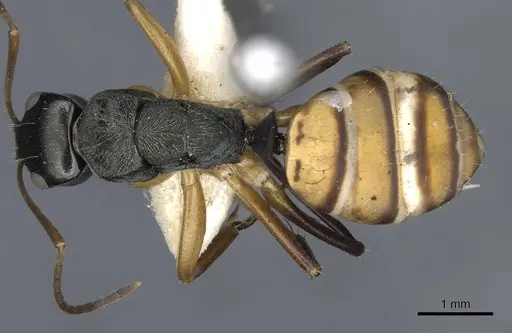
CASENT0903639
View on AntWeb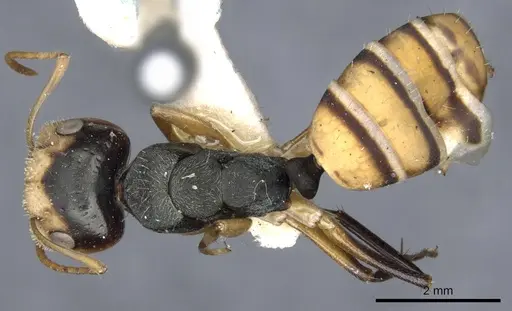
Literature
Loading distribution map...Loading products...