
Camponotus canescens
- Sci. Name
- Camponotus canescens
- Subgenus
- Myrmobrachys
- Tribe
- Camponotini
- Subfamily
- Formicinae
- Author
- Mayr, 1870
- Distribution
- Found in 4 countries
Introduction
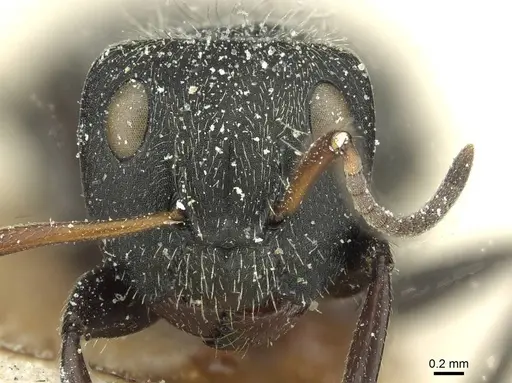
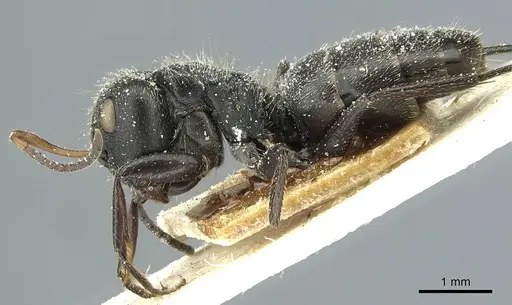
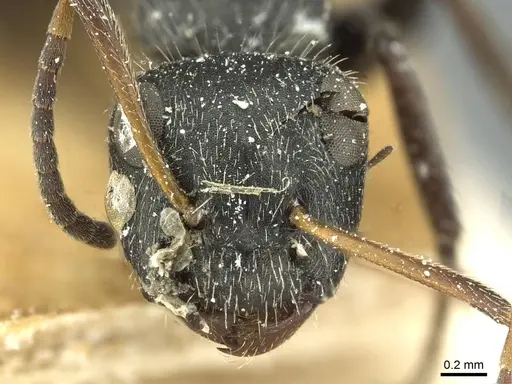
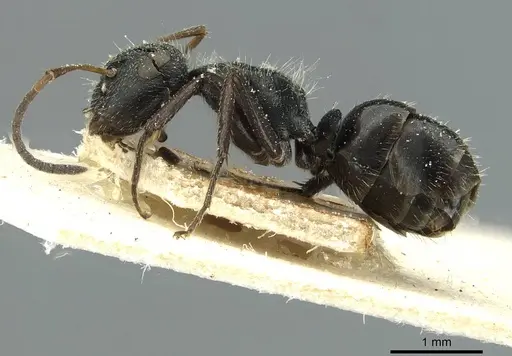
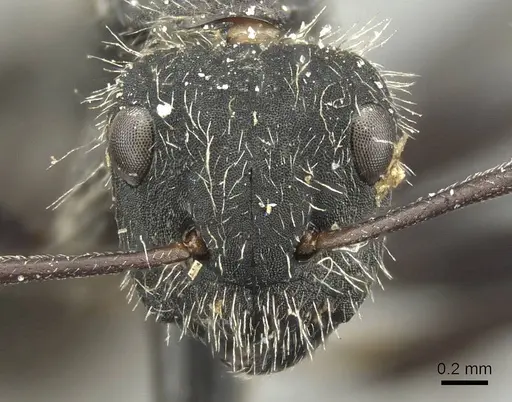
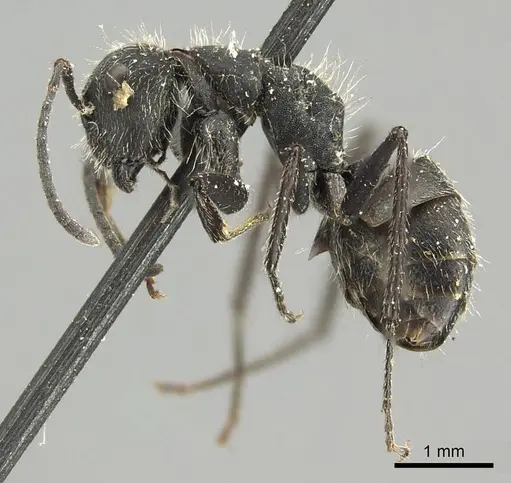
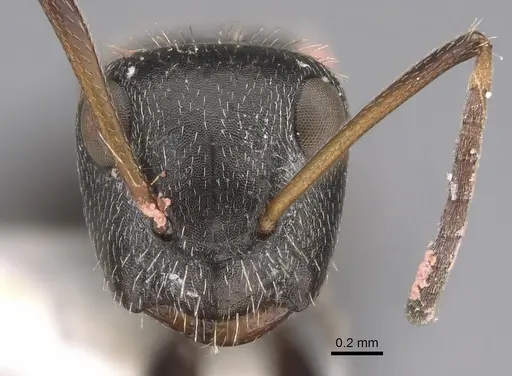
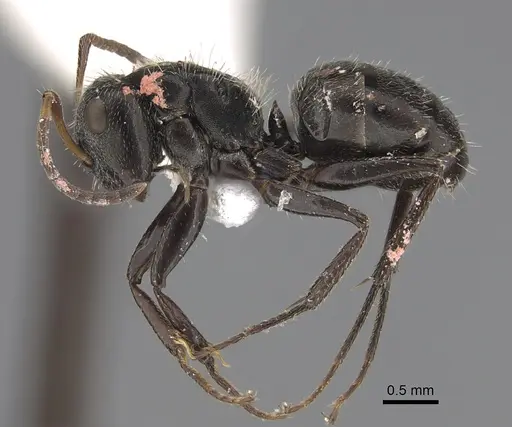
Camponotus canescens is a medium-sized black ant belonging to the subgenus Myrmobrachys, native to the Neotropical region spanning from Guatemala down to Bolivia and Brazil . Workers measure 5.5-6mm and are predominantly black with distinctive light brown coloration on the scape and first funicular segment, while the mandibles and tibiae are medium brown . The ant has rounded head sides and is covered with abundant grayish hairs, giving it a matte appearance. This species is commonly found in tropical forests and secondary growth areas, where it nests in pre-existing cavities such as empty pods and orchids . It can be confused with the similar Camponotus senex, but C. canescens lacks the erect hairs around the eyes that characterize that species .
Quick Summary
- Difficulty: Medium
- Origin & Habitat: Neotropical region, found in Guatemala, Costa Rica, Panama, Colombia, Peru, Bolivia, Brazil, and Trinidad [4][5][2][1]. Inhabits tropical forests to secondary forests at elevations ranging from sea level to 980m in the Colombian Andes [6][1].
- Colony Type: Colony structure is not well documented, likely single-queen based on typical Camponotus patterns, but this is unconfirmed.
- Size & Growth:
- Queen: Size data unavailable, no specific measurements exist for this species
- Worker: 5.5-6mm [3]
- Colony: Estimated up to several hundred workers based on typical Camponotus colony sizes
- Growth: Moderate, typical for tropical Camponotus species
- Development: Estimated 6-8 weeks at optimal temperature based on genus-level Camponotus data (Development time inferred from related Camponotus species, direct measurements not available for this species)
- Antkeeping:
- Temperature: Keep at 24-28°C, these are tropical ants requiring warm, stable conditions. A heating cable on one side of the nest creates a suitable gradient.
- Humidity: Moderate to high humidity, they naturally inhabit damp forest environments. Keep the nest substrate slightly moist but not waterlogged.
- Diapause: No, as a tropical species, they do not require hibernation. Maintain consistent temperatures year-round.
- Nesting: In nature they nest in pre-existing cavities, empty seed pods, hollow stems, and orchid bulbs [1]. In captivity, they do well in Y-tong (AAC) nests, plaster nests, or naturalistic setups with tight chambers. Avoid overly large spaces, they prefer snug chambers scaled to their body size.
- Behavior: These are generalist patrolling ants that recruit workers massively when they find abundant food sources [7]. They are omnivorous, feeding on honeydew from membracids, small insects, and nectar [7]. Workers are moderately aggressive when defending the nest but not particularly territorial. They are medium-sized ants, so escape prevention is important but not as critical as for tiny species, standard barriers work well.
- Common Issues: tropical species requires consistent warmth, cold drafts can weaken or kill colonies, wild-caught colonies may carry Ophiocordyceps fungal infections, a known natural pathogen [8], nesting in pre-existing cavities means they may be reluctant to excavate, provide suitable chambers, moderate growth rate may test beginner patience, don't overfeed or disturb frequently
Housing and Nest Preferences
Camponotus canescens naturally nests in pre-existing cavities found in plant material, empty seed pods, hollow stems, and orchid bulbs are their preferred natural nesting sites [1]. This preference for ready-made cavities means they adapt well to Y-tong (AAC) nests or plaster formicaria in captivity. Provide chambers that are snug rather than spacious, these ants feel secure in tight spaces. A naturalistic setup with cork bark or wooden structures can also work well. Avoid test tubes for established colonies as they need more space. Ensure the nest has a water reservoir to maintain humidity without frequent disturbance.
Feeding and Diet
Like most Camponotus species, C. canescens is omnivorous. In the wild, they maintain mutualistic relationships with membracids (treehoppers) and feed on the honeydew these insects produce [7]. They also hunt small invertebrates and collect nectar. In captivity, offer a varied diet: sugar water or honey as a constant energy source, and protein-rich foods like mealworms, crickets, or other small insects 2-3 times per week. They are generalist patrollers and will recruit heavily when they discover abundant food sources, this mass recruitment is fascinating to observe. Remove uneaten protein within 24-48 hours to prevent mold.
Temperature and Seasonal Care
As a tropical species from the Neotropical region, C. canescens requires warm temperatures between 24-28°C. They are found in lowland tropical forests and secondary growth areas where temperatures remain consistently warm year-round [1]. Unlike temperate species, they do not require a diapause (winter rest) period. Maintain stable temperatures avoiding cold drafts, air conditioning vents, or windows in winter. A small heating cable placed on one side of the nest can create a gentle gradient, allowing ants to regulate their own temperature by moving between warmer and cooler areas. Sudden temperature drops can stress or kill these ants.
Colony Development and Growth
Colony growth is moderate rather than rapid. The queen seals herself in a chamber and raises the first brood alone, living off her stored fat reserves until the nanitic (first) workers emerge. Based on typical Camponotus development patterns, expect 6-8 weeks from egg to first worker at optimal temperature. Initial colonies grow slowly as the queen can only lay a limited number of eggs while tending the first brood herself. Once workers emerge, growth accelerates as more foragers become available to bring food back to the colony. Patience is key, don't disturb the queen or over-handle the nest during the founding phase.
Health and Common Problems
One notable concern is the fungal pathogen Ophiocordyceps unilateralis sensu lato, which has been documented infecting this species in the wild [8]. This fungus manipulates ant behavior, causing infected ants to leave the nest and attach to vegetation before the fungus produces spores. While this is a natural phenomenon, wild-caught colonies may arrive with infections that can spread within captivity. Quarantine new colonies and monitor for unusual behavior. Additionally, as a tropical species, they are sensitive to temperature fluctuations, keep them away from cold windows or air conditioning. Their moderate size means standard escape prevention is adequate, but ensure connections between outworld and nest are secure.
Frequently Asked Questions
How long does it take for Camponotus canescens to have first workers?
Expect 6-8 weeks from egg to first worker at optimal temperature (24-28°C). This is based on typical Camponotus development patterns since specific timing has not been documented for this species.
What do Camponotus canescens ants eat?
They are omnivorous. Feed them sugar water or honey constantly for energy, and protein sources like mealworms, crickets, or other small insects 2-3 times per week.
Do Camponotus canescens ants need hibernation?
No, they do not require hibernation. As a tropical species from Central and South America, they need warm temperatures year-round (24-28°C).
What is the best nest type for Camponotus canescens?
Y-tong (AAC) nests, plaster formicaria, or naturalistic setups with cork bark work well. They prefer pre-existing cavities over excavated tunnels, so provide snug chambers rather than large open spaces.
How big do Camponotus canescens colonies get?
Colony size is not well documented, but based on typical Camponotus patterns, they likely reach several hundred workers. Growth is moderate, expect several months to reach 50+ workers.
Are Camponotus canescens good for beginners?
They are rated as medium difficulty. They require warm, stable tropical conditions and do not tolerate cold. Their moderate growth rate and specific nesting preferences (pre-existing cavities) may present a learning curve, but they are not among the most difficult species.
Can I keep multiple Camponotus canescens queens together?
Colony structure is not well documented for this species. Combining unrelated queens is not recommended as the colony type (single or multiple queen) has not been confirmed.
Why is my Camponotus canescens colony dying?
Common causes include: temperature too cold (below 24°C), low humidity, fungal infection (watch for Ophiocordyceps symptoms), or overfeeding leading to mold. Ensure warm, stable conditions and remove uneaten protein promptly.
When should I move Camponotus canescens to a formicarium?
Keep them in a founding setup (test tube or small container) until the colony reaches 30-50 workers. Once they outgrow the space or the water reservoir runs low, transfer to a Y-tong or plaster nest. Avoid disturbing during the founding phase.
Report an Issue
The current care sheet is based fully on literature. See inconsistencies, or something that's incorrect? Please , it will be resolved after review from an admin. Contributing to the blogs tab also helps providing information, to make us be able to further improve the caresheets. Thank you for your support!
References

This caresheet is licensed under CC BY-SA 4.0 .
Community Blogs
CASENT0911728
View on AntWeb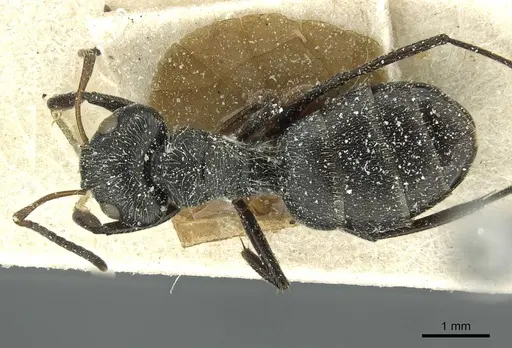
CASENT0911729
View on AntWeb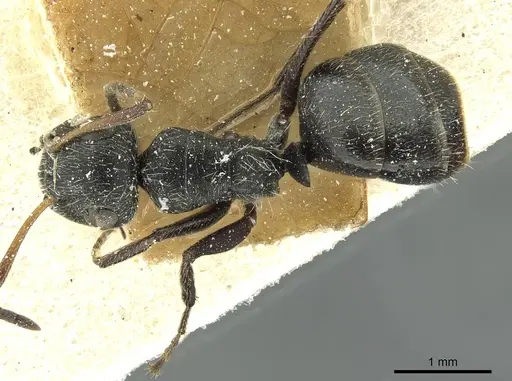
CASENT0915785
View on AntWeb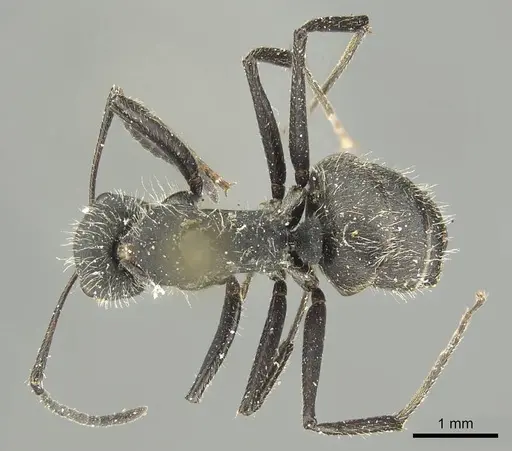
CASENT0923524
View on AntWeb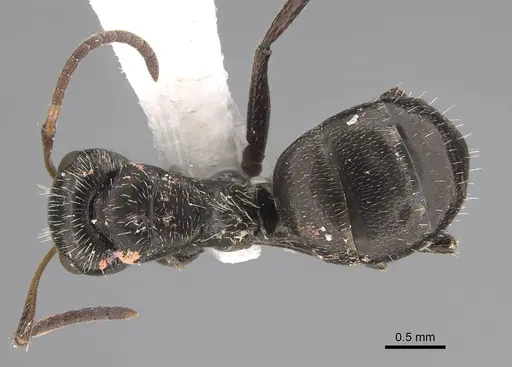
Literature
Loading distribution map...Loading products...