
Camponotus bevohitra
- Sci. Name
- Camponotus bevohitra
- Subgenus
- Mayria
- Tribe
- Camponotini
- Subfamily
- Formicinae
- Author
- Rakotonirina <i>et al.</i>, 2016
- Distribution
- Found in 1 countries
Introduction
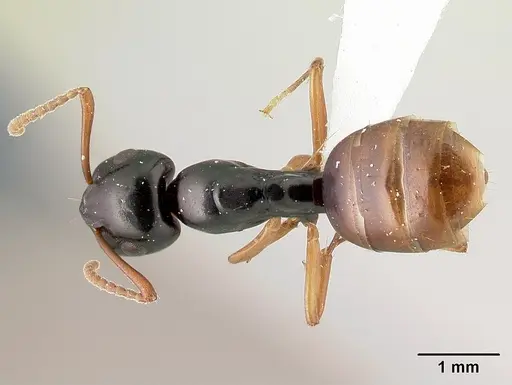
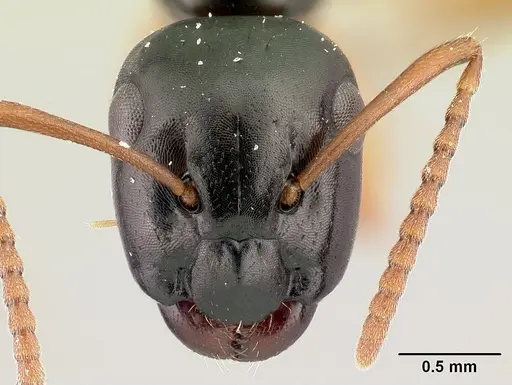
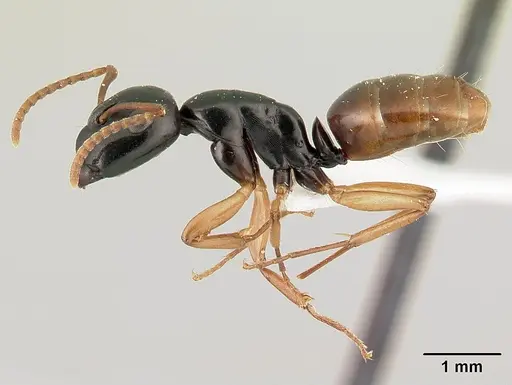
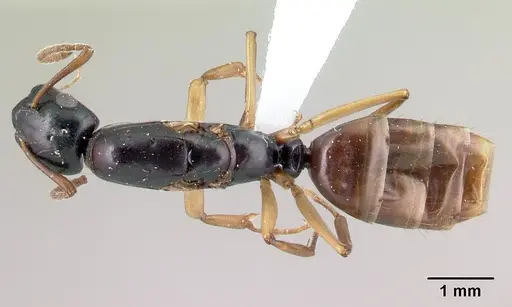
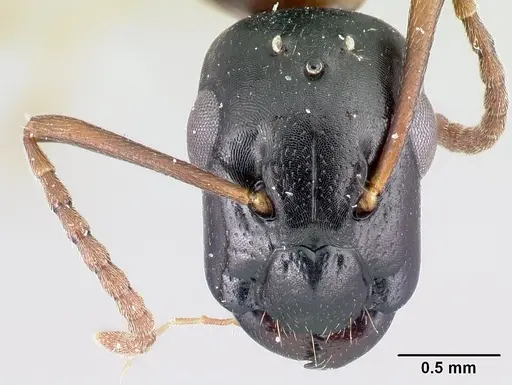
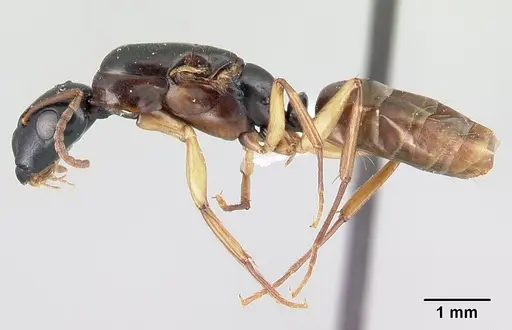
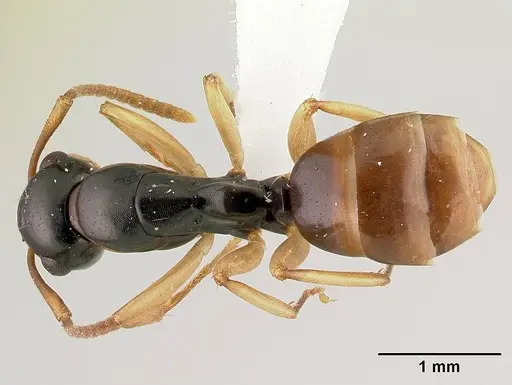
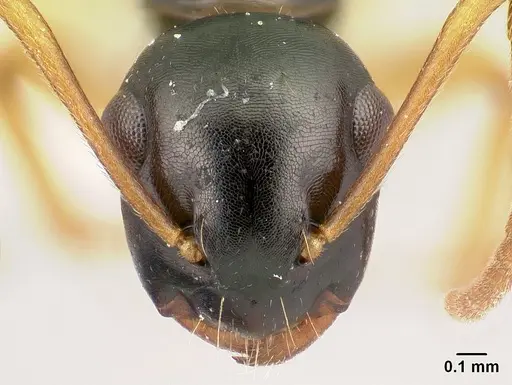
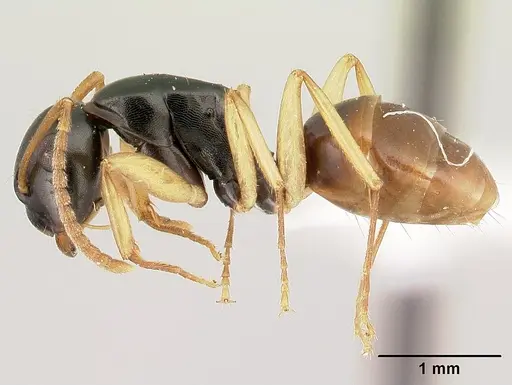
Camponotus bevohitra is a medium-sized ant species endemic to Madagascar, belonging to the Mayria subgenus and the Camponotus alamaina species group. Workers are polymorphic with major workers reaching larger sizes than minors. They have distinctive morphology including large protruding eyes, long antennal scapes, and a black to dark brown head and mesosoma with gaster and legs ranging from dark brown to yellow. The species is restricted to montane rainforest habitats in the central high plateau of Madagascar at elevations around 1410 meters. Unlike many Camponotus species that nest underground, C. bevohitra nests in dead twigs or branches above ground, making them an arboreal-nesting species . This unique nesting preference sets them apart from typical carpenter ants and influences their care requirements in captivity.
Quick Summary
- Difficulty: Medium
- Origin & Habitat: Montane rainforest in central high plateau of Madagascar, specifically known from Réserve Spéciale d'Ambohitantely at 1410m elevation [1][2].
- Colony Type: Likely monogyne based on typical Camponotus patterns, colony type is unconfirmed for this species.
- Size & Growth:
- Queen: Size data unavailable, inferred from Mayria subgenus patterns as approximately 12-16mm
- Worker: Minor workers: approximately 5-8mm, Major workers: approximately 8-12mm, sizes estimated from morphology ratios [1]
- Colony: Up to several hundred workers (estimated)
- Growth: Moderate, standard Camponotus development timeline
- Development: Estimated 6-8 weeks at optimal temperature based on genus-level Camponotus development data (Development time is estimated from related Camponotus species as no direct species-specific data exists. Temperature will significantly affect development speed.)
- Antkeeping:
- Temperature: Keep at 22-26°C. As a montane species from Madagascar, they prefer moderate temperatures rather than extreme heat. A gentle gradient allowing workers to self-regulate is ideal [1].
- Humidity: Moderate humidity (50-70%). Their arboreal nesting in dead twigs suggests they prefer drier conditions than ground-nesting ants. Provide a moisture gradient so ants can choose their preferred zone.
- Diapause: Likely required. As a montane Madagascar species, they likely experience seasonal temperature changes. Provide a cool period (15-18°C) for 2-3 months during winter months, reducing feeding frequency.
- Nesting: Arboreal specialists, they naturally nest in dead twigs and branches above ground. Y-tong (AAC) nests or acrylic nests with horizontal chambers work well. Avoid fully enclosed underground-style formicaria. Provide twigs/branches or simulate these conditions with appropriate nest architecture [1][2].
- Behavior: Generally calm and non-aggressive compared to some Camponotus species. Workers forage on lower vegetation in the wild, suggesting moderate activity levels. They are not known for being particularly defensive or aggressive toward keepers. Escape risk is moderate, use standard Camponotus escape prevention (fluon on edges). This species lacks a functional sting, instead, they bite and spray formic acid from their acidopore as their defense mechanism, typical of the Formicinae subfamily.
- Common Issues: arboreal nesting requirements mean standard underground nests may cause stress or improper humidity levels, montane origin means they may not tolerate high temperatures, avoid overheating above 30°C, slow colony growth can frustrate beginners, patience is key with this species, wild-caught colonies may have parasites or diseases that affect captive survival, humidity control is critical, too wet leads to mold, too dry causes desiccation
Nest Preferences and Housing
Camponotus bevohitra is an arboreal-nesting species, meaning they naturally live in dead twigs and branches above ground rather than underground [1]. This is the most critical aspect of their care. In captivity, they do best in Y-tong (AAC) nests or acrylic nests designed with horizontal chambers that simulate their natural twig environment. Traditional fully enclosed underground formicaria with deep chambers are not ideal for this species. The nest should have good ventilation while maintaining moderate humidity. You can also provide actual dead twigs or branches in a naturalistic setup, though these can be difficult to maintain. The key is providing a dry, airy nest environment with chambers scaled to their size, not too large, as they prefer cozy spaces. Ensure the nest has multiple chambers connected by narrow passages to mimic the tight spaces of a twig interior.
Feeding and Diet
Like other Camponotus species, C. bevohitra is omnivorous and will accept a variety of foods. In the wild, they forage on lower vegetation, likely collecting honeydew from aphids and hunting small insects [1]. In captivity, offer a balanced diet: sugar water or honey as an energy source (always available), and protein sources like mealworms, small crickets, or other insects 2-3 times per week. Since they forage on vegetation, they may also accept plant-based foods or fruit. Remove uneaten prey after 24-48 hours to prevent mold. During founding, the claustral queen will not need food, she relies entirely on stored fat reserves until her first workers (nanitics) emerge. Once workers are active, begin offering small amounts of sugar water and tiny protein pieces.
Temperature and Seasonal Care
As a montane species from central Madagascar, C. bevohitra prefers moderate temperatures rather than heat. Keep the nest area at 22-26°C, with a slight gradient so workers can regulate their own temperature. Avoid temperatures above 30°C, as this can stress or kill the colony. Room temperature (around 22-24°C) is often ideal for this species. During winter months (roughly November-February in the Northern Hemisphere), reduce temperatures to 15-18°C to simulate their natural seasonal cycle. This cool period mimics the cooler montane conditions they experience in Madagascar. During this time, reduce feeding frequency significantly, perhaps once every two weeks, as the colony will be less active. Do not feed heavily during diapause as uneaten food will mold in the cooler, slower-moving air. [1]
Colony Founding and Development
Camponotus bevohitra likely follows typical claustral founding behavior based on genus patterns, though specific founding behavior is unconfirmed for this species. The queen seals herself into a small chamber and does not leave to forage during the founding period. She relies entirely on her stored fat reserves (metabolic energy) to survive and raise her first brood. This means you do not need to feed a founding queen at all, doing so can actually cause problems by attracting pests or causing humidity issues. The founding chamber should be small and snug, a test tube with a cotton barrier works well. The queen will remain sealed in, laying eggs and tending to the brood until her first workers emerge. This process typically takes 6-8 weeks at optimal temperature (around 24°C), though it may take longer if temperatures are cooler. The first workers (nanitics) are usually smaller than subsequent workers. Once workers are foraging, you can begin connecting the founding setup to an outworld and offer food. [1]
Behavior and Temperament
This species is generally calm and manageable in captivity. They are not particularly aggressive or defensive, making them suitable for antkeepers who want to observe interesting behavior without high escape risk or painful stings. Workers are moderately active and will forage throughout the nest and outworld. The major workers, while larger, are not particularly aggressive and can be handled with care if necessary. Their natural foraging on lower vegetation suggests they explore their environment methodically rather than rushing frantically. As members of the Formicinae subfamily, they lack a functional sting. Instead, their defense mechanism involves biting the target and spraying a stream of concentrated formic acid from an acidopore into the wound. This is not dangerous to healthy humans. Escape prevention should be standard (fluon on rim edges) but does not require the extreme measures needed for tiny species. [1]
Frequently Asked Questions
Can I keep Camponotus bevohitra in a test tube?
Yes, test tubes work well for founding colonies. Use a small test tube with a water reservoir (cotton ball) at one end. The queen will seal herself into the dark end. For established colonies, transfer to a Y-tong or acrylic nest designed for arboreal species rather than keeping them long-term in test tubes.
What is the best nest type for Camponotus bevohitra?
Y-tong (AAC) nests or acrylic nests with horizontal chambers are ideal. This species naturally nests in dead twigs above ground, so they prefer airy, relatively dry conditions rather than the damp underground environment that many ant species need. Avoid deep, enclosed soil formicaria.
How long until first workers with Camponotus bevohitra?
Expect first workers (nanitics) in 6-8 weeks at optimal temperature (around 24°C). This is based on typical Camponotus development patterns since no species-specific data exists. Cooler temperatures will slow development significantly.
Do Camponotus bevohitra need hibernation?
Yes, they likely need a cool period. As a montane Madagascar species, provide 2-3 months at 15-18°C during winter. Reduce feeding during this time and avoid disturbing the colony.
Are Camponotus bevohitra good for beginners?
They are intermediate in difficulty. The main challenge is providing proper arboreal-style housing rather than typical underground nests. Once housing is correct, they are relatively straightforward to care for.
What do Camponotus bevohitra eat?
They are omnivores. Offer sugar water or honey constantly, plus protein sources like mealworms, small crickets, or other insects 2-3 times weekly. They may also accept fruit or plant-based foods.
How big do Camponotus bevohitra colonies get?
Estimated up to several hundred workers based on typical Camponotus colony development. They are not among the largest Camponotus species but can still form substantial colonies over time.
Can I keep multiple queens together?
No, this species is likely monogyne (single-queen) based on typical Camponotus patterns. Unlike some Camponotus species that can found colonies together (pleometrosis), C. bevohitra should be kept one queen per colony. Multiple unrelated queens will fight.
When should I move Camponotus bevohitra to a formicarium?
Move them once the colony reaches roughly 20-30 workers and the test tube is becoming cramped. This is typically when you see workers spending more time in the outworld or the test tube shows signs of wear. Always ensure the formicarium is properly set up with food and water before connecting it.
Report an Issue
The current care sheet is based fully on literature. See inconsistencies, or something that's incorrect? Please , it will be resolved after review from an admin. Contributing to the blogs tab also helps providing information, to make us be able to further improve the caresheets. Thank you for your support!
References

This caresheet is licensed under CC BY-SA 4.0 .
Community Blogs
Literature
Loading distribution map...Loading products...