
Camponotus banghaasi
- Sci. Name
- Camponotus banghaasi
- Subgenus
- Myrmoplatypus
- Tribe
- Camponotini
- Subfamily
- Formicinae
- Author
- Emery, 1903
- Distribution
- Found in 3 countries
Introduction
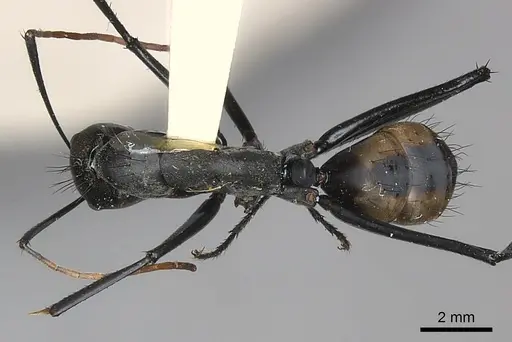
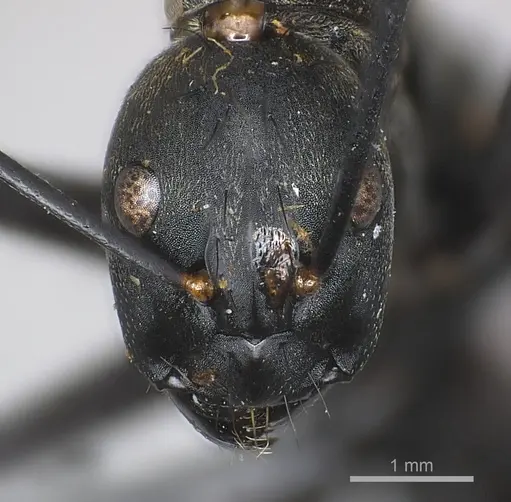
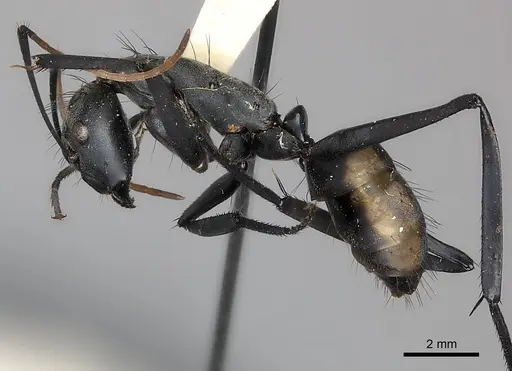
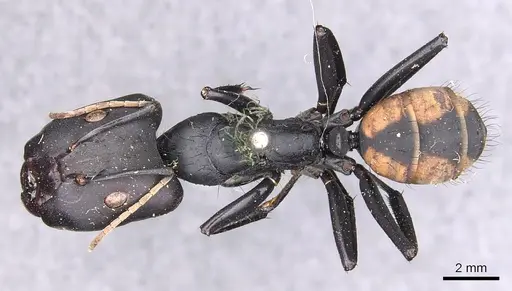
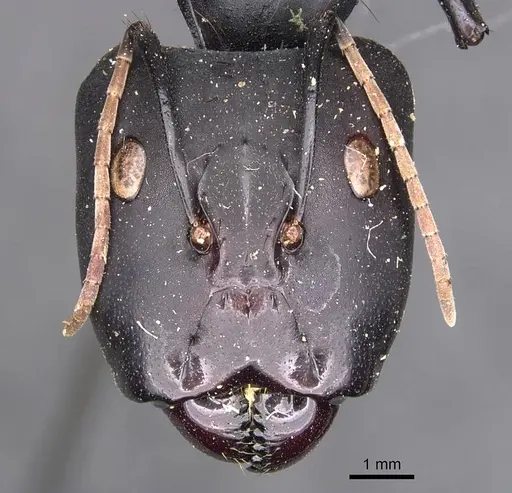
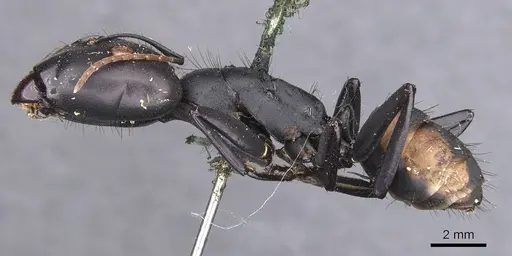
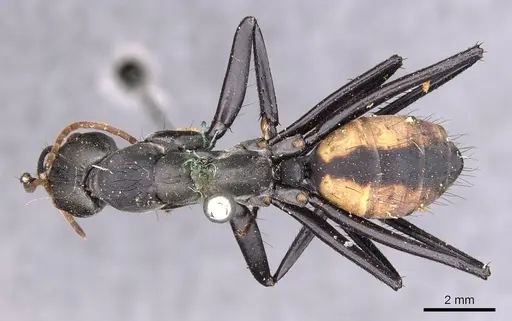
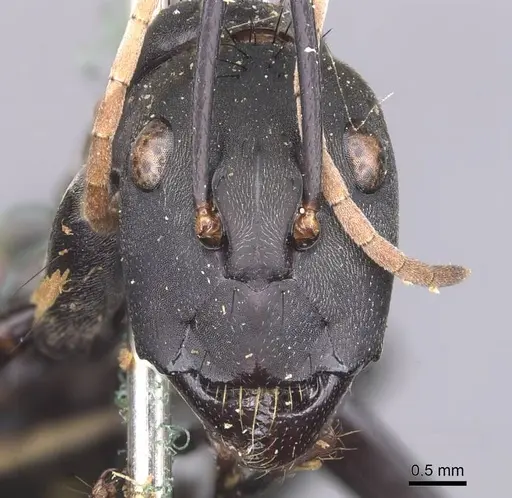
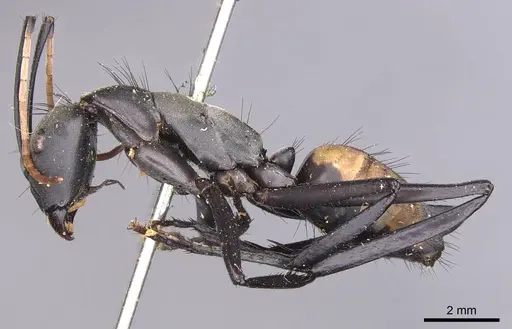
Camponotus banghaasi is a large Neotropical ant species native to the Amazonian regions of Peru and Ecuador. Workers reach approximately 10-12mm in length, making them one of the larger Camponotus species in the region . They are easily recognized by their distinctive coloring: a whitish-yellow area partially covering the gaster, leaving a black subtriangular longitudinal band along the top . The hind tibiae are strongly flattened with a concave surface, and the pronotum lacks spines . This species is arboreal, living in the Amazonian rainforest understory, and is uncommonly collected, likely due to their tree-dwelling habits and putatively small colony sizes . They were originally described from Peru and have recently been recorded in Ecuador's Orellana province within Parque Nacional Yasuní at around 216m elevation .
Quick Summary
- Difficulty: Medium
- Origin & Habitat: Amazonian rainforest of Peru and Ecuador at low elevation (around 216m) [1]. Found in understorey trails in primary rainforest.
- Colony Type: Colony structure is unconfirmed. Based on typical Camponotus patterns, likely single-queen (monogyne) colonies with claustral founding.
- Size & Growth:
- Queen: Size data unavailable, no direct measurements exist for queens in the research literature.
- Worker: Approximately 10-12mm for major workers [1]. Minor workers would be smaller.
- Colony: Likely small, possibly under 500 workers based on being uncommonly collected and putatively small colonies [1].
- Growth: Moderate, typical for larger Camponotus species.
- Development: Estimated 6-8 weeks at optimal temperature based on typical Camponotus development. (Development time is estimated from related large Camponotus species. Larger ants typically develop slower than smaller species.)
- Antkeeping:
- Temperature: Keep warm, around 24-28°C. As a lowland tropical species, they need consistently warm conditions year-round. A heating cable on one side of the nest creates a suitable gradient.
- Humidity: High humidity required, think damp rainforest. Keep nest substrate consistently moist but not waterlogged. Amazonian species prefer humid conditions.
- Diapause: No true diapause, being a tropical species, they do not require hibernation. However, activity may slow slightly during cooler periods.
- Nesting: Arboreal in nature, likely nests in hollow twigs, decaying branches, or under bark in the rainforest canopy. In captivity, a Y-tong (AAC) nest or plaster formicarium works well. Keep nesting chambers humid and provide a water tube for humidity.
- Behavior: Temperament is typical of larger Camponotus, generally calm and not overly aggressive. They are relatively slow-moving compared to smaller ant species. As members of the Formicinae subfamily, they lack a functional sting but can bite and spray formic acid from their acidopore as a defense mechanism. Escape prevention is important due to their large size, ensure enclosures have tight-fitting lids and no gaps. They are nocturnal foragers in nature, so expect most activity in evening hours.
- Common Issues: tropical species may struggle in cool rooms, monitor temperature closely, arboreal nature means they need higher humidity than ground-nesting ants, small colony size means slower population growth, patience is required, wild-caught colonies may have parasites or diseases that can cause colony failure, large size requires appropriately sized enclosures and feeding spaces
Housing and Nest Setup
Camponotus banghaasi is an arboreal species, so your setup should reflect their natural tree-dwelling preferences. A Y-tong (AAC) nest or plaster formicarium works well, both hold humidity consistently, which is critical for this Amazonian species. The nesting chambers should be appropriately sized for a colony that will eventually reach a few hundred workers. Provide a constant water source (test tube with cotton) for humidity, and consider covering part of the outworld with a damp substrate if the colony shows signs of drying out.
The outworld should be simple but functional, a plastic container with a secure lid works fine. Since these ants are large (10-12mm), standard ant keeping equipment fits them well. They are not particularly active outside the nest, so a modest outworld size is sufficient. Use a test tube setup for the founding queen, then transition to a proper nest once the colony reaches 20-30 workers. [1]
Feeding and Diet
Like other Camponotus species, Camponotus banghaasi is omnivorous with a preference for protein-rich foods. In captivity, they readily accept sugar sources (honey, sugar water) and protein (mealworms, crickets, other insects). Feed them a few small insects weekly, and keep a constant supply of sugar water available. Larger prey items can be offered as the colony grows.
These ants are nocturnal foragers in the wild, so place food in the outworld during evening hours for best acceptance. Remove uneaten prey after 24-48 hours to prevent mold. Since they likely have small colonies in nature, avoid overfeeding, excess food can attract mold and create humidity problems.
Temperature and Humidity
This is a critical aspect of keeping Camponotus banghaasi successfully. Being from the Amazonian lowlands of Peru and Ecuador, they need warm and humid conditions year-round. Maintain temperatures between 24-28°C, use a heating cable on one side of the nest if your room temperature is below this range. Place the heating cable on top of the nest, not underneath, to avoid drying out the substrate.
Humidity should stay high, around 70-85%. The nest substrate should feel consistently damp but never waterlogged. A water tube connected to the nest helps maintain humidity. Monitor condensation on the nest walls as an indicator. If condensation disappears frequently, increase misting or add more water sources. Poor temperature or humidity is the most common cause of colony failure with this species. [1]
Colony Development
Camponotus banghaasi colonies appear to be small in the wild, they are uncommonly collected, which suggests smaller colony sizes [1]. In captivity, expect slow but steady growth. The queen is claustral, meaning she seals herself in a chamber and raises the first brood alone without foraging. She lives entirely on her stored fat reserves until the first workers (nanitics) emerge.
First workers will be smaller than mature majors, appearing within 6-8 weeks under optimal conditions. After the nanitics emerge, the colony enters a growth phase. Major workers (the larger soldiers) typically appear once the colony reaches a few dozen workers. Be patient, large Camponotus species grow more slowly than smaller ants, but colonies can live for many years once established.
Behavior and Handling
These ants have a calm temperament typical of larger Camponotus species. They are not aggressive toward keepers and will generally ignore your presence. However, as Formicine ants, they lack a functional sting but can deliver a painful bite combined with spraying formic acid from their acidopore if threatened, this is their primary defense mechanism. They are relatively slow-moving and deliberate in their movements.
In the wild, they are arboreal and likely nocturnal, foraging in the rainforest canopy. In captivity, they adjust to your light cycle but may show peak activity in evening hours. They are not escape artists in the same way tiny ants are, but their large size means they can still push through loose lids, use secure, tight-fitting enclosures. [1]
Frequently Asked Questions
How long does it take for Camponotus banghaasi to get their first workers?
Expect first workers (nanitics) to emerge in about 6-8 weeks under optimal warm conditions (24-28°C). This is typical for larger Camponotus species.
What do Camponotus banghaasi ants eat?
They are omnivorous. Offer sugar water or honey constantly, and feed protein (small insects like mealworms, crickets) several times per week. They are nocturnal feeders, so offer food in the evening.
What temperature do Camponotus banghaasi need?
Keep them warm at 24-28°C. As an Amazonian species, they need consistently warm conditions year-round. A heating cable can help maintain proper temperature.
Do Camponotus banghaasi need hibernation?
No, they do not require hibernation. Being a tropical species from Peru and Ecuador, they do not enter diapause. Their activity may slow slightly during cooler periods, but no special winter care is needed.
How big do Camponotus banghaasi colonies get?
Based on their being uncommonly collected in the wild, colonies likely remain small, probably under 500 workers. This is a smaller colony size compared to many other Camponotus species.
Are Camponotus banghaasi good for beginners?
They are rated as medium difficulty. The main challenges are maintaining proper humidity and temperature, being a tropical species, they are less forgiving of cool or dry conditions than temperate species.
What size are Camponotus banghaasi workers?
Major workers reach 10-12mm in length, making them relatively large ants. Minor workers would be somewhat smaller.
Where is Camponotus banghaasi found in the wild?
They are native to the Amazonian regions of Peru and Ecuador, found in lowland rainforest at around 216m elevation. They are arboreal, living in the rainforest canopy.
When should I move my Camponotus banghaasi colony to a formicarium?
Wait until the colony has 20-30 workers before moving from a test tube setup to a proper nest. The queen should be in a claustral chamber, and the colony should be actively foraging in the outworld.
Report an Issue
The current care sheet is based fully on literature. See inconsistencies, or something that's incorrect? Please , it will be resolved after review from an admin. Contributing to the blogs tab also helps providing information, to make us be able to further improve the caresheets. Thank you for your support!
References

This caresheet is licensed under CC BY-SA 4.0 .
Community Blogs
Literature
Loading distribution map...Loading products...