
Camponotus amoris
- Sci. Name
- Camponotus amoris
- Subgenus
- Tanaemyrmex
- Tribe
- Camponotini
- Subfamily
- Formicinae
- Author
- Forel, 1904
- Distribution
- Found in 2 countries
Introduction
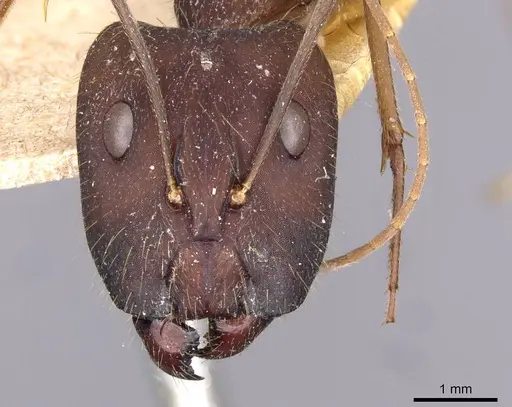
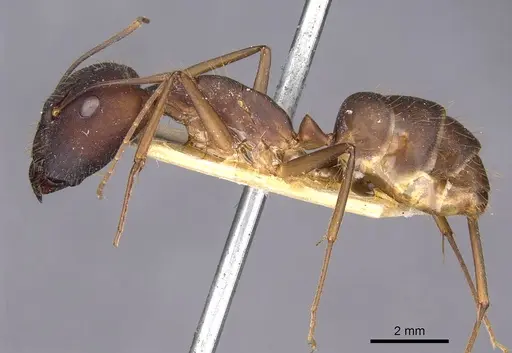
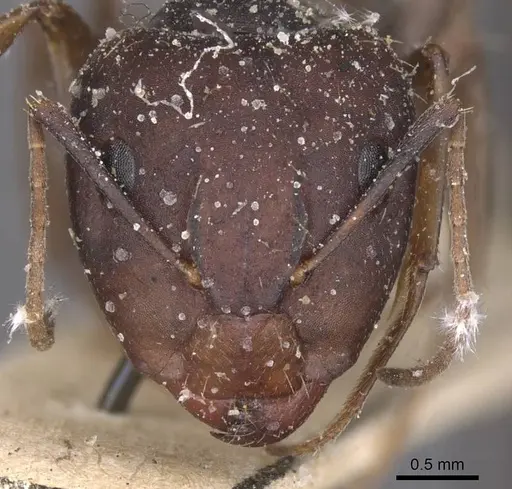
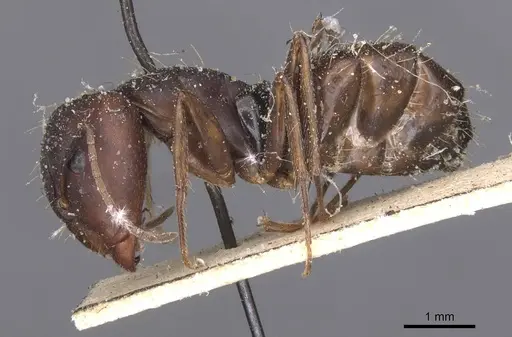
Camponotus amoris is a large Neotropical ant found from Honduras and Costa Rica down through Colombia, Peru, and into the Brazilian Amazon . Major workers reach about 13 mm in total length and are a distinctive dark red color with a rectangular, matte head . The head has several erect hairs, which helps separate it from similar species like Camponotus cacicus . It belongs to the subgenus Tanaemyrmex and lives in mountain forests up to 980 meters elevation . It has been recorded at food bait stations, suggesting it visits seeds as part of an ant-plant mutualism . Like other formicine ants, it has no sting but bites and sprays formic acid from its abdomen as a defense.
Quick Summary
- Difficulty: Medium
- Origin & Habitat: Neotropical region: Brazil, Colombia, Peru, Honduras, Costa Rica [2][1]. Lives in mountain forests at elevations from sea level up to 980 m [2][1].
- Colony Type: Colony structure has not been directly studied for this species. Based on related Camponotus, it is likely monogyne (single queen), but this is unconfirmed.
- Size & Growth:
- Queen: Size data unavailable. Queens are probably larger than major workers, but no measurements exist for this species.
- Worker: Major workers: ~13 mm total length [1].
- Colony: Unknown for this species. Related large Camponotus can reach several hundred workers, but this is unconfirmed.
- Growth: Moderate (estimated from genus patterns)
- Development: 8-12 weeks at warm temperatures (24-28°C), estimated from related Camponotus. (Direct measurements are not available. Development time depends on stable warmth.)
- Antkeeping:
- Temperature: Keep nest at 24-28°C. Create a gradient with a heating cable so workers can choose their comfort zone. Avoid cold drafts and temperature swings [1].
- Humidity: Moderate: keep the nest substrate slightly moist but not wet. Provide a water source like a water tube. Too much moisture can cause mold, too little can desiccate brood.
- Diapause: No hibernation needed. As a tropical species, keep warm year-round.
- Nesting: Y-tong (AAC) or plaster nests work well. Chamber sizes should accommodate 13 mm workers. They prefer darker nesting conditions. A test tube works for founding, then move to a larger formicarium when the colony outgrows it.
- Behavior: Typical Camponotus temperament: generally calm unless the nest is disturbed. They defend by biting and spraying formic acid, not stinging. Active foragers that collect nectar, honeydew, and small insects. Their bite is mild. Escape risk is moderate, they are large enough that standard barriers work, but check for gaps.
- Common Issues: slow colony establishment can stall growth if conditions are not stable, patience is needed., temperature drops below 20°C can stop brood development and harm the colony., humidity extremes: too dry desiccates brood, too wet promotes mold, aim for slightly moist substrate., large workers may squeeze through small gaps in nest connections, seal all joints carefully., wild-caught colonies may carry mites or nematodes, quarantine new colonies for at least two weeks.
Housing and Nest Setup
Camponotus amoris is a large ant that does well in standard formicariums. Y-tong (AAC) or plaster nests are ideal because they provide darkness, humidity control, and easy observation. Since this species lives in mountain forests, it prefers darker conditions, avoid bright lights on the nest. Chamber sizes should be big enough for 13 mm workers to move around comfortably. Use a test tube with water for founding colonies, then move them to a larger nest once they have 20-30 workers. Because they are large, they produce more waste than tiny ants, so clean the outworld regularly. Always seal any gaps in tube connections to prevent escapes. [1][2]
Feeding and Diet
Camponotus amoris is omnivorous. Offer protein (like mealworms, crickets) two to three times a week. Keep a constant sugar source available, such as honey water, sugar water, or commercial ant nectar. In the wild they likely tend homopterans for honeydew, so sugar is essential. They can tackle prey larger than small ants can. Remove uneaten prey after 24-48 hours to prevent mold. Fresh fruit is accepted occasionally.
Temperature and Seasonal Care
As a tropical species, Camponotus amoris needs steady warmth. Keep the nest at 24-28°C for best growth. Use a heating cable on one side to create a gradient. They can tolerate brief drops to around 20°C, but development will slow. Avoid placing the colony near air conditioning vents or cold windows. Unlike temperate ants, they do not require hibernation, maintain stable temperatures year-round. [1]
Colony Development and Growth
Large Camponotus grow slowly. From egg to first nanitic worker takes about 6-10 weeks at 24-28°C. The queen raises the first brood alone, so avoid disturbing the founding chamber. A healthy colony might reach 50 workers in the first year, then accelerate. The queen can live many years, this is a long-term commitment. To maximise growth, provide consistent warmth, adequate humidity, and regular protein feeding.
Behavior and Observation
Camponotus amoris has a typical Camponotus temperament: calm unless provoked. When threatened, they bite and spray formic acid, they do not sting. Workers forage actively and will recruit nestmates by laying pheromone trails to food sources. Their large size makes them easy to watch. In nature they are part of seed-dispersal mutualisms [3]. Their bite is mild and they rarely attack the keeper.
Common Keeping Problems
The biggest challenge is patience, these ants grow slowly, and beginners may overfeed or disturb them too often. Temperature instability is another common issue: if the colony gets cold (below 20°C) for more than a few days, brood may die. Humidity must be balanced: too dry and brood desiccates, too wet and mold grows. Aim for a slightly moist nest substrate with a water tube. Wild-caught colonies may bring in parasites, quarantine new acquisitions and watch for mites or odd behavior. Also check all connections for gaps because large workers can squeeze through surprisingly small openings.
Frequently Asked Questions
How long does it take for Camponotus amoris to get first workers?
Expect 6-10 weeks from egg to first worker at 24-28°C. This is typical for large Camponotus. The queen raises the first brood alone, so avoid disturbance.
What do Camponotus amoris ants eat?
They eat both protein (insects) and sugar (honey water, nectar). Offer protein two to three times a week and keep sugar always available.
Do Camponotus amoris ants need hibernation?
No. As a tropical species from Central and South America, they do not need hibernation. Keep them warm year-round.
What size colony do Camponotus amoris reach?
Colony size is not documented. Based on related large Camponotus, they may reach several hundred workers over several years, but this is unconfirmed.
Are Camponotus amoris good for beginners?
They are intermediate difficulty. The main challenge is patience, they grow slowly and need stable warmth. If you can provide that, they are rewarding.
What temperature should I keep Camponotus amoris at?
Keep the nest at 24-28°C. Use a heating cable on one side for a gradient. Avoid temperatures below 20°C.
When should I move Camponotus amoris from a test tube to a formicarium?
Move them when they have 20-30 workers or when the test tube gets crowded. Make sure the new nest has appropriate chamber sizes and humidity.
Can I keep multiple Camponotus amoris queens together?
This has not been studied. Most Camponotus are monogyne, so it is not recommended to house multiple unrelated queens together.
Where is Camponotus amoris found in the wild?
They range from Honduras and Costa Rica through Colombia, Peru, and into the Brazilian Amazon. They live in mountain forests up to 980 meters elevation.
How big are Camponotus amoris workers?
Major workers reach about 13 mm total length. Queen size is not recorded but is likely larger.
Is Camponotus amoris invasive anywhere?
No. Its native range is Central and South America, and there are no records of it establishing elsewhere.
Report an Issue
The current care sheet is based fully on literature. See inconsistencies, or something that's incorrect? Please , it will be resolved after review from an admin. Contributing to the blogs tab also helps providing information, to make us be able to further improve the caresheets. Thank you for your support!
References

This caresheet is licensed under CC BY-SA 4.0 .
Community Blogs
CASENT0217604
View on AntWeb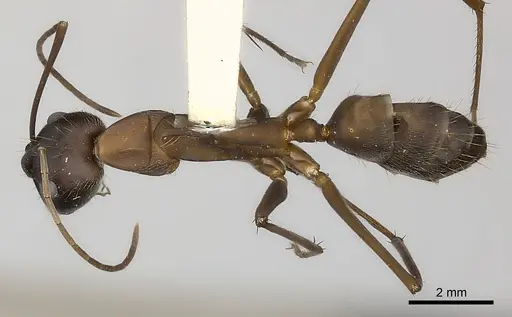
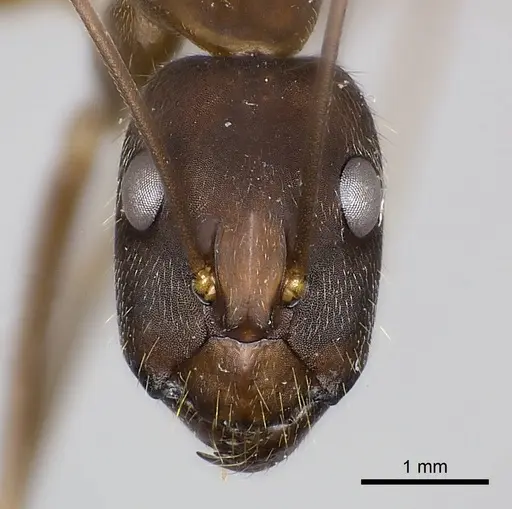
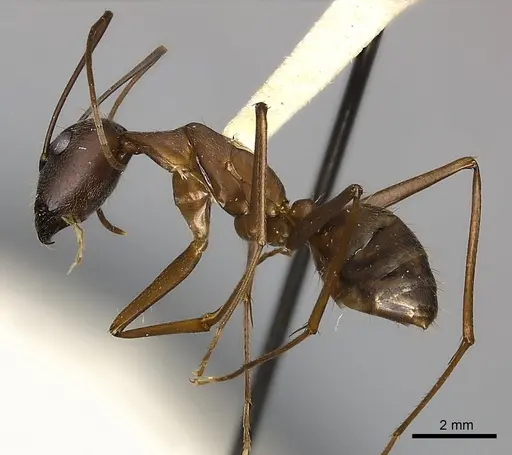
CASENT0910029
View on AntWeb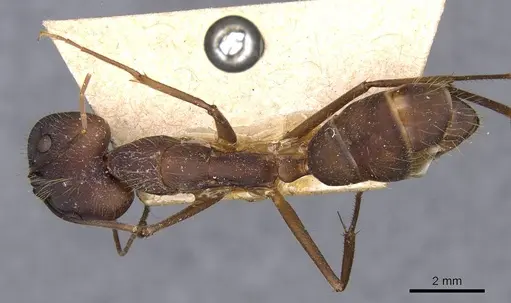
CASENT0913694
View on AntWeb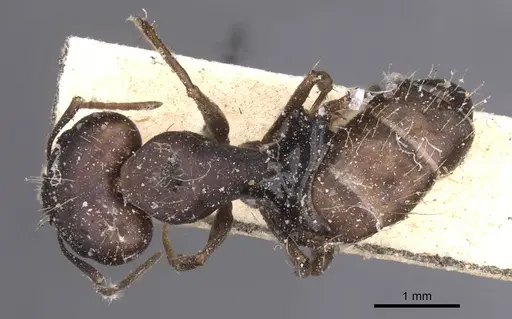
CASENT0923513
View on AntWeb
Literature
Loading distribution map...Loading products...