
Calyptomyrmex loweryi
- Sci. Name
- Calyptomyrmex loweryi
- Tribe
- Crematogastrini
- Subfamily
- Myrmicinae
- Author
- Shattuck, 2011
- Distribution
- Found in 3 countries
Introduction
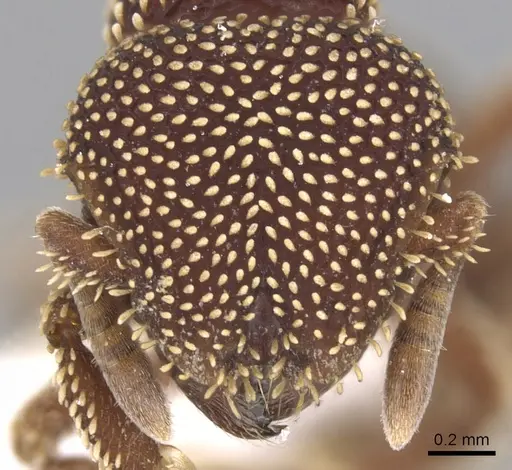
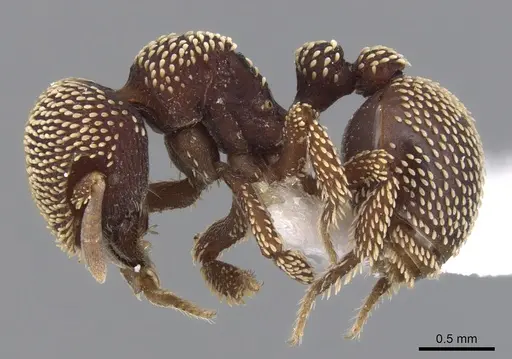
Calyptomyrmex loweryi is a small Myrmicinae ant native to Southeast Asia, found across northern Borneo, the Philippines, and Singapore. Workers have a distinctive dull red-brown coloration with unique spatulate hairs - these hairs are narrower near the body and expand outward with rounded tips, lying flat against the body surface. This camouflage is enhanced by workers often carrying a layer of soil on their bodies, using their enlarged hairs to retain camouflaging material . The species was formally described in 2011 by Steven Shattuck and is most similar to Calyptomyrmex beccarii, but can be distinguished by its larger size and broader, more angular head shape . What makes C. loweryi interesting is its cryptic lifestyle - these ants are rarely encountered and have been collected only a limited number of times. They nest in rotten wood or directly in soil, often found under large logs or in leaf litter samples, and forage singly or in small numbers through rainforests . This makes them a true rainforest litter ant, well adapted to the humid, shaded microhabitats of the forest floor.
Quick Summary
- Difficulty: Expert
- Origin & Habitat: Southeast Asia, found in the Philippines (Luzon, Mindanao), Malaysia (Sabah, Sarawak), Borneo, Indonesia, and Singapore. Inhabits rainforest, rubber plantations, and reafforestation areas. Nests in rotten logs, under large logs, and in leaf litter [1][2][3].
- Colony Type: Colony structure is unconfirmed. Based on limited collection data, colonies appear small with workers foraging singly or in small groups [2].
- Size & Growth:
- Queen: Size data unavailable, no queen measurements exist for this species
- Worker: ~2-2.5mm total length, inferred from Calyptomyrmex genus (workers are small rainforest ants)
- Colony: Likely small, unknown maximum, but foragers work singly suggesting smaller colonies [2]
- Growth: Unknown
- Development: Unconfirmed, no development data available for this species (Development time is unknown)
- Antkeeping:
- Temperature: Likely 24-28°C based on tropical rainforest habitat. Start in the mid-70s°F (24-26°C) and observe colony activity [1][2].
- Humidity: High, rainforest species requiring damp conditions. Keep substrate consistently moist but not waterlogged, with some drier areas available [2].
- Diapause: No, being a tropical species, they do not require a diapause period [1].
- Nesting: Nests in rotten wood or directly in soil. In captivity, a naturalistic setup with moist substrate (like a mix of soil and rotting wood) or a Y-tong/plaster nest with high humidity works well. They prefer tight, humid chambers scaled to their small size [2].
- Behavior: Very cryptic and rarely seen. Workers forage singly or in small numbers, making them difficult to observe. They are not aggressive and likely have minimal defensive capabilities given their small size and cryptic lifestyle. Escape risk is moderate, their small size means gaps must be sealed carefully, but they are not strong climbers. The spatulate hairs and soil-camouflaging behavior is their primary defense, they blend in with their environment [2]. The subfamily Myrmicinae typically uses smear defense with a modified stinger, though specific behavior is unconfirmed for this species.
- Common Issues: difficulty finding this species for sale, rarely collected or available in the antkeeping hobby, cryptic behavior means colonies may seem inactive, they forage singly and stay hidden, humidity control is critical, being rainforest litter ants, they dry out easily, small colony size means losses have big impact, start with as many workers as possible, wild-caught colonies may be stressed from collection and transport, leading to colony failure
Discovery and Identification
Calyptomyrmex loweryi was formally described in 2011 by Steven Shattuck in his revision of the genus Calyptomyrmex in Southeast Asia and Oceania. The species was named after B.B. Lowery, who collected the type specimens from the Philippines (Mindanao, Bukidnon) in 1978. The holotype worker comes from a reafforestation area near Malaybalay, found in a rotten log, while paratypes were collected from both a reafforestation area and a rubber plantation nearby [1].
The species can be identified by several key features: spatulate hairs on the head and body that are broader and more rounded than related species, a larger body size, a flatter posterior margin of the head with more sharply rounded lateral corners, and a finely matte dorsal face of the propodeum lacking the low rugae found in similar species. The dull red-brown coloration and the distinctive soil-camouflaging behavior (where workers cover themselves with soil particles using their enlarged hairs) also help identify this species [1][4].
Natural History and Habitat
Calyptomyrmex loweryi is a true rainforest specialist, encountered in primary rainforest, rubber plantations, and reafforestation areas across northern Borneo, the Philippines, and Singapore. They are considered a litter ant, found in leaf litter samples, under large logs, and in rotten wood. One specimen was collected from soil under a large log in primary rainforest at Danum Valley in Malaysia [1][2].
The species has been collected only a limited number of times, reflecting both its cryptic behavior and the specialized microhabitat it occupies. Workers forage singly or in very small numbers through the rainforest understory, making them difficult to detect. Their spatulate hairs and soil-camouflaging behavior help them blend in with the forest floor, where they likely hunt small invertebrates and tend aphids or other honeydew-producing insects [2].
Housing and Nest Setup
Because C. loweryi is a rainforest litter ant that nests in rotten wood and soil, a naturalistic setup works best. Use a mix of moist soil and rotting wood pieces as substrate, or provide a Y-tong/plaster nest with high humidity chambers. The key is maintaining consistently damp conditions without waterlogging, these ants come from humid rainforest environments where the substrate stays moist [2].
Given their very small size, escape prevention is important. Use fine mesh barriers and ensure all gaps are sealed. However, they are not strong climbers and are unlikely to scale smooth surfaces like glass. Provide a shallow water dish and keep the outworld relatively simple, these are not exploratory ants that need large foraging areas [2].
Feeding and Diet
Based on typical Calyptomyrmex and general Myrmicinae behavior, C. loweryi is likely an omnivore that feeds on small insects, honeydew, and nectar. In captivity, offer small protein sources like fruit flies, pinhead crickets, or small mealworms, along with sugar water or honey as an energy source [2].
Being a small rainforest ant, they probably prefer small, soft-bodied prey. Feed small insects appropriate to their size, anything too large will be ignored. Offer sugar sources regularly, especially if the colony is growing. Remove uneaten food after 24-48 hours to prevent mold in the humid setup they require.
Temperature and Humidity
As a tropical rainforest species from Southeast Asia, C. loweryi requires warm and humid conditions. Aim for temperatures in the mid-70s to low-80s Fahrenheit (24-28°C), which matches their natural habitat in Borneo and the Philippines. A slight temperature gradient allows the colony to self-regulate [1].
Humidity is critical, keep the nest substrate consistently moist but not flooded. The natural habitat (rainforest floor under logs and in rotting wood) is constantly humid. Use a moisture reservoir or regular misting to maintain humidity, and ensure ventilation is adequate to prevent mold while retaining moisture. A hygrometer can help monitor conditions, aim for 70-80% humidity in the nest area.
Frequently Asked Questions
How long does it take for Calyptomyrmex loweryi to develop from egg to worker?
The exact development time is unconfirmed, no specific studies exist on this species' development. Estimate several weeks to months at optimal temperature (around 24-28°C) based on typical tropical ant development, but this is a rough guess [1].
What do Calyptomyrmex loweryi ants eat?
Based on typical genus behavior, they likely accept small insects (fruit flies, pinhead crickets), sugar water, and honey. They are probably omnivorous rainforest foragers. Offer small protein prey and sugar sources regularly [2].
Are Calyptomyrmex loweryi good for beginners?
No, this species is not recommended for beginners. It is extremely rare in the antkeeping hobby, has unconfirmed care requirements, requires high humidity, and colonies remain small. This is an expert-level species for experienced keepers interested in unusual Myrmicinae [2].
Do Calyptomyrmex loweryi ants sting?
Given their very small size, any sting would be negligible to humans. They are not known for being aggressive or having painful stings, their primary defense is cryptic camouflage. The Myrmicinae subfamily typically uses a smear defense with a modified stinger, though specific behavior is unconfirmed for this species [1].
How big do Calyptomyrmex loweryi colonies get?
The maximum colony size is unknown. Based on their foraging behavior (workers search singly or in small numbers), colonies are likely small, probably under a few hundred workers at most [2].
Can I keep multiple Calyptomyrmex loweryi queens together?
The colony structure is unconfirmed, we don't know if they are single-queen or multi-queen colonies. Combining unrelated queens is not recommended since this has not been documented for this species [1].
What temperature should I keep Calyptomyrmex loweryi at?
Aim for 24-28°C (mid-70s to low-80s°F). This matches their tropical rainforest habitat in the Philippines and Borneo. A slight gradient allows the colony to choose its preferred temperature [1].
Do Calyptomyrmex loweryi need hibernation?
No, as a tropical species from Southeast Asia, they do not require a diapause or hibernation period. Keep them warm year-round [1].
Why are my Calyptomyrmex loweryi dying?
Common causes include: low humidity (they need consistently damp conditions), improper feeding (they need small prey and sugar), stress from wild collection, or temperature issues (they need warmth). Ensure high humidity, appropriate-sized prey, and stable temperatures in the 24-28°C range [2].
Where can I get Calyptomyrmex loweryi ants?
This species is extremely rare in the antkeeping hobby. It has been collected only a limited number of times in the wild and is not commonly available from suppliers. You may need to connect with specialized Southeast Asian ant collectors or join ant enthusiast communities to find this species [2].
Report an Issue
The current care sheet is based fully on literature. See inconsistencies, or something that's incorrect? Please , it will be resolved after review from an admin. Contributing to the blogs tab also helps providing information, to make us be able to further improve the caresheets. Thank you for your support!
References

This caresheet is licensed under CC BY-SA 4.0 .
Community Blogs
CASENT0900996
View on AntWeb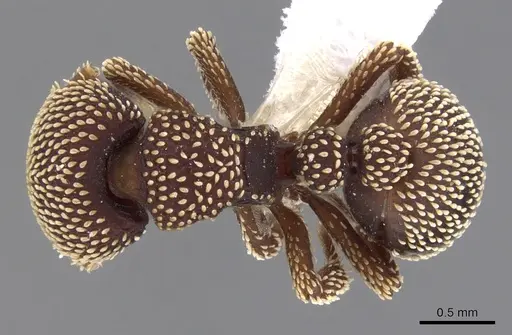
Literature
Loading distribution map...Loading products...