
Calyptomyrmex grammus
- Sci. Name
- Calyptomyrmex grammus
- Tribe
- Crematogastrini
- Subfamily
- Myrmicinae
- Author
- Shattuck, 2011
- Distribution
- Found in 1 countries
Introduction
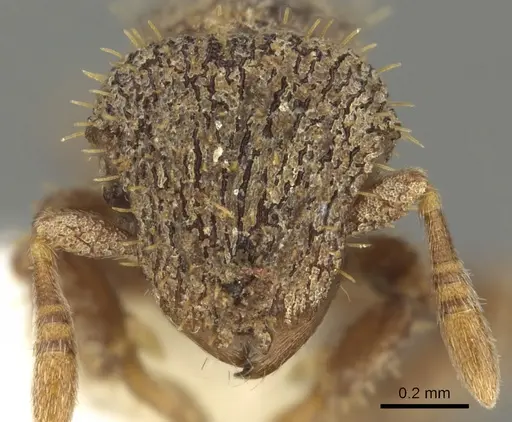
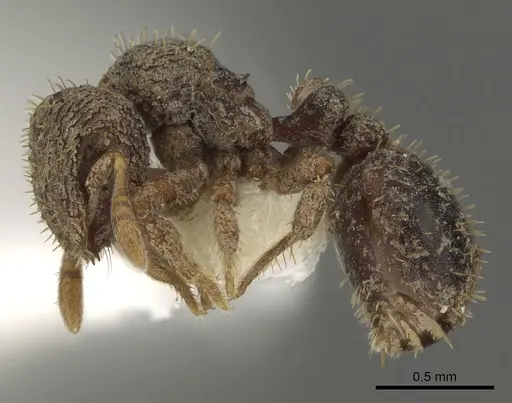
Calyptomyrmex grammus is an extremely rare rainforest ant species from Far North Queensland, Australia. Workers are tiny, around 2-2.5mm in total length, with a red-brown coloration and lighter antennae and legs . These ants have a remarkable camouflage behavior - workers often cover themselves with a layer of soil, using their enlarged spatulate hairs to retain camouflaging material on their bodies . The propodeum has short, broad spines, and the mesonotum has distinctive longitudinal rugae (ridges) . This species was formally described in 2011 and has been encountered only a handful of times, making it one of the rarest ants in the Australian ant fauna.
Quick Summary
- Difficulty: Expert
- Origin & Habitat: Far North Queensland, Australia, restricted to tropical rainforest habitats. Known from Mulgrave River Road and Graham Range [1][2].
- Colony Type: Unconfirmed, colony structure has not been documented. Like most Myrmicinae, likely single-queen colonies but this needs confirmation.
- Size & Growth:
- Queen: Unknown, queen has not been described in scientific literature
- Worker: ~2-2.5mm, inferred from Calyptomyrmex genus [1]
- Colony: Unknown, only known from a handful of workers
- Growth: Unknown
- Development: Unknown, no development data exists for this species (No direct observations of colony development or founding behavior have been documented.)
- Antkeeping:
- Temperature: Keep at 24-28°C, these are tropical rainforest ants requiring warm, stable conditions. A heating cable on one side of the nest creates a suitable gradient.
- Humidity: High humidity required, think damp rainforest floor. Keep the nest substrate consistently moist but not waterlogged. Provide a water reservoir and mist occasionally, but allow some drier areas for the ants to regulate their own humidity.
- Diapause: No, as a tropical species from Far North Queensland, they do not require hibernation. Maintain warm conditions year-round.
- Nesting: In nature they nest in rotten wood or directly in soil [2]. For captivity, a small naturalistic setup with moist substrate (like a plaster nest or test tube setup with soil chamber) works well. Their tiny size means chambers and passages must be very small.
- Behavior: These ants forages singly or in small numbers through the rainforest leaf litter [2]. They are not aggressive and rely on camouflage rather than confrontation. Their tiny size and cryptic behavior make them difficult to observe. Escape prevention is critical, at around 2mm, they can squeeze through extremely small gaps. Use fine mesh barriers and tight-fitting lids.
- Common Issues: escape prevention is critical, their tiny size means they can squeeze through gaps that seem sealed, humidity control is challenging, too wet causes mold, too dry causes desiccation, this species has never been kept in captivity, all care recommendations are speculative, wild-caught colonies may be nearly impossible to obtain due to their rarity, temperature stability is crucial, tropical species are sensitive to temperature swings
Rarity and Collection History
Calyptomyrmex grammus is one of the rarest ant species in Australia, having been encountered only a handful of times since its discovery. The species was formally described in 2011 by Steven Shattuck based on specimens collected from leaf litter samples in Far North Queensland rainforest [1]. The type locality is Mulgrave River Road,7km west by south of Bellenden Ker, with additional specimens from the Graham Range area. This species remains poorly known because of its cryptic behavior, tiny size, and restricted habitat. The fact that workers are often covered in soil and camouflaging material makes them exceptionally difficult to spot even by experienced ant collectors using berlese funnels to process leaf litter [2]. For antkeepers, this rarity means that obtaining a colony is extremely challenging and may not be possible without specialized collection permits.
Identification and Distinguishing Features
Identifying Calyptomyrmex grammus requires examination under magnification. Workers are extremely tiny, around 2-2.5mm total length, making them among the smaller ant species. The key identifying features include: thin hairs on the head and body with blunt tips, short broad spines on the propodeum, a weakly punctate gaster (abdomen), and longitudinal rugae on the mesonotum (the middle section of the body) [1]. The petiolar node (the segment of the waist closest to the body) is relatively broad and thin when viewed from above. The body is red-brown with slightly lighter antennae and legs. This species is most similar to Calyptomyrmex ocullatus but can be separated by the presence of longitudinal rugae on the mesonotum (absent in ocullatus) and the broader, thinner petiolar node [1]. The distinctive soil-carrying behavior with spatulate hairs is also characteristic of the genus.
Natural History and Foraging
In their natural rainforest habitat, Calyptomyrmex grammus nests in rotten wood or directly in soil [2]. Workers forage singly or in small numbers through the leaf litter layer, searching for small prey items and honeydew. Their remarkable camouflage strategy involves covering themselves with soil particles using their enlarged, spatulate hairs, this helps them remain invisible against the forest floor background. This behavior is not just passive, they actively retain and carry camouflaging material on their bodies [2]. The small eye size (only 3-4 ommatidia) suggests they rely more on chemical cues than visual perception, which is common among litter-dwelling ants. Their tiny size allows them to navigate through the complex microhabitat of the rainforest floor, accessing small crevices and spaces that larger ants cannot reach.
Housing and Captive Care
Since this species has never been documented in captivity, all care recommendations are speculative estimates based on what is known about their natural habitat and related species. Provide a small, humid nest setup, a plaster nest with a water reservoir or a test tube setup with a moist soil chamber works well. The nest chambers must be tiny given the worker size of around 2mm. Maintain temperatures between 24-28°C using a heating cable if room temperature is lower. Keep humidity high (70-85%) by ensuring the substrate remains consistently moist but not waterlogged. Foraging occurs in small numbers, so offer tiny prey items like springtails, micro-arthropods, or small fruit fly portions. Sugar sources may be accepted but are not guaranteed. Escape prevention is absolutely critical, use fine mesh (at least 0.5mm or smaller) and ensure all connections are sealed. Given the extreme rarity of this species in the wild, captive breeding would be essential for establishing a sustainable antkeeping population. [2]
Feeding and Nutrition
Based on the genus typical behavior and the fact that they are small rainforest litter ants, Calyptomyrmex grammus likely preys on tiny arthropods and collects honeydew from aphids or scale insects. In captivity, offer small live prey such as springtails, tiny isopods, or freshly killed fruit fly portions. These ants are too small to tackle larger insects. Sugar water or honey diluted with water may be accepted, but their primary diet likely consists of protein. Feed small amounts every 2-3 days and remove any uneaten prey within 24 hours to prevent mold. The cryptic foraging behavior (foraging singly or in small numbers) suggests they are not aggressive foragers and may take prey opportunistically rather than mounting coordinated raids. [2]
Frequently Asked Questions
How big are Calyptomyrmex grammus ants?
Workers are extremely tiny at around 2-2.5mm total length [1]. This makes them among the smaller ant species kept in captivity. The queen size has not been documented.
Where does Calyptomyrmex grammus live in the wild?
This species is restricted to Far North Queensland rainforest in Australia, known only from Mulgrave River Road and Graham Range [1][2].
Can I keep Calyptomyrmex grammus in a test tube?
A test tube setup with a moist cotton ball can work as a founding setup, but given their tiny size and need for humidity, a small plaster nest or naturalistic setup with a soil chamber may be better. The key is maintaining high humidity while preventing escapes through tiny gaps.
What do Calyptomyrmex grammus eat?
Based on related species, they likely eat small live prey (springtails, micro-arthropods) and may collect honeydew. Offer tiny prey items and occasional sugar water, but primary nutrition should come from protein sources.
How long does it take for Calyptomyrmex grammus to develop from egg to worker?
This is unknown, no development data exists for this species.
Do Calyptomyrmex grammus ants sting?
As Myrmicinae ants, they have a stinger, but at their tiny size they would be unable to penetrate human skin. They are not considered dangerous to humans.
Are Calyptomyrmex grammus good for beginners?
No. This is an expert-level species due to its extreme rarity in the wild, complete lack of captive husbandry information, tiny size requiring excellent escape prevention, and specific humidity requirements. Do not attempt unless you have extensive experience with sensitive rainforest species.
Do Calyptomyrmex grammus need hibernation?
No, as a tropical rainforest species from Far North Queensland, they do not require diapause or hibernation. Keep them warm year-round at 24-28°C.
Why are Calyptomyrmex grammus so rarely found?
Their tiny size, cryptic camouflage behavior (covering themselves with soil), and restricted rainforest habitat make them exceptionally difficult to detect. They have only been collected a handful of times using specialized leaf litter extraction methods [1][2].
How do I identify Calyptomyrmex grammus?
Look for: tiny workers (around 2-2.5mm), red-brown coloration, thin blunt-tipped hairs on body, short broad propodeal spines, longitudinal rugae on mesonotum, and broad thin petiolar node in dorsal view [1]. A microscope is required for accurate identification.
Can I find Calyptomyrmex grammus in my area?
No, this species is restricted to Far North Queensland, Australia, specifically the Mulgrave River and Graham Range areas. They are not found anywhere else in the world.
What makes Calyptomyrmex grammus unique among ants?
Their remarkable soil-carrying camouflage behavior is distinctive, workers use enlarged spatulate hairs to retain soil particles on their bodies, making them nearly invisible against the rainforest floor [2]. Combined with their extreme rarity and recent 2011 description, they are one of Australia's most enigmatic ant species.
Report an Issue
The current care sheet is based fully on literature. See inconsistencies, or something that's incorrect? Please , it will be resolved after review from an admin. Contributing to the blogs tab also helps providing information, to make us be able to further improve the caresheets. Thank you for your support!
References

This caresheet is licensed under CC BY-SA 4.0 .
Community Blogs
CASENT0901001
View on AntWeb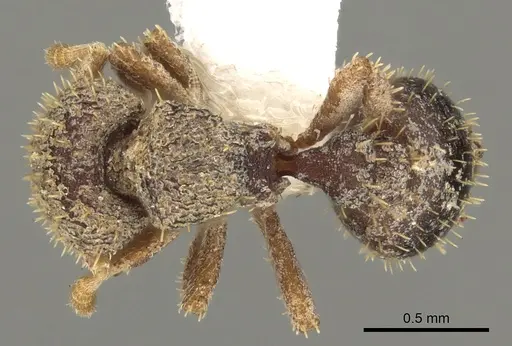
Literature
Loading distribution map...Loading products...