
Calyptomyrmex fritillus
- Sci. Name
- Calyptomyrmex fritillus
- Tribe
- Crematogastrini
- Subfamily
- Myrmicinae
- Author
- Shattuck, 2011
- Distribution
- Found in 1 countries
Introduction
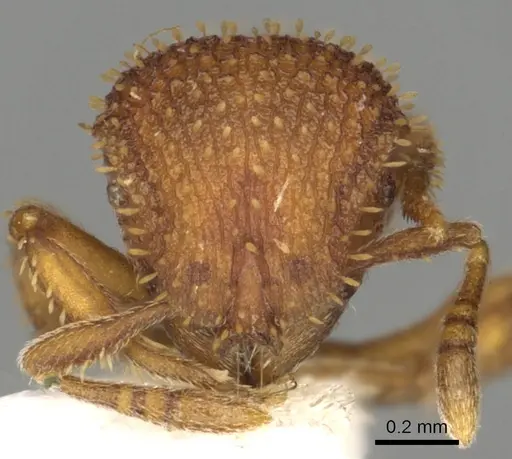
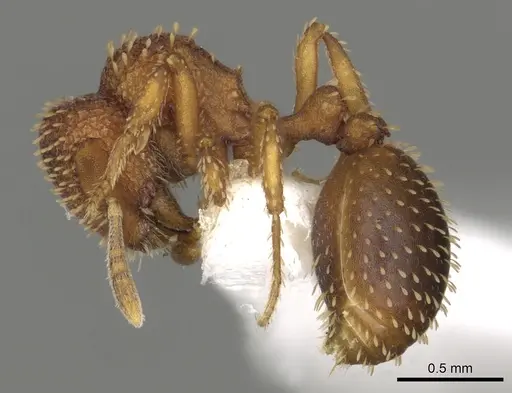
Calyptomyrmex fritillus is a tiny rainforest ant from Far North Queensland, Australia. Workers are among the smallest ants kept in captivity - exact body size data is unavailable, but they are very small (head width 0.72-0.80mm) . They have a distinctive yellow-red to red-brown coloration and are covered in unusual spatulate hairs - hairs narrower near the body that expand outward with rounded tips . These ants are masters of camouflage; workers often carry a layer of soil on their bodies, using their enlarged hairs to hold the material in place . The species was only described in 2011, so there is very little documented information about their captive care .
Quick Summary
- Difficulty: Expert
- Origin & Habitat: Calyptomyrmex fritillus comes from a restricted region of Far North Queensland, Australia, specifically found in Mt. Webb National Park, Gap Creek near Mt. Finnigan, and Mt. Cook National Park. They live in rainforest habitats, collected from leaf litter samples [1][2].
- Colony Type: Colony structure is unconfirmed. This is a newly described species with very limited collection records [2].
- Size & Growth:
- Queen: Unknown, queen has not been described [1]
- Worker: Size data unavailable, workers measure 0.72-0.80mm in head width but full body length is not documented [1]
- Colony: Likely small, workers are rarely collected and forage singly or in small numbers [2]
- Growth: Unknown, estimated slow based on limited data
- Development: Unknown, no development data exists for this species (This is a newly described species with no documented development timeline.)
- Antkeeping:
- Temperature: Keep around 22-26°C. This species comes from Australian rainforest, so they need warmth and stability.
- Humidity: Keep high, rainforest species need consistently moist substrate. The nest material should feel damp but not waterlogged.
- Diapause: Unknown, Australian tropical rainforests do not experience harsh winters. This species likely does not require hibernation.
- Nesting: In nature they nest in rotten wood or directly in soil [2]. In captivity, a small Y-tong (AAC) nest or plaster nest with tight chambers works well. Their tiny size means escape prevention must be excellent, use fine mesh barriers.
- Behavior: These ants are very shy and non-aggressive. Workers forage singly or in small numbers through leaf litter [2]. They are not known to sting and their tiny size means they pose no danger to keepers. The main concern is their extreme small size, they can squeeze through gaps that larger ants cannot. Escape prevention is critical.
- Common Issues: escape prevention is critical, their tiny size means they can squeeze through standard mesh barriers, high humidity requirements can lead to mold if ventilation is poor, limited data means keepers are essentially pioneering captive husbandry, slow growth and small colony sizes make them difficult to establish, wild-caught colonies may be stressed from collection and have high mortality
Why Calyptomyrmex fritillus Is a Challenge
This species is genuinely one of the most challenging ants to keep because it was only described in 2011 and has been collected very few times in the wild [1]. There is essentially no published research on their captive care, colony structure, or development. You will be pioneering their husbandry. The workers themselves are tiny, which means they require specialized housing with excellent escape prevention. Most standard ant keeping equipment is designed for much larger species. Expect a steep learning curve and be prepared for some trial and error.
Housing and Escape Prevention
Because these ants are so small, standard test tube setups and formicarium connections may not work well. The workers can squeeze through gaps that appear tiny to us but are enormous to them. Use fine mesh on all openings and consider using petroleum jelly or fluon barriers on the edges of outworlds. A small Y-tong (AAC) nest with very tight chambers works better than larger setups where the ants might get lost or stressed. Keep the nest chambers appropriately scaled to their tiny size, narrow passages, not the wide tunnels suitable for larger ants. [2]
Feeding and Diet
In the wild, these ants forage through leaf litter, likely hunting tiny micro-arthropods and other invertebrates [2]. In captivity, offer small live prey like springtails, microworms, and fruit flies. Sugar acceptance is unconfirmed, you can offer a tiny drop of honey water or sugar water but do not rely on it as a primary food source. Feed small amounts of protein a few times per week. Remove uneaten prey promptly to prevent mold in the humid environment they require.
Creating the Right Environment
Calyptomyrmex fritillus comes from Australian rainforest environments in Far North Queensland, where humidity is consistently high and temperatures are warm year-round. Replicate this by keeping the nest area at 22-26°C with high humidity. Use a moisture reservoir connected to the nest to maintain consistent moisture. Avoid both drying out and waterlogging, aim for substrate that feels damp but does not have standing water. Minimal ventilation is needed to maintain humidity, but some airflow prevents mold. A small outworld allows for feeding without disturbing the nest too often. [1][2]
Understanding Their Natural History
What makes this species fascinating is their camouflage behavior, workers are often found covered in a layer of soil, with their distinctive spatulate hairs helping hold the material in place [2]. This likely helps them blend into the rainforest floor where they forage. They nest in rotten wood or directly in soil, and are found only in a few locations in Far North Queensland [1]. Their restricted distribution and limited collection records suggest they are specialized to very specific microhabitats within the rainforest. This specialization may make them sensitive to environmental changes, so stable conditions are crucial in captivity.
Frequently Asked Questions
How long does it take for Calyptomyrmex fritillus to have first workers?
Unknown, this species has no documented development timeline.
Can I keep Calyptomyrmex fritillus in a test tube?
Standard test tubes may work but the tiny workers can escape through standard cotton plugs. You need to use fine mesh or cotton that has been tightly packed. A small Y-tong nest with appropriately sized chambers is likely a better option.
What do Calyptomyrmex fritillus ants eat?
They likely hunt tiny invertebrates in captivity. Offer small live prey like springtails, microworms, and fruit flies. Sugar acceptance is unconfirmed but you can offer a tiny drop of honey water occasionally.
Are Calyptomyrmex fritillus ants dangerous?
No, they are extremely small and non-aggressive. Their tiny size means they cannot sting humans. They are completely harmless to keepers.
Do Calyptomyrmex fritillus ants need hibernation?
Probably not, they come from Australian tropical rainforests which do not have harsh winters. They may slow down during cooler periods but a true hibernation is unlikely needed.
How big do Calyptomyrmex fritillus colonies get?
Unknown, they are rarely collected and likely have small colonies. Based on their foraging pattern (singly or in small numbers), colonies probably stay under 100 workers.
Why are my Calyptomyrmex fritillus ants escaping?
Their extreme tiny size means they can squeeze through gaps that appear sealed. Use fine mesh, apply petroleum jelly or fluon barriers, and check all connections between nest and outworld for gaps.
Can I keep multiple queens together?
Not documented, colony structure for this species is completely unstudied. Do not attempt combining unrelated queens until more is known about their natural colony structure.
Is Calyptomyrmex fritillus good for beginners?
No, this is an expert-level species. They were only described in 2011, have almost no documented care information, require excellent escape prevention due to their tiny size, and need high humidity. This is a species for experienced keepers who want to pioneer new species in captivity.
What temperature do Calyptomyrmex fritillus ants need?
Keep them warm, around 22-26°C. This matches their Australian rainforest origin. Use a heating cable on one side of the nest to create a gentle gradient if your room temperature is lower.
When should I move Calyptomyrmex fritillus to a formicarium?
Wait until the colony is established with at least 10-20 workers. Their tiny size means they do better in small, appropriately scaled nests rather than large formicariums designed for bigger ants.
Why are my Calyptomyrmex fritillus dying?
Possible causes include: escape (check for tiny gaps), improper humidity (too dry or too wet), temperature stress, or stress from wild collection. This species has no established captive protocols, so some trial and error is expected.
Report an Issue
The current care sheet is based fully on literature. See inconsistencies, or something that's incorrect? Please , it will be resolved after review from an admin. Contributing to the blogs tab also helps providing information, to make us be able to further improve the caresheets. Thank you for your support!
References

This caresheet is licensed under CC BY-SA 4.0 .
Community Blogs
CASENT0901000
View on AntWeb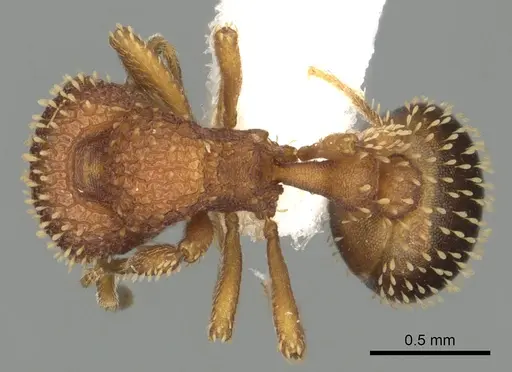
Literature
Loading distribution map...Loading products...