
Calyptomyrmex brevis
- Sci. Name
- Calyptomyrmex brevis
- Tribe
- Crematogastrini
- Subfamily
- Myrmicinae
- Author
- Weber, 1943
- Distribution
- Found in 3 countries
Introduction
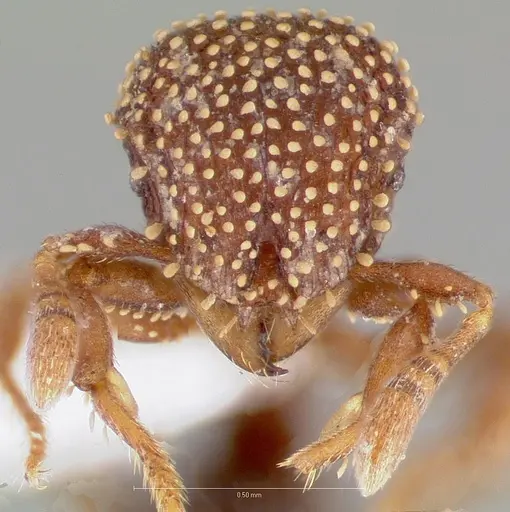
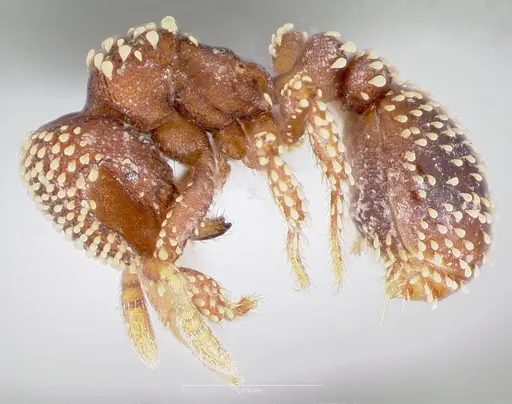
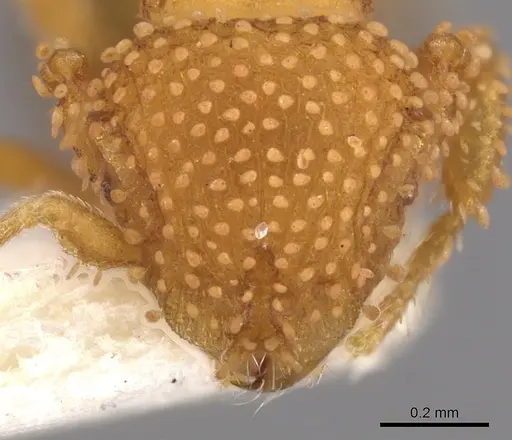
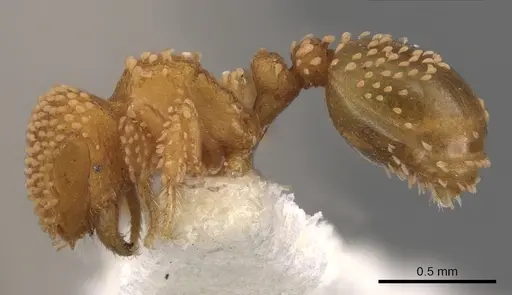
Calyptomyrmex brevis is a tiny, cryptic ant from the subfamily Myrmicinae. Workers are small and blend into the leaf litter of tropical African forests. The species was first described by Weber in 1943 from the Imatong Mountains of South Sudan, with confirmed records also in the Democratic Republic of Congo and Ghana . They live on the shaded, humid forest floor, making them a challenging but fascinating species for experienced antkeepers who want to work with a poorly known ant.
Quick Summary
- Difficulty: Expert
- Origin & Habitat: Tropical Africa, recorded in the Democratic Republic of Congo (provinces IT and NK), Ghana, and South Sudan [2][1]. In Gabon, they were found at 375m elevation in a leaf litter transect, suggesting a preference for shaded forest floor habitats [3].
- Colony Type: Unconfirmed, no research documents whether colonies are single-queen or multi-queen.
- Size & Growth:
- Queen: Unknown, no queen description exists in the scientific literature.
- Worker: Unknown, worker measurements have not been published in available sources.
- Colony: Unknown, no colony size data available.
- Growth: Unknown
- Development: Unknown, no development data exists for this species. (No direct observations of founding or development have been documented. Related leaf-litter Myrmicinae may take several months to develop, but this is entirely speculative.)
- Antkeeping:
- Temperature: Inferred: keep around 24-28°C based on their tropical forest floor habitat. A slight gradient with cooler areas (around 22°C) is recommended. Related leaf-litter Myrmicinae typically prefer stable, warm conditions.
- Humidity: High humidity is essential, think damp forest floor. Keep the nest substrate consistently moist but not waterlogged. Provide a humidity gradient with a moister nesting area and slightly drier foraging area. Rely on substrate moisture rather than fixed schedules.
- Diapause: Unknown for this species. Tropical African ants from higher elevations may have reduced activity periods, but no specific data exists. Many tropical ants do not enter true diapause but may reduce activity during unfavorable seasons.
- Nesting: In nature they nest in leaf litter, rotting wood, and soil. For captivity, a naturalistic setup with moist substrate (soil/peat mix) works well, or a Y-tong/plaster nest with small chambers scaled to their tiny size. They do best with tight, humid chambers rather than large open spaces.
- Behavior: Behavior is poorly documented. Based on genus patterns, they are likely cryptic and slow-moving, foraging in leaf litter rather than on open trails. They probably prefer small live prey. Escape risk is significant due to their tiny size, use fine mesh barriers and tight-fitting lids. Aggression levels are unknown but likely low to moderate. This species belongs to a subfamily that uses a stinger to smear venom, but it is not dangerous to humans.
- Common Issues: no development data means you cannot track if your colony is growing normally, this makes troubleshooting extremely difficult., escape prevention is critical due to their tiny size, they can squeeze through standard ant keeping barriers., humidity control is challenging, too dry and they desiccate, too wet and mold becomes a problem., no established feeding protocols exist, you must experiment to determine what they accept., wild-caught colonies may have parasites or diseases that are poorly understood and difficult to treat.
Housing and Nest Setup
Calyptomyrmex brevis requires a setup that mimics their natural leaf-litter habitat [3]. A naturalistic terrarium-style setup works best, use a container filled with moist, loose substrate (a mix of soil, peat, and rotting wood pieces). The substrate should be kept consistently damp but never waterlogged. Small, shallow containers or test tube setups with close-fitting barriers are essential due to their tiny size. If using a formicarium, choose one with small chambers and narrow tunnels scaled to their body size. Provide a water tube or moisture reservoir to maintain humidity without daily misting. Because they are cryptic and prefer dark, humid spaces, cover the nest partially to reduce light exposure.
Feeding and Diet
Diet is not documented for this species, but based on related Myrmicinae and their leaf-litter habits, they likely forage for small arthropods. Start by offering small live prey (fruit flies, pinhead crickets, tiny mealworms) and sugar water or honey diluted with water. Their tiny size means you may need to offer prey items much smaller than what you'd give typical ants. Remove uneaten prey promptly to prevent mold. Do not expect aggressive feeding responses, these are subtle foragers, not aggressive hunters. If they accept sugar, provide it consistently, if not, rely on protein prey offered 2-3 times weekly.
Temperature and Seasonal Care
Maintain temperatures around 24-28°C with minimal fluctuations. A heating cable on one side of the nest can create a gentle gradient, but monitor carefully to avoid overheating. Room temperature in heated homes (around 22-24°C) may be acceptable, but verify colony activity and health. No specific diapause requirements are documented, but observe your colony for seasonal slowdowns, if they become less active in winter, reduce feeding and avoid disturbing them. Many tropical ants maintain year-round activity when kept warm. Avoid temperatures below 20°C or above 32°C.
Challenges and Why This Is an Expert Species
Calyptomyrmex brevis is rated Expert because virtually no captive husbandry information exists. You will be pioneering every aspect of their care, there are no established protocols for feeding, development, or colony maintenance. This means you cannot compare your colony's progress to known benchmarks. Additionally, their tiny size makes standard ant-keeping equipment problematic (they can escape through mesh that stops larger ants). They require specialized, humid, stable conditions that can be difficult to maintain. Only experienced antkeepers should attempt this species, and only after deciding they are committed to the experimental process of learning alongside this poorly understood ant.
Frequently Asked Questions
How long does it take for Calyptomyrmex brevis to produce first workers?
Unknown, no development data exists for this species. Related leaf-litter Myrmicinae typically take 2-4 months from egg to worker at optimal temperatures, but this is a rough estimate. You will need to document your own observations and establish baselines for this species.
Can I keep Calyptomyrmex brevis in a test tube setup?
Yes, a test tube setup can work if it provides adequate humidity and the tube has a very tight-fitting barrier. However, their small size means you must use fine mesh or cotton that they cannot squeeze through. Test tubes are actually ideal for maintaining the high humidity they need.
What do Calyptomyrmex brevis eat?
Not definitively known, but likely small live prey (fruit flies, springtails, tiny arthropods) and possibly honeydew or sugar sources. Start with small live prey and diluted honey/sugar water. Remove uneaten food promptly.
Are Calyptomyrmex brevis good for beginners?
No. This is an expert-level species because no captive care protocols exist, their tiny size creates escape challenges, and they require specific humid, stable conditions that are difficult to maintain without experience.
Do Calyptomyrmex brevis ants sting?
This species belongs to a group of ants that use a flattened stinger to smear venom rather than pierce skin. However, their tiny size and the nature of the venom make it unlikely to affect humans significantly.
How big do Calyptomyrmex brevis colonies get?
Unknown, no colony size data exists for this species. Based on genus patterns and their cryptic leaf-litter lifestyle, colonies are likely small (likely under 100-200 workers) rather than large.
Do Calyptomyrmex brevis need hibernation?
Unknown, no diapause data exists. As a tropical species from Africa, they likely do not require true hibernation, but may reduce activity during cooler seasons if your room temperature drops.
Why are my Calyptomyrmex brevis dying?
Without established baselines, diagnosing problems is extremely difficult. Common issues likely include: too low humidity (desiccation), escape through barriers, mold from overwatering, temperature stress, or starvation if prey is too large. Review each parameter carefully and compare to their natural habitat (warm, humid, shaded forest floor).
Can I keep multiple queens together?
Unknown, colony structure has not been documented. Do not attempt combining unrelated queens without observation capability. Some Myrmicinae are polygynous while others are not, and we have no data for this species.
Where does Calyptomyrmex brevis naturally live?
Democratic Republic of Congo, Ghana, and South Sudan. They are found in leaf litter in tropical forests, at least in Gabon recorded at 375m elevation. Their habitat is shaded, humid forest floor with rotting wood and debris [3][2][1].
Report an Issue
The current care sheet is based fully on literature. See inconsistencies, or something that's incorrect? Please , it will be resolved after review from an admin. Contributing to the blogs tab also helps providing information, to make us be able to further improve the caresheets. Thank you for your support!
References

This caresheet is licensed under CC BY-SA 4.0 .
Community Blogs
CASENT0406908
View on AntWeb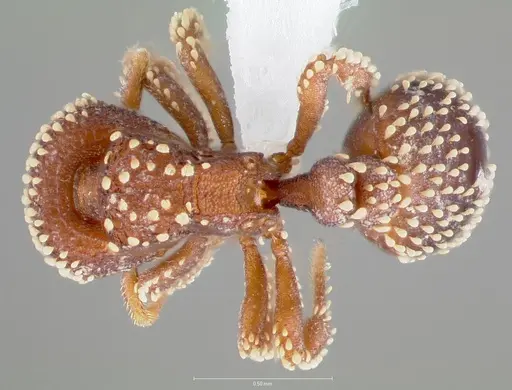
CASENT0900986
View on AntWeb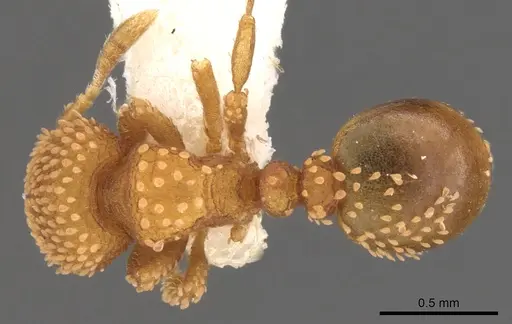
Literature
Loading distribution map...Loading products...