
Calyptomyrmex beccarii
- Sci. Name
- Calyptomyrmex beccarii
- Tribe
- Crematogastrini
- Subfamily
- Myrmicinae
- Author
- Emery, 1887
- Distribution
- Found in 6 countries
Introduction
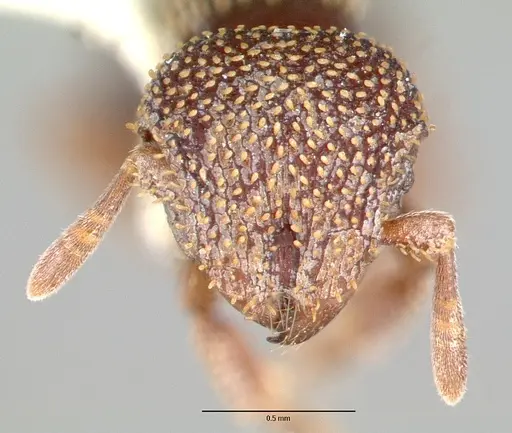
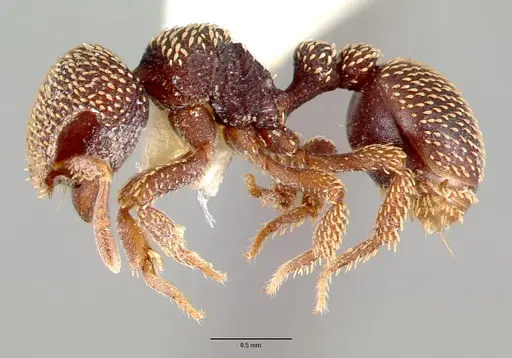
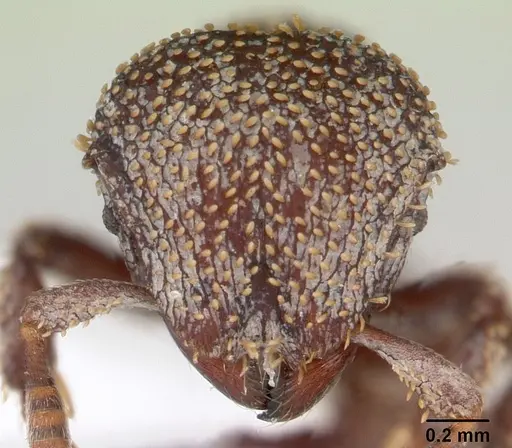
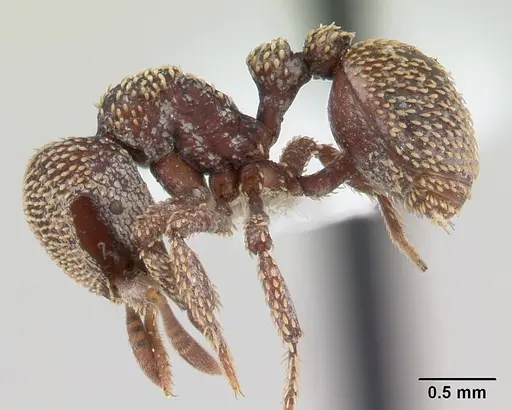
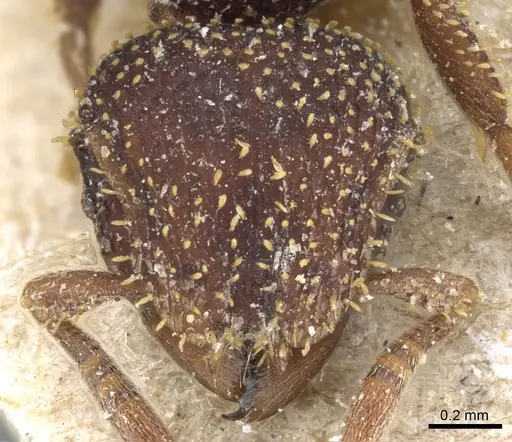
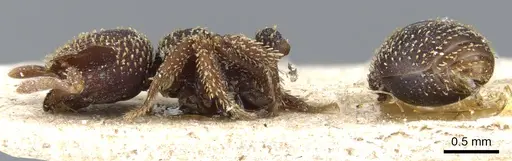
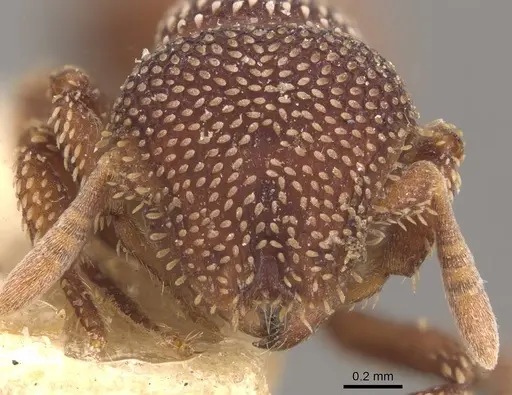
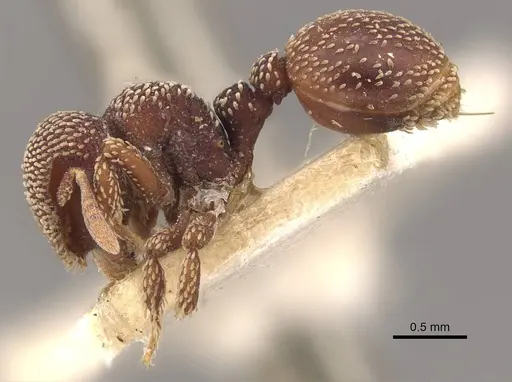
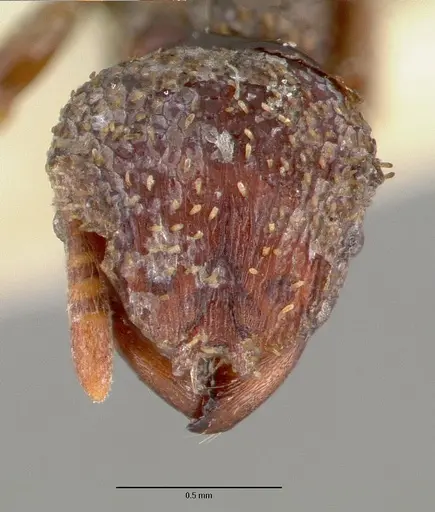
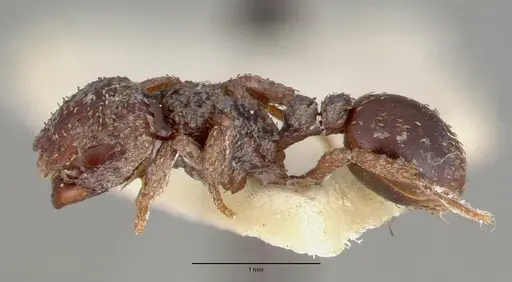
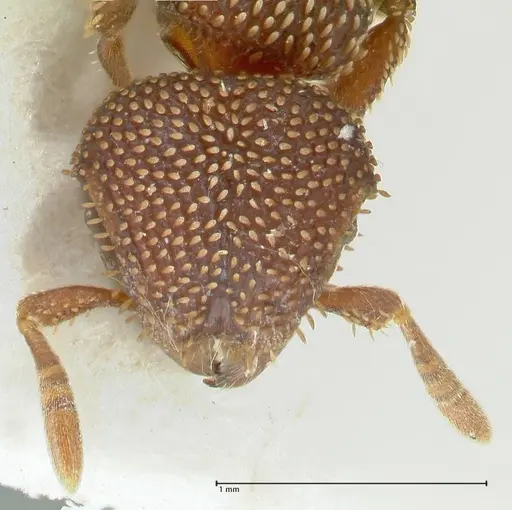
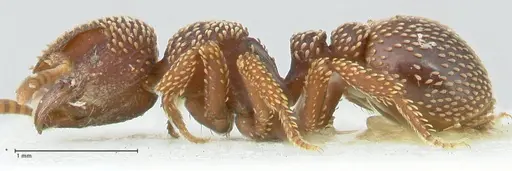
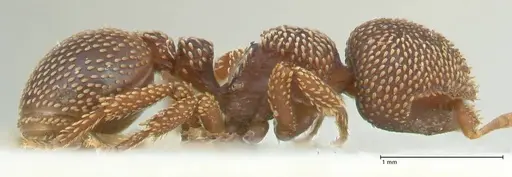
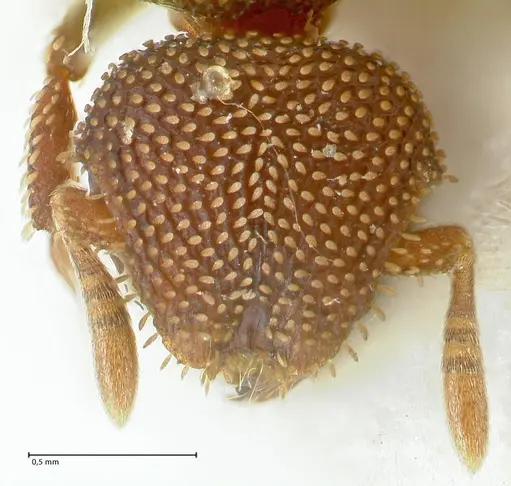
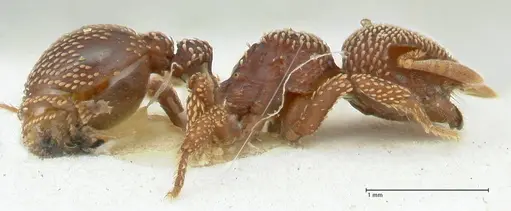
Calyptomyrmex beccarii is a small rainforest ant measuring about 3.5mm in total length, easily recognized by its distinctive spatulate hairs that are narrower near the body and expand outward with rounded tips, lying flat against the body . The body is dull red-brown with a finely sculptured gaster, and the propodeum lacks spines or angles entirely . This species holds special status as the type-species of the genus Calyptomyrmex, meaning it's the reference species that defines the entire group . What makes C. beccarii particularly interesting is its remarkable distribution - it's the most widespread species in its genus, ranging from Singapore northeast through the Philippines and south to Papua New Guinea and northern Australia . Workers have a fascinating camouflage behavior: they deliberately collect and retain soil particles on their body using their enlarged spatulate hairs, effectively disguising themselves as tiny moving dirt particles . This litter-dwelling ant forages singly or in small numbers through the rainforest floor, nesting in rotten wood or directly in soil .
Quick Summary
- Difficulty: Medium
- Origin & Habitat: Rainforest habitats across Southeast Asia and Oceania, from Singapore northeast to Philippines, south to Papua New Guinea and northern Australia [1]. Found in leaf litter and rotting wood in undisturbed forest environments [5][4]. One nest was found in a carton termite nest [1].
- Colony Type: Colony structure is unconfirmed, the species has not been studied in detail regarding queen number.
- Size & Growth:
- Queen: size data unavailable
- Worker: approximately 3.5mm total length [6][1]
- Colony: Unknown, colony size has not been documented
- Growth: Unknown, growth rate has not been studied
- Development: Unknown, development timeline has not been directly studied for this species (Related small rainforest Myrmicinae typically take several weeks to months from egg to worker at tropical temperatures, but specific data for C. beccarii is unavailable.)
- Antkeeping:
- Temperature: Keep at 24-28°C, these are tropical rainforest ants requiring warm, stable conditions. A heating cable on one side of the nest creates a suitable gradient.
- Humidity: High humidity required, aim for 70-80% relative humidity. Keep the nest substrate consistently moist but not waterlogged, mimicking damp rainforest floor conditions.
- Diapause: No, being a tropical species, they do not require hibernation. Maintain warm conditions year-round.
- Nesting: Provide humid nest conditions with rotten wood pieces or soil-based substrate. Y-tong nests with moisture chambers work well, or a naturalistic setup with damp soil and rotting wood fragments. They naturally nest in rotten wood or soil in humid environments [4].
- Behavior: Docile and non-aggressive litter-dwelling ants. Workers forages singly or in small numbers, searching for small prey and honeydew [4]. They are not known to sting and pose no danger to keepers. Their small size means escape prevention is critical, they can squeeze through standard test tube gaps. The most notable behavior is their soil-camouflaging habit, where workers deliberately collect debris on their spatulate hairs [4]. This species has a smear defense mechanism, they use a modified, flattened stinger to wipe venom onto enemies rather than piercing flesh.
- Common Issues: escape prevention is critical due to their very small size, use fine mesh barriers and tight-fitting lids, high humidity requirements can lead to mold if ventilation is inadequate, balance humidity with airflow, limited availability in the antkeeping hobby means established colonies are rare, wild-caught colonies may be stressed from collection methods and difficult to establish, their cryptic lifestyle and small size make them easy to overlook when checking on colonies
Housing and Nest Setup
Calyptomyrmex beccarii requires a humid, naturalistic setup that mimics their rainforest floor habitat. A Y-tong nest with moisture chambers works well, or you can create a naturalistic formicarium with damp soil and small rotting wood pieces. The key is maintaining high humidity while preventing stagnation. Place a water reservoir or moisture chamber connected to the nest area, and use a substrate that retains moisture without becoming waterlogged. Because they are tiny, ensure all connections and barriers are tight, standard test tube setups may allow escapes through the gap between tube and cotton. Consider adding small pieces of leaf litter or soil on top of the foraging area to provide cover and allow their natural camouflage behavior. [4][1]
Feeding and Diet
In the wild, these ants forages in leaf litter for small prey and likely tends aphids or collects honeydew [4]. In captivity, offer small live prey like springtails, fruit flies, or tiny crickets. Sugar sources can be provided via honey water or sugar water on a regular basis, though acceptance may vary. Feed protein prey several times per week and keep a sugar source available constantly. Remove uneaten prey after 24-48 hours to prevent mold. Their small size means prey items should be appropriately sized, anything larger than a fruit fly may be difficult for them to handle.
Temperature and Humidity
Maintain temperatures between 24-28°C, which matches their tropical rainforest origin across Southeast Asia and northern Australia. A slight gradient allowing workers to choose their preferred temperature is ideal. Use a heating cable on one side of the nest if room temperature falls below this range. Humidity should be high, aim for 70-80% relative humidity in the nest area. The substrate should feel consistently damp but never soggy. Mist the nest area occasionally if humidity drops, but ensure adequate ventilation to prevent mold buildup. These ants are adapted to stable, humid conditions, so avoid drafts or sudden temperature changes. [1][5]
Behavior and Observation
One of the most fascinating aspects of keeping C. beccarii is observing their unique camouflage behavior. Workers deliberately collect soil particles and debris on their body, using their specialized spatulate hairs to retain this camouflaging material [4]. This makes them nearly invisible against the forest floor substrate. They forages singly or in small groups rather than in large raiding parties, making them a peaceful, unobtrusive species. They are not aggressive and do not pose any sting threat to keepers. Their small size and cryptic habits mean you may not see constant activity, this is normal for the species. Provide a dark background and avoid disturbing the colony frequently to encourage natural behavior.
Colony Establishment
Establishing C. beccarii colonies can be challenging due to their limited availability in the antkeeping hobby. Wild-caught colonies may be difficult to acclimate as these ants are sensitive to collection stress and habitat disruption. If you obtain a colony, allow 1-2 weeks of minimal disturbance for them to settle into their new setup. Ensure humidity and temperature are stable before introducing the colony. Founding behavior is unconfirmed for this species, queens may seal themselves in a small chamber and raise the first workers on stored fat reserves, but this has not been directly documented. Growth rate is unknown for this species. [4]
Frequently Asked Questions
How long does it take for Calyptomyrmex beccarii to produce first workers?
The exact development timeline is unconfirmed for this species. Based on related small Myrmicinae, expect several weeks to months from egg to first worker at optimal temperature (24-28°C). Patience is key with this species.
Can I keep Calyptomyrmex beccarii in a test tube setup?
Test tubes can work but require careful escape prevention. Their tiny size means they can squeeze through gaps between the cotton plug and tube walls. Use fine mesh over any openings and consider switching to a formicarium once the colony reaches 10+ workers.
Do Calyptomyrmex beccarii ants sting?
No, this species is not known to sting. They are docile, non-aggressive ants that rely on camouflage rather than defensive behavior. They have a smear defense mechanism using a modified stinger to wipe venom onto enemies.
What do Calyptomyrmex beccarii eat?
Feed small live prey like springtails, fruit flies, or tiny crickets. Provide a constant sugar source like honey water or sugar water. Remove uneaten prey after 24-48 hours to prevent mold.
Are Calyptomyrmex beccarii good for beginners?
This species is rated as medium difficulty. While not aggressive, their high humidity requirements and small size make them better suited for keepers with some experience maintaining humid setups. Their limited availability is also a factor.
Do Calyptomyrmex beccarii need hibernation?
No, they do not require hibernation. Being a tropical species from Southeast Asia and northern Australia, they need warm conditions year-round. Maintain temperatures of 24-28°C throughout the year.
How big do Calyptomyrmex beccarii colonies get?
Colony size is not well documented in available literature. Based on their small size and litter-dwelling habits, colonies likely reach several dozen to a few hundred workers. They are not known to form supercolonies.
Why do Calyptomyrmex beccarii cover themselves with soil?
This is a deliberate camouflage behavior. Their specialized spatulate hairs (flattened hairs narrower at the base and expanded at the tip) are designed to collect and retain soil particles, making them nearly invisible against the forest floor, a survival strategy in their leaf litter habitat.
When should I move Calyptomyrmex beccarii to a formicarium?
Move them when the test tube becomes crowded or shows mold issues. A small Y-tong nest or naturalistic setup with moisture retention works well. They prefer humid conditions, so ensure the new setup can maintain adequate moisture.
Can I keep multiple Calyptomyrmex beccarii queens together?
Colony structure is unconfirmed for this species. Combining unrelated queens is not recommended as it has not been documented.
Report an Issue
The current care sheet is based fully on literature. See inconsistencies, or something that's incorrect? Please , it will be resolved after review from an admin. Contributing to the blogs tab also helps providing information, to make us be able to further improve the caresheets. Thank you for your support!
References

This caresheet is licensed under CC BY-SA 4.0 .
Community Blogs
CASENT0010655
View on AntWeb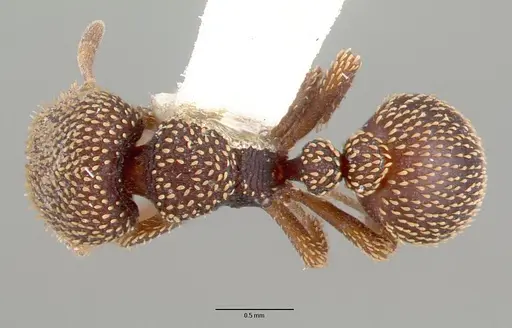
CASENT0178453
View on AntWeb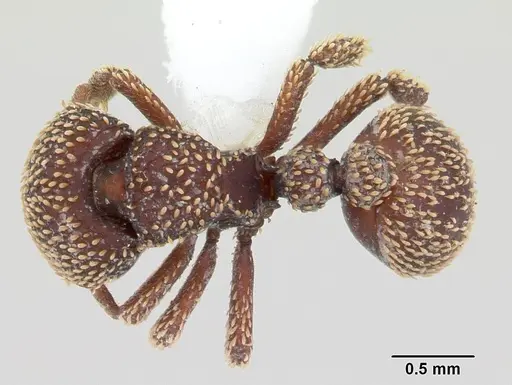
CASENT0904677
View on AntWeb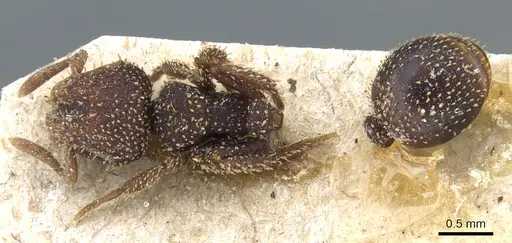
CASENT0908925
View on AntWeb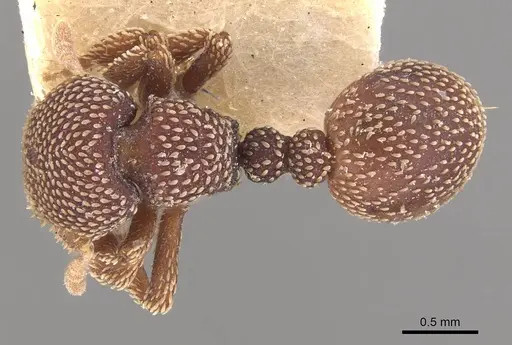
CASTYPE06924
View on AntWeb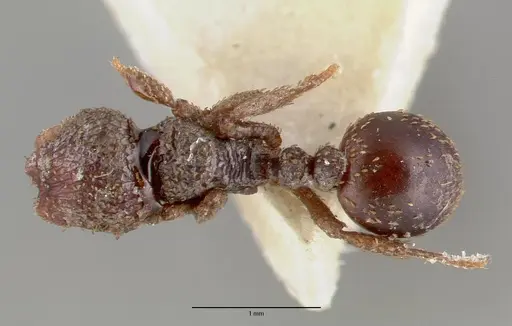
FOCOL2181
View on AntWeb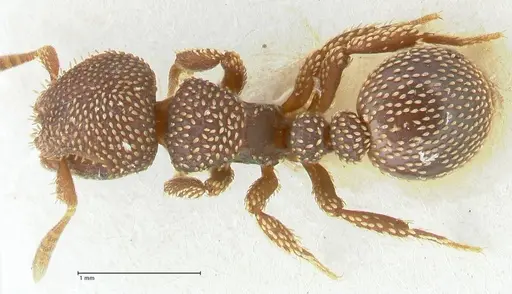
FOCOL2182
View on AntWeb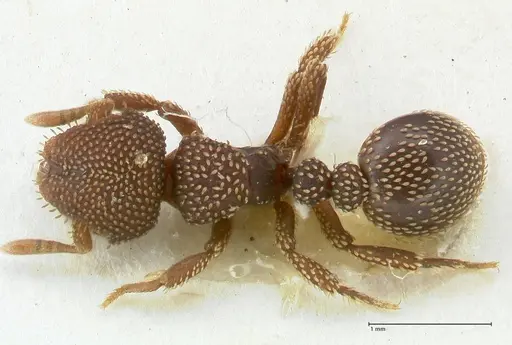
Literature
Loading distribution map...Loading products...