
Brachyponera luteipes
- Sci. Name
- Brachyponera luteipes
- Tribe
- Ponerini
- Subfamily
- Ponerinae
- Author
- Mayr, 1862
- Distribution
- Found in 4 countries
Introduction
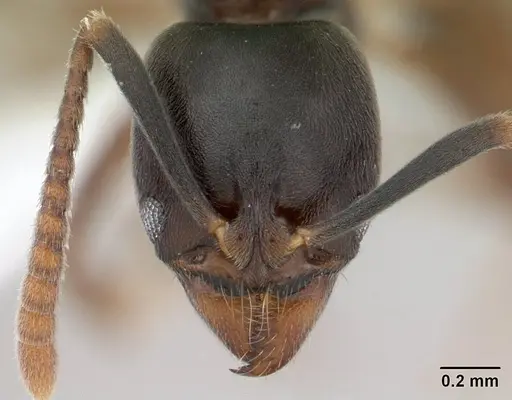
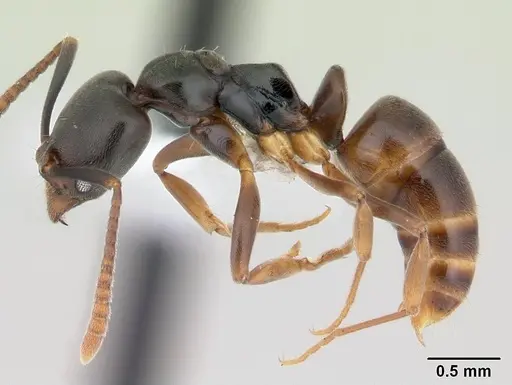
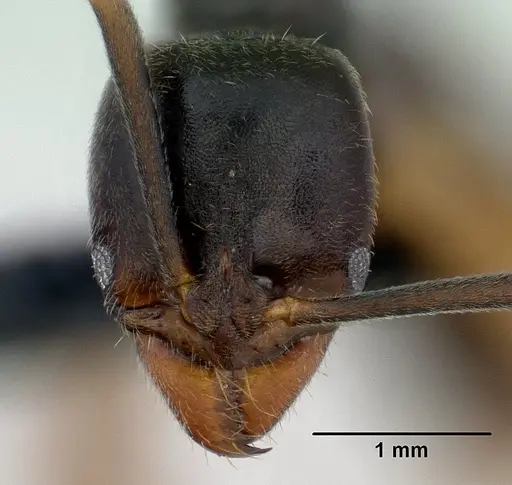
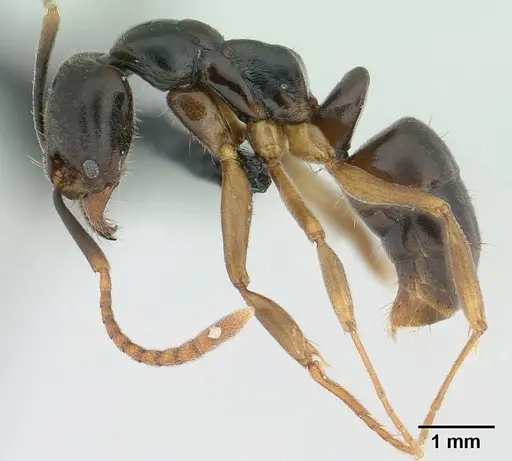
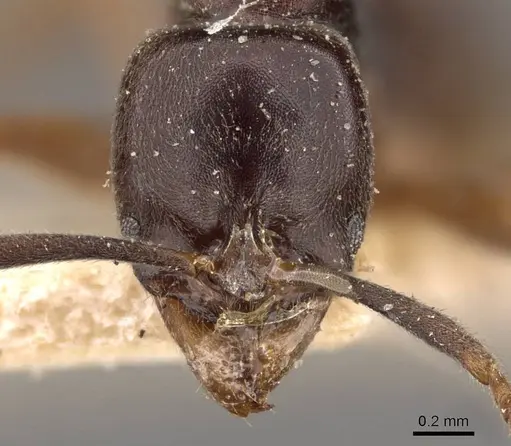
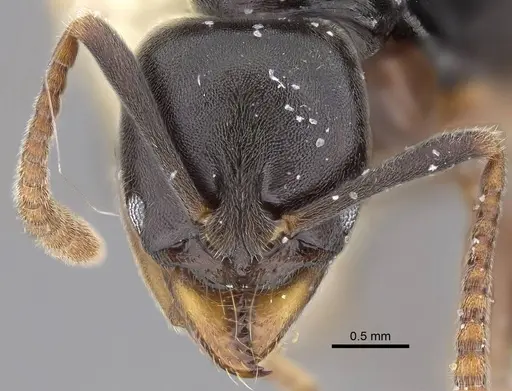
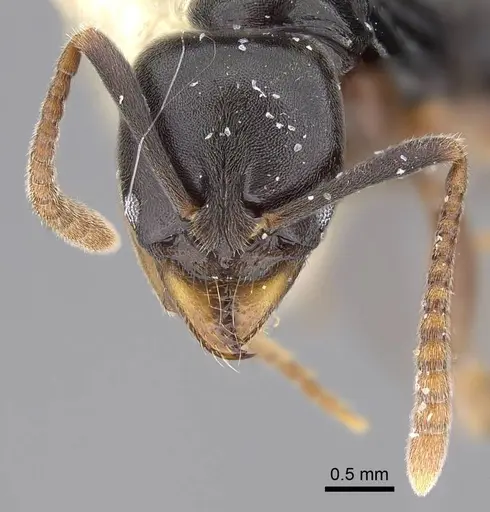
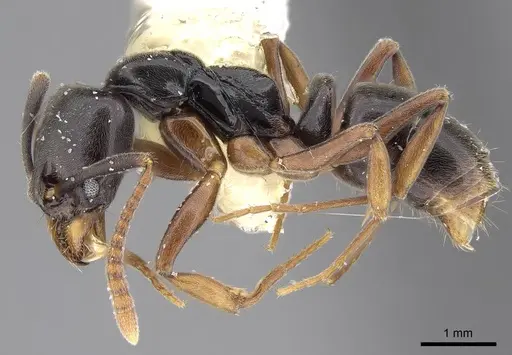
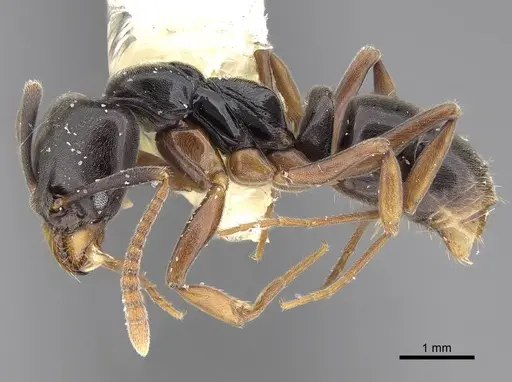
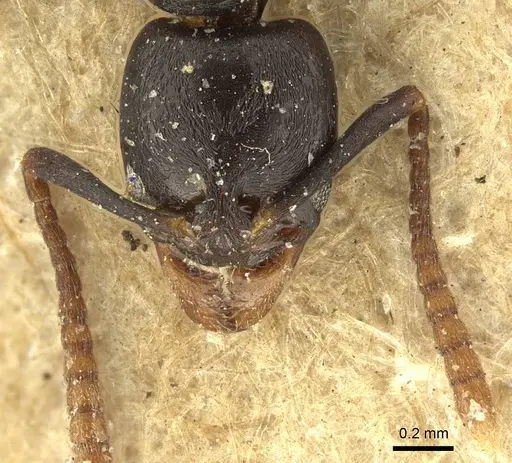
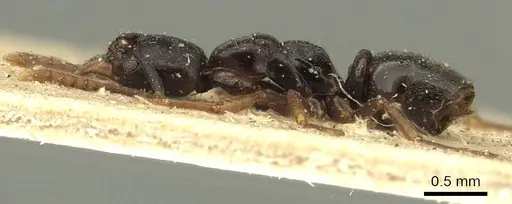
Brachyponera luteipes is a small Ponerine ant native to South and Southeast Asia. Workers measure 3.5-4mm and are jet-black with a shiny appearance, while their mandibles, antennae, legs, and the tip of the abdomen are reddish-brown . The head and body are covered in fine, silky whitish pubescence, and the propodeum sits noticeably lower than the thorax, giving them a distinctive profile . This species nests in rotting wood or leaf litter on the forest floor and forages solitarily on the ground . It is closely related to the invasive Asian needle ant (Brachyponera chinensis), but B. luteipes is smaller and they are now recognized as separate species based on genetic analysis . This tramp species has been introduced to various locations across Asia and Oceania but is not considered invasive .
Quick Summary
- Difficulty: Medium
- Origin & Habitat: Native to South and Southeast Asia including India, Sri Lanka, Bangladesh, Myanmar, Thailand, Laos, Vietnam, Malaysia, Indonesia, Philippines, China, Japan, and Micronesia. Found from sea level up to 2200m elevation in the Himalayas. Inhabits forests, grasslands, and human-modified areas. Nests in rotting wood or leaf litter on the ground [3][4][8][9].
- Colony Type: Colony structure is not well documented in scientific literature.
- Size & Growth:
- Antkeeping:
- Temperature: Keep around 22-26°C. This species comes from tropical to subtropical regions across Asia, so moderate warmth is appropriate.
- Humidity: Keep substrate moderately moist. In the wild they nest in rotting wood and leaf litter on the forest floor, so they prefer damp but not waterlogged conditions.
- Diapause: Diapause requirements are unconfirmed. Their range extends from tropical regions to temperate areas like China and Japan [9][2]. Some populations may experience cooler winters.
- Nesting: Provide a naturalistic setup with rotting wood pieces, leaf litter, or a Y-tong/plaster nest with narrow chambers. They naturally nest in decomposing wood and soil.
- Behavior: These ants are predatory and forage solitarily on the ground [11]. They are behaviorally cryptic, not aggressive toward humans but will defend their nest if disturbed. Workers are small enough to squeeze through small gaps, so escape prevention should be moderate. As Ponerine ants, they have a functional stinger but being so small, the sting is barely noticeable to humans.
- Common Issues: slow growth, development takes many months, which can frustrate beginners, predatory diet, they need live prey and may not accept commercial ant foods, escape risk, small size means they can slip through standard test tube barriers, unknown diapause, winter care requirements are unclear, wild-caught colonies may have parasites that cause colony failure
Housing and Nest Setup
Brachyponera luteipes naturally nests in rotting wood and leaf litter on the forest floor. For captivity, a naturalistic setup works best, use a container filled with soil mixed with rotting wood pieces or leaf litter. Alternatively, a Y-tong nest with narrow chambers scaled to their small size works well. Plaster nests are another good option since they hold moisture well. Keep the nest material consistently moist but not waterlogged, the substrate should feel damp to the touch. Provide a water tube for drinking water. Because of their small size, ensure any connections between the nest and outworld are sealed with cotton or appropriate barriers. [3][2]
Feeding and Diet
This species is predatory and feeds primarily on small invertebrates. In captivity, offer small live prey such as fruit flies, pinhead crickets, small worms, and other micro-arthropods. They are solitary foragers, so place prey where workers will find it. They may also accept protein-based commercial ant foods, but live prey is ideal for their natural predatory behavior. Sugar sources are not typically a major part of their diet since they are predators, though they may occasionally drink honey water. Feed them every 2-3 days, removing any uneaten prey after 24 hours to prevent mold. [11][4]
Temperature and Seasonal Care
Keep your colony at 22-26°C. This species comes from tropical to subtropical regions across Asia, so moderate warmth is appropriate. Room temperature within this range works fine, if your space is cooler, use a heating cable on one side of the nest to create a gradient. Place the heating element on top of the nest, not underneath, to avoid evaporating moisture too quickly. Regarding winter care, diapause requirements are unconfirmed. Their range extends to temperate regions like China and Japan, so they likely tolerate cooler temperatures. If your colony shows reduced activity in winter, you can lower temperatures slightly to around 18-20°C for a few months, but this is optional based on current knowledge. [9]
Behavior and Temperament
Brachyponera luteipes is a cryptic, solitary-foraging predator. Workers hunt alone on the forest floor rather than forming foraging trails [11]. When threatened, they may use their stinger, but being so small, the sting is barely noticeable to humans. They are not aggressive toward keepers and typically retreat into the nest when disturbed. These ants are not known for climbing smooth surfaces aggressively, but their small size means they can slip through tiny gaps. Use standard escape prevention measures like fluon on test tube rims. They are most active during warmer months and reduce activity in cooler conditions [12].
Colony Development
Queen size is approximately 4.5mm, making her noticeably larger than workers (3.5-4mm). The egg-to-worker development timeline is unconfirmed for this species. Ponerine ants generally develop more slowly than many common ant species. Founding colonies may take several months before the first workers emerge. Be patient, these ants are slow growers compared to species like Lasius or Tetramorium. [1]
Similar Species and Identification
Brachyponera luteipes is closely related to Brachyponera chinensis, the invasive Asian needle ant. The two species were long confused and only recently confirmed as separate species through genetic analysis [5]. B. luteipes is smaller than B. chinensis and has different propodeal sculpturing, the propodeum is largely smooth in B. luteipes [3]. In the wild, they can be found in similar habitats and even sympatrically on some Japanese islands. For antkeepers, proper identification matters because B. chinensis is invasive in some regions while B. luteipes is not known to be invasive.
Frequently Asked Questions
How long does it take for Brachyponera luteipes to go from egg to worker?
The exact egg-to-worker timeline is unconfirmed for this species. Based on typical Ponerinae development patterns, expect several months from founding to first workers. This is slower than many common ant species, so patience is required.
What do Brachyponera luteipes ants eat?
They are predatory ants that eat small live invertebrates. Feed them small prey like fruit flies, pinhead crickets, small worms, and other micro-arthropods. They may accept commercial protein foods, but live prey is ideal for their natural predatory diet.
Can I keep Brachyponera luteipes in a test tube?
Yes, test tubes work for founding colonies. However, because they are small (3.5-4mm), ensure the cotton barrier is packed tightly to prevent escapes. For established colonies, a naturalistic setup with soil and rotting wood or a Y-tong nest works better since they naturally nest in decomposing wood.
What temperature do Brachyponera luteipes need?
Keep them at 22-26°C. This species comes from tropical to subtropical Asia, so moderate warmth is appropriate. Room temperature in this range works well, use a heating cable on one side of the nest if needed.
Are Brachyponera luteipes good for beginners?
They are rated as medium difficulty. While not as challenging as some specialized predators, they do require specific care: live prey feeding, longer development times, and moderate humidity. Beginners should consider easier species first, but those willing to provide live prey can succeed with this species.
How big do Brachyponera luteipes colonies get?
Colony size is not well documented in scientific literature. Based on their small worker size (3.5-4mm), colonies likely remain relatively small.
Do Brachyponera luteipes need hibernation?
Diapause requirements are unconfirmed. Their range extends from tropical regions to temperate areas like China and Japan. If your colony shows reduced activity in winter, you can provide a cooler period around 18-20°C for 2-3 months, but this is optional based on current knowledge.
Why is my Brachyponera luteipes colony dying?
Common causes include: overfeeding leading to mold, incorrect humidity (too dry or too wet), temperatures outside their 22-26°C range, stress from too much disturbance, or lack of appropriate live prey. Wild-caught colonies may also carry parasites. Ensure proper humidity, moderate temperatures, and offer live prey regularly.
When should I move my colony to a formicarium?
Wait until the colony has at least 20-30 workers and the founding chamber becomes crowded. For this species, a naturalistic setup with soil and rotting wood often works better than traditional formicariums since they naturally nest in decomposing wood.
Report an Issue
The current care sheet is based fully on literature. See inconsistencies, or something that's incorrect? Please , it will be resolved after review from an admin. Contributing to the blogs tab also helps providing information, to make us be able to further improve the caresheets. Thank you for your support!
References

This caresheet is licensed under CC BY-SA 4.0 .
Community Blogs
CASENT0178451
View on AntWeb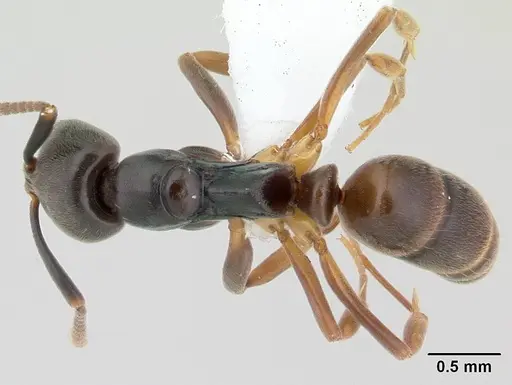
CASENT0179624
View on AntWeb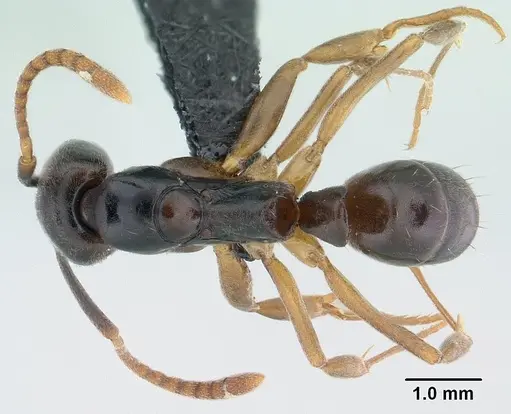
CASENT0907283
View on AntWeb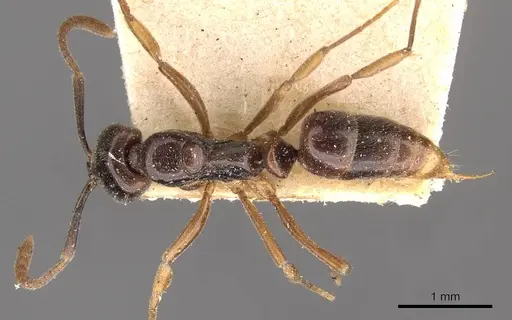
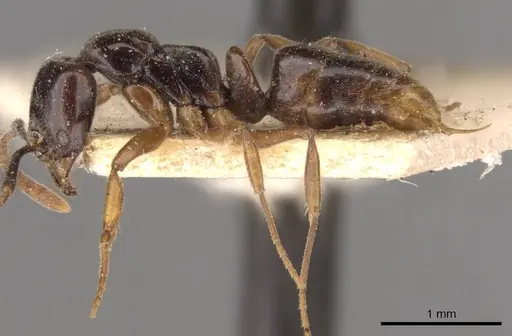
CASENT0907285
View on AntWeb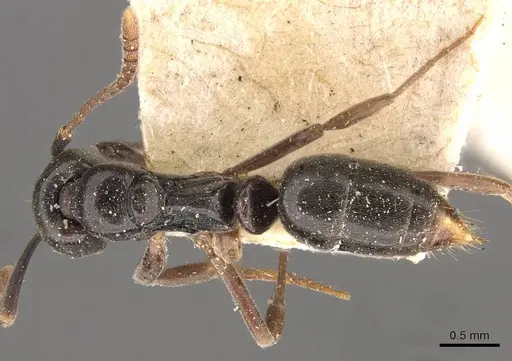
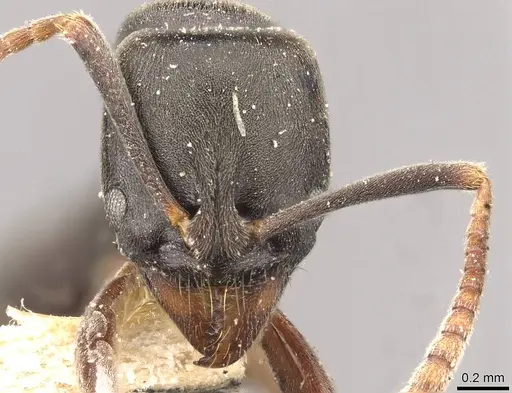
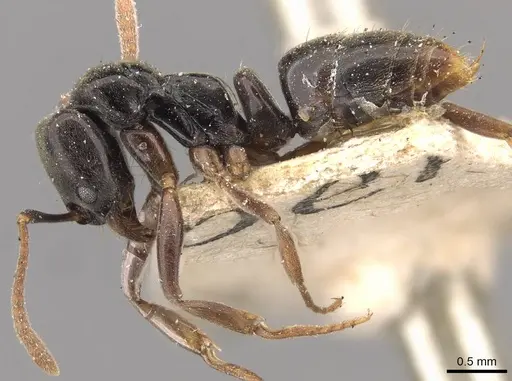
CASENT0914510
View on AntWeb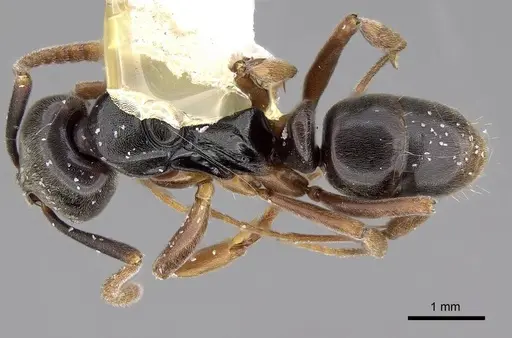
CASENT0915672
View on AntWeb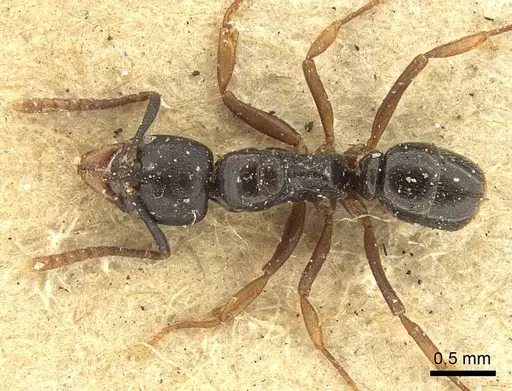
Literature
Loading distribution map...Loading products...