
Brachymyrmex termitophilus
- Sci. Name
- Brachymyrmex termitophilus
- Tribe
- Myrmelachistini
- Subfamily
- Formicinae
- Author
- Forel, 1895
- Distribution
- Found in 5 countries
Introduction
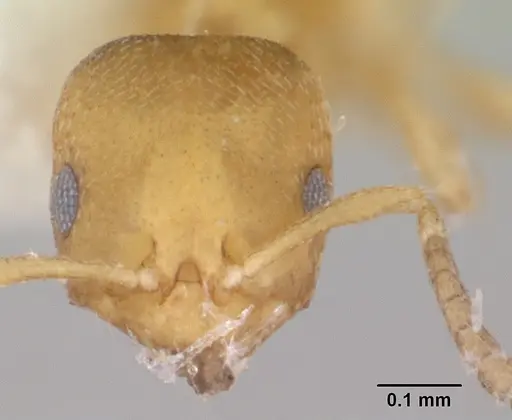
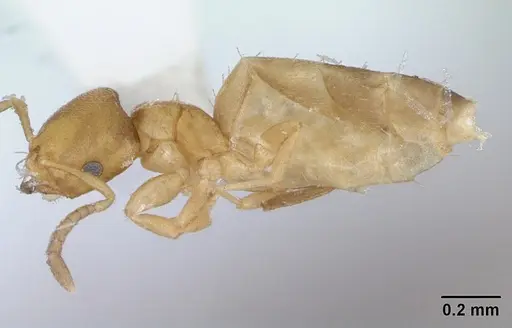
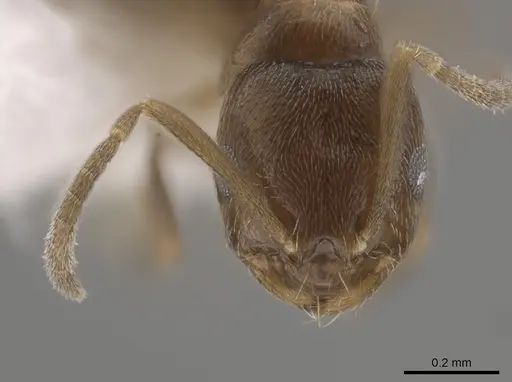
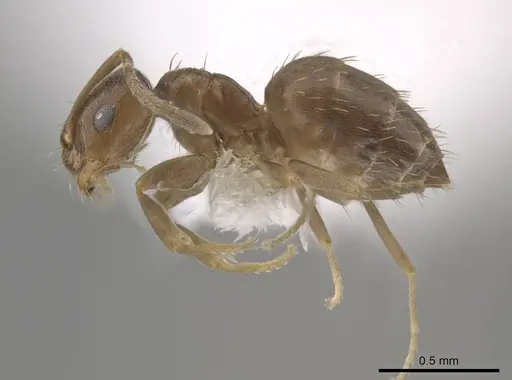
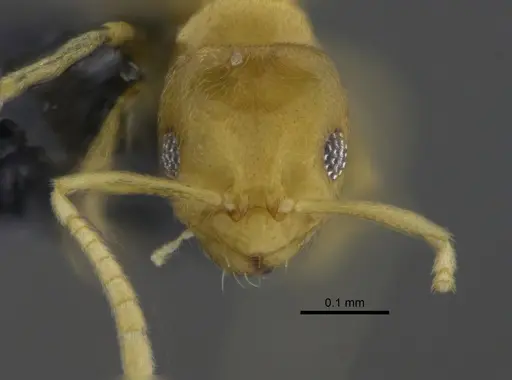
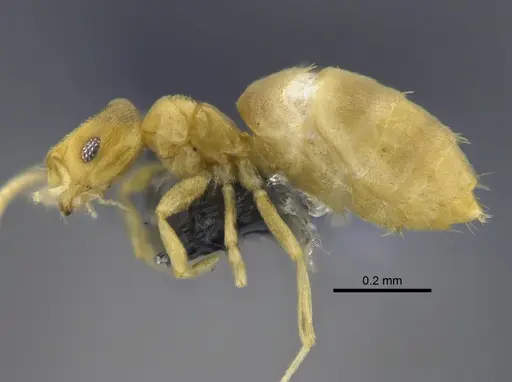
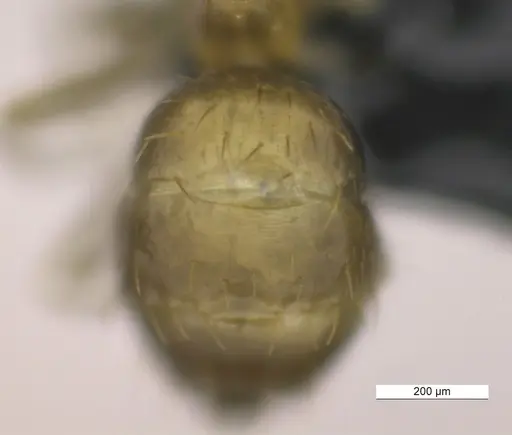
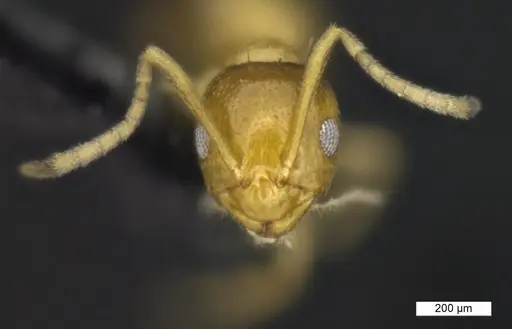
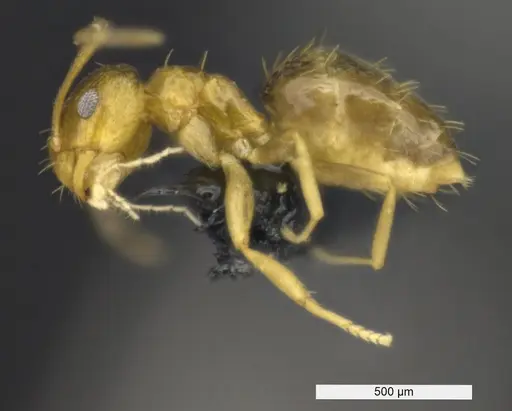
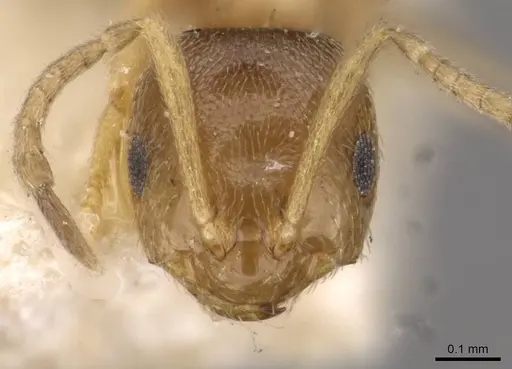
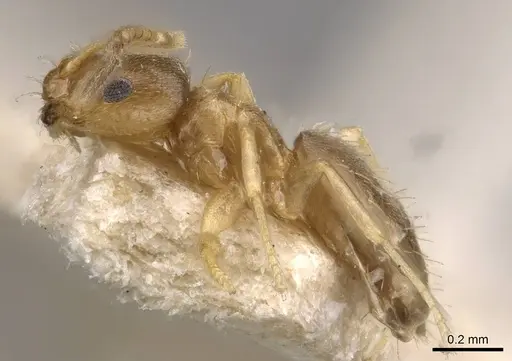
Brachymyrmex termitophilus is a tiny, pale yellow ant from the Americas. Workers are extremely small – their head length is about 0.38–0.45 mm, making them hard to spot without magnification . The body is smooth, shiny, and yellowish, with dense tiny hairs on the gaster (the rear section) . A couple of erect hairs sit on the pronotum and mesonotum . What makes this species stand out is its association with termites – it was originally collected from termite nests, likely living in them as a guest rather than as a parasite . Its taxonomic status is still a bit fuzzy; it looks a lot like several other Brachymyrmex species, so identification can be tricky .
Quick Summary
- Difficulty: Medium
- Origin & Habitat: Native to the Americas, from the southern USA through Mexico, Central America (Costa Rica, Dominican Republic), down to Colombia, Brazil, Paraguay, and Argentina [1][2]. Lives in tropical and subtropical regions, often in association with termite nests [1].
- Colony Type: Colony structure is unconfirmed – no research says whether colonies have one queen or multiple queens [1].
- Size & Growth:
- Queen: Unconfirmed – no queen measurements are documented [1].
- Worker: Total body length is not documented, head length is 0.38–0.45 mm [1]. Workers are among the smallest ants in the genus.
- Colony: Unknown – no research counts colony size. Based on related Brachymyrmex species, probably a few dozen to a few hundred workers.
- Growth: Unknown – no development data exists.
- Development: Unconfirmed – no direct data. Based on typical Brachymyrmex patterns (small size, warm climate), an estimate is 4–8 weeks at warm temperatures. (This is an estimate from genus-level inference, not direct measurement.)
- Antkeeping:
- Temperature: Keep at warm room temperature, roughly 24–28°C. They come from tropical/subtropical regions, so warmth supports activity. Provide a slight gradient so workers can choose their spot. No research confirms exact needs.
- Humidity: High humidity is likely, given their tropical origin and termite-nest association. Keep the nest substrate damp but not waterlogged. A gradient with a drier area is a good idea. No research confirms exact levels.
- Diapause: Unknown – no research covers overwintering. Some populations live in temperate USA, so a seasonal slowdown might happen, but that's unconfirmed.
- Nesting: In the wild they nest with termites. For captivity, a small test‑tube setup or a Y‑tong nest with very tiny chambers works well. Because these ants are so small, chamber passages must be narrow to stop them getting lost or falling into water.
- Behavior: These ants are tiny, non-aggressive, and likely form small colonies. They are ground‑nesting and have been found in termite nests, suggesting they prefer humid, sheltered spots. Their minute size makes them escape artists – they can slip through any gap bigger than about 0.5 mm. Use fine mesh and tight seals. They don't sting and are harmless to people.
- Common Issues: escape prevention is critical due to their extremely small size – use fine mesh barriers and tight-fitting lids, slow colony growth – do not overfeed or let mold develop, wild-caught colonies may carry parasites from termite nests, hard to observe because of their minute size – a magnifying glass or microscope helps
Appearance and Identification
Brachymyrmex termitophilus workers are extremely small – head length is about 0.38–0.45 mm [1]. The body is smooth, shiny, and a pale yellowish colour. Under a microscope you can see two erect hairs on the pronotum and two on the mesonotum [1]. The gaster is covered in dense, short hairs (pubescence) that give it a slightly fuzzy look [1]. The antennal scapes extend past the back of the head by roughly the width of the eye or less [1]. These ants look a lot like B. aphidicola, B. australis, B. cordemoyi, and B. obscurior, so careful identification and labeling are important [1].
Natural History
This species was first found in termite nests in Brazil [2]. The association seems to be commensal – the ants live in the termite mound, enjoying a humid, protected home, while the termites don't seem to bother them. It's not true social parasitism. The range is huge: from the southern United States through Mexico, Central America, the Caribbean (Dominican Republic), and down to Colombia, Brazil, Paraguay, and Argentina [1][2]. This wide spread suggests they can handle a variety of warm climates.
Housing and Nest Setup
Because they are so tiny, housing needs extra care. A standard test‑tube setup works, but pack the cotton plug very tightly – these ants can wriggle through gaps that would stop larger species. A small Y‑tong (AAC) nest with narrow chambers is good. Keep the nest slightly damp to mimic the humid termite nest. Avoid tall water reservoirs that could trap and drown these minute insects. For the outworld, use fine mesh (at least 0.5 mm or finer) and seal every joint. A tiny gap is an open door.
Feeding and Diet
Like most Brachymyrmex, these ants probably eat honeydew from aphids and small insects. In captivity, offer very small protein sources such as fruit flies, tiny pieces of mealworm, or micro‑crickets. Sugar water or diluted honey works as an energy source. Because they are so small, cut prey into minuscule pieces. Feed sparingly and remove leftovers quickly to prevent mold, which can kill a small colony.
Temperature and Care
Coming from the tropics and subtropics, they prefer warmth. Keep them at 24–28°C – most homes are already in that range. If the colony seems sluggish, a small heating cable on one side of the nest can create a gradient. Don't overheat, as a small colony may not be able to move away. Humidity should be high – aim for a damp but not wet nest substrate. Provide some ventilation to stop mold. Since no specific research exists, watch your colony and adjust conditions based on their activity.
Challenges and Considerations
The main challenge is their tiny size. They are hard to see, easy to lose, and tough to monitor. Escape prevention is non‑negotiable – use fine mesh, seal all gaps, and consider double barriers. Colony growth is slow, so be patient. Tiny ants produce tiny broods. If you collect from the wild, watch for parasites (mites, etc.) because of their termite‑nest habitat. Captive‑bred colonies from reliable sellers are much safer.
Frequently Asked Questions
How long does it take for Brachymyrmex termitophilus to produce first workers?
The exact timeline is unconfirmed – no research gives this. Based on typical Brachymyrmex patterns and their small size, an estimate is 4–8 weeks from egg to first worker at about 26°C. This is not guaranteed.
Can I keep Brachymyrmex termitophilus in a test tube?
Yes, a test‑tube setup works. But pack the cotton plug very tightly and seal all connections. Even tiny gaps allow escape.
What do Brachymyrmex termitophilus eat?
They likely accept very small protein sources (fruit flies, tiny insect pieces) and sugar sources like honey water or sugar water. All food must be scaled to their tiny size.
Are Brachymyrmex termitophilus good for beginners?
This species is rated Medium difficulty. They are not aggressive, but their minute size makes housing and observation challenging. Beginners may find larger, more forgiving species easier.
How big do Brachymyrmex termitophilus colonies get?
Colony size is unconfirmed. Based on related Brachymyrmex, they probably reach a few dozen to a few hundred workers – not huge colonies.
Do Brachymyrmex termitophilus need hibernation?
Diapause requirements are unknown. Given their wide range (including temperate USA), some seasonal slowdown may occur, but this is unconfirmed. If activity drops in winter, a cool period around 15–18°C may be appropriate, but don't force hibernation.
Why are my Brachymyrmex termitophilus escaping?
Their tiny size makes them escape artists. Check all barriers – even sub‑millimeter gaps. Use fine mesh (0.5 mm or finer), tight lids, and possibly fluon barriers at entry points. Inspect connections between nest and outworld.
Can I keep multiple queens together?
Colony structure is unconfirmed. Without research on whether they are mono‑ or polygyne, combining unrelated queens is not recommended.
Where is Brachymyrmex termitophilus found?
This species has a broad range: from the southern USA through Mexico, Costa Rica, Dominican Republic, Colombia, Brazil, Paraguay, and Argentina [1][2].
Report an Issue
The current care sheet is based fully on literature. See inconsistencies, or something that's incorrect? Please , it will be resolved after review from an admin. Contributing to the blogs tab also helps providing information, to make us be able to further improve the caresheets. Thank you for your support!
References

This caresheet is licensed under CC BY-SA 4.0 .
Community Blogs
CASENT0173481
View on AntWeb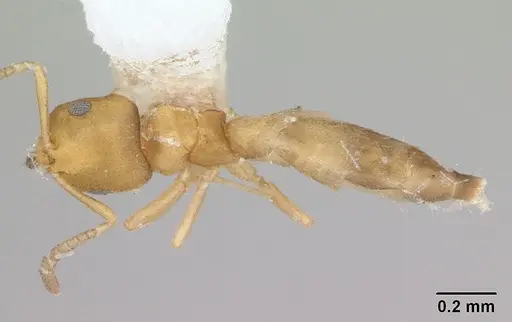
CASENT0653715
View on AntWeb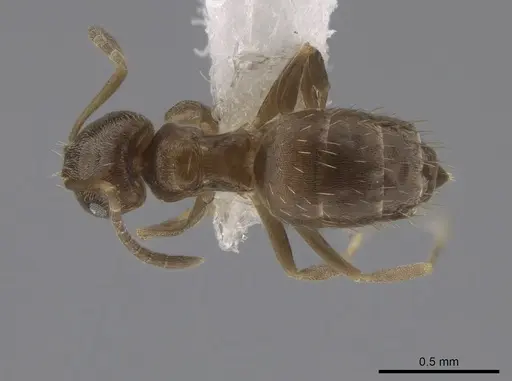
CBUMAGENT41832
View on AntWeb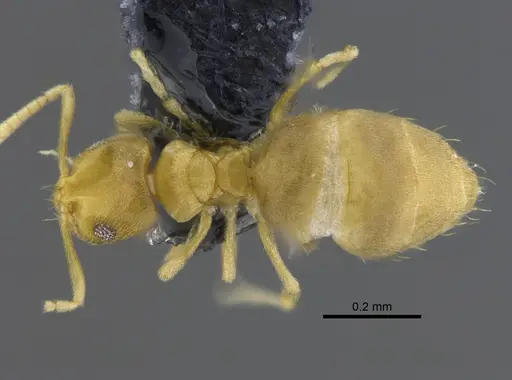
MACN-BAR-INS-7418
View on AntWeb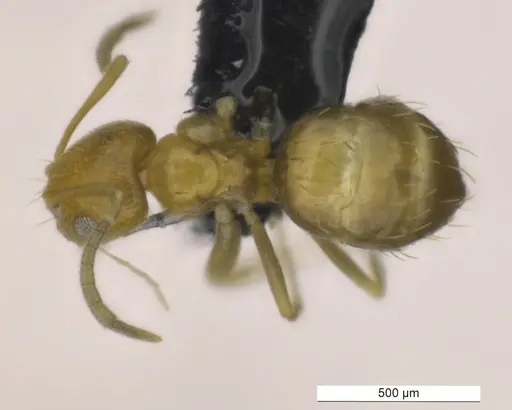
USNMENT00757137
View on AntWeb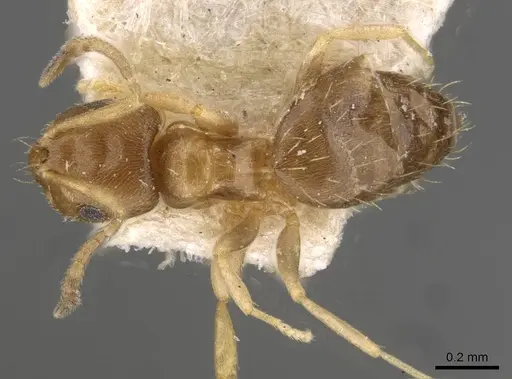
Literature
Loading distribution map...Loading products...