
Brachymyrmex feitosai
- Sci. Name
- Brachymyrmex feitosai
- Tribe
- Myrmelachistini
- Subfamily
- Formicinae
- Author
- Ortiz & Fernández, 2014
- Distribution
- Found in 1 countries
Introduction
Brachymyrmex feitosai is a tiny, recently described ant species from the Brazilian Atlantic Forest. Workers measure just 2-3mm and have a smooth, shiny brown body with distinctive features including five long erect hairs on the face and unusual bulging spiracles on the thorax. This species is known only from workers collected in three Brazilian states (Minas Gerais, Rio de Janeiro, and São Paulo), making it one of the least-studied ants in the hobby. The one specimen collected from an underground trap suggests these ants live primarily underground, which is unusual for antkeepers to replicate. The species was named in 2014 to honor Dr. Rodrigo Feitosa for his contributions to ant taxonomy.
Quick Summary
- Difficulty: Unknown, likely Moderate to Hard
- Origin & Habitat: Brazilian Atlantic Forest in the states of Minas Gerais, Rio de Janeiro, and São Paulo. Found in pristine forest fragments at elevations around 600m. One specimen was collected in an underground trap, suggesting hypogaeic (ground-dwelling) habits [1][2].
- Colony Type: Unknown. Only worker caste has been described. Queen and male are unknown. Based on genus patterns, likely single-queen colonies.
- Size & Growth:
- Queen: Unknown, queen has not been described [1].
- Worker: Workers are 2-3mm total length (head length 0.33-0.43mm) [1][2].
- Colony: Unknown, no colony size data exists.
- Growth: Unknown, no development data exists.
- Development: Unknown, no development data exists. Based on typical Brachymyrmex patterns and small worker size, estimate 4-8 weeks at warm temperatures. (This is a pure estimate based on genus-level patterns. No direct observations of development exist for this species.)
- Antkeeping:
- Temperature: Unknown for this species. Based on Brazilian Atlantic Forest origin (warm, humid climate), aim for 22-28°C with stable conditions. Start around 24-26°C and observe colony activity.
- Humidity: Based on Atlantic Forest origin, these ants likely prefer humid conditions. Keep nest substrate consistently moist but not waterlogged. Provide a gradient with slightly drier areas available.
- Diapause: Unknown, no research on overwintering behavior exists. As a Brazilian species from subtropical Atlantic Forest, they likely do not require true hibernation but may reduce activity in cooler periods.
- Nesting: Natural nesting is poorly documented. One specimen was collected in an underground trap, suggesting they nest in soil or under ground cover. For captivity, use a naturalistic setup with moist substrate (soil/plaster mix) or a Y-tong nest with tight chambers scaled to their tiny size. Their very small size means they can escape through standard mesh, use fine mesh barriers.
- Behavior: Behavior is unstudied. Based on genus patterns, these are likely docile, non-aggressive ants that forage quietly. Their tiny size makes them difficult to observe. Escape prevention is critical due to their very small size, they can squeeze through gaps that larger ants cannot. They are not known to sting and pose no danger to keepers.
- Common Issues: escape prevention is critical, their tiny size allows them to squeeze through standard mesh barriers, no colony size data exists, keepers should expect slow growth typical of small tropical ants, queen has never been described, finding a mated queen for captive breeding may be impossible, underground lifestyle means they may be shy and difficult to observe, lack of basic biology data makes care recommendations uncertain
Appearance and Identification
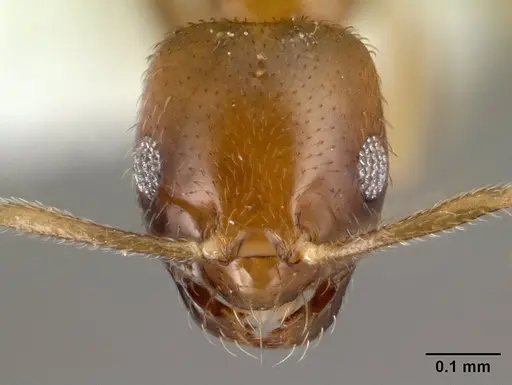
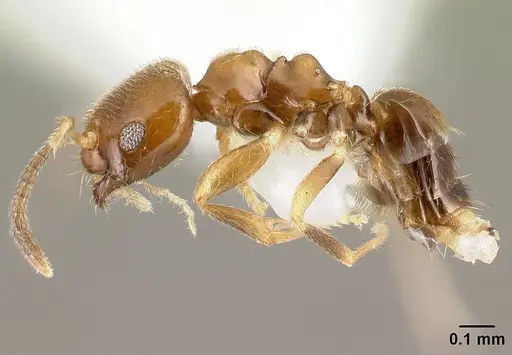
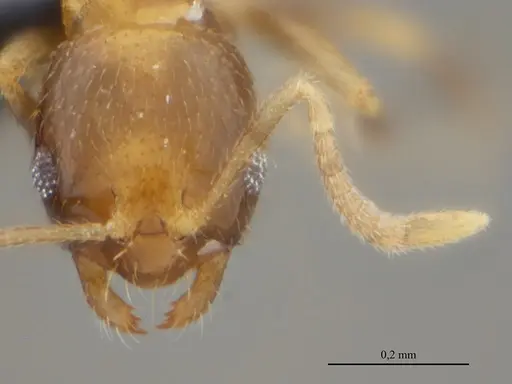
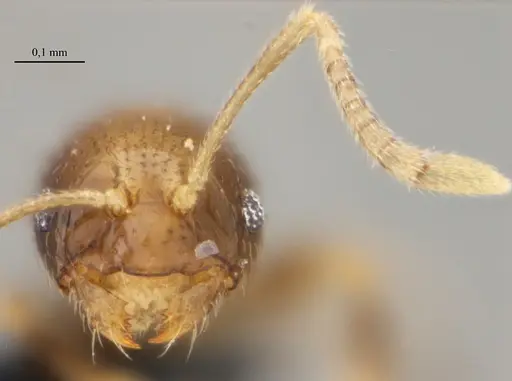
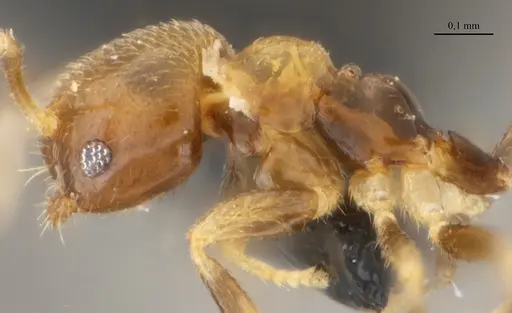
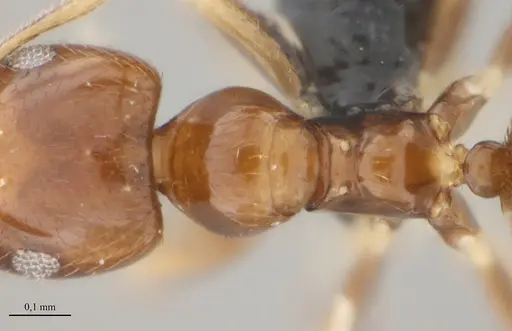
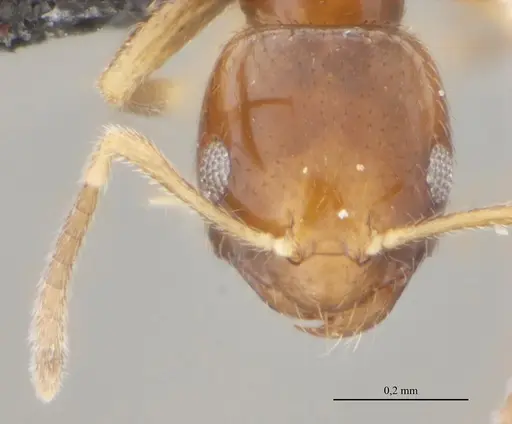
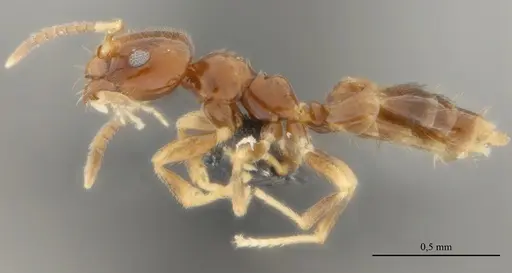
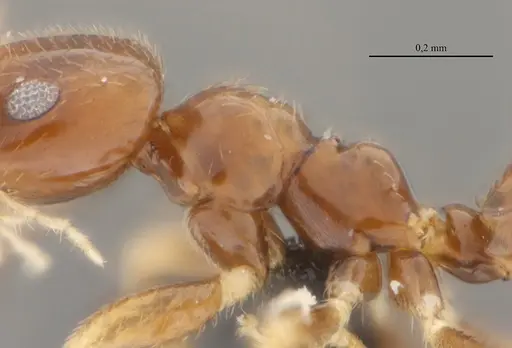
Brachymyrmex feitosai workers are among the smallest ants you might keep, measuring just 2-3mm in total length. Their body is entirely smooth and shiny, colored brown throughout. The most distinctive features are the five long erect hairs on the face (clypeus): one in the center near the front, and two pairs along the sides. They also have unusual bulging spiracles on the thorax that stick up prominently when viewed from the side. Their small size and shiny appearance make them look almost like tiny wasps. Unlike many ants, they have three simple eyes (ocelli) on top of the head in addition to the compound eyes. These identification features matter for keepers because they confirm you have the correct species, there are many similar-looking tiny brown ants in Brazil. [1][2]
Natural History and Distribution
This species is known only from southeastern Brazil, specifically the states of Minas Gerais, Rio de Janeiro, and São Paulo. All specimens come from the Brazilian Atlantic Forest, a biodiversity hotspot known for its humid, warm climate and dense vegetation. The type specimens were collected in Rio de Janeiro's Floresta de Tijuca (the largest urban forest in the world), while other specimens came from forest fragments in Minas Gerais and São Paulo. Notably, one specimen from São Paulo was collected in an underground trap, a device buried in the soil to catch creatures that live underground. This suggests Brachymyrmex feitosai has hypogaeic habits, meaning it lives most of its life underground or in the soil layer. This is unusual for antkeepers to replicate and may explain why this species has rarely been encountered. [1][2]
Housing and Nest Setup
Because this species appears to live underground, a naturalistic setup with moist substrate works best. Use a soil and plaster mix or a thick layer of moist soil in a formicarium. The chambers should be small and tight, these are tiny ants that feel exposed in large open spaces. A Y-tong (acrylic) nest with narrow chambers also works well if you keep the substrate consistently moist. The critical issue is escape prevention: at just 2-3mm, these ants can squeeze through gaps that larger ants cannot. Use fine mesh (at least 0.5mm) on all openings and consider applying fluon to the rim of the outworld. Provide a water tube for drinking and keep the nest area humid. Because they may be shy underground-dwellers, place the nest in a quiet location with minimal disturbance.
Feeding and Diet
The diet of Brachymyrmex feitosai has not been studied, but Brachymyrmex genus members are typically omnivorous, accepting sugar sources and small protein items. Based on related species, offer sugar water or honey as a constant energy source. For protein, provide tiny prey items like fruit flies, small mealworms, or micro-arthropods. Because these ants are so small, their prey items must be appropriately sized, even a small fruit fly is a substantial meal for them. Feed protein 2-3 times per week, removing any uneaten prey after 24 hours to prevent mold. Observe whether they accept the foods you offer and adjust accordingly.
Temperature and Seasonal Care
No specific temperature data exists for this species, but it comes from the Brazilian Atlantic Forest, a warm and humid subtropical environment. Aim for temperatures in the 24-28°C range, which is typical room temperature in many homes. Avoid temperatures below 20°C or above 30°C. A heating cable on one side of the nest can create a gradient if your room runs cool. Unlike temperate species, they likely do not require a true hibernation period. However, they may naturally reduce activity during cooler months, this is normal and you should not force heating if the colony is resting. Keep humidity high by misting the substrate or maintaining a water reservoir.
Challenges and Limitations
This is one of the most poorly documented species a antkeeper could attempt to keep. The queen has never been described, meaning there may be no documented cases of captive breeding. If you obtain workers, you likely have a colony with an unknown queen status. Growth rates, development times, and exact dietary needs are all unknown, you will be learning alongside the scientific community. The underground lifestyle means colonies may be inactive and difficult to observe, which can be frustrating for keepers wanting active, visible ants. Additionally, their tiny size makes them escape risks and difficult to handle. This species is best suited for advanced keepers who enjoy the challenge of keeping poorly-documented species and can accept uncertainty in care. [1][2]
Frequently Asked Questions
How long does it take for Brachymyrmex feitosai to go from egg to worker?
This is unknown, no development data exists for this species. Based on typical Brachymyrmex patterns and their very small size, estimate 4-8 weeks at warm temperatures (around 24-26°C).
Can I keep Brachymyrmex feitosai in a test tube?
Yes, you can start them in a test tube setup like most ants. However, their small size and apparent underground lifestyle mean they may do better in a naturalistic setup with moist substrate. Use a test tube with a cotton ball providing water access.
What do Brachymyrmexfeitosai ants eat?
Diet is unconfirmed for this species. Based on related Brachymyrmex species, they likely accept sugar water or honey and small protein sources like fruit flies or tiny mealworms. Offer both and observe what they accept.
Do Brachymyrmexfeitosai ants need hibernation?
Unknown, no research exists on their seasonal behavior. As a Brazilian species from subtropical Atlantic Forest, they likely do not require true hibernation but may reduce activity in cooler periods.
How big do Brachymyrmexfeitosai colonies get?
Unknown, no colony size data exists for this species. Based on similar Brachymyrmex species, colonies likely reach a few hundred workers at most.
Why are my Brachymyrmexfeitosai ants dying?
Without basic biology data, diagnosing problems is difficult. Common issues likely include: escape through tiny gaps, drying out (they need humidity), wrong temperature (too cold or too hot), or inadequate food. Check your escape prevention first, their tiny size means they can slip through standard barriers.
Can I keep multiple queens together?
Unknown, the colony structure has not been documented. Queen and male castes have never been described for this species. Do not attempt combining unrelated queens without documented evidence that this works.
What makes Brachymyrmexfeitosai different from other Brachymyrmex?
This species has distinctive features: five long erect hairs on the clypeus (face), unusual bulging spiracles on the thorax, and entirely smooth shiny body. It is one of the newest described species (2014) and one of the least-studied in the hobby.
Is Brachymyrmexfeitosai a good species for beginners?
No, this is not a good beginner species. Basic biology (queen description, colony size, development time, diet) is completely unknown. The queen has never been described. This species is best for advanced keepers who enjoy documenting poorly-known species.
When should I move my colony to a formicarium?
Wait until the colony is well-established with at least 20-30 workers. However, because they may prefer underground conditions, a naturalistic setup with substrate may be better than a traditional formicarium from the start.
Where can I find Brachymyrmexfeitosai queens?
This is likely impossible, the queen has never been scientifically described. You would need to find a wild colony and hope it contains a queen, but identifying it would be extremely difficult without a description to compare against.
Report an Issue
The current care sheet is based fully on literature. See inconsistencies, or something that's incorrect? Please , it will be resolved after review from an admin. Contributing to the blogs tab also helps providing information, to make us be able to further improve the caresheets. Thank you for your support!
References

This caresheet is licensed under CC BY-SA 4.0 .
Community Blogs
CASENT0217326
View on AntWeb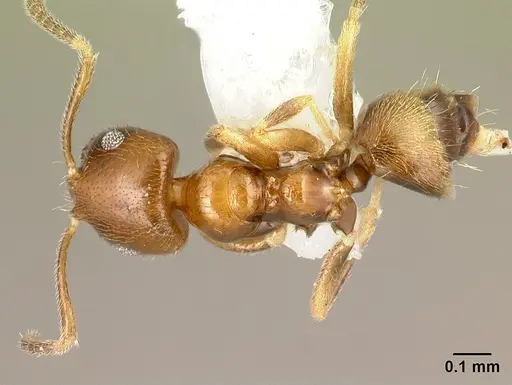
UFV-LABECOL-001900
View on AntWeb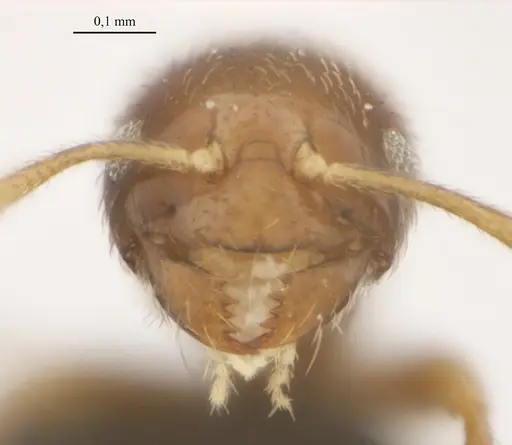
UFV-LABECOL-002691
View on AntWeb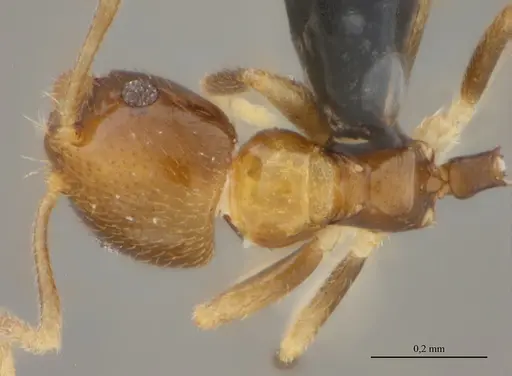
UFV-LABECOL-002693
View on AntWeb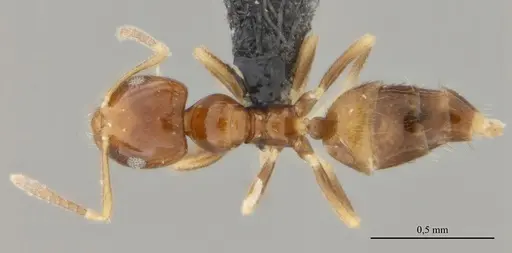
Literature
Loading distribution map...Loading products...