
Bothroponera umgodikulula
- Sci. Name
- Bothroponera umgodikulula
- Tribe
- Ponerini
- Subfamily
- Ponerinae
- Author
- Joma & Mackay, 2015
- Distribution
- Found in 1 countries
Introduction
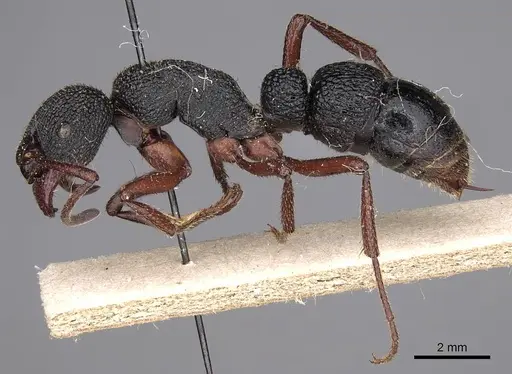
Bothroponera umgodikulula is a large African ant species native to South Africa, specifically found in the Eastern Cape (Whittlesea/Bulhoek area) and Western Cape (Hopefield) provinces. Workers are impressively large at 14.80-15.65mm, making this the largest species in the Bothroponera genus . They have a striking appearance with an almost entirely black body contrasted by bright red legs, antennae, and mandibles. The most distinctive identification feature is their horizontal propodeal spiracle - a respiratory opening positioned sideways on the body rather than vertically like most ants . The fourth abdominal segment (second gastral segment) is notably smooth and glossy, unlike the rough, sculptured segments of similar species . These ants inhabit grassland at approximately 1,060m elevation in the Eastern Cape, and fynbos biome areas in the Western Cape .
Quick Summary
- Difficulty: Unknown, insufficient hobby keeping data
- Origin & Habitat: South Africa (Eastern Cape and Western Cape provinces). Found in grassland habitat around Whittlesea at ~1,060m elevation, and fynbos biome near Hopefield [1][2].
- Colony Type: Colony structure is unconfirmed. No data on queen number or colony size exists for this species [1][2].
- Size & Growth:
- Queen: Undescribed, only workers have been documented [1][2]
- Worker: 14.80-15.65mm total length [1][2]
- Colony: Unknown, no colony data available
- Growth: Unknown
- Development: Unconfirmed, no development data exists for this species (Based on typical Ponerinae patterns, expect 2-4 months from egg to first worker at warm temperatures, but this is an estimate only.)
- Antkeeping:
- Temperature: Likely moderate, they come from temperate South Africa at elevation ~1,060m. Start around 20-24°C and monitor colony activity. Avoid overheating.
- Humidity: Moderate, grassland and fynbos are not extremely wet. Aim for 50-70% humidity with a moist nest substrate.
- Diapause: Unknown, South African temperate species may have a mild winter rest period, but this has not been documented.
- Nesting: Ground-nesting species likely. Provide a deep soil or plaster nest with chambers scaled to their large size. They should do well in a Y-tong or naturalistic setup with compact soil chambers.
- Behavior: Ponerine ants are typically predatory and have a potent sting. Given their large size, expect them to be capable defenders. They are likely more active hunters than many common pet ants. Escape prevention is important, while large, they can still squeeze through small gaps. Monitor for aggression and use proper barriers.
- Common Issues: no captive husbandry data exists, this is an extremely rare species in the antkeeping hobby, founding behavior is completely unknown, we don't know if queens are claustral or semi-claustral, colony size and growth rate are unconfirmed, making it difficult to plan housing transitions, winter care requirements are unknown, South African seasonal patterns differ from temperate species, sting pain level is not documented but their large size suggests a noticeable sting
Identification and Appearance
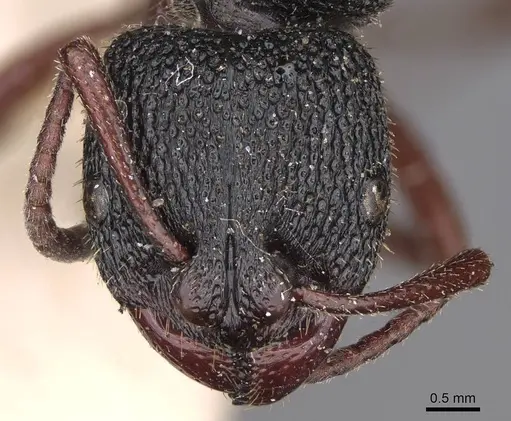
Bothroponera umgodikulula is one of the most distinctive ants in the Ponerinae subfamily due to its unique physical features. Workers reach an impressive 14.80-15.65mm in total length, making them the largest Bothroponera species known [1][2]. Their body is predominantly black, but this is dramatically offset by bright red legs, antennae, and mandibles, giving them a striking appearance [1][2]. The most diagnostic feature is the horizontal propodeal spiracle, unlike other Bothroponera species where this respiratory opening points downward, in B. umgodikulula it points sideways [1][2]. The fourth abdominal segment (second gastral segment) is unusually smooth and glossy compared to the rough, foveolate sculpture covering most of the rest of the body [2]. Their head is subquadrate (nearly square), and the entire body is covered in fine golden hairs that are especially noticeable on the underside of the head [2].
Natural Habitat and Distribution
This species is endemic to South Africa with two known population areas. The type locality is Bulhoek (now called Whittlesea) in the Eastern Cape Province, at an elevation of approximately 1,060 meters [1]. The area features grassland vegetation. A second population was discovered in the Hopefield area of the Western Cape Province, which lies about 90 miles north of Cape Town near Saldanha Bay [2]. The Western Cape population inhabits the fynbos biome, a unique and threatened ecosystem known for high plant diversity [2]. However, the Hopefield area has been significantly impacted by invasive plant species including several Acacia species (alien wattles), various Eucalyptus, and prickly pear cactus [2]. This habitat alteration means the species may face conservation concerns in parts of its range [2].
Keeping Requirements
Since Bothroponera umgodikulula has never been kept in the antkeeping hobby, all recommendations are estimates based on related Ponerinae species and their natural habitat. They should be kept at moderate temperatures, aim for roughly 20-24°C, avoiding both cold and excessive heat. The species comes from temperate South Africa at elevation, so they likely experience cooler nights than tropical species. Humidity should be moderate, around 50-70%, with a nest substrate that holds some moisture but isn't waterlogged. For nesting, provide a deep setup with soil or plaster chambers scaled to their large 15mm worker size. A Y-tong nest or well-designed naturalistic setup would work well. Feed them protein-rich foods like insects, Ponerinae ants are typically predators. Given their large size and potent sting, handle with care and ensure excellent escape prevention.
Similar Species and Identification Tips
Bothroponera umgodikulula belongs to the Bothroponera pumicosa species complex, a group of closely related African ants that can be difficult to distinguish [1][2]. The most reliable identifying features of B. umgodikulula are the horizontal propodeal spiracle and the smooth, glossy fourth abdominal segment [1][2]. Similar species like Bothroponera cavernosa and B. cavernosa var. montivaga have rough, sculptured fourth segments [2]. Another similar species, Bothroponera laevissima, also has smooth segments but its body surface is much smoother overall, B. umgodikulula has coarse foveolate (pitted) sculpture on most body surfaces [2]. The red legs, antennae, and mandibles combined with the black body also help distinguish this species in the genus.
Conservation Status
While no formal conservation assessment exists for Bothroponera umgodikulula, the species faces potential threats in its limited range. The Hopefield population in the Western Cape inhabits an area considered threatened due to extensive invasive plant species including alien wattles (Acacia cyclops, A. longifolia, A. saligna), Eucalyptus species, and prickly pear cactus [2]. These invasive plants alter the native fynbos ecosystem and may affect ant populations. The species is only known from two relatively small areas in South Africa, making it potentially vulnerable to habitat loss. If you encounter this species in the hobby, avoid releasing any ants in non-native areas.
Frequently Asked Questions
How long do Bothroponera umgodikulula workers live?
Worker lifespan is unconfirmed for this species. Ponerine ants typically live several months to a few years, with queens living much longer, potentially over a decade.
What do Bothroponera umgodikulula eat?
Feeding is unconfirmed for this species. Based on related Ponerinae, they are likely predatory and will accept small live insects like crickets, mealworms, and other arthropods. Protein should form the bulk of their diet.
Are Bothroponera umgodikulula good for beginners?
No, this species is not recommended for beginners. It is extremely rare in the antkeeping hobby with no established husbandry guidelines. There is no data on founding behavior, colony growth, or captive requirements.
How big do Bothroponera umgodikulula colonies get?
Colony size is unknown. No colony data exists for this species in scientific literature. Related Bothroponera species typically form colonies of several hundred to a few thousand workers.
Do Bothroponera umgodikulula need hibernation?
Winter requirements are unknown. The species comes from temperate South Africa at elevation ~1,060m, so they likely experience cooler winters. A mild winter rest period may be beneficial, but specific requirements are unconfirmed.
Can I keep multiple Bothroponera umgodikulula queens together?
Colony structure is unconfirmed. No data exists on whether this species is single-queen (monogyne) or multi-queen (polygyne). Combining unrelated queens is not recommended without evidence they can coexist.
What is the best nest type for Bothroponera umgodikulula?
Nest type is unconfirmed, but based on their large size and likely ground-nesting habits, a Y-tong or naturalistic setup with deep soil chambers would be appropriate. Ensure chambers are scaled to their 15mm worker size.
How do I identify Bothroponera umgodikulula?
Look for: large 14.80-15.65mm workers, black body with red legs/antennae/mandibles, horizontal propodeal spiracle (unique), and smooth glossy fourth abdominal segment. The fine golden body hairs are also distinctive.
Where is Bothroponera umgodikulula found?
This species is endemic to South Africa, known only from two areas: Whittlesea (Bulhoek) in the Eastern Cape Province at ~1,060m elevation, and Hopefield in the Western Cape Province near Saldanha Bay.
Report an Issue
The current care sheet is based fully on literature. See inconsistencies, or something that's incorrect? Please , it will be resolved after review from an admin. Contributing to the blogs tab also helps providing information, to make us be able to further improve the caresheets. Thank you for your support!
References

This caresheet is licensed under CC BY-SA 4.0 .
Community Blogs
ANTWEB1008601
View on AntWeb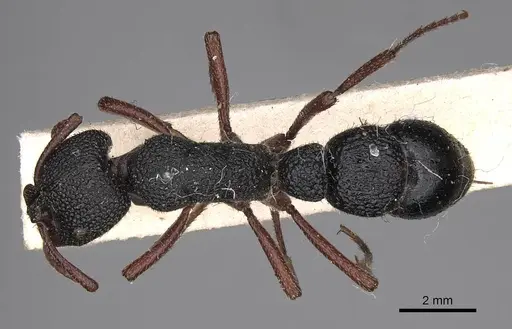
Literature
Loading distribution map...Loading products...