
Bothroponera planicornis
- Sci. Name
- Bothroponera planicornis
- Tribe
- Ponerini
- Subfamily
- Ponerinae
- Author
- Rakotonirina & Fisher, 2013
- Distribution
- Found in 1 countries
Introduction
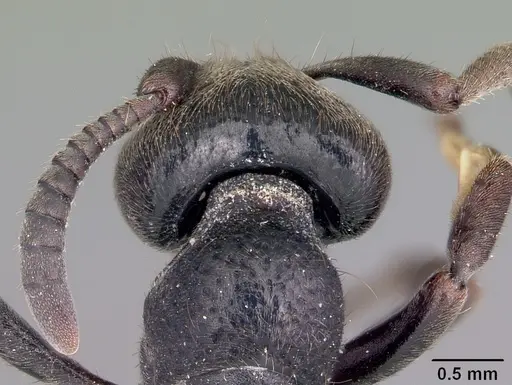
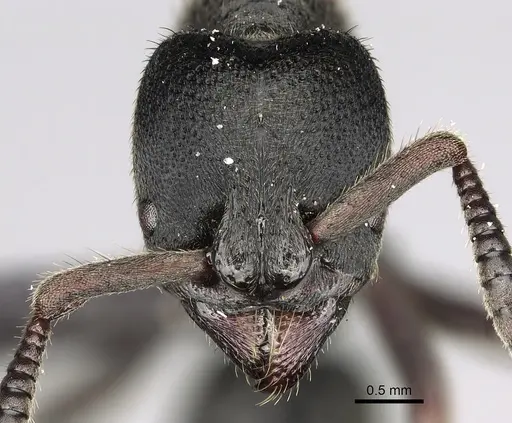
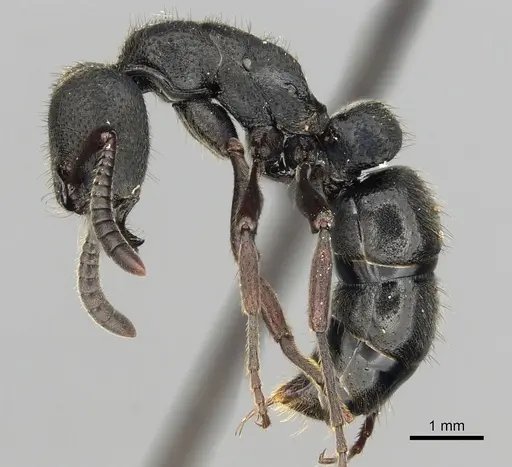
Bothroponera planicornis is a rare Ponerine ant endemic to eastern Madagascar. Workers have a dark brown to black body with noticeably lighter appendages. They can be identified by their distinctive dorsoventrally flattened antennal scape and laterally compressed hind basitarsus with a concave inner surface. The species is locally rare despite its relatively wide geographic range across Madagascar's mesic forests, known only from lowland, sandy, and montane rainforest habitats . This ant forages on the ground surface and nests primarily in rotten logs . The queen caste has never been documented, making captive breeding extremely difficult .
Quick Summary
- Difficulty: Hard
- Origin & Habitat: Eastern Madagascar, mesic forests including lowland forest (PN Marojejy, Betaolana), sandy forest (Mahavelona/Foulpointe), and montane rainforest (PN Ranomafana) [1][2][3]
- Colony Type: Unknown, only worker caste has been documented. Queen and male castes remain undescribed, making colony structure uncertain [1][2].
- Size & Growth:
- Queen: Unknown, queen caste has never been described [1].
- Worker: Size data unavailable, only head measurements (HL 2.09-2.25mm) and mesosoma measurements (WL 2.86-3.02mm) are available in the literature. Based on typical Bothroponera genus size, workers likely measure approximately 6-10mm total length.
- Colony: Unknown, only 7 worker specimens have been collected [1].
- Growth: Unknown, no captive colony data exists.
- Development: Unknown, development has never been studied in captivity or described in literature. (No data available on egg-to-worker development time.)
- Antkeeping:
- Temperature: Based on Madagascar's mesic forest habitats, aim for 22-26°C with stable conditions. Avoid temperatures below 20°C or above 30°C.
- Humidity: High humidity is essential, these ants come from rainforest environments. Keep nest substrate consistently moist but not waterlogged. Provide a water tube for drinking access.
- Diapause: Unknown, no research on seasonal dormancy. Madagascar has mild temperatures year-round, so diapause may not be required.
- Nesting: In nature, they nest in rotten logs. In captivity, a naturalistic setup with moist substrate (soil/peat mix) works well. Provide pieces of rotting wood or cork for them to adopt as nesting sites [1][2].
- Behavior: Bothroponera planicornis is a ground-foraging predator, typical of the Ponerinae subfamily. Workers hunt small invertebrates on the forest floor. They have a potent sting for subduing prey, as is common in Ponerine ants. Workers are moderately large so escape prevention is straightforward, standard barriers work well. Temperament is likely defensive when disturbed, but they are not aggressive toward humans. Activity level appears moderate, with workers actively foraging on ground surfaces [1][2].
- Common Issues: availability is extremely limited, this is one of the rarest Madagascar ants in the hobby, queen caste has never been documented, making colony founding impossible from wild-caught queens, no captive breeding data exists, all colonies would need to be wild-caught workers, high humidity requirements make mold a constant risk if ventilation is poor, specific habitat needs (rotten logs, rainforest conditions) are difficult to replicate reliably
Species Overview and Identification
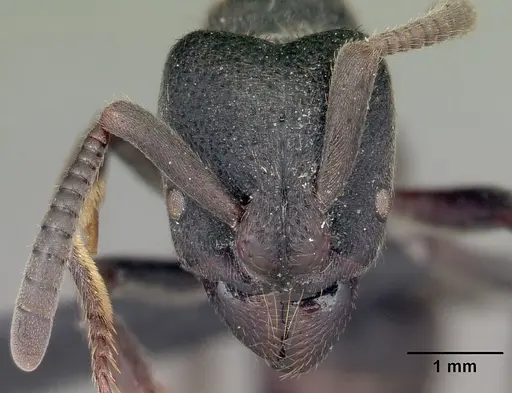
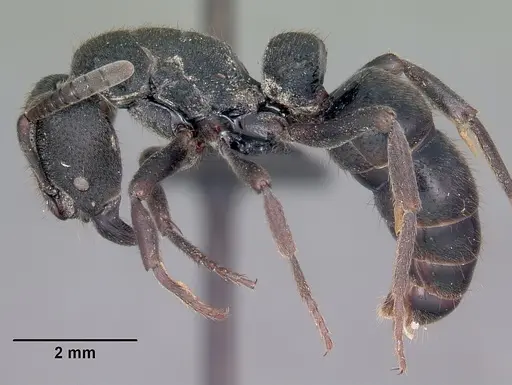
Bothroponera planicornis is a Ponerine ant native to eastern Madagascar. Workers are medium-sized ants with distinctive morphological features. Their most notable traits are the dorsoventrally flattened basal half of the antennal scape and the laterally compressed hind basitarsus with a concave inner surface. The body is dark brown to black with noticeably lighter appendages. Workers have erect slender hairs and pubescence on the dorsal surface of the head and body. The petiolar node is thick when viewed in profile, and the junction between the propodeal dorsum and declivity forms a distinct angle rather than a continuous curve [1][2]. This species can be distinguished from similar Bothroponera cambouei and Bothroponera perroti by these unique morphological features.
Natural History and Distribution
This species has an unusual distribution pattern, it is locally rare despite having a relatively wide geographic range across eastern Madagascar. Known populations occur in three main areas: the lowland and montane forests of Marojejy and Betaolana in the northeast, the sandy forests around Mahavelona (Foulpointe) on the east coast, and the montane rainforest of Ranomafana in the southeast. All known localities are mesic (moist) forest habitats, indicating strong humidity requirements. Workers forage on the ground surface, searching for prey among leaf litter and debris. Nests are located primarily in rotten logs, which provides the moist, protected environment these ants need [1][2]. The complete absence of queen or male specimens in any collection suggests either very low colony density or specialized reproductive behavior that has not been observed.
Housing and Nesting Preferences
Based on their natural nesting behavior in rotten logs, a naturalistic setup works best for this species. Use a mixture of soil and organic material (peat, coco fiber) kept consistently moist. Adding pieces of rotting wood, cork, or leaf litter gives them natural nesting sites to choose from. Alternatively, a plaster nest with built-in water chambers can maintain high humidity, though you should provide some natural substrate pieces for them to modify. The key is maintaining damp conditions without flooding, the substrate should feel moist but water should not pool on the surface. A water tube attached to the outworld ensures drinking access. Ventilation must be adequate to prevent mold while still retaining humidity. Room temperature in the low-to-mid 20s Celsius typically falls within their acceptable range. [1][2]
Feeding and Diet
As a Ponerine ant, Bothroponera planicornis is predatory and likely hunts small invertebrates. In captivity, offer small live prey such as fruit flies, pinhead crickets, small mealworms, and other appropriately-sized insects. They probably accept protein-rich foods like small pieces of raw meat or hard-boiled egg as well. Unlike some ants that readily accept sugar, Ponerines are typically more carnivorous, though you can occasionally offer a drop of diluted honey or sugar water to test acceptance. Feed every 2-3 days, removing any uneaten prey after 24 hours to prevent mold. A varied diet helps ensure proper nutrition for any colony you might obtain.
Temperature and Seasonal Care
Eastern Madagascar maintains relatively warm, stable temperatures year-round in the mesic forest zones. Target temperatures of 22-26°C are ideal. A heating cable placed on one side of the nest creates a temperature gradient, allowing ants to self-regulate. Avoid temperatures below 20°C as this may stress them, and keep everything below 30°C to prevent overheating. Regarding seasonal cycles, no research exists on whether this species has a dormancy period. Given Madagascar's mild climate, they likely remain active year-round with perhaps some slowing during cooler periods. Monitor your colony's behavior, if they become less active in winter, reduce feeding and ensure temperatures don't drop too low. Maintain stable conditions rather than allowing dramatic temperature swings.
Challenges and Conservation Status
Bothroponera planicornis presents significant challenges for antkeepers. The most fundamental issue is that the queen caste has never been documented, meaning no one has ever observed how this species founds new colonies. This makes captive breeding essentially impossible, any colonies in the hobby would have to be wild-caught workers, which is difficult given the species' rarity and remote Madagascar distribution. The species is protected in Madagascar's national parks (Marojejy, Ranomafana) where known populations occur, and exporting them would require proper permits. Additionally, their specific humidity and habitat requirements are difficult to replicate reliably. For these reasons, this species is best considered an advanced keeper's challenge or a species to appreciate through research rather than attempt to maintain in captivity. [1][2]
Frequently Asked Questions
Can I keep Bothroponera planicornis in a test tube?
A test tube setup is not ideal for this species. They naturally nest in rotten logs with high humidity, so a naturalistic setup with moist substrate works much better. If you must use a test tube for temporary housing, ensure very high humidity and add a water tube, but transition to a proper nest as soon as possible.
How long does it take for eggs to develop into workers?
This is completely unknown, no research has ever studied their development.
Can I keep multiple queens together?
This cannot be answered, the queen caste has never been documented, so we have no information about colony structure or whether multiple queens can be kept together.
How big do colonies get?
Colony size is unknown. Only 7 worker specimens have ever been collected, and no mature colonies have been studied.
What do Bothroponera planicornis eat?
They are predatory ants that hunt small invertebrates on the ground surface. In captivity, feed small live prey like fruit flies, pinhead crickets, and small mealworms. They may accept protein like raw meat or boiled egg, and occasionally test sugar sources, but protein should be the primary food.
Are Bothroponera planicornis good for beginners?
No, this species is not suitable for beginners. They are extremely rare in the hobby, require high humidity, have unknown colony structure, and cannot be bred in captivity since the queen has never been documented. This is an advanced species for experienced keepers interested in rare Madagascar ants.
Do they need hibernation or diapause?
Diapause requirements are unknown. Madagascar has mild year-round temperatures, so they may not require a true hibernation period. However, they may slow down during cooler months. Monitor your colony's activity and adjust care accordingly.
Why are my ants dying?
Without captive breeding data, specific failure points are unknown. However, likely causes include: humidity too low (they need rainforest conditions), temperature stress (too cold or too hot), improper diet, or simply the stress of being wild-caught without a queen. This species is extremely difficult to maintain long-term.
Report an Issue
The current care sheet is based fully on literature. See inconsistencies, or something that's incorrect? Please , it will be resolved after review from an admin. Contributing to the blogs tab also helps providing information, to make us be able to further improve the caresheets. Thank you for your support!
References

This caresheet is licensed under CC BY-SA 4.0 .
Community Blogs
CASENT0096369
View on AntWeb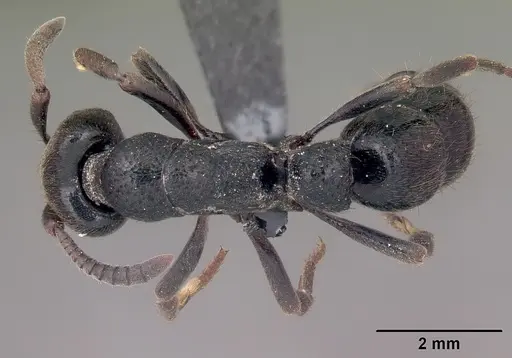
CASENT0151943
View on AntWeb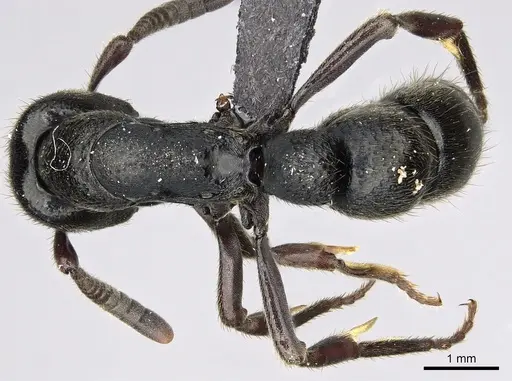
Literature
Loading distribution map...Loading products...