
Steenberg Rugged Ringbum ant
Bothroponera cavernosa
- Sci. Name
- Bothroponera cavernosa
- Tribe
- Ponerini
- Subfamily
- Ponerinae
- Author
- Roger, 1860
- Common Name
- Steenberg Rugged Ringbum ant
- Distribution
- Found in 1 countries
Introduction
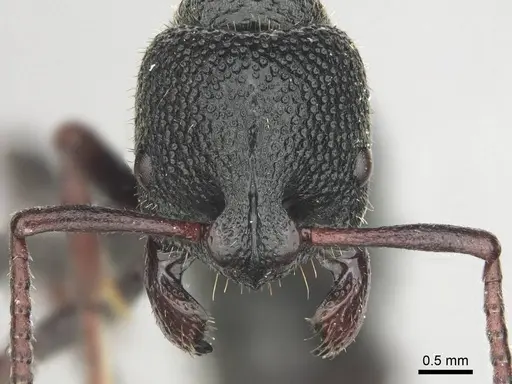
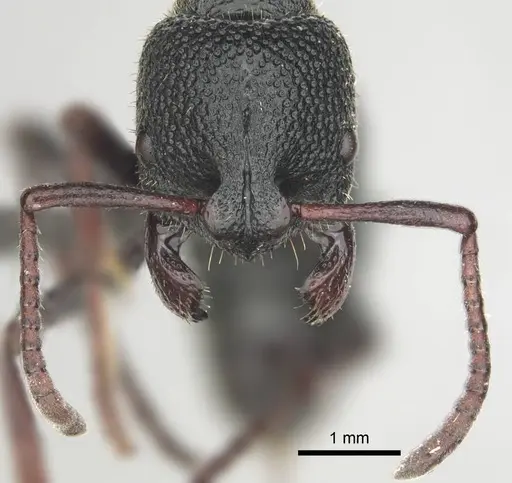
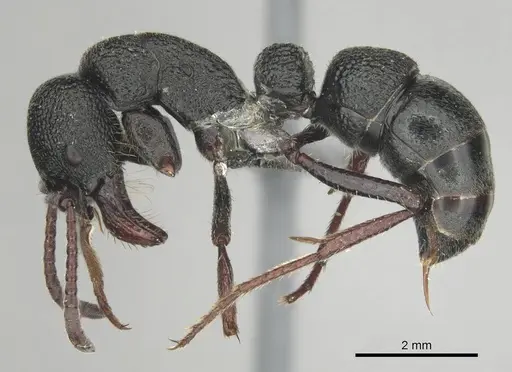
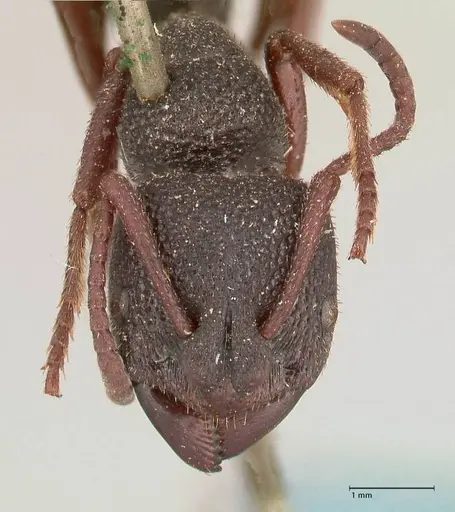
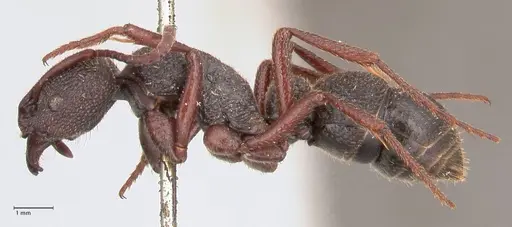
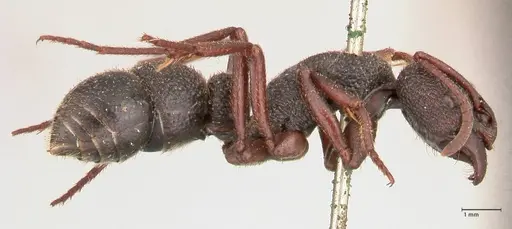
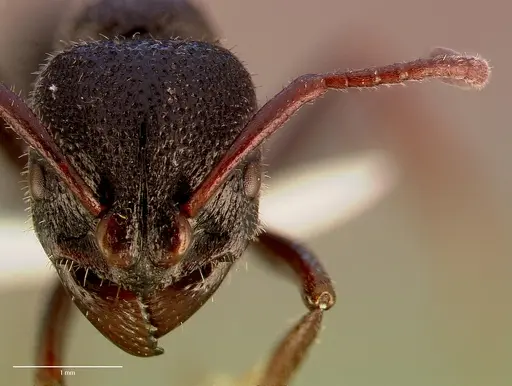
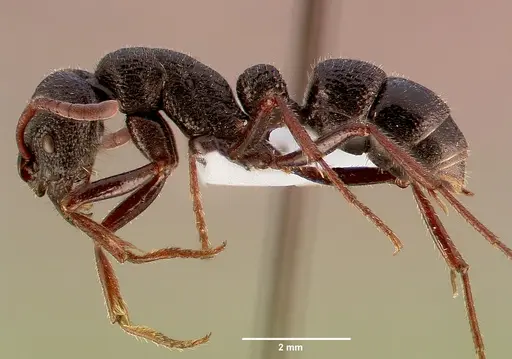
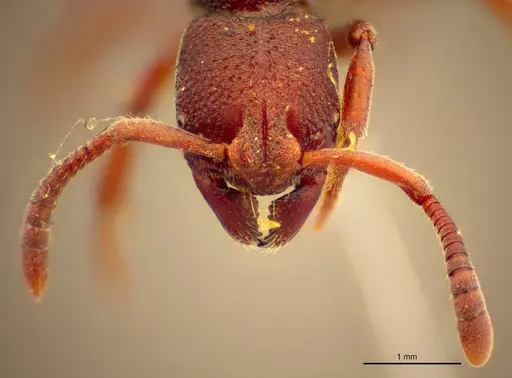
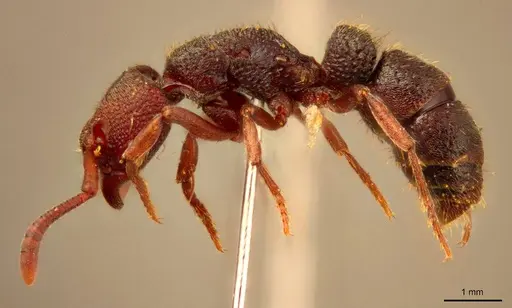
Bothroponera cavernosa is a large predatory ant species native to South Africa, specifically the Eastern Cape Province, Transkei, and Ciskei regions. Workers reach approximately 12mm in total length, making them one of the larger ant species in the region. They are easily recognized by their black body with brownish-red mandibles, clypeus, and leg segments, along with distinctive short golden hairs covering their body. The most notable identification feature is the rough texture on the second abdominal segment (gaster), which lacks the small pits (foveolae) found in related species . This species belongs to the Bothroponera pumicosa species complex, a group of predatory ants that hunt insects and other small invertebrates. They are ground-nesting ants typically found under stones in humid habitats with wet soils . Like other Ponerinae ants, they possess a functional sting which they use for subduing prey. Very little is documented about their specific biology, colony structure, or captive care requirements, making them a species best suited for experienced antkeepers who enjoy documenting behavior that may not be well-known in captivity.
Quick Summary
- Difficulty: Expert
- Origin & Habitat: South Africa, Eastern Cape Province, Transkei, and Ciskei regions. Found under stones in humid habitats with wet soils [1].
- Colony Type: Colony structure is not well-documented. Based on related Bothroponera species, likely monogyne (single queen). Field observations indicate small numbers of individuals [1].
- Size & Growth:
- Queen: size data unavailable, no direct measurements exist. Based on typical ant size ratios relative to workers (12mm), queens likely slightly larger.
- Worker: approximately 12mm total length [1]
- Colony: small colonies, field observations indicate small numbers of individuals under stones [1]
- Growth: Unknown, likely moderate like other Ponerinae.
- Development: Unknown, no development data exists for this species. (Ponerinae ants typically have longer development than faster-growing genera like Pheidole.)
- Antkeeping:
- Temperature: Based on South African distribution and humid habitat preference, keep nest area around 22-26°C with a gentle gradient. Avoid temperatures below 18°C or above 30°C.
- Humidity: Requires high humidity, they naturally nest in wet soils under stones in humid habitats. Keep nest substrate consistently moist but not waterlogged. Provide a water source nearby.
- Diapause: Unknown, South African climate is milder than temperate regions. Some reduced activity may occur during cooler months, but formal hibernation is likely not required.
- Nesting: Natural nesting is under stones in humid soil. In captivity, a naturalistic setup with moist substrate (like a digging formicarium or soil-filled container) works well. Provide flat stones or other cover on the surface. Avoid completely dry nests.
- Behavior: Bothroponera cavernosa is a predatory ant that hunts insects and small invertebrates. Like other Ponerinae, they possess a functional sting for subduing prey and defending the nest. Workers are large (12mm) and relatively slow-moving compared to smaller ants. Escape risk is moderate, their size makes them easier to contain than tiny ants, but they are strong and may attempt to dig through substrate. They are ground-nesting and likely most active during cooler parts of the day or at night.
- Common Issues: limited availability, this species is rarely available in the antkeeping hobby due to limited distribution and collection., unknown colony structure makes it difficult to know proper queen introduction methods., high humidity requirements can lead to mold problems if ventilation is inadequate., predatory diet needs may be challenging to meet consistently with live prey., slow growth and development may frustrate keepers expecting rapid colony expansion.
Nest Preferences and Housing
In the wild, Bothroponera cavernosa nests under stones in humid soil habitats [1]. For captive care, replicate these conditions using a naturalistic setup with moist substrate, a digging formicarium filled with soil or a similar medium works well. Provide a flat stone or piece of bark on the surface of the substrate to give the colony a sense of cover, which they would naturally have under stones in the wild.
Avoid completely dry nests or fully artificial setups like Y-tong nests, as these ants require moisture to maintain their preferred humidity levels. The nest should have chambers deep enough to allow workers to move brood to appropriate humidity zones. A water reservoir or moisture system that keeps the substrate consistently damp (but not soggy) is essential. Ensure adequate ventilation to prevent mold while maintaining humidity.
Feeding and Diet
Bothroponera cavernosa is a predatory ant that hunts insects and small invertebrates in the wild. In captivity, offer a diet based on small live prey such as fruit flies, small crickets, mealworms, and other appropriately-sized insects. Protein-rich foods are essential for brood development and maintaining the large workers this species produces.
Like other Ponerinae ants, they may also accept sugar sources such as honey or sugar water, though protein should make up the majority of their diet. Feed prey items twice weekly, adjusting based on colony size and consumption rates. Remove uneaten prey after 24-48 hours to prevent mold. A constant sugar water or honey water source is recommended, especially once the colony has workers.
Temperature and Seasonal Care
Based on their South African distribution in the Eastern Cape Province, Bothroponera cavernosa prefers warm, humid conditions. Keep the nest area at 22-26°C, providing a temperature gradient so workers can choose their preferred zone. A heating cable or mat on one side of the nest can create this gradient.
Avoid temperatures below 18°C or above 30°C. During winter months in temperate regions, room temperature may be sufficient, but monitor colony activity. Unlike temperate species that require formal hibernation, this species likely experiences only mild seasonal slowdown. Reduce feeding frequency during periods of reduced activity rather than attempting full hibernation.
Behavior and Handling
As a Ponerinae ant, Bothroponera cavernosa possesses a functional sting which they use for subduing prey and defending the nest. While their sting is not considered dangerous to healthy humans, it can be painful and may cause localized reactions in sensitive individuals. These ants are not aggressive toward humans unless directly threatened, but will defend their nest vigorously.
Workers are relatively large (12mm) and slower-moving than many smaller ant species. They are ground-nesting and likely most active during cooler parts of the day or at night. When keeping this species, avoid disturbing the nest unnecessarily, especially during founding and early colony stages. Provide darkness and minimal vibration to encourage natural behavior. [1]
Colony Establishment
Establishing a colony of Bothroponera cavernosa can be challenging due to limited availability in the antkeeping hobby. If acquiring a queen, she should be housed in a claustral setup (sealed chamber) with moist substrate. The founding chamber should be dark and undisturbed.
After the first workers emerge, gradually introduce small prey items. Do not rush to move the colony to a larger setup, allow them to establish before any transitions. The slow growth typical of Ponerinae species means colonies take time to develop. Patience is essential, as this species is not suitable for keepers expecting rapid colony expansion.
Frequently Asked Questions
How long does it take for Bothroponera cavernosa to produce first workers?
The exact development timeline is unknown for this species. Based on similar Ponerinae ants, development likely takes several months from egg to worker at optimal temperatures (22-26°C). This is significantly slower than many common ant species, so patience is essential.
What do Bothroponera cavernosa ants eat?
They are predatory ants that hunt insects and small invertebrates. Feed small live prey such as fruit flies, small crickets, and mealworms regularly. They likely also accept sugar sources like honey water, but protein should form the majority of their diet.
What humidity level do Bothroponera cavernosa ants need?
They require high humidity to match their natural habitat of wet soils under stones in humid areas of South Africa. Keep the nest substrate consistently moist but not waterlogged. Allow some variation so workers can choose their preferred humidity zone.
Are Bothroponera cavernosa good for beginners?
No, this species is not recommended for beginners. Very little is documented about their specific care requirements, they are rarely available in the hobby, and they have specific humidity and dietary needs that can be challenging to meet. They are best suited for experienced antkeepers who enjoy documenting species with limited available information.
How big do Bothroponera cavernosa colonies get?
Based on field observations, colonies appear to remain relatively small, likely fewer than a few hundred workers. This is consistent with their natural nesting under stones, which typically supports smaller colony sizes rather than the massive colonies of some other genera.
What temperature should I keep Bothroponera cavernosa at?
Keep nest temperatures around 22-26°C with a gentle gradient. Avoid temperatures below 18°C or above 30°C. A heating cable on one side of the nest can help maintain appropriate temperatures.
Can I keep multiple Bothroponera cavernosa queens together?
The colony structure is not well-documented for this species. Based on related Bothroponera species, they are likely monogyne (single queen). Combining unrelated queens is not recommended without specific documentation supporting multi-queen arrangements.
Do Bothroponera cavernosa ants need hibernation?
Hibernation requirements are unknown. Based on their South African distribution with mild winters, they likely do not require formal hibernation. During cooler winter months, simply reduce feeding and allow natural slowdown rather than attempting full hibernation.
What type of nest is best for Bothroponera cavernosa?
A naturalistic setup with moist soil substrate works best, replicating their natural habitat under stones. Provide a flat stone or cover on the surface. Avoid dry artificial nests. The substrate should allow for digging chambers while retaining moisture.
Why is my Bothroponera cavernosa colony dying?
Common causes include: low humidity (they need consistently moist substrate), improper temperature (too cold or too hot), insufficient protein in diet, mold from overwatering with poor ventilation, or stress from excessive disturbance. Review each of these factors and adjust accordingly.
Where is Bothroponera cavernosa found in the wild?
They are native to South Africa, specifically the Eastern Cape Province, Transkei, and Ciskei regions. They nest under stones in humid habitats with wet soils.
Report an Issue
The current care sheet is based fully on literature. See inconsistencies, or something that's incorrect? Please , it will be resolved after review from an admin. Contributing to the blogs tab also helps providing information, to make us be able to further improve the caresheets. Thank you for your support!
References

This caresheet is licensed under CC BY-SA 4.0 .
Community Blogs
CASENT0251953
View on AntWeb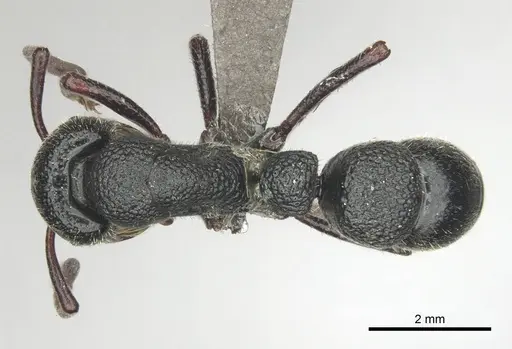
CASENT0888202
View on AntWeb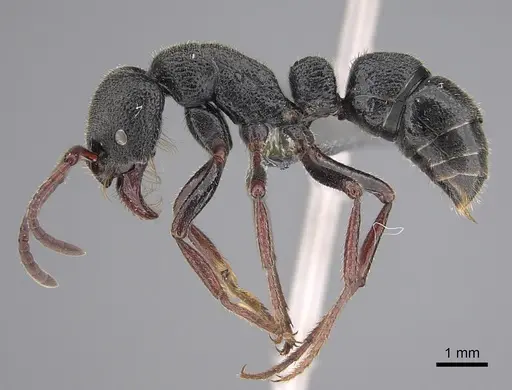
FOCOL0955
View on AntWeb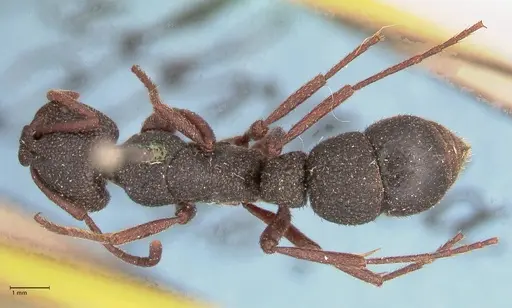
SAM-HYM-C008788A
View on AntWeb
SAM-HYM-C008788B
View on AntWeb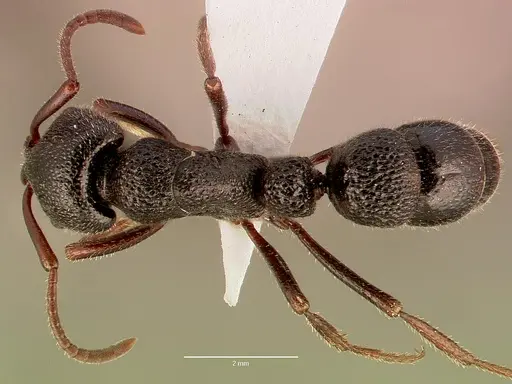
ZMUC00514656
View on AntWeb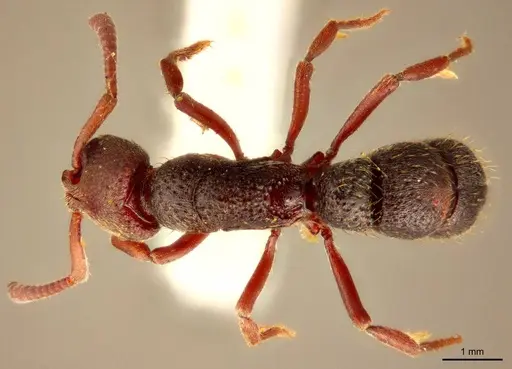
Literature
Loading distribution map...Loading products...