
Basiceros militaris
- Sci. Name
- Basiceros militaris
- Tribe
- Attini
- Subfamily
- Myrmicinae
- Author
- Weber, 1950
- Distribution
- Found in 7 countries
Introduction
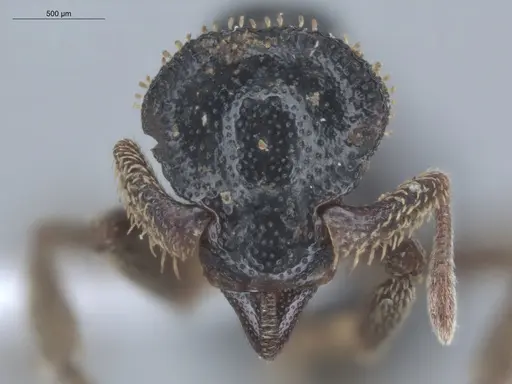
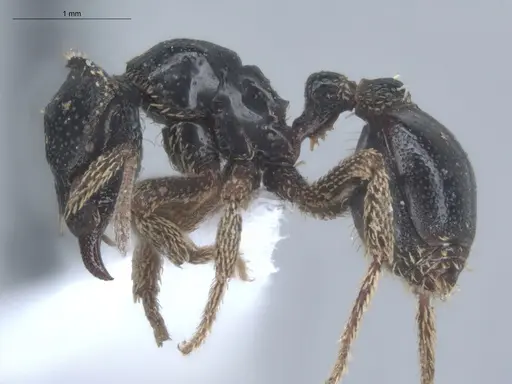
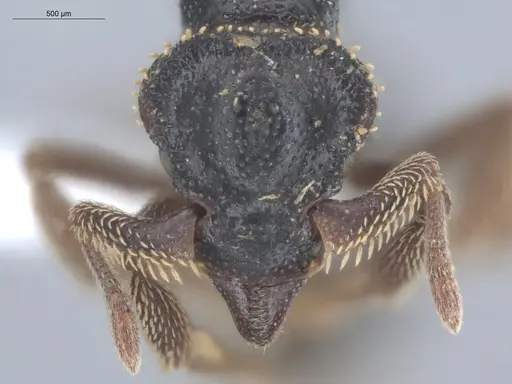
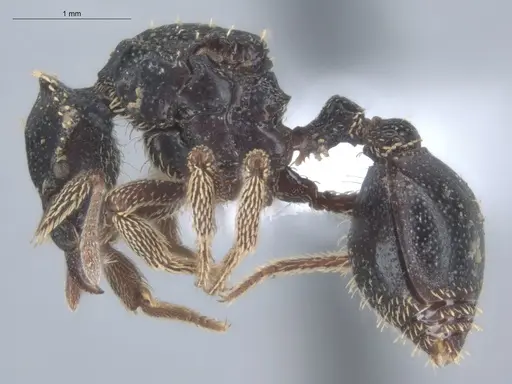
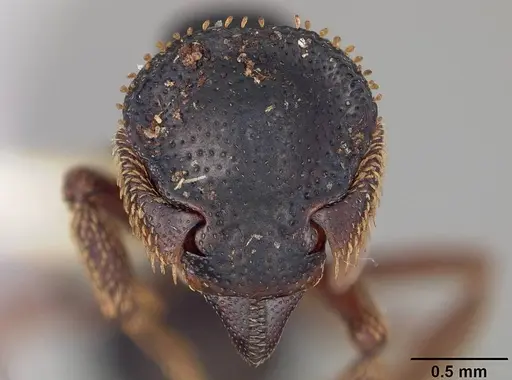
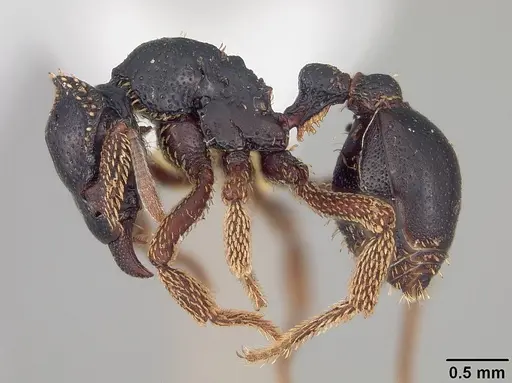
Basiceros militaris is a small cryptobiotic ant native to Central and South America, from Honduras to southern Brazil . Workers are 6.04-6.58 mm long, dark brown to black, with clavate hairs forming a continuous crest on the head . The species name refers to Roman military helmets due to these hairs . They camouflage with soil and leaf litter using specialized hairs, making them nearly invisible . Colonies are small and occupy pre-existing cavities in leaf litter, soil, or decaying wood .
Quick Summary
- Difficulty: Medium
- Origin & Habitat: Tropical Central and South America, Brazil, Ecuador, French Guiana, Guyana, Peru, Trinidad & Tobago, Venezuela [1]. Found in moist forested areas, typically in leaf litter or decaying wood [6][2].
- Colony Type: Small colonies with phenotypic plasticity, including intercastes. Potential polygyny observed with up to three dealate queens in some samples [1].
- Size & Growth:
- Antkeeping:
- Temperature: Keep warm, around 24-28°C, based on tropical habitat [2]
- Humidity: Keep substrate consistently moist but not waterlogged, as they inhabit moist forests [2]
- Diapause: No, tropical species do not require hibernation
- Nesting: Provide naturalistic setup with leaf litter, soil, and decaying wood, they do not excavate nests [2]
- Behavior: Cryptic and slow-moving, forage individually with camouflage. Predatory, hunting small arthropods. Not aggressive toward keepers, main defense is camouflage. Escape risk moderate due to small size [5][2].
- Common Issues: high humidity requirements can lead to mold if ventilation is poor, small colony sizes mean slow population growth, cryptobiotic behavior makes observation difficult, predatory diet requires live prey, they cannot survive on sugar alone
Housing and Nest Setup
Basiceros militaris does not excavate nests in captivity. In the wild, colonies live in pre-existing cavities in leaf litter, soil, or decaying wood [2]. Provide a naturalistic setup with a deep layer of moist substrate, such as soil mixed with rotting wood pieces. Include leaf litter or debris on the surface so they can cover themselves, this is essential for their cryptobiotic behavior. Use Y-tong, plaster, or soil nests with small chambers, and maintain high humidity. A water tube connected to the nest helps with drinking and humidity [2].
Feeding and Diet
Basiceros militaris is predatory, based on related species [2]. Offer small live prey such as springtails, fruit flies, and micro-arthropods. They are unlikely to accept sugar water or honey. Feed 2-3 times per week, removing uneaten prey after 48 hours to prevent mold. Prey size should match their small size [2].
Temperature and Humidity
As a tropical species, keep temperatures warm around 24-28°C [2]. Humidity should be high, with substrate consistently moist but not waterlogged, reflecting their natural moist forest habitat [2]. Avoid drying out or stagnant air to prevent colony death or mold.
Understanding Intercastes
Intercastes, intermediate forms between workers and queens, are common in wild colonies [1]. They may have ocelli or partial wing structures but are not fully developed queens. The original type specimens were intercastes, not true workers [1]. This is normal variation, not a deformity.
Camouflage and Behavior
Basiceros militaris is cryptobiotic, using specialized hairs to adhere soil and leaf litter for camouflage [5][2]. This makes them nearly invisible and helps in ambush hunting. In captivity, provide debris in the outworld for them to exhibit this behavior. Do not remove their covering, it is essential for their wellbeing [5][2].
Frequently Asked Questions
How long does it take for Basiceros militaris to develop from egg to worker?
The exact development timeline is unknown, as no specific data is available. Based on related Attini species, it may take several months at optimal temperatures [2].
Can I keep Basiceros militaris in a test tube setup?
Test tubes can work initially, but these ants need debris for camouflage. A naturalistic setup with moist substrate and leaf litter is better long-term [2].
What do Basiceros militaris eat?
They are predatory and eat small live prey like springtails and fruit flies. They do not accept sugar water [2].
Are Basiceros militaris good for beginners?
This species is rated medium difficulty due to small colony sizes, specific humidity needs, and predatory diet. It is not recommended for first-time keepers.
How big do Basiceros militaris colonies get?
Colonies remain small, with up to 100 workers estimated [2].
Do Basiceros militaris need hibernation?
No, they are tropical ants and do not require diapause. Maintain warm temperatures year-round.
Why does my ant have weird features (ocelli, partial wings)?
This is normal intercaste variation in Basiceros militaris [1]. Intercastes are common in wild colonies and are not deformities.
When should I move Basiceros militaris to a formicarium?
They do not excavate nests, so a naturalistic setup with substrate and debris is preferred over traditional formicaria [2].
Can I keep multiple queens together?
Colony structure is unconfirmed, but up to three dealate queens have been observed in some samples [1]. Combining unrelated queens is not recommended due to lack of study.
Report an Issue
The current care sheet is based fully on literature. See inconsistencies, or something that's incorrect? Please , it will be resolved after review from an admin. Contributing to the blogs tab also helps providing information, to make us be able to further improve the caresheets. Thank you for your support!
References

This caresheet is licensed under CC BY-SA 4.0 .
Community Blogs
CASENT0280778
View on AntWeb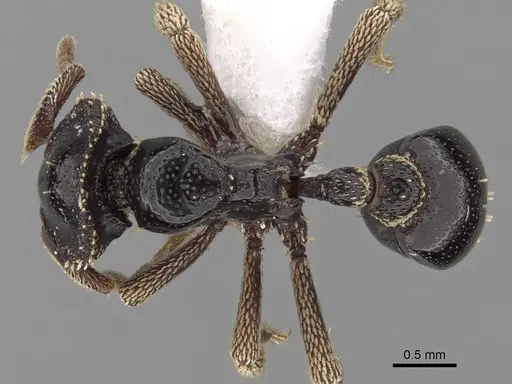
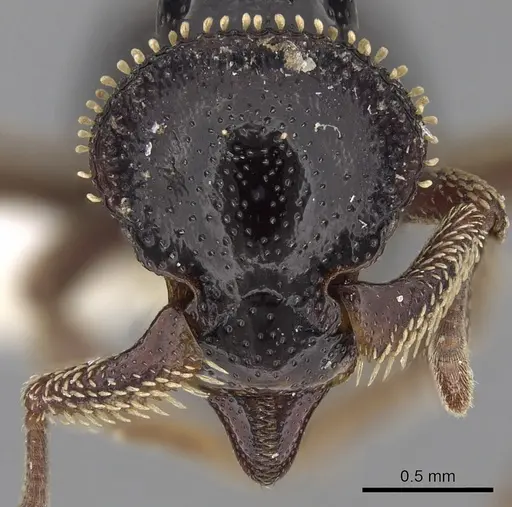
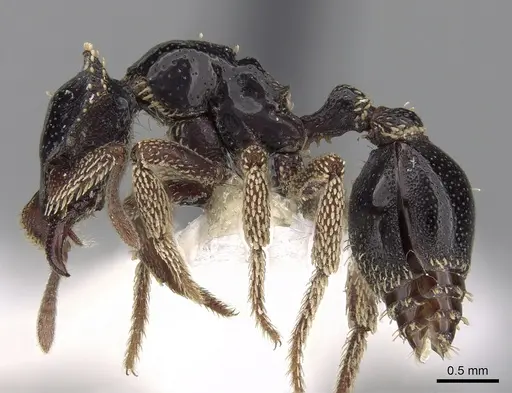
ECOFOG-IT14-0437-34
View on AntWeb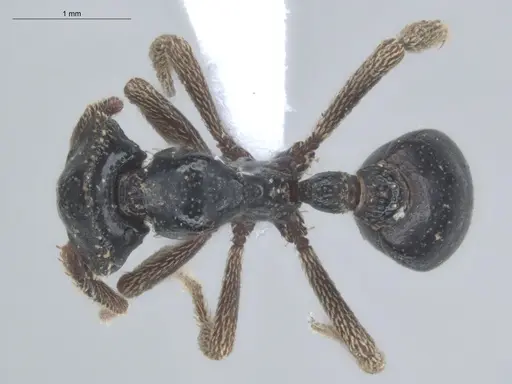
ECOFOG-IT14-0799-43
View on AntWeb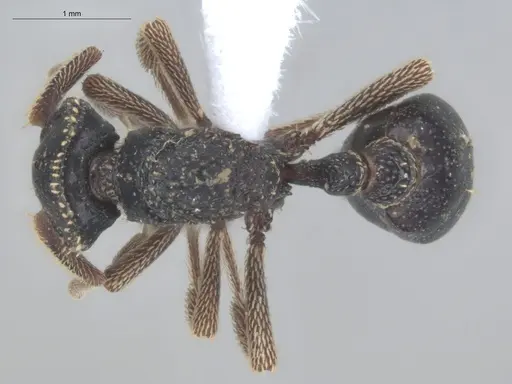
USNMENT00412263
View on AntWeb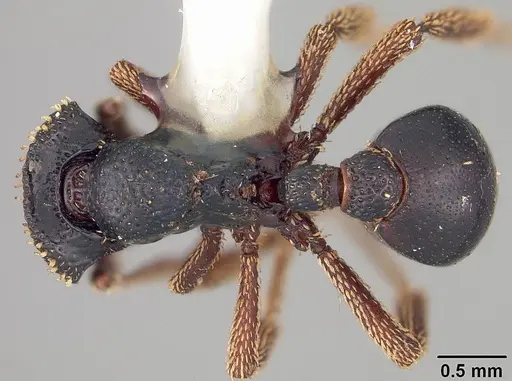
Literature
Loading distribution map...Loading products...