
Basiceros convexiceps
- Sci. Name
- Basiceros convexiceps
- Tribe
- Attini
- Subfamily
- Myrmicinae
- Author
- Mayr, 1887
- Distribution
- Found in 1 countries
Introduction
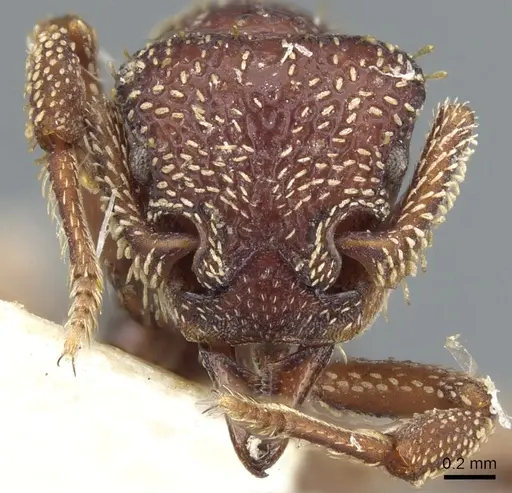
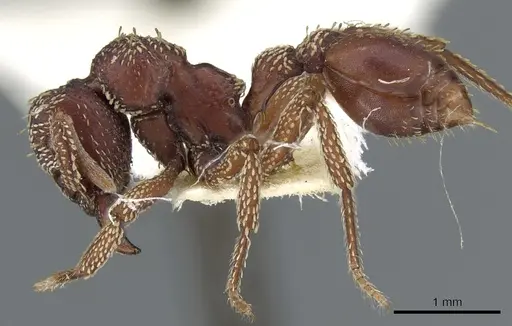
Basiceros convexiceps is a medium-sized ant native to the Brazilian Atlantic Forest. Workers measure about 6.6mm and queens reach about 7.6mm, making them one of the larger species in the genus . They have a distinctive reddish-ferruginous color with a trapezoidal head and specialized hairs covering their body that adhere to soil particles, giving them excellent camouflage - this cryptobiotic habit is why they are called 'dirt ants' . This species is part of the manni species-group and represents the most generalized morphology in the genus . What makes B. convexiceps particularly interesting is its polygynic colony structure - the only documented colony had 60 workers and three wingless queens living together . They nest in rotting wood and leaf litter in the Atlantic Forest, and are predatory on small arthropods . This is a rare species that is very rarely collected in full colonies, making captive husbandry challenging.
Quick Summary
- Difficulty: Expert
- Origin & Habitat: Brazilian Atlantic Forest biome, from Santa Catarina to Bahia. Found in rotting wood, under bark, and leaf litter [4].
- Colony Type: Polygynic, colonies have multiple queens (documented with 3 wingless gynes in one nest). Small colony size with around 60 workers [4].
- Size & Growth:
- Antkeeping:
- Temperature: Keep around 22-26°C. Atlantic Forest is warm and humid with moderate temperature fluctuations. A gentle gradient is recommended.
- Humidity: High humidity preferred, think damp forest floor. Keep substrate consistently moist but not waterlogged. These ants naturally live in rotting wood and leaf litter which retain moisture.
- Diapause: Unlikely required, as a tropical Atlantic Forest species, they probably do not need a true diapause.
- Nesting: Rotting wood and leaf litter dwellers. In captivity, a naturalistic setup with rotting wood pieces, leaf litter, and moist substrate works well. Y-tong or plaster nests with high humidity can also work.
- Behavior: Cryptobiotic ants that camouflage themselves with soil particles using specialized hairs. Predatory on small arthropods. They are not aggressive and will flee rather than fight. Escape risk is moderate, their medium size means standard barriers work well.
- Common Issues: very rare in the hobby, finding colonies is extremely difficult, small colony sizes mean colonies are fragile and sensitive to disturbance, predatory diet requires live small prey, cannot survive on sugar alone, cryptobiotic habit means they may be hard to spot in naturalistic setups, wild-caught colonies may have parasites given their rarity
Appearance and Identification
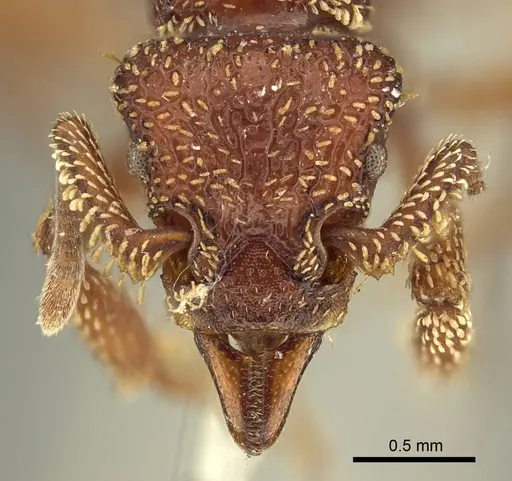
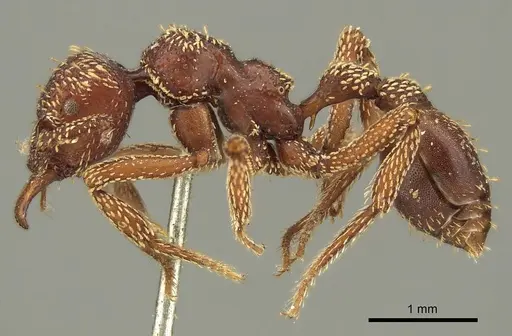
Basiceros convexiceps workers measure about 6.6mm and queens reach about 7.6mm, making them one of the larger species in the genus [1]. They have a distinctive reddish-ferruginous (rusty orange) coloration throughout their body [4]. The head is trapezoidal (wider at the back) with a continuously convex vertexal margin except for a shallow median groove. Their most distinctive feature is the specialized hairs covering their cuticle that actively adhere to soil particles and debris, providing excellent camouflage, this is why they are called 'dirt ants' [2]. The subpetiolar process (a projection on the waist) consists of a single forward-curved projection. Queens are similar in color but larger with three ocelli on the head [1].
Natural History and Distribution
This species is restricted to the Brazilian Atlantic Forest biome, with confirmed records from Santa Catarina to Bahia [4]. They are endemic to this region and have not been found in Espírito Santo. The Atlantic Forest is a tropical to subtropical biome with high humidity and moderate temperatures year-round. B. convexiceps has been collected from rotting wood (under bark and inside decaying trunks) and from leaf litter samples, indicating they both nest and forage in these microhabitats [4]. The documented colony from Jussaral (Rio de Janeiro) was found in a wide, rotted trunk, this is the only complete colony ever recorded. They are predatory on small arthropods [2].
Colony Structure
Basiceros convexiceps is one of the few Basiceros species with confirmed polygynic (multi-queen) colonies. The only fully documented colony had 60 workers and three wingless gynes (queens) living together in a rotting trunk [4]. This suggests the species naturally forms small colonies with multiple reproductive queens. The presence of wingless gynes (rather than fully winged queens ready for nuptial flights) indicates these were likely ergatoid replacement reproductives, queens born without wings that can take over if the primary queen dies. Colony sizes appear to be naturally small, the maximum documented colony had only about 60 workers. This is typical of the genus, which generally forms small colonies [4].
Feeding and Diet
Basiceros convexiceps is predatory on small arthropods [2]. In captivity, offer small live prey such as springtails, fruit flies, small crickets, and other micro-arthropods. Feed small prey items 2-3 times per week, adjusting based on colony size and consumption. Remove uneaten prey after 24-48 hours to prevent mold. Sugar sources are not a primary food source, these are predators, not sugar-seekers. A small amount of honey or sugar water may be occasionally accepted but should not be relied upon.
Housing and Nesting
In the wild, B. convexiceps nests in rotting wood and leaf litter in the Atlantic Forest [4]. For captive care, a naturalistic setup works best, a container with moist substrate (like a mix of soil and rotting wood pieces) with leaf litter on top. The setup should maintain high humidity. You can also use a Y-tong or plaster nest with a water reservoir, but ensure humidity stays high. These ants are cryptobiotic, they camouflage with debris, so providing materials they can stick to themselves (small soil particles, detritus) helps them feel secure. A shallow foraging area with small prey items completes the setup.
Temperature and Humidity
As a tropical Atlantic Forest species, B. convexiceps prefers warm and humid conditions. Aim for temperatures around 22-26°C with some variation allowed. A heating cable on one side of the nest creates a gentle gradient they can choose from. Humidity should be high, the substrate should feel consistently moist but not waterlogged. These ants naturally live in rotting wood and leaf litter which naturally retain moisture. Mist occasionally but rely more on water reservoirs and damp substrate. Good ventilation is essential to prevent mold while maintaining humidity. [4][2]
Behavior and Temperament
Basiceros convexiceps is a cryptic, non-aggressive ant. Their primary defense is camouflage, the specialized hairs on their body collect soil particles, making them nearly invisible against the forest floor. When disturbed, they are more likely to flee than to fight. They possess a stinger but it is not medically significant to humans. Their small colony sizes and cryptic nature mean they are not active foragers in the open, they hunt small arthropods in the leaf litter and rotting wood. Workers are moderately sized at about 6.6mm, so standard escape prevention works well, though they are agile climbers. [2][4]
Frequently Asked Questions
How long does it take for Basiceros convexiceps to develop from egg to worker?
The exact development timeline has not been scientifically documented for this species. Development time is unknown.
What do Basiceros convexiceps eat?
They are predatory on small arthropods. Feed live springtails, fruit flies, small crickets, and other tiny prey. Remove uneaten prey after 24-48 hours. They are not sugar-seekers and should not rely on honey or sugar water.
Can I keep multiple queens together?
Yes, Basiceros convexiceps is naturally polygynic. The documented wild colony had three wingless queens living together with 60 workers. However, introducing unrelated queens in captivity can be risky, proceed with caution and have backup plans.
How big do Basiceros convexiceps colonies get?
Colony sizes appear to be naturally small. The only fully documented colony had approximately 60 workers. Expect colonies to remain modest in size, likely under 100 workers even in established colonies.
What temperature do Basiceros convexiceps need?
Keep them around 22-26°C. As a tropical Atlantic Forest species, they prefer warmth with moderate humidity. A gentle temperature gradient allows them to regulate their own conditions.
Do Basiceros convexiceps need hibernation?
Unlikely, as a tropical species from the Atlantic Forest, they probably do not require a true diapause.
Are Basiceros convexiceps good for beginners?
No, this is an expert-level species. They are extremely rare in the antkeeping hobby, have specific predatory dietary needs, require high humidity, and form small fragile colonies. They are best suited for experienced keepers interested in unusual species.
What type of nest should I use for Basiceros convexiceps?
A naturalistic setup with moist substrate, rotting wood pieces, and leaf litter works best. This matches their natural habitat in rotting wood and leaf litter. Y-tong or plaster nests with high humidity are alternatives.
Why is my Basiceros convexiceps colony dying?
Common causes include: improper humidity (too dry), lack of live prey (they need predatory food), stress from disturbance, and parasites from wild-caught colonies. Ensure high humidity, constant access to small live prey, and minimal disturbance.
Report an Issue
The current care sheet is based fully on literature. See inconsistencies, or something that's incorrect? Please , it will be resolved after review from an admin. Contributing to the blogs tab also helps providing information, to make us be able to further improve the caresheets. Thank you for your support!
References

This caresheet is licensed under CC BY-SA 4.0 .
Community Blogs
CASENT0904974
View on AntWeb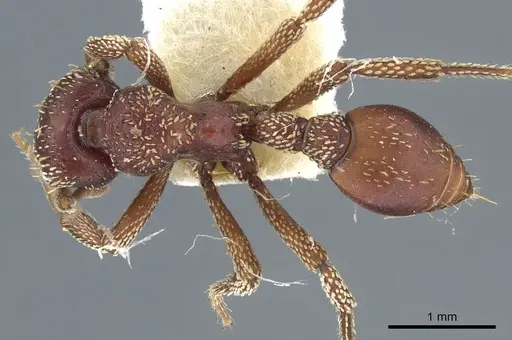
CASENT0915697
View on AntWeb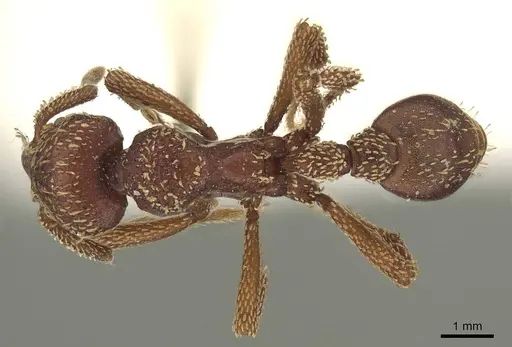
Literature
Loading distribution map...Loading products...