
Baracidris meketra
- Sci. Name
- Baracidris meketra
- Tribe
- Solenopsidini
- Subfamily
- Myrmicinae
- Author
- Bolton, 1981
- Distribution
- Found in 1 countries
Introduction
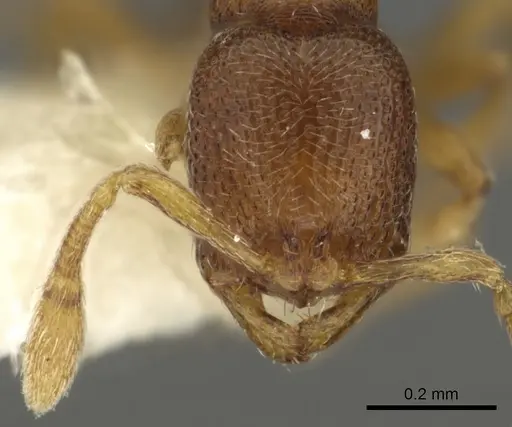
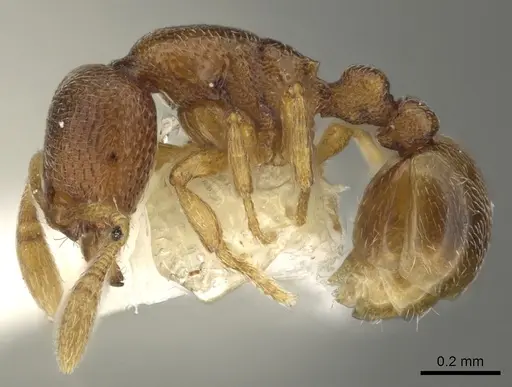
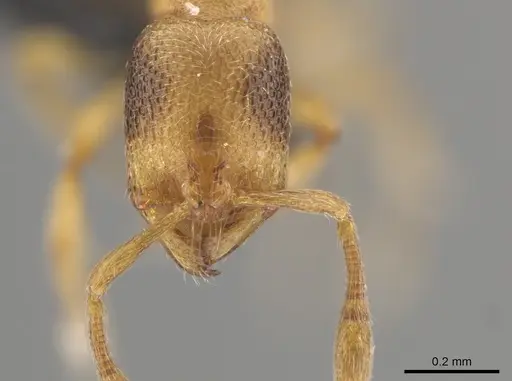
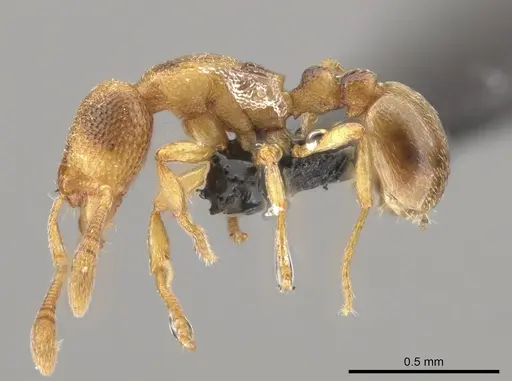
Baracidris meketra is an extremely rare tiny ant species from the West African forests of Nigeria, Ghana, and Ivory Coast. Workers measure approximately 1.7-1.8mm in total length, making them among the smallest ants in the Myrmicinae subfamily. They are uniformly light brown with a distinctive appearance featuring a concave posterior head margin and the complete absence of standing hairs on their body - a key identification feature . These ants belong to the Solenopsidini tribe and are part of the Adelomyrmex genus-group, characterized by their 12-segmented antennae with a 2-segmented club. In the wild, they have been collected only from leaf litter in forested areas, including samples from cocoa plantations where they lived among the roots of shade trees. This species remains one of the least-studied ants in captivity, with virtually no documented husbandry information available.
Quick Summary
- Difficulty: Expert
- Origin & Habitat: West African forests in Nigeria, Ghana, and Ivory Coast. Found in leaf litter accumulation between the roots of forest trees, including cocoa plantation litter samples [3][2].
- Colony Type: Colony structure is unconfirmed. Only known from a handful of wild specimens with no documented queen number or colony size in the scientific literature.
- Size & Growth:
- Queen: Approximately 2.0mm total length (from paratype dealate queen description) [3]
- Worker: 1.7-1.8mm total length [3]
- Colony: Unknown, only known from scattered specimens
- Growth: Unknown
- Development: Unconfirmed, no development data exists for this species (Development timeline is entirely unstudied. No scientific paper has documented the development of this species.)
- Antkeeping:
- Temperature: Temperature requirements are unconfirmed. Based on their West African forest origin, they likely need 22-26°C. Start in this range and adjust based on colony activity if you ever obtain a colony.
- Humidity: Requires high humidity consistent with forest floor leaf litter microhabitats. Keep substrate consistently moist but not waterlogged.
- Diapause: Unknown, West African species may have reduced activity during dry seasons rather than true hibernation
- Nesting: Natural nesting occurs in leaf litter and soil. In captivity, a test tube setup with moist substrate or a small naturalistic setup with tight chambers scaled to their tiny size would be appropriate. Avoid large open spaces.
- Behavior: Behavior is unstudied in captivity. Based on their tribe position (Solenopsidini), they are likely generalist foragers with potential predatory tendencies on small arthropods. Their tiny size makes them vulnerable and they likely avoid confrontation. As members of Solenopsidini, they possess a sting mechanism, though any sting would likely be imperceptible to humans given their minute size. Escape prevention is critical due to their minute size, they can squeeze through the smallest gaps. Handle with extreme care as they are fragile and easily lost.
- Common Issues: this species has never been documented in captivity, there is no established husbandry protocol, tiny size makes them extremely difficult to house and feed successfully, escape prevention is critical, they can pass through standard mesh barriers, virtually no information on acceptable foods or feeding schedules, colony establishment from wild-caught queens may be the only option, but founding behavior is unknown, risk of colony collapse from standard antkeeping mistakes due to lack of species-specific knowledge
Why This Species Is So Challenging
Baracidris meketra represents one of the most poorly documented ant species in the antkeeping hobby. This species has been collected only a handful of times in the wild, with specimens from Nigeria, Ghana, and Ivory Coast representing the entirety of our scientific knowledge. The original description from 1981 by Barry Bolton remains the primary source of morphological information, and no subsequent papers have documented their biology, colony structure, or captive care. This means that keeping B. meketra successfully would essentially be pioneering entirely new husbandry techniques based on educated guesses rather than established best practices. For this reason, this species is recommended only for expert antkeepers with extensive experience with difficult, tiny species who are prepared to document their observations carefully.
Natural History and Habitat
In the wild, Baracidris meketra has been collected exclusively from forest environments in West Africa. The Ghana specimens were extracted from leaf litter that had accumulated between the roots of a large forest tree left in a cocoa plantation to provide shade [3]. This indicates they are adapted to the humid, shaded microhabitat found in forest floor litter layers. The Ivory Coast specimen came from the Banco Forest near Abidjan, a dense tropical forest area [4]. They appear to be strictly forest-dwelling species that avoid open areas. Their extremely small size suggests they likely occupy very specific microhabitats within the leaf litter, probably foraging in the tight spaces between decaying leaves and soil where larger predators cannot reach them.
Housing Recommendations
Given the complete lack of captive husbandry data, any setup would be experimental. Based on their natural habitat in leaf litter, a naturalistic setup with a thin layer of moist forest floor substrate would most closely mimic their native environment. Alternatively, a small test tube setup with a water reservoir and moist cotton would maintain the high humidity they likely require. The key consideration is their extremely small size, standard formicarium chambers will be far too large, and they may have difficulty navigating to food sources. Use very small containers with tight spaces. Escape prevention must be excellent: even standard fluon barriers may not be sufficient for ants this small. Consider using petroleum jelly on container rims or extremely fine mesh. Temperature should be maintained in the low-to-mid 20s Celsius range, consistent with West African forest conditions.
Feeding and Nutrition
The feeding requirements of B. meketra are completely unstudied. As members of the Solenopsidini tribe, they may have omnivorous tendencies similar to other small myrmicine ants, potentially accepting small insects, honeydew, and sugar sources. However, their tiny size means any prey items must be extremely small, likely limited to springtails, booklice, or other micro-arthropods that naturally occur in leaf litter. Given their probable position as foragers in the forest floor arthropod community, live prey acceptance seems likely. Sugar water or honey water could be offered in very small quantities, but acceptance is entirely uncertain. Start with tiny amounts of live micro-prey and observe carefully. Do not overfeed, excess food will likely mold quickly in the humid conditions they require.
Acquisition Considerations
Obtaining Baracidris meketra for captive keeping presents significant challenges. This species has never been documented in the antkeeping trade, and there are no known captive colonies. The only potential source would be wild-caught queens from West Africa, which raises serious legal and ethical concerns. Many West African countries have laws protecting native insects, and international transport of collected ants may violate treaties or local regulations. Additionally, successfully founding a colony from a wild-caught queen would require solving the completely unknown founding behavior of this species. For all these reasons, prospective keepers should consider whether attempting to keep this species is responsible or feasible. Alternative, better-documented species from the Solenopsidini tribe would be far more appropriate for most antkeepers.
Frequently Asked Questions
Is Baracidris meketra available for purchase in the antkeeping hobby?
No, this species is not available in the antkeeping trade. It has never been documented in captivity and is known only from a handful of wild specimens collected in Nigeria, Ghana, and Ivory Coast.
How big do Baracidris meketra colonies get?
The maximum colony size is completely unknown. Workers are tiny at 1.7-1.8mm total length, and the species is known from only scattered individual specimens rather than documented colonies.
What do Baracidris meketra ants eat?
Feeding behavior is unstudied. Based on their tribe position (Solenopsidini), they likely accept small insects and sugar sources, but their tiny size would limit prey to micro-arthropods like springtails.
Are Baracidris meketra good for beginners?
No. This species is among the most challenging ants to keep because it has never been documented in captivity, there is no established husbandry information, and their extremely small size creates practical difficulties. This species is recommended only for expert antkeepers.
What temperature do Baracidris meketra need?
Temperature requirements are unconfirmed. Based on their West African forest origin, they likely need 22-26°C. Start in this range and adjust based on colony activity if you ever obtain a colony.
Can I keep multiple Baracidris meketra queens together?
Colony structure is completely unstudied. There is no information on whether they are single-queen or multi-queen colonies, or whether queens would tolerate each other. Do not attempt without any documented evidence of colony structure.
How long does it take for Baracidris meketra to develop from egg to worker?
Development timeline is entirely unconfirmed. No scientific paper has documented the development of this species.
Where does Baracidris meketra naturally live?
They are found only in West African forests in Nigeria, Ghana, and Ivory Coast. Specimens have been collected from leaf litter in forested areas, including cocoa plantation litter.
Why is Baracidris meketra so rarely seen in antkeeping?
This species is extremely rare in the wild, known only from a handful of specimens collected over decades. They have never been documented in the antkeeping hobby, and there are no established captive breeding protocols.
What makes Baracidris meketra different from other ants?
They are distinguished by the complete absence of standing hairs on their body, a concave posterior head margin, and membership in the rare Baracidris genus which contains only a few described species. They are among the smallest ants in the Myrmicinae subfamily.
Is Baracidris meketra invasive anywhere?
No. This species has an extremely limited distribution in West Africa and has never been documented outside its native range of Nigeria, Ghana, and Ivory Coast.
Report an Issue
The current care sheet is based fully on literature. See inconsistencies, or something that's incorrect? Please , it will be resolved after review from an admin. Contributing to the blogs tab also helps providing information, to make us be able to further improve the caresheets. Thank you for your support!
References

This caresheet is licensed under CC BY-SA 4.0 .
Community Blogs
CASENT0901013
View on AntWeb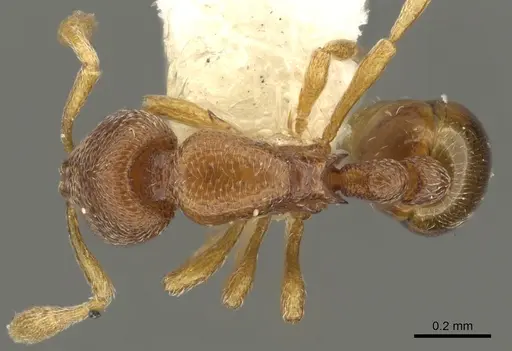
KGCOL00625
View on AntWeb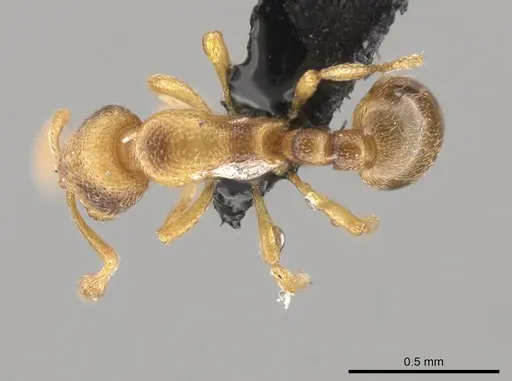
Literature
Loading distribution map...Loading products...