
Azteca coeruleipennis
- Sci. Name
- Azteca coeruleipennis
- Tribe
- Leptomyrmecini
- Subfamily
- Dolichoderinae
- Author
- Emery, 1893
- Distribution
- Found in 4 countries
Introduction
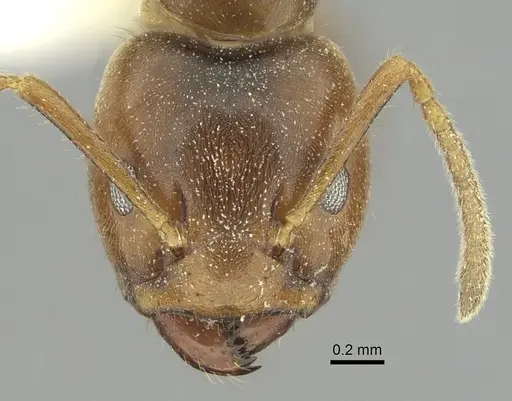
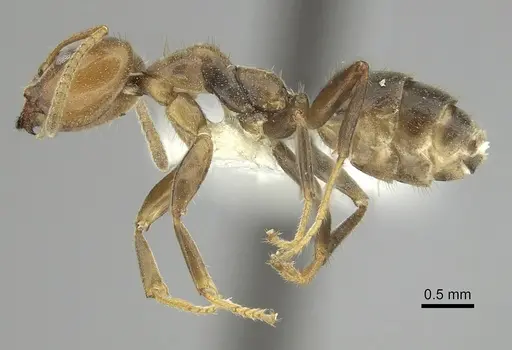
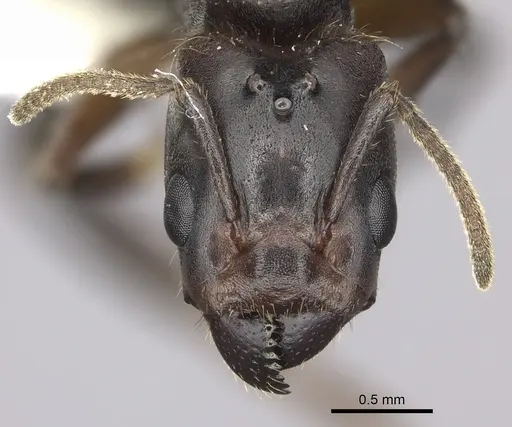
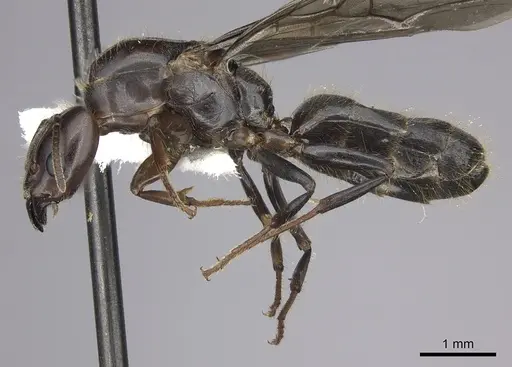
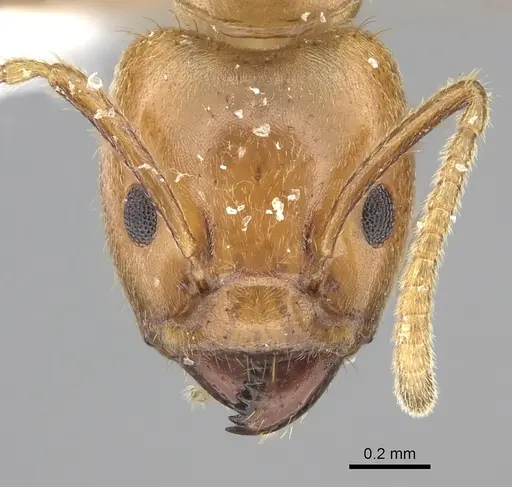
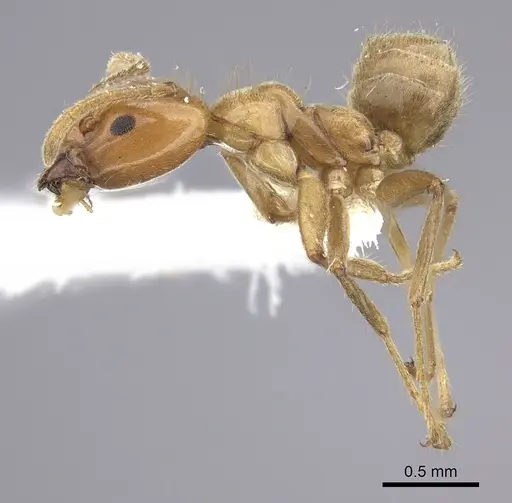
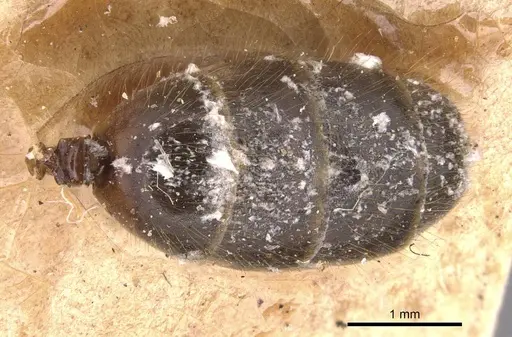
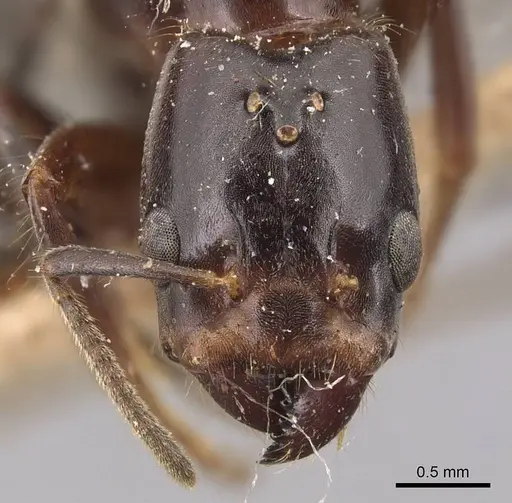
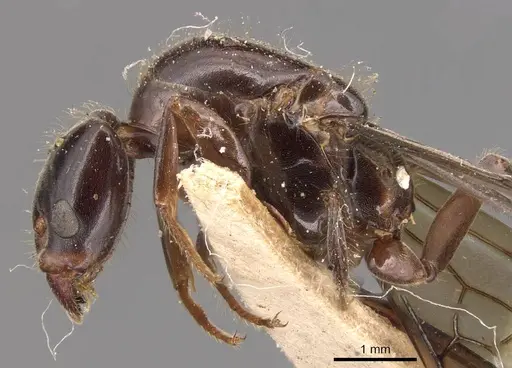
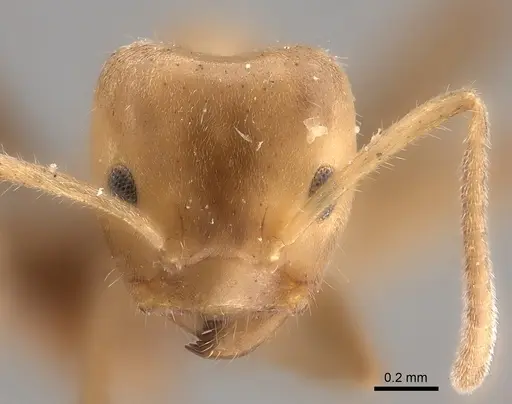
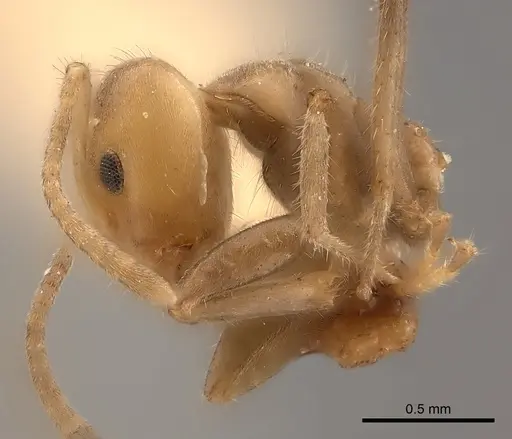
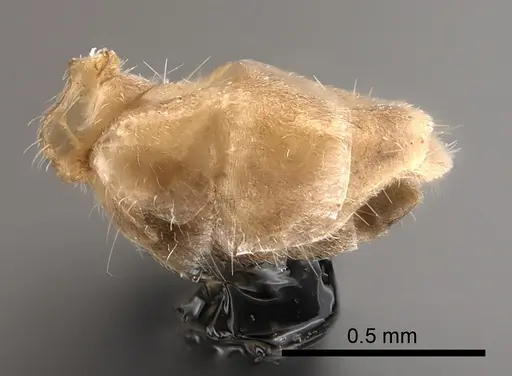
Azteca coeruleipennis is a small to medium-sized ant species native to the tropical forests of Mexico through Panama, including Costa Rica, Guatemala, Honduras, and Trinidad and Tobago . Workers are bright yellow-orange and measure approximately 3-4 mm in total length. Queens are significantly larger at approximately 8-9 mm and are dark brown to black in color . This species is an obligate Cecropia ant, meaning it cannot survive without its specific host tree . Colonies are polydomous, with nests spread across multiple hollow stems and branches throughout the tree rather than in a single central location . Unique among Cecropia ants, this species maintains a three-way mutualistic relationship with specialized Chaetothyrialean fungi that grow inside the Cecropia stems, transmitting fungal partners from mother queens to offspring through specialized mouth pouches called infrabuccal pockets .
Quick Summary
- Difficulty: Expert
- Origin & Habitat: Mexico to Panama, obligate inhabitant of Cecropia trees in highly seasonal tropical forests [1][2]
- Colony Type: Unconfirmed, colony social structure is not documented in available research
- Size & Growth:
- Antkeeping:
- Temperature: Unknown, specific requirements not documented in research
- Humidity: Unknown, specific requirements not documented in research
- Diapause: Unknown, while found in seasonal habitats, specific overwintering requirements are not documented
- Nesting: Obligate Cecropia specialist, requires living host trees [1][2]
- Behavior: Arboreal ants that live inside Cecropia tree stems. Workers tend sap-sucking insects and harvest food bodies provided by Cecropia trees [9]. Small worker size (3-4 mm) requires excellent escape prevention. Members of subfamily Dolichoderinae lack a functional sting and use smear defense through abdominal secretions.
- Common Issues: cannot survive without living Cecropia trees, this is an obligate mutualist that will starve without its host plant., fungal symbiosis requires specific host plant conditions that cannot be replicated in standard ant keeping setups., small worker size (3-4mm) means escapes are likely without specialized barriers., wild-caught colonies usually die when removed from host trees due to loss of fungal partners and food sources.
The Cecropia Obligate Mutualism
Azteca coeruleipennis is an obligate Cecropia ant, meaning its entire life cycle depends on Cecropia trees [1][2]. These ants live inside the hollow stems of Cecropia, feeding on specialized food bodies produced by the plant and tending sap-sucking scale insects that live on the tree [9]. The relationship is so specialized that removing these ants from their host tree almost always results in colony death. This makes them unsuitable for standard ant keeping setups like test tubes, plaster nests, or formicariums. Without the living plant to provide food and housing, the colony cannot survive.
Natural History and Nest Structure
Azteca coeruleipennis maintains polydomous colonies, spreading their nest across multiple locations throughout the Cecropia tree [5][6]. Workers move freely between hollow stems in the main trunk and outer branches, with brood distributed throughout these spaces [2]. This decentralized nesting strategy helps them utilize the entire Cecropia tree efficiently. They occur in highly seasonal habitats and are considered dry-forest specialists compared to other Cecropia ants [3]. Their arboreal lifestyle means they are adapted to warm, humid conditions with good air circulation through the tree stems.
Fungal Symbiosis
A unique aspect of this species is its relationship with Chaetothyrialean fungi that grow inside Cecropia domatia [7]. Queens carry these fungal spores in their infrabuccal pockets, specialized mouth pouches, and transmit them to their offspring when establishing new colonies [7][8]. This fungal farming behavior is essential for the colony's survival and is nearly impossible to replicate in artificial setups. The fungal partnership is so specific that one fungal OTU (OTU5) occurred only in A. coeruleipennis patches among the Cecropia ants studied [8].
Why Standard Ant Keeping Fails
Attempting to keep Azteca coeruleipennis in a test tube or standard formicarium will fail because you cannot provide the three essential requirements: living Cecropia stems, the specific fungal partners, and the food bodies the plant produces. While you might offer honey and insects, these ants have evolved to process specialized nutrients from their host plant and fungi. Their small size (3-4 mm workers) makes them excellent escape artists that can squeeze through tiny gaps in standard enclosures. This species is best observed in the wild or studied in specialized botanical research facilities rather than kept as pets. [4]
Housing Requirements
There is no practical way to house this species in a standard ant setup. They require living Cecropia trees to survive. In theory, one could attempt to keep them in a large terrarium with a young Cecropia sapling, but even this is extremely difficult because the ants need access to the entire developing tree structure as the colony grows. The tree itself requires specific light, humidity, and soil conditions to thrive. This species is best observed in the wild or studied in specialized botanical research facilities.
Frequently Asked Questions
Can I keep Azteca coeruleipennis in a test tube?
No. This is an obligate Cecropia ant that cannot survive without its host plant. Test tubes provide neither the food sources nor the fungal symbionts these ants require to live.
What do Azteca coeruleipennis eat?
In nature, they feed on food bodies produced by Cecropia trees and honeydew from scale insects that live on the plant. They cannot survive on standard ant foods like honey and insects alone because they rely on nutrients from their specific host plant and cultivated fungi.
How long until Azteca coeruleipennis gets their first workers?
The exact timeline is unknown and has not been documented in captive conditions.
Are Azteca coeruleipennis good for beginners?
Absolutely not. This is an expert-level species requiring specialized botanical knowledge, greenhouse conditions, and living Cecropia trees. They are extremely difficult to keep alive in captivity.
Do Azteca coeruleipennis need hibernation?
It is unknown whether they require hibernation. They come from highly seasonal tropical habitats, so they may slow down during dry or cooler seasons, but specific winter care requirements have not been documented.
Can I keep multiple Azteca coeruleipennis queens together?
It is not recommended. While foundress queens establish individually in Cecropia saplings, combining unrelated queens in captivity has not been documented and would likely result in fighting.
Why did my Azteca coeruleipennis colony die?
Almost certainly because they were removed from their Cecropia host tree. These ants are obligate mutualists that cannot survive without the living plant, its food bodies, and the specific fungi they cultivate in the stems. Wild-caught colonies rarely survive extraction.
How big do Azteca coeruleipennis colonies get?
Maximum colony size is unknown. No data is available on colony size for this species.
Report an Issue
The current care sheet is based fully on literature. See inconsistencies, or something that's incorrect? Please , it will be resolved after review from an admin. Contributing to the blogs tab also helps providing information, to make us be able to further improve the caresheets. Thank you for your support!
References

This caresheet is licensed under CC BY-SA 4.0 .
Community Blogs
CASENT0249536
View on AntWeb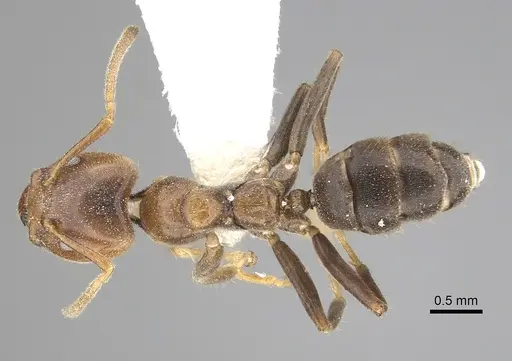
CASENT0609953
View on AntWeb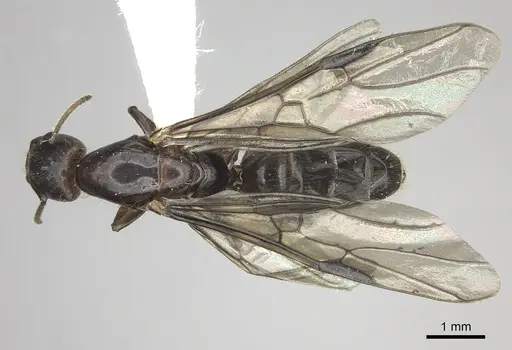
CASENT0609954
View on AntWeb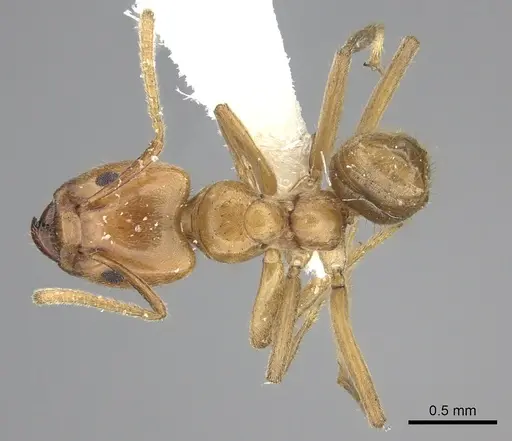
CASENT0631814
View on AntWeb
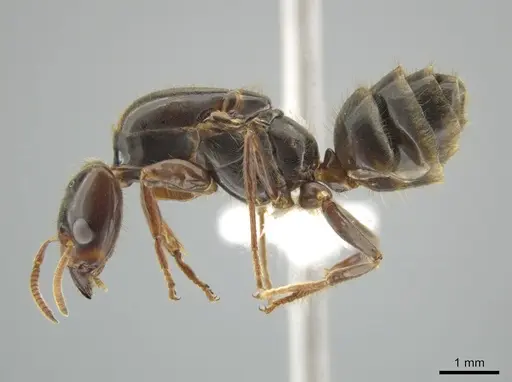
CASENT0886052
View on AntWeb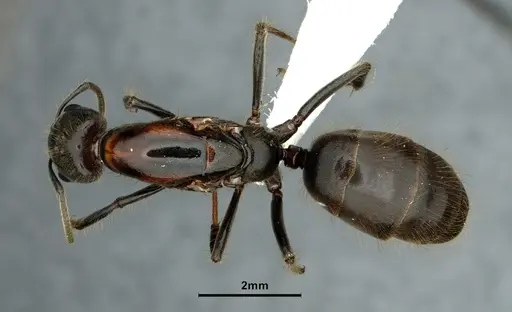
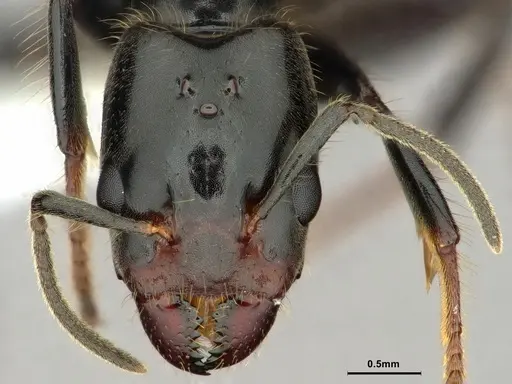
CASENT0905076
View on AntWeb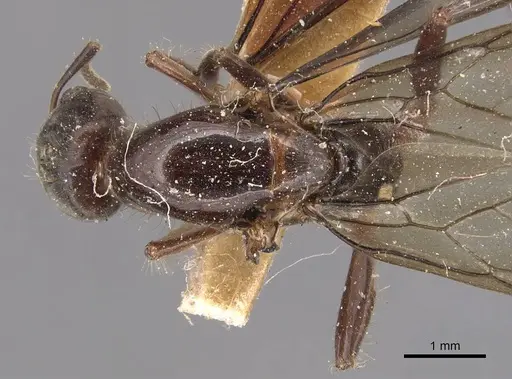
CASTYPE00609
View on AntWeb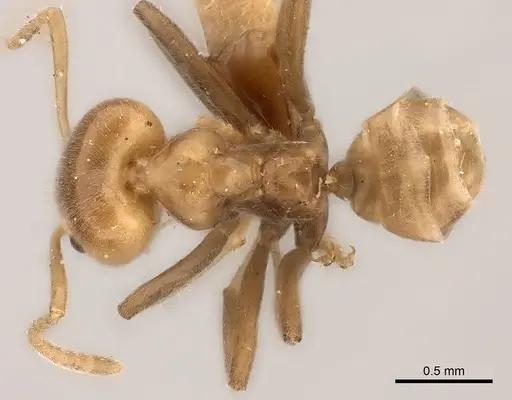
JTLC000008034
View on AntWeb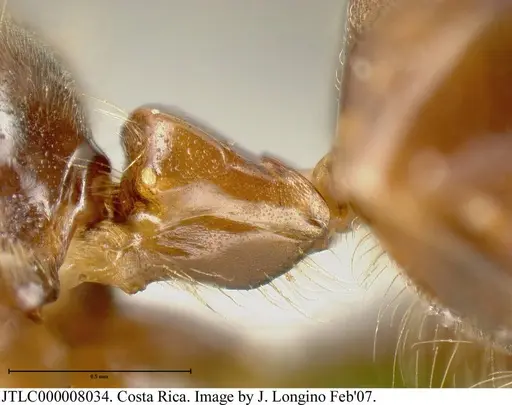
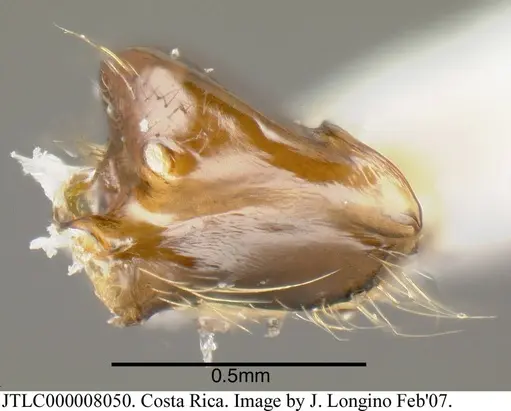
JTLC000008050
View on AntWeb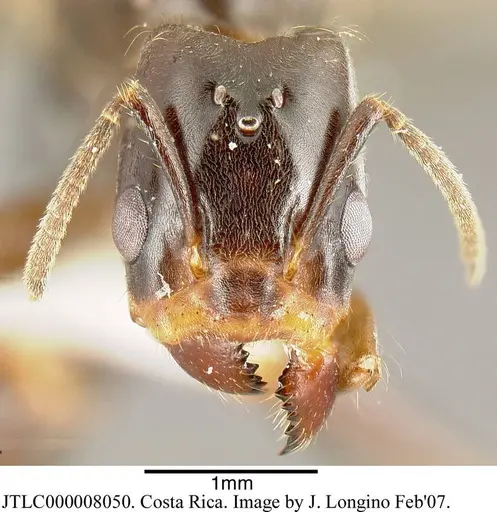
Literature
Loading distribution map...Loading products...