
Grandfather's Wood Ant
Axinidris lignicola
- Sci. Name
- Axinidris lignicola
- Tribe
- Tapinomini
- Subfamily
- Dolichoderinae
- Author
- Snelling, 2007
- Common Name
- Grandfather's Wood Ant
- Distribution
- Found in 1 countries
Introduction
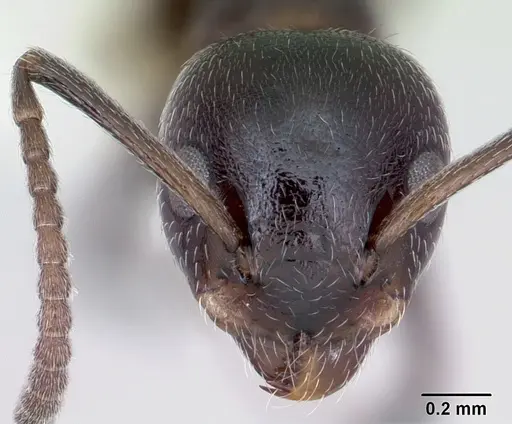
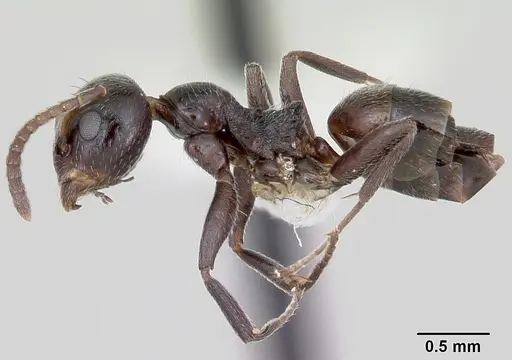
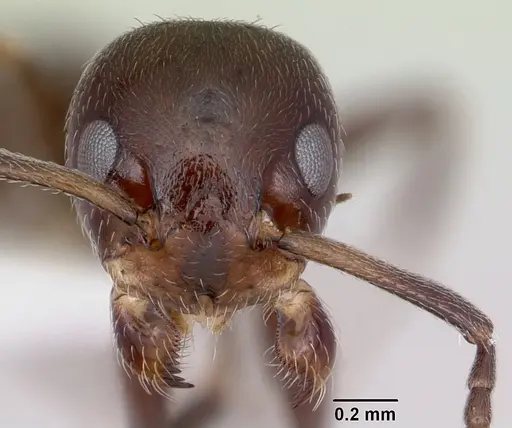
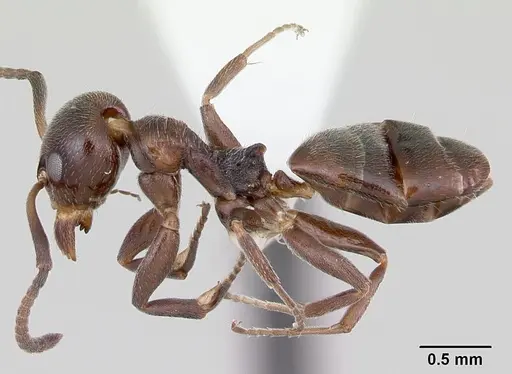
Axinidris lignicola is a tiny ant species from South Africa's Western Cape region, known only from worker specimens collected in 1995 . Workers are dark brown with distinctive yellowish markings on the clypeus and mandible bases, and their bodies are covered in fine hairs with a noticeably raised ridge (medial carina) on the propodeum . They were discovered nesting inside the center of a small dead tree trunk, approximately 2.5 centimeters in diameter, positioned about one meter above ground in indigenous forest . This species presents a unique challenge for antkeepers: only worker specimens have ever been collected, meaning no queens, males, or colony founding behavior have been described since the species was first identified in 2007 . The species remains one of the rarest Afrotropical ants, with only a single individual recorded in recent ecological surveys despite targeted sampling .
Quick Summary
- Difficulty: Not viable for antkeeping
- Origin & Habitat: South Africa (Western Cape), indigenous forest, nesting in dead tree trunks [1]
- Colony Type: Unknown, only worker caste described [1]
- Size & Growth:
- Queen: size data unavailable
- Worker: size data unavailable
- Colony: Unknown
- Growth: Unknown
- Development: Unconfirmed (No queens have been described, colony development is unknown [1].)
- Antkeeping:
- Behavior: Unknown, likely arboreal forager given nesting location in tree trunks [1]
- Common Issues: only workers are known to science, founding a colony is currently impossible., extremely small size requires perfect escape prevention with fine mesh., rarely collected, obtaining specimens is extremely difficult., no captive care data exists, keeping them is entirely experimental.
Natural History and Identification
Axinidris lignicola was described by Roy Snelling in 2007 based on specimens collected in 1995 from Grootvadersbosch in South Africa's Western Cape [1]. The species name means "wood-dweller, " derived from Latin lignum (wood) and colo (inhabit) [1].
Workers are dark brown with yellowish lateral lobes on the clypeus and a yellowish stripe at the base of the mandibular teeth [1]. Identification features include abundant hairs on the pronotum, the lack of erect hairs on the antennal scape shaft, and the strongly elevated medial carina on the propodeum [1]. They have short, tooth-like propodeal spines and the first gastral segment has both discal hairs and a marginal row of suberect hairs [1].
The type series was collected from the center of a dead tree trunk approximately 2.5 centimeters in diameter, one meter above ground, in indigenous forest [1]. This arboreal nesting habit indicates they prefer elevated, enclosed spaces in decaying wood.
Housing and Nest Requirements
Based on their natural history, Axinidris lignicola would need a setup mimicking small dead tree trunks. In nature, they occupy the center of narrow decaying branches, suggesting they prefer tight, enclosed spaces with wood-like textures [1].
For housing, a small wooden nest block or Y-tong (autoclaved aerated concrete) nest with very narrow chambers scaled to their tiny size would be appropriate. The natural nest was only 2.5 centimeters across, so they do not need large spaces. An arboreal setup (elevated or vertical) might be more natural than a ground-level formicarium since they were found one meter above ground [1].
Escape prevention is critical. With workers under 2mm in total length, they can squeeze through small gaps. You will need extremely fine mesh and perfect seals on all containers. Small vials or custom mini-containers might work better for observation than standard test tubes.
Temperature and Humidity
Direct data on temperature requirements for Axinidris lignicola is unavailable. Their origin in South Africa's Western Cape, which has a Mediterranean climate with mild, wet winters and warm, dry summers, provides some guidance [1].
The type locality was indigenous forest, which typically provides damp, shaded conditions even during dry periods. This suggests they prefer moderate humidity and stable temperatures. A starting point of 20-24°C with moderate humidity (damp but not wet nest material) would be reasonable. Avoid high heat, as forest-dwelling species often prefer cooler conditions than open-ground ants.
Because they nest in dead wood, the nest material should retain some moisture without becoming waterlogged. The substrate should feel damp to the touch but not soggy.
Feeding and Diet
The diet of Axinidris lignicola has never been studied. They appear in ecological surveys of seed dispersal, but only as incidental captures, not as primary seed dispersers [3][2]. As members of the subfamily Dolichoderinae, they are likely generalist foragers.
Based on typical Dolichoderinae patterns, they probably accept sugar water, honeydew, and small insects. However, this is untested for this specific species. If workers were obtained, offering diluted sugar water and tiny prey like springtails or fruit flies could be attempted, but success is uncertain.
Do not rely on any specific food type until acceptance is confirmed. These ants are essentially unknown in captivity, so feeding them would be experimental.
The Reality of Keeping This Species
It is important to be honest: Axinidris lignicola is not currently a viable species for antkeeping. Only workers have ever been collected, meaning you cannot start a colony [1]. Even if you obtained workers from a collector, they would simply live out their natural lifespan without reproducing.
The species is known from a single collection event in 1995,with only one individual found in recent ecological surveys despite extensive sampling [2]. This extreme rarity means even research institutions struggle to obtain specimens.
If you are interested in this genus, consider it a long-term goal to wait for queens to be discovered and described, or for someone to successfully collect a colony with brood. Until then, this species remains a scientific curiosity rather than a pet ant.
Frequently Asked Questions
Can I keep Axinidris lignicola in a test tube?
You could house workers in a test tube, but without a queen, the colony cannot reproduce. Test tubes may be too large for these tiny ants, consider smaller containers. Perfect escape prevention is essential given their small size [1].
How long until Axinidris lignicola gets its first workers?
This is unknown. No queens have ever been described for this species, so founding behavior and development timelines remain a mystery [1].
What is the ideal temperature for Axinidris lignicola?
Based on their origin in South Africa's Western Cape, they likely prefer moderate temperatures around 20-24°C, but this is unconfirmed. Start at room temperature and observe behavior.
Do Axinidris lignicola need hibernation?
Unknown. The Western Cape has mild winters, so they may not need full hibernation, but this is speculation with no supporting data.
What do Axinidris lignicola eat?
Their diet is unstudied. As members of the subfamily Dolichoderinae, they likely accept sugar water and small insects, but this is untested in captivity.
Are Axinidris lignicola good for beginners?
No. They are not recommended for antkeeping because only workers have been described, you cannot start a colony. This makes them suitable only for advanced research collections, not hobby keeping.
How big do Axinidris lignicola colonies get?
Unknown. Only individual workers have been collected, so colony size and structure remain undescribed [1].
Why are Axinidris lignicola so hard to find?
They are known from only one location in South Africa (Grootvadersbosch) and were described in 2007 from a single collection event. They appear to be genuinely rare or cryptic in their dead wood habitat [1][2].
Report an Issue
The current care sheet is based fully on literature. See inconsistencies, or something that's incorrect? Please , it will be resolved after review from an admin. Contributing to the blogs tab also helps providing information, to make us be able to further improve the caresheets. Thank you for your support!
References

This caresheet is licensed under CC BY-SA 4.0 .
Community Blogs
CASENT0172613
View on AntWeb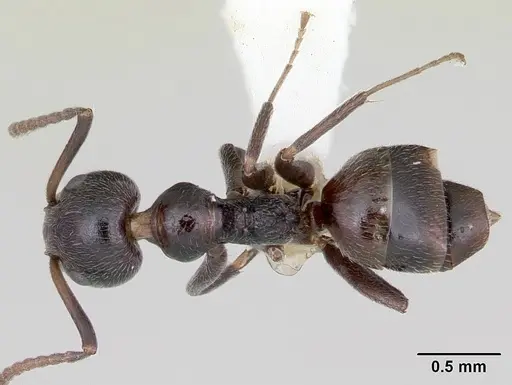
CASENT0172614
View on AntWeb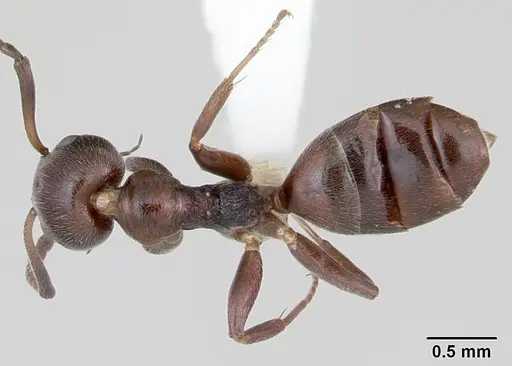
Literature
Loading distribution map...Loading products...