
Axinidris bidens
- Sci. Name
- Axinidris bidens
- Tribe
- Tapinomini
- Subfamily
- Dolichoderinae
- Author
- Shattuck, 1991
- Distribution
- Found in 2 countries
Introduction
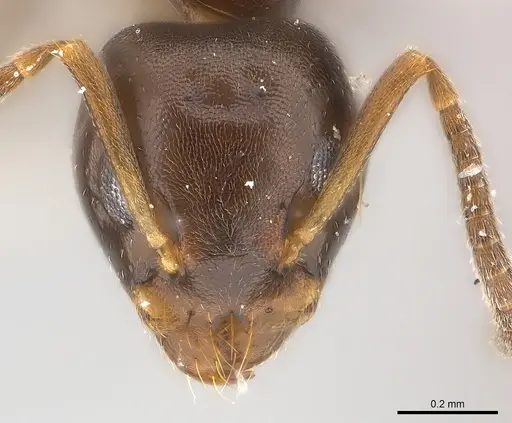
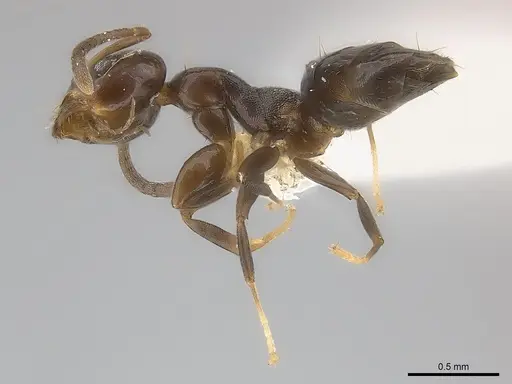
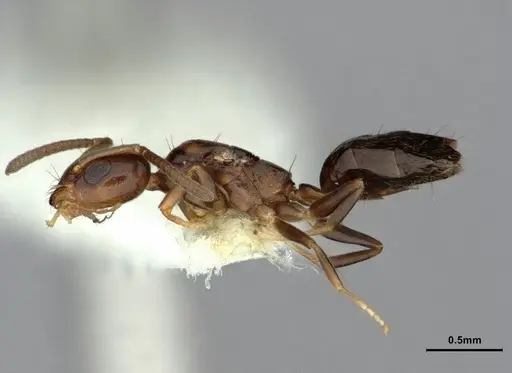
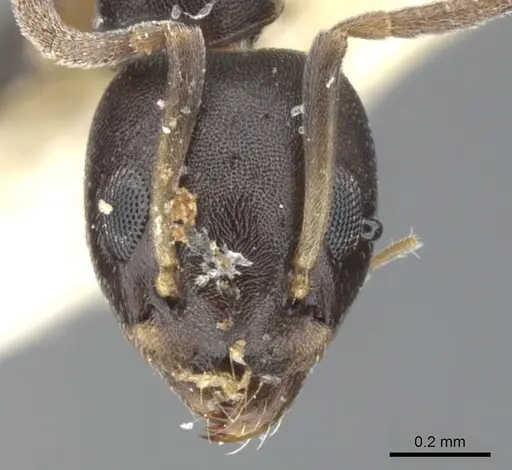
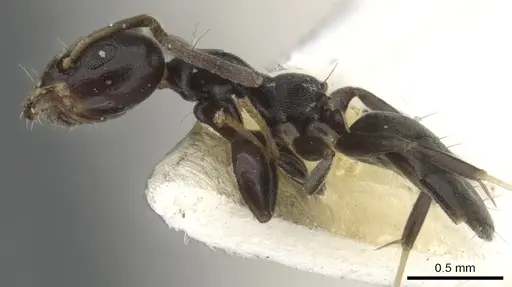
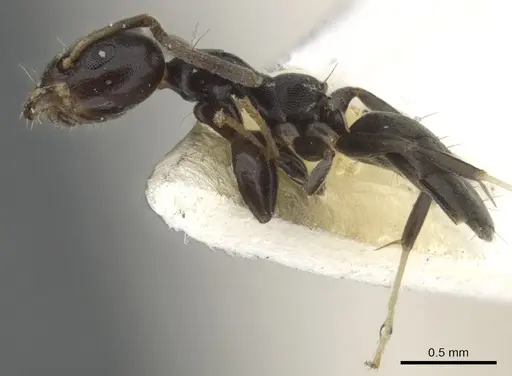
Axinidris bidens is a tiny African ant that lives in rainforest trees. The queen measures only about 2.5 millimeters long - smaller than many worker ants of other species . Workers are extremely small, likely under 2mm in total length. These ants make their homes inside living plant stems in the rainforests of Central and East Africa, including Ghana, Cameroon, Kenya, Rwanda, and Uganda [AntWiki]. One colony found in Cameroon contained a single queen with 44 workers and 19 pupae living inside a living Acanthus eminens stem . They are omnivorous and have been collected by fogging trees like Teclea nobilis and Heinsenia diervillioides .
Quick Summary
- Difficulty: Expert
- Origin & Habitat: Afrotropical rainforests and moist forests in Ghana, Cameroon, Central African Republic, Kenya, Rwanda, and Uganda [1][2][3]. They prefer moist rainforest habitats and have been found in cocoa agroforestry systems [4][5].
- Colony Type: Likely single-queen (monogyne) based on one documented colony containing one queen, 44 workers, and brood, but colony structure remains unconfirmed [1].
- Size & Growth:
- Queen: Approximately 2.5mm total length [1].
- Worker: Size data unavailable, workers are extremely small but no total length measurement exists in the literature.
- Colony: Small, one documented colony contained 44 workers [1]. Maximum size unknown but likely remains small.
- Growth: Slow
- Development: Unknown, development time has not been documented for this species. (Tropical temperatures (around 24-28°C) likely speed development compared to temperate species.)
- Antkeeping:
- Temperature: 24-28°C (estimated from tropical rainforest habitat data) [2]. Keep stable and warm year-round.
- Humidity: High humidity required. Keep nest substrate moist but not waterlogged, mimicking moist rainforest conditions [2].
- Diapause: No [2]. This is a tropical species that remains active year-round.
- Nesting: Arboreal, requires hollow plant stems, twigs, or narrow vertical cavities. Naturalistic setups with living or dried plant stems work best [1][2].
- Behavior: Arboreal and likely fast-moving like other members of the Dolichoderinae subfamily. Workers forage on trees and fallen trunks [1]. Their extremely small size makes escape prevention critical, they can fit through the tiniest gaps. As Dolichoderinae, they lack a stinger and use chemical defenses instead.
- Common Issues: escape prevention is critical, at only 2.5mm the queen and smaller workers can squeeze through gaps that larger ants cannot., desiccation risk, as a moist rainforest species they dry out quickly if humidity drops too low., inappropriate nest materials, they need plant stems or very small cavities, not standard acrylic nests with large chambers., rarity in captivity means care protocols are experimental and colony failure rates may be high.
Nest Preferences and Housing
In nature, Axinidris bidens nests inside living plant stems. They have been found in the stems of Leonardoxa africana and Acanthus eminens, and collected by fogging trees like Teclea nobilis and Heinsenia diervillioides [1][2]. This means you should provide hollow stems, narrow twigs, or plant cavities rather than standard formicariums with large chambers. A naturalistic setup with vertical plant stems or dried bamboo sections works best. The nest cavities must be tiny, remember the queen is only 2.5mm long [1]. If using a test tube setup for founding, use very small diameter tubes and provide a vertical orientation. They need excellent ventilation combined with high humidity, so avoid completely sealed containers.
Temperature and Humidity
These ants come from moist tropical rainforests [2]. Keep them warm and stable at roughly 24-28°C. Unlike temperate ants, they do not need hibernation and remain active year-round [2]. Maintain high humidity by keeping the nest substrate moist but not waterlogged. You want conditions similar to the inside of a living plant stem in a rainforest, damp but with some air exchange. Use a water reservoir or moist substrate in the nest area, and mist the outworld occasionally if using a naturalistic setup. Watch for mold, as tropical species are susceptible to fungal issues in stagnant air.
Feeding and Diet
Axinidris bidens appears to be omnivorous [2]. In captivity, offer tiny prey appropriate to their size, springtails, fruit flies, or very small insect pieces. They may also accept sugar sources like honey water or sugar water, as many arboreal ants collect honeydew. Because they are so small, provide food in tiny portions that they can actually handle. A drop of honey water or a single fruit fly may feed the entire colony. Remove uneaten protein quickly to prevent mold in their humid environment.
Colony Founding
Founding behavior has not been documented for this species. Whether queens seal themselves in (claustral) or need to forage (semi-claustral) remains unknown. If you obtain a queen, provide a small, humid cavity with minimal disturbance. Do not combine multiple queens, the single documented colony had only one queen, suggesting they are monogyne (single-queen) [1]. Alate queens have been collected in Cameroon during November, suggesting nuptial flights may occur in the wet season [1].
Behavior and Foraging
These are arboreal ants that forage on trees and fallen trunks [1]. Workers likely move quickly and may be shy due to their small size. They do not possess stingers (typical for Dolichoderinae) but may use chemical defenses. Because of their tiny size, they are vulnerable to larger ants and predators, so ensure their outworld has extremely fine mesh or tight-fitting lids. They may prefer to stay high up in their enclosure rather than foraging on the ground, so provide vertical climbing surfaces and place food at various heights.
Frequently Asked Questions
Can I keep Axinidris bidens in a test tube?
You can try, but it is not ideal long-term. Test tubes may be too large in diameter for these tiny ants, and they prefer vertical plant stems. If using a test tube for founding, choose the smallest diameter available and position it vertically. Move them to a naturalistic setup with hollow stems once the colony grows [1].
How big do Axinidris bidens colonies get?
They likely remain small. One documented colony contained 44 workers plus the queen [1]. While maximum size is unknown, they probably do not grow into large colonies like some other ant species.
Can I keep multiple Axinidris bidens queens together?
Not recommended. The only documented colony contained a single queen, suggesting they are monogyne (single-queen species) [1]. Combining queens will likely result in fighting and death.
Are Axinidris bidens good for beginners?
No. These are expert-level ants due to their extremely small size (queen only 2.5mm), specialized arboreal nesting needs, and rarity in captivity. They require careful humidity management and escape-proof enclosures with very fine mesh [1][2].
What do Axinidris bidens eat?
They are omnivorous [2]. Feed them tiny prey like springtails or fruit flies, and offer sugar water or honey water. Keep food portions small to prevent mold in their humid environment.
Do Axinidris bidens need hibernation?
No. They are a tropical species from African rainforests and remain active year-round. Keep them warm (24-28°C) consistently [2].
How long until Axinidris bidens get their first workers?
Unknown. Development time has not been documented for this species.
Where do Axinidris bidens nest in nature?
They nest inside living plant stems and hollow twigs in rainforest trees. They have been found in stems of Leonardoxa africana and Acanthus eminens, and collected from trees like Teclea nobilis [1][2].
How do I prevent Axinidris bidens from escaping?
Use extreme escape prevention. The queen is only 2.5mm long and workers are smaller [1]. You need tight-fitting lids, fine mesh (smaller than standard window screen), and Fluon or baby powder barriers applied carefully to all surfaces. Check for any gaps in tubing or connections.
Report an Issue
The current care sheet is based fully on literature. See inconsistencies, or something that's incorrect? Please , it will be resolved after review from an admin. Contributing to the blogs tab also helps providing information, to make us be able to further improve the caresheets. Thank you for your support!
References

This caresheet is licensed under CC BY-SA 4.0 .
Community Blogs
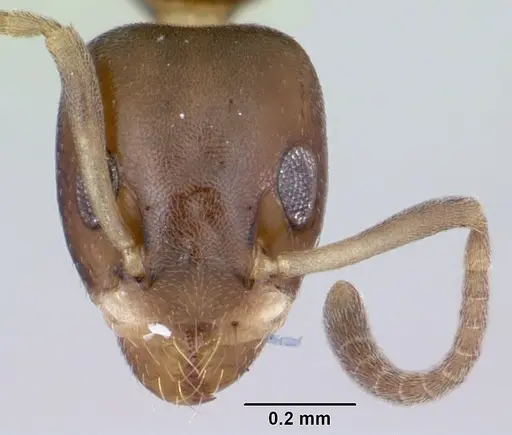
CASENT0217130
View on AntWeb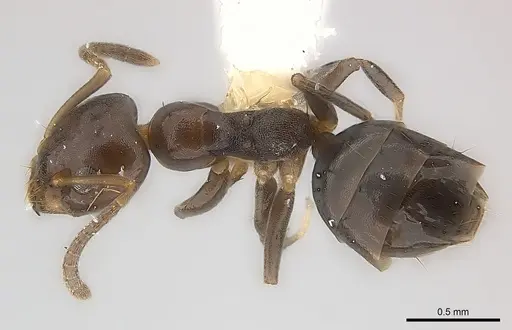
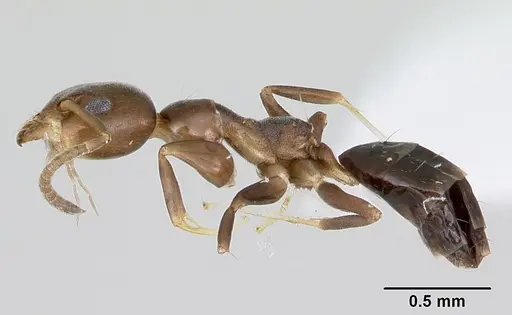
CASENT0403871
View on AntWeb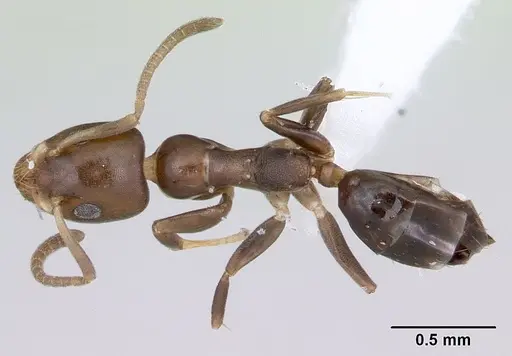
CASENT0886024
View on AntWeb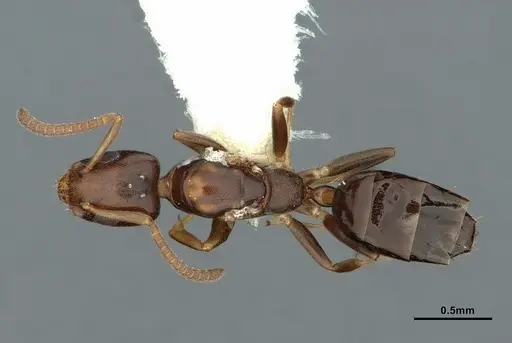
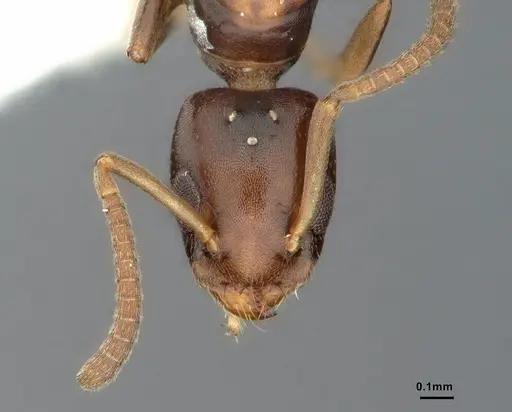
CASENT0902930
View on AntWeb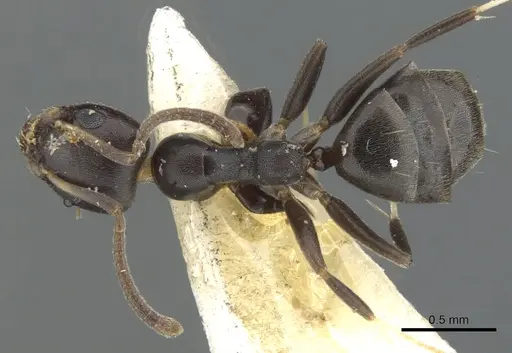
Literature
Loading distribution map...Loading products...