
Atopomyrmex cryptoceroides
- Sci. Name
- Atopomyrmex cryptoceroides
- Tribe
- Crematogastrini
- Subfamily
- Myrmicinae
- Author
- Emery, 1892
- Distribution
- Found in 3 countries
Introduction
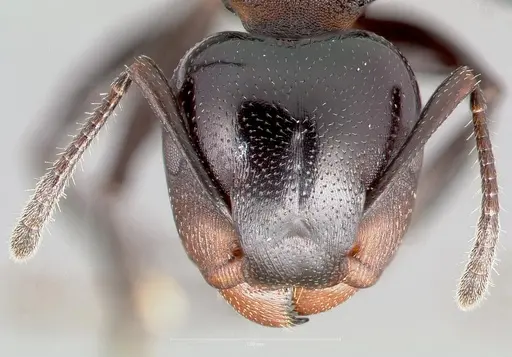
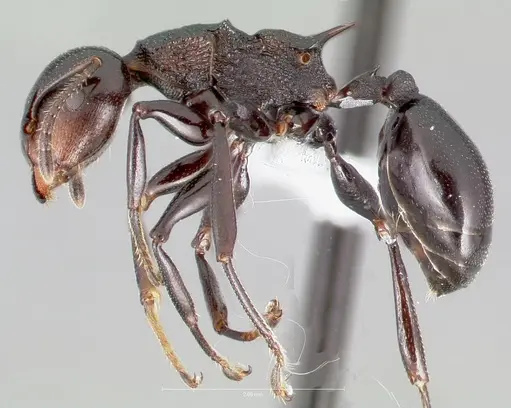
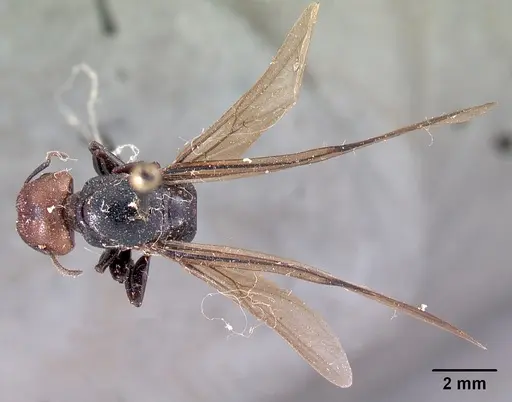
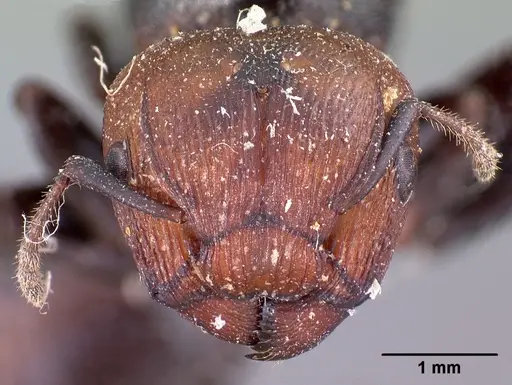
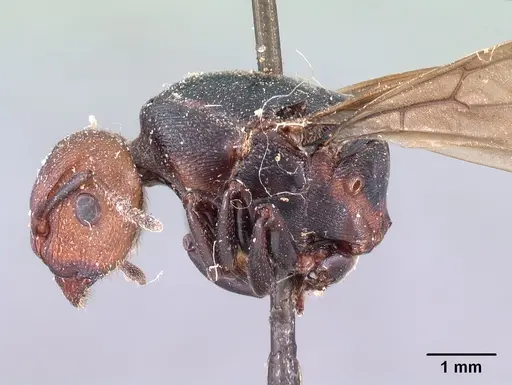
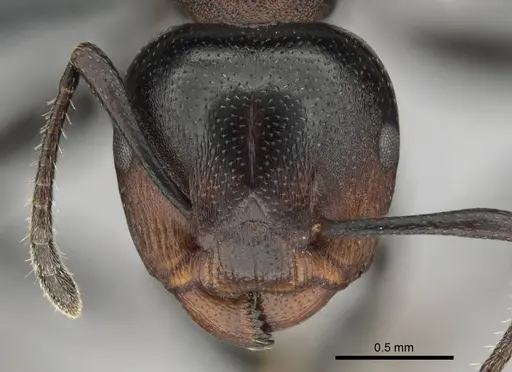
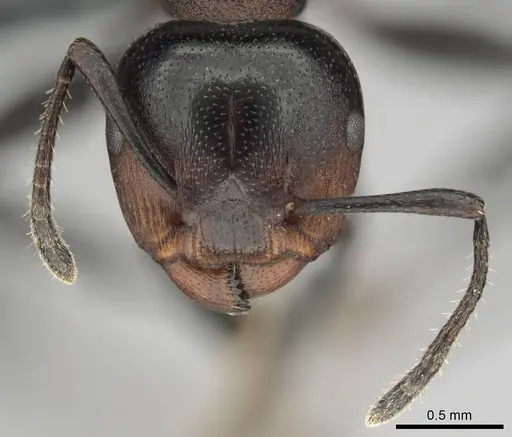
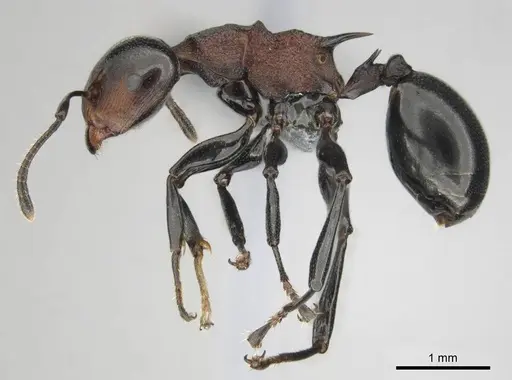
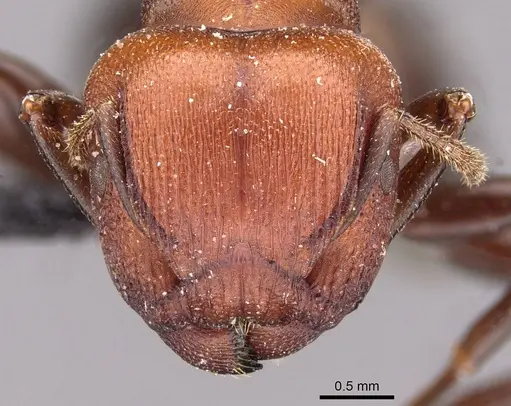
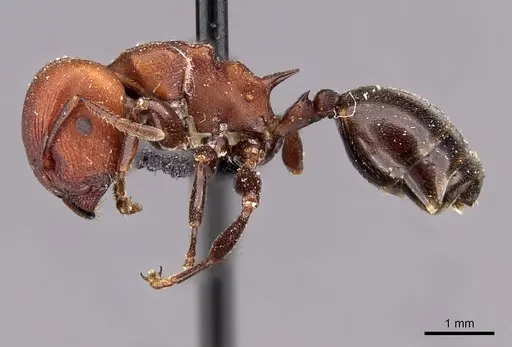
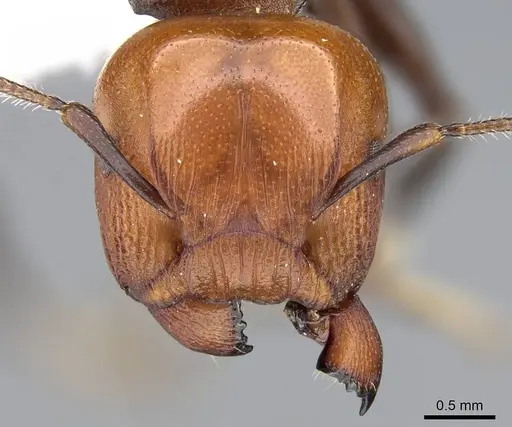
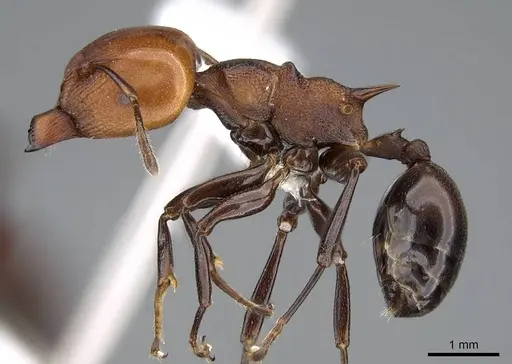
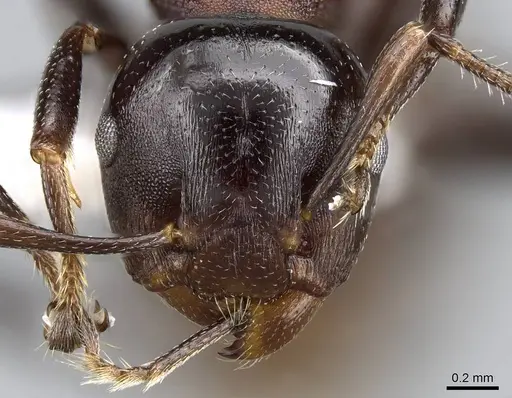
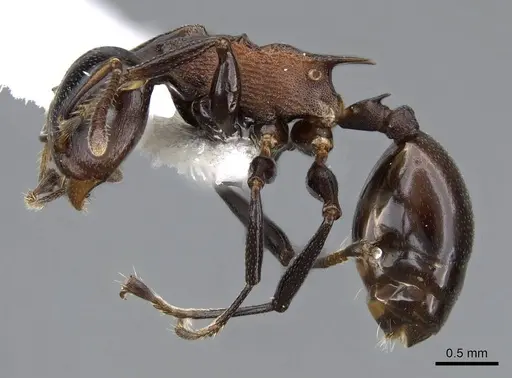
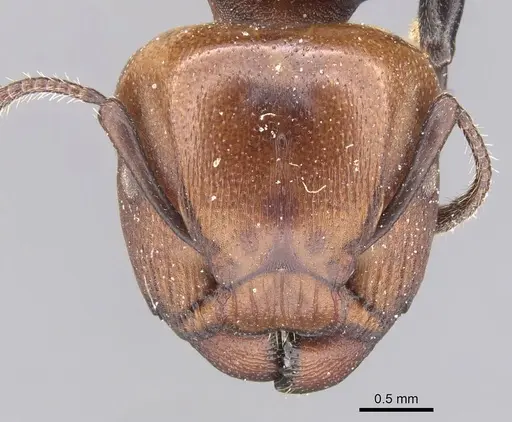
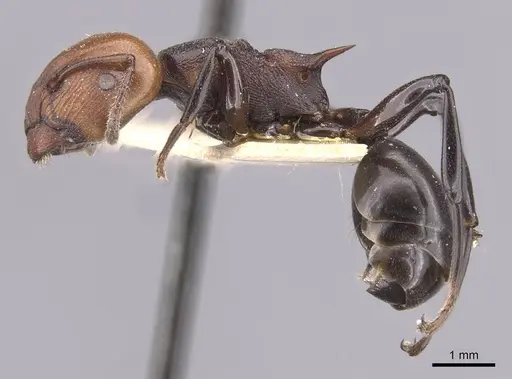
Atopomyrmex cryptoceroides are tree-dwelling ants native to the rainforests of West and Central Africa, with confirmed records from Sierra Leone, Ghana, Guinea, Ivory Coast, Nigeria, Cameroon, Democratic Republic of Congo, and Zimbabwe [AntWiki]. These ants display strong polymorphism, meaning workers come in noticeably different sizes within the same colony [AntWiki]. In nature, they live inside the wood of standing trees and forage along trunks and branches, rarely descending to the forest floor [AntWiki]. Unlike their close relatives Atopomyrmex mocquerysi, these ants have smooth, shiny areas on the sides of their heads behind the eyes rather than a rough, pitted texture, and their propodeal spines spread outward at the base before angling backward [AntWiki]. Because they spend their lives high in the canopy, they are rarely encountered in ground-based surveys; one study in Cameroon found only a single individual across multiple rainforest plots despite their presence in the region .
Quick Summary
- Difficulty: Expert
- Origin & Habitat: Rainforests of West and Central Africa including Ghana, Guinea, Ivory Coast, Nigeria, Cameroon, Democratic Republic of Congo, and Zimbabwe [1][2][3]
- Colony Type: Unknown/Unconfirmed
- Size & Growth:
- Queen: Size data unavailable, no measurements in available literature [5]
- Worker: Polymorphic, workers vary in size from minor to major castes [1]
- Colony: Unknown, likely moderate to large based on arboreal habits
- Growth: Unknown, estimated moderate
- Development: Unknown, no development data available for this species (Tropical species typically develop faster at warmer temperatures)
- Antkeeping:
- Temperature: Exact requirements unknown, based on tropical rainforest origin, maintain warm conditions year-round in the mid-20s°C range
- Humidity: High humidity required, keep nest substrate consistently moist but not waterlogged
- Diapause: No, tropical species without winter rest period
- Nesting: Arboreal, requires vertical setups with wood, cork, or arboreal formicarium design [1]
- Behavior: Arboreal foragers that travel vertically on trunks and branches, polymorphic worker caste with likely division of labor between size classes [1]. Escape prevention is critical as arboreal ants are skilled climbers.
- Common Issues: extremely rare in captivity with undocumented care requirements and no established husbandry protocols., arboreal species require specialized vertical nesting setups, standard soil nests or test tubes are inadequate long-term., high humidity needs increase mold risk without careful ventilation and substrate management., small size and expert climbing ability create significant escape risks without fine mesh barriers and sealed lids.
Natural History and Distribution
Atopomyrmex cryptoceroides inhabits the rainforest zones of West and Central Africa. Confirmed records place them in Sierra Leone, Ghana, Guinea, Ivory Coast, Nigeria, Cameroon, Democratic Republic of Congo, and Zimbabwe [1][2][3]. Historical specimens have been collected from specific localities including Mundame and Alen in Cameroon, Fernando Po (Bioko), and the Uelle region [5]. They share their range with the closely related Atopomyrmex mocquerysi, though the two species differ in head sculpture and spine shape [1]. These ants are strictly arboreal, nesting in the wood of standing trees and foraging primarily on trunks and branches [1]. Their canopy-dwelling habits make them difficult to detect in standard ground surveys, one comprehensive study in Cameroon found only a single individual across multiple rainforest plots [4].
Nesting and Housing
In captivity, you must replicate their tree-dwelling lifestyle. Standard soil nests or simple test tubes will not suffice long-term. Instead, provide vertical nesting spaces made of wood, cork, or arboreal formicaria with chambers drilled into wood or cork [1]. The nest material should retain moisture well but not become waterlogged. Because they live in standing trees, they likely prefer firm, solid wood rather than rotting substrate. Ensure the setup has excellent escape prevention, arboreal ants are skilled climbers and may squeeze through small gaps. A vertical orientation with climbing surfaces is essential for their natural foraging behavior.
Temperature and Humidity
As a tropical rainforest species, they require warm, stable temperatures and high humidity. Exact thermal preferences are unstudied, but you should maintain temperatures in the mid-20s°C range year-round based on their African rainforest origin [1]. They do not require hibernation. Humidity should remain high, with moist nest substrate that never dries out completely. Use a water tower or frequent misting to maintain moisture, but ensure adequate ventilation to prevent mold growth in the humid environment.
Feeding and Diet
While specific dietary studies are lacking, arboreal Myrmicinae typically collect honeydew from sap-sucking insects and capture small arthropod prey. Offer your colony sugar water or honey water in small amounts, and provide protein via small live insects such as fruit flies, springtails, or tiny crickets. Remove uneaten protein quickly to prevent mold in the humid nest environment.
Worker Polymorphism and Behavior
This species shows strong polymorphism, with workers occurring in different sizes [1]. You will likely see smaller minor workers and larger major workers with different roles. Majors may serve as soldiers or food processors, while minors handle brood care and foraging. They forage arboreally, traveling up and down vertical surfaces, and rarely venture onto horizontal ground [1].
Frequently Asked Questions
Can I keep Atopomyrmex cryptoceroides in a test tube?
Not recommended long-term. While you might start a founding queen in a test tube temporarily, these are arboreal ants that naturally nest in tree wood [1]. They need a vertical setup with wood, cork, or similar materials to thrive.
Do Atopomyrmex cryptoceroides need hibernation?
No. They come from tropical African rainforests [1], so they do not require a winter rest period. Keep them warm year-round.
What do Atopomyrmex cryptoceroides eat?
Exact diet is unstudied, but arboreal ants typically feed on honeydew from scale insects and small prey. Offer sugar water or honey water plus small live insects like fruit flies or springtails.
How big do Atopomyrmex cryptoceroides colonies get?
Colony size is unknown. Based on similar arboreal species, they may reach several hundred workers, but this is speculative.
Are Atopomyrmex cryptoceroides good for beginners?
No. These are expert-level ants due to their rarity, undocumented care requirements, and specialized arboreal nesting needs.
Do Atopomyrmex cryptoceroides sting?
As members of the subfamily Myrmicinae, they have a stinger. The Crematogastrini tribe uses a smear defense mechanism where venom is wiped onto enemies rather than piercing. Handle with care.
How long until Atopomyrmex cryptoceroides get their first workers?
Development time is unconfirmed. No specific data is available for this species.
Can I keep multiple Atopomyrmex cryptoceroides queens together?
Unknown. There is no documentation of founding behavior or colony structure for this species. It is safest to assume single-queen colonies until proven otherwise.
Report an Issue
The current care sheet is based fully on literature. See inconsistencies, or something that's incorrect? Please , it will be resolved after review from an admin. Contributing to the blogs tab also helps providing information, to make us be able to further improve the caresheets. Thank you for your support!
References

This caresheet is licensed under CC BY-SA 4.0 .
Community Blogs
CASENT0005914
View on AntWeb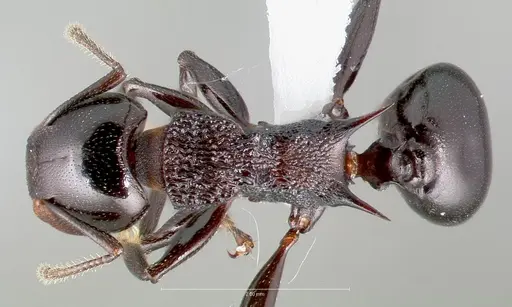
CASENT0102046
View on AntWeb
CASENT0815805
View on AntWeb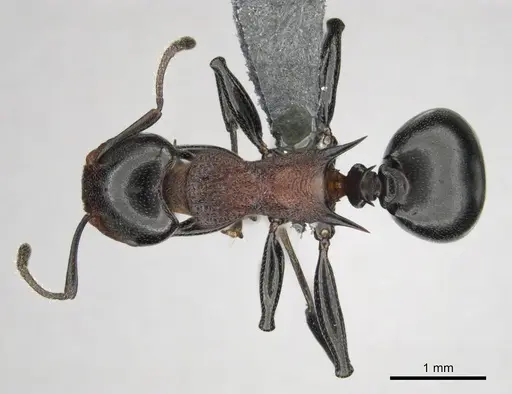
CASENT0908981
View on AntWeb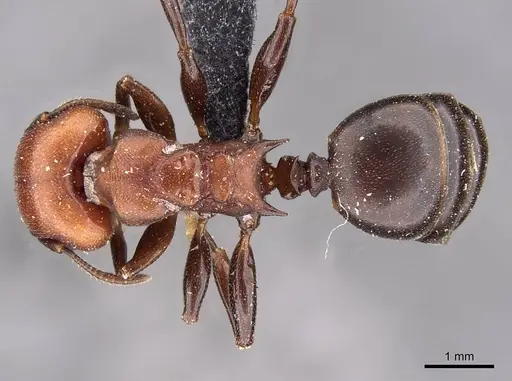
CASENT0914955
View on AntWeb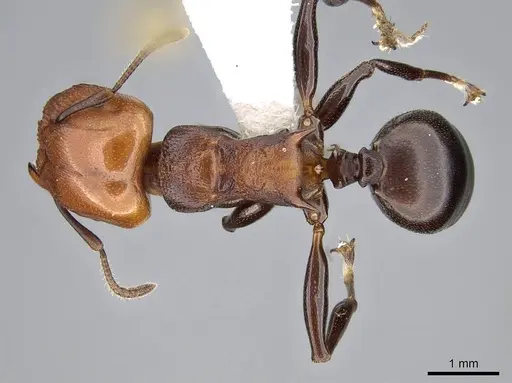
CASENT0914956
View on AntWeb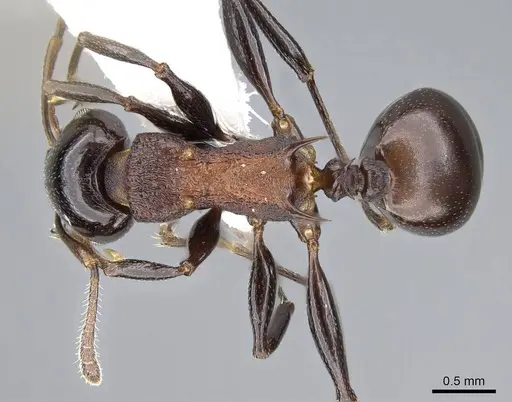
RMCAENT000017777
View on AntWeb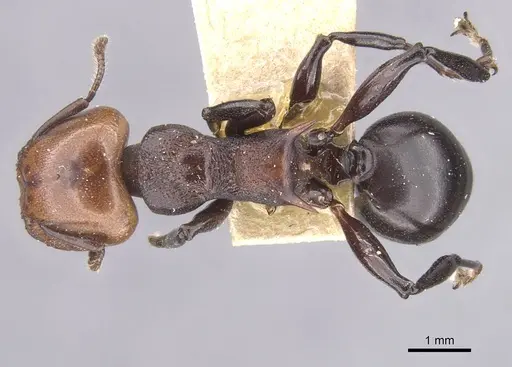
Literature
Loading distribution map...Loading products...