
Aptinoma antongil
- Sci. Name
- Aptinoma antongil
- Tribe
- Tapinomini
- Subfamily
- Dolichoderinae
- Author
- Fisher, 2009
- Distribution
- Found in 1 countries
Introduction
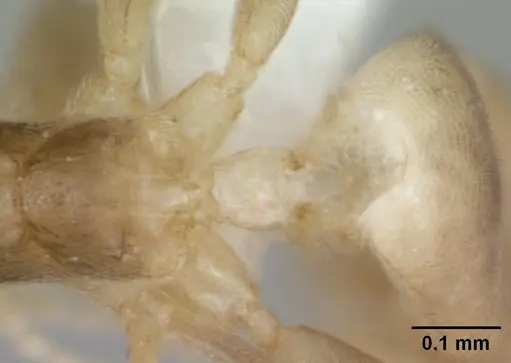
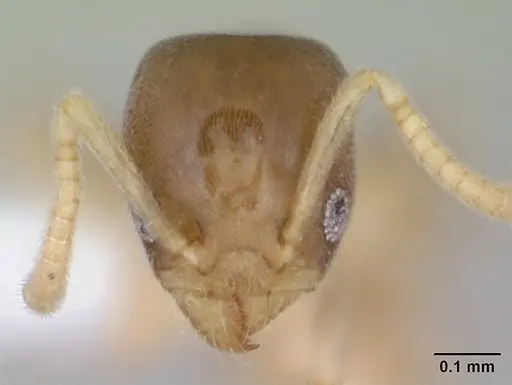
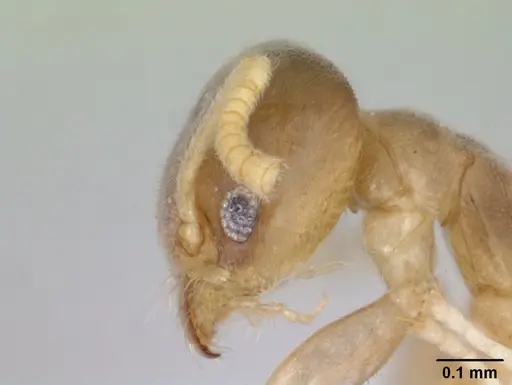
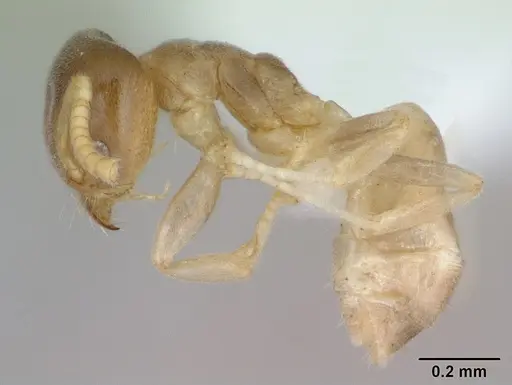
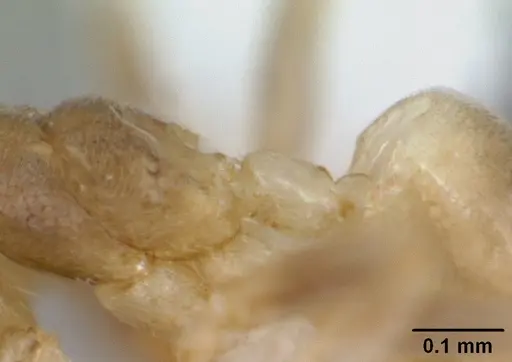
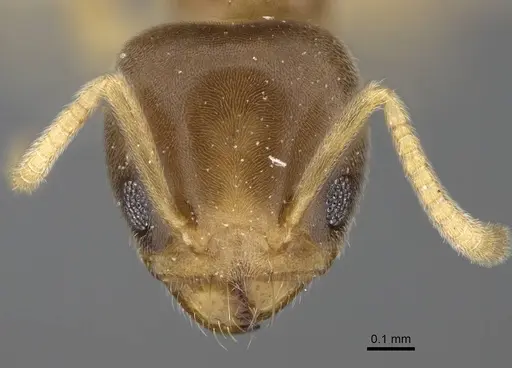
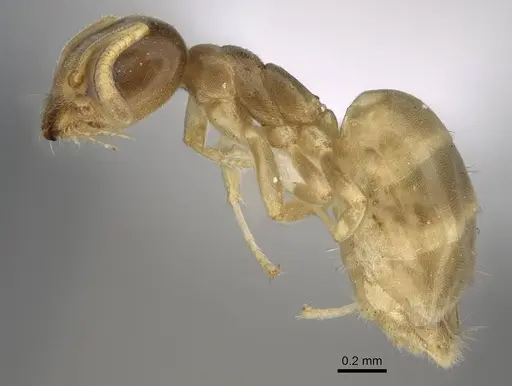
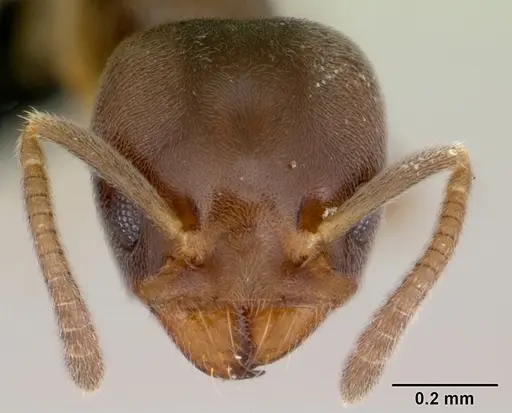
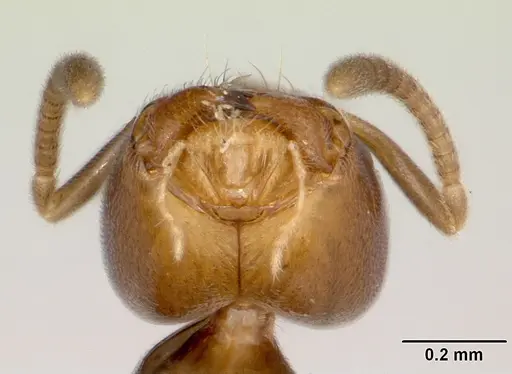
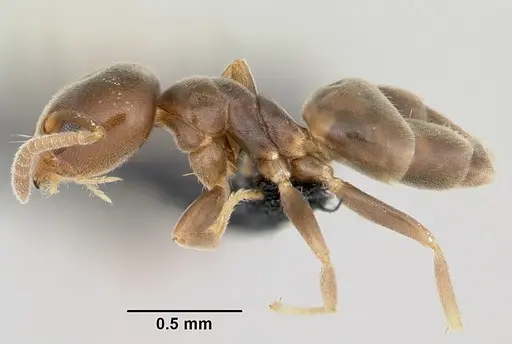
Aptinoma antongil is a small, dimorphic ant from the rainforests of Madagascar. Workers come in two distinct sizes: minor workers are roughly 4mm and major workers reach up to 6mm, all colored light to dark brown . Unlike many tree-dwelling ants that nest in hollow twigs, this species appears to nest under moss and leaf litter in the forest canopy, with workers foraging at branch junctions . They are endemic to the forests around Antongil Bay in northeastern Madagascar and were only described scientifically in 2009 . Queens and males have never been collected by scientists, making the founding behavior and colony structure of this species a complete mystery .
Quick Summary
- Difficulty: Expert
- Origin & Habitat: Rainforest canopy around Antongil Bay, Madagascar [1][2]
- Colony Type: Unknown, queens have never been observed [1]
- Size & Growth:
- Antkeeping:
- Temperature: Warm and stable, roughly 24-28°C (inferred from tropical rainforest habitat) [3]
- Humidity: High humidity required, nest substrate should be consistently moist like rainforest moss [1][3]
- Diapause: No, tropical species that likely remains active year-round [4]
- Nesting: Arboreal vertical setups with moss and twig junctions, avoid standard soil nests [1]
- Behavior: Arboreal foragers that navigate complex canopy structure. Major workers likely serve defensive roles while minors forage. Escape risk is moderate due to small size [1].
- Common Issues: complete lack of captive breeding knowledge means founding attempts are pure experimentation, arboreal requirements make standard test tube setups potentially unsuitable, extreme rarity in the trade means colony loss represents significant conservation concern, unknown dietary needs may lead to starvation if standard Dolichoderinae foods are rejected
Nest Preferences
In nature, Aptinoma antongil nests under canopy litter and moss rather than inside dead twigs [1]. This suggests they need a humid, arboreal setup with plenty of moss and small branch junctions to hide under. For captive housing, a vertical naturalistic setup with cork bark, living moss, and twig junctions would likely work better than a standard soil nest. The nest area should maintain high humidity similar to a rainforest canopy, but with good ventilation to prevent mold in the moss. Because they forage at branch junctions [1], provide plenty of horizontal surfaces and intersections rather than open vertical space.
Feeding and Diet
While specific dietary studies do not exist for this species, as a member of the subfamily Dolichoderinae, they likely feed on honeydew from sap-sucking insects and small arthropod prey [4]. In the canopy, they probably tend scale insects and aphids on branches. In captivity, offer sugar water or honeydew as a carbohydrate source, plus small live prey like fruit flies or tiny springtails. Observe carefully to see what they accept, as arboreal species can be picky about food presentation.
Temperature and Care
Coming from the humid rainforests of Madagascar [1], these ants need warm, stable temperatures year-round. Aim for roughly 24-28°C with minimal fluctuation. They do not require hibernation as they are a tropical species. Use a heating cable or mat on one side of the nest to create a gentle gradient, but monitor closely to prevent drying out the moss substrate. High humidity is essential, the nest material should feel damp but not waterlogged.
Worker Dimorphism
Aptinoma antongil has two distinct worker sizes. Major workers are larger (up to 6mm) with shorter antennae relative to their head size, while minor workers are smaller (around 4mm) with longer antennae relative to their heads [1]. This dimorphism likely means majors specialize in defense and food processing while minors handle foraging. When keeping this species, note that the different sizes may have different food preferences or temperature tolerances.
The Challenge of Unknown Biology
This species represents one of the biggest challenges in ant keeping: attempting to establish a colony when the founding behavior is completely unknown. Since queens have never been collected [1], we do not know if they find colonies alone (claustral), forage during founding (semi-claustral), or are social parasites. Any attempt to found a colony would be experimental. If you acquire a colony (likely only possible through collection in Madagascar), document everything, temperature, humidity, feeding response, and brood development, to help build the first captive care knowledge for this species.
Frequently Asked Questions
Can I keep Aptinoma antongil in a test tube setup?
Probably not ideal. While test tubes work for many ants, Aptinoma antongil is arboreal and nests under moss in tree canopies [1]. They need vertical space and complex surfaces. A naturalistic setup with moss and branches is more appropriate than a horizontal test tube.
How long does Aptinoma antongil take from egg to worker?
Unknown. No studies have documented the development timeline for this species. Based on related Dolichoderinae, it might take 6-10 weeks at tropical temperatures, but this is purely speculative.
Do Aptinoma antongil need hibernation?
No. They come from tropical Madagascar and remain active year-round [4]. Keep them at stable warm temperatures (24-28°C) without seasonal cooling.
What do Aptinoma antongil eat?
Likely honeydew and small insects, based on their subfamily (Dolichoderinae). In captivity, offer sugar water and tiny live prey like fruit flies or springtails, but be prepared to experiment since their exact preferences are unstudied.
Are Aptinoma antongil good for beginners?
No. This is an expert-only species. Queens have never been observed by scientists [1], so founding behavior is unknown, and they have specific arboreal requirements. Combined with their rarity, they are unsuitable for beginners.
How big do Aptinoma antongil colonies get?
Unknown. Scientists have only collected workers, not entire colonies [1]. Colony size could range from dozens to thousands, there is no data to estimate.
Where can I buy Aptinoma antongil?
You likely cannot. They are endemic to a small region of Madagascar [1] and are not commercially available. Any specimens would need to be legally collected from the wild with proper permits, making them virtually unobtainable for most keepers.
Why are major and minor workers so different in Aptinoma antongil?
The major workers are larger with proportionally shorter antennae, likely specializing in defense and food processing, while smaller minors handle foraging in tight spaces [1]. This division of labor is common in dimorphic ant species.
Can I keep multiple Aptinoma antongil queens together?
Unknown. Since queens have never been collected [1], we do not know if this species is monogyne (single queen) or polygyne (multiple queens). Combining queens would be experimental and likely risky.
Report an Issue
The current care sheet is based fully on literature. See inconsistencies, or something that's incorrect? Please , it will be resolved after review from an admin. Contributing to the blogs tab also helps providing information, to make us be able to further improve the caresheets. Thank you for your support!
References

This caresheet is licensed under CC BY-SA 4.0 .
Community Blogs
CASENT0418181
View on AntWeb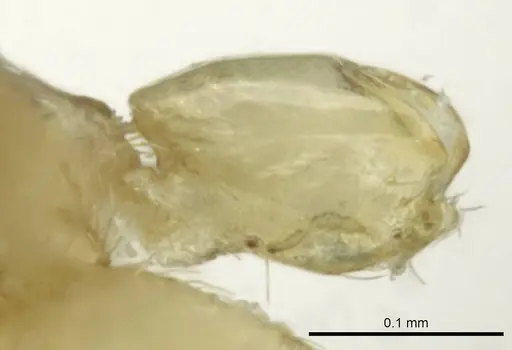
CASENT0418237
View on AntWeb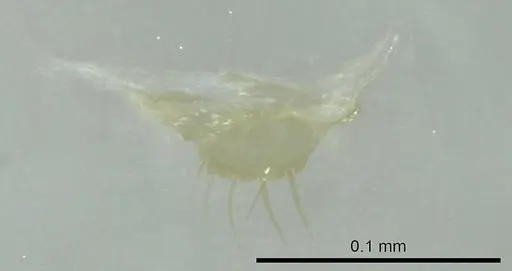
CASENT0418267
View on AntWeb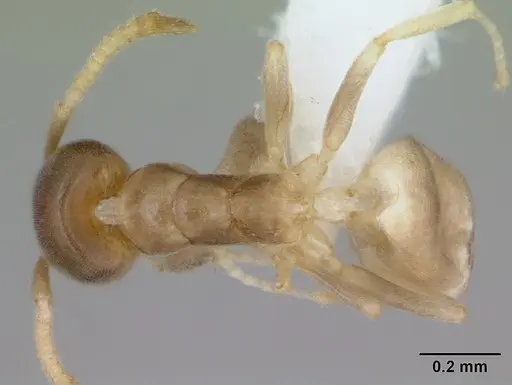
CASENT0418269
View on AntWeb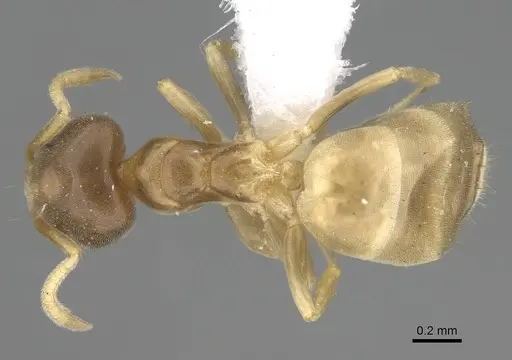
CASENT0489161
View on AntWeb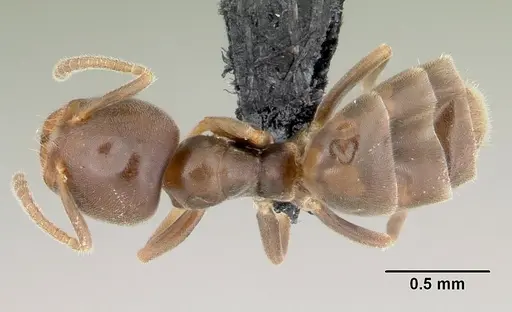
Literature
Loading distribution map...Loading products...