Aphaenogaster tennesseensis shows a March to September flight window. Peak activity occurs in August, with nuptial flights distributed across 3 months.
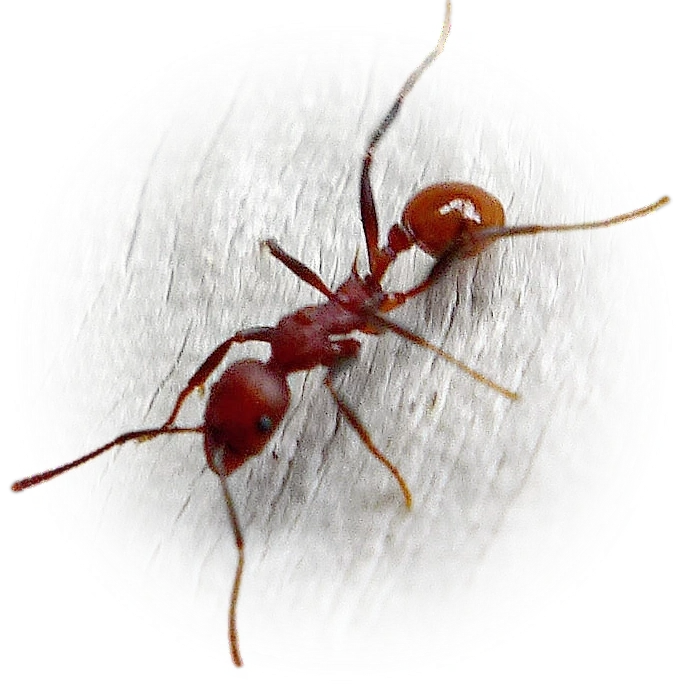
Tennessee Collared Ant
Aphaenogaster tennesseensis
- Sci. Name
- Aphaenogaster tennesseensis
- Tribe
- Stenammini
- Subfamily
- Myrmicinae
- Author
- Mayr, 1862
- Common Name
- Tennessee Collared Ant
- Distribution
- Found in 2 countries
- Nuptial Flight
- From March to September
- Peak flight Time
- 13:00
AI Identifiable
try →
Introduction
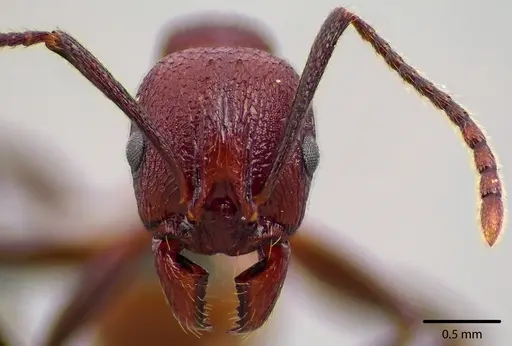
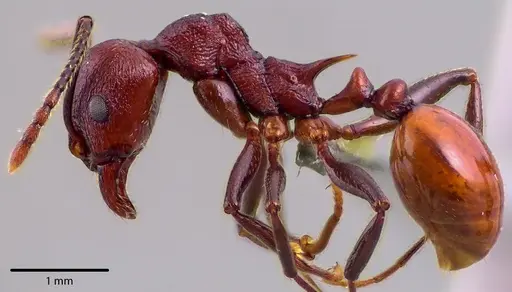
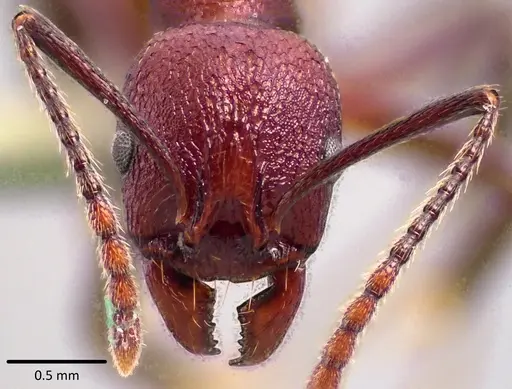
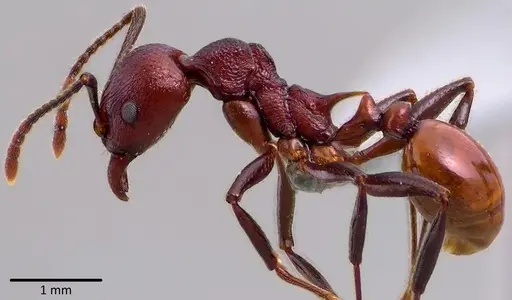
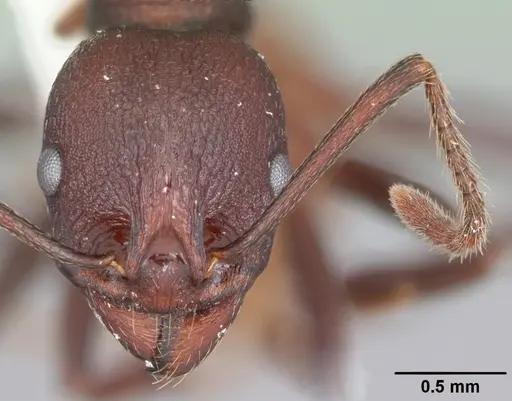
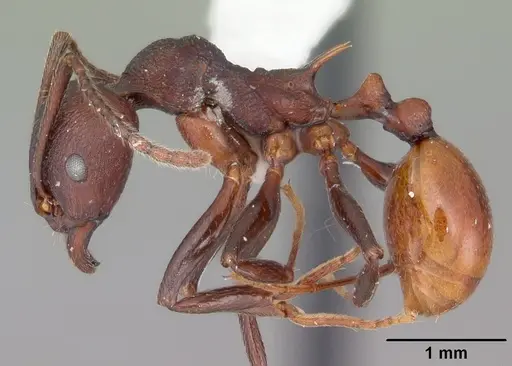
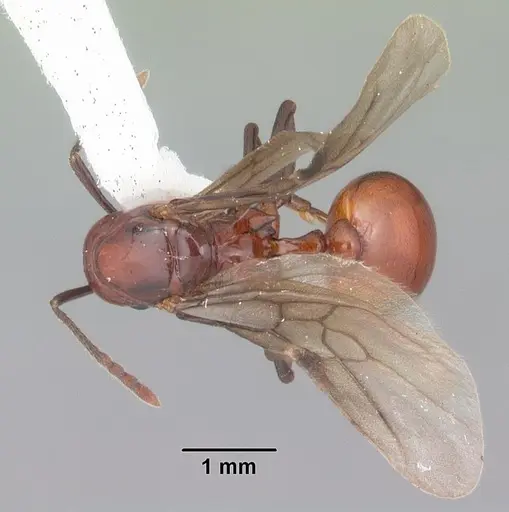
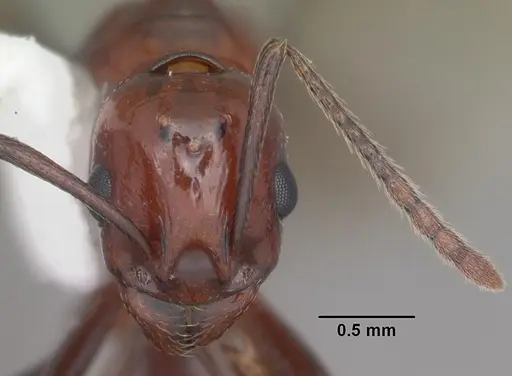
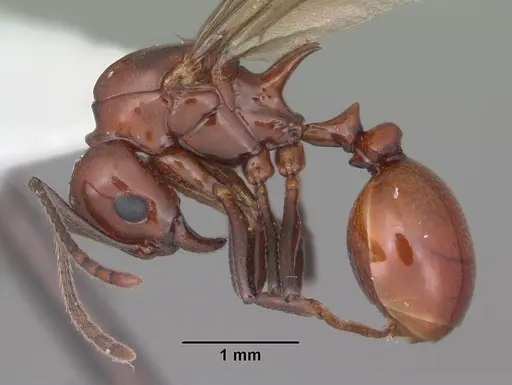
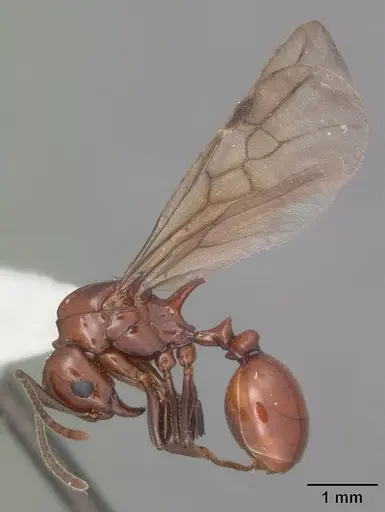
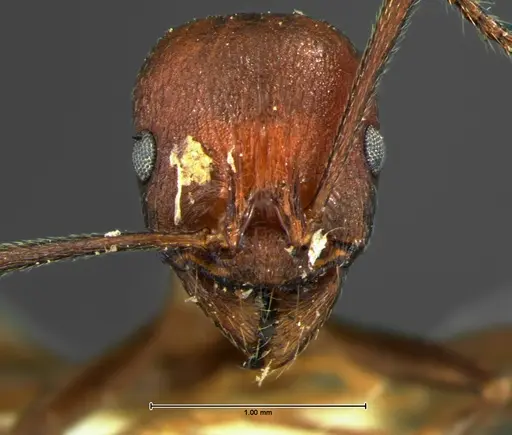
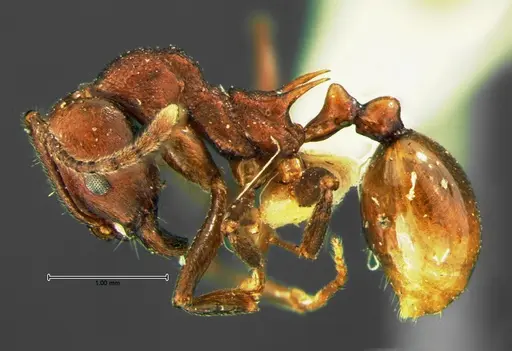
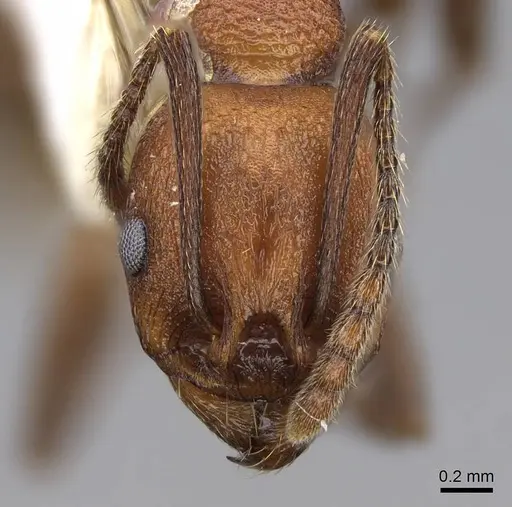
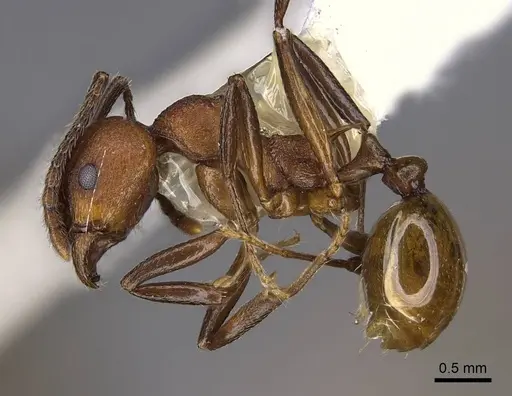
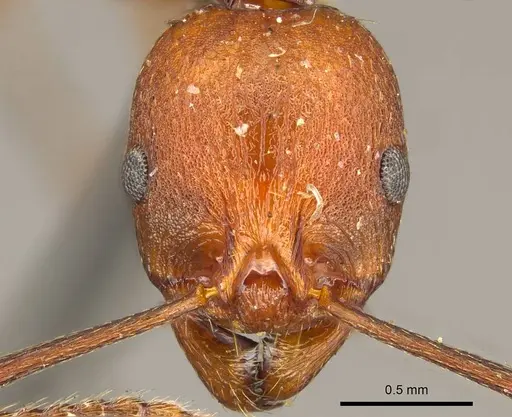
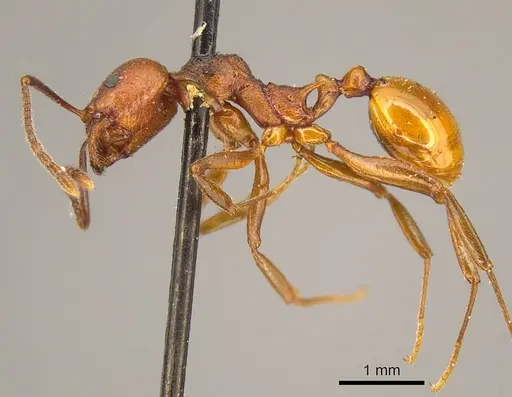
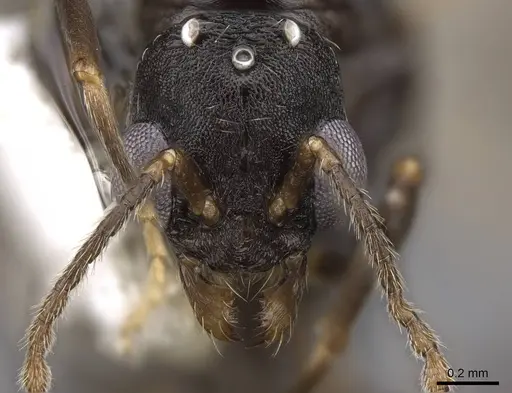
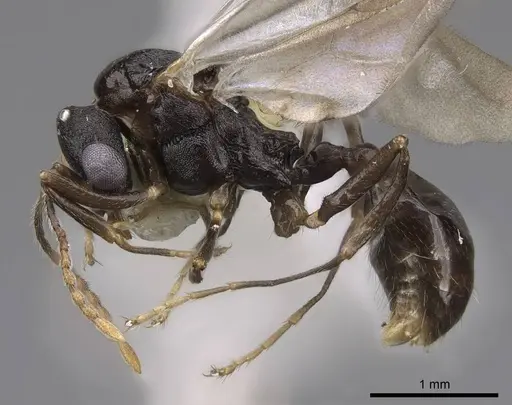
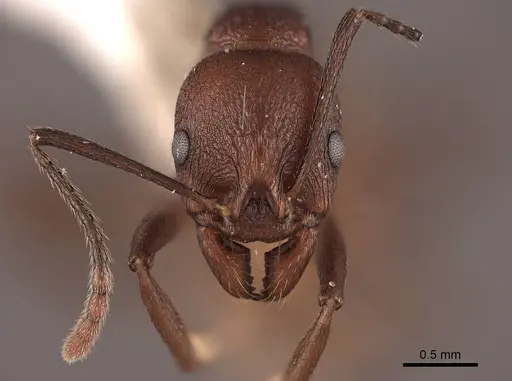
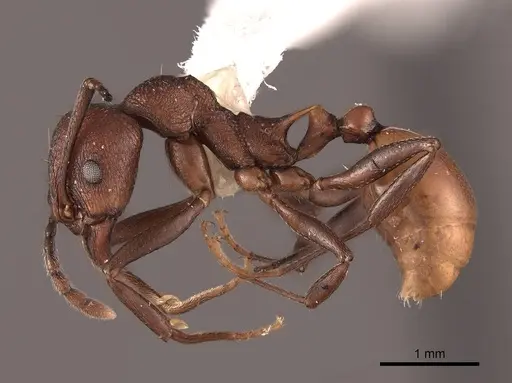
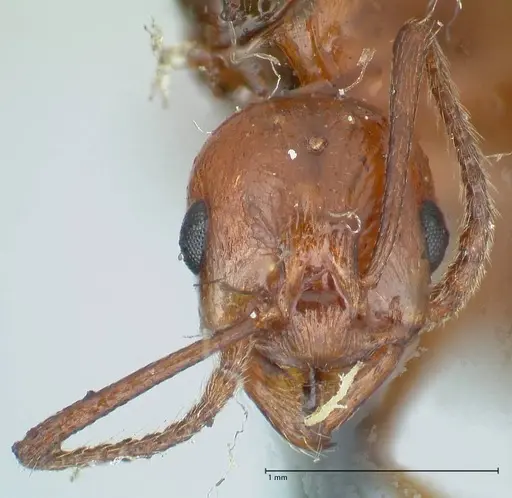
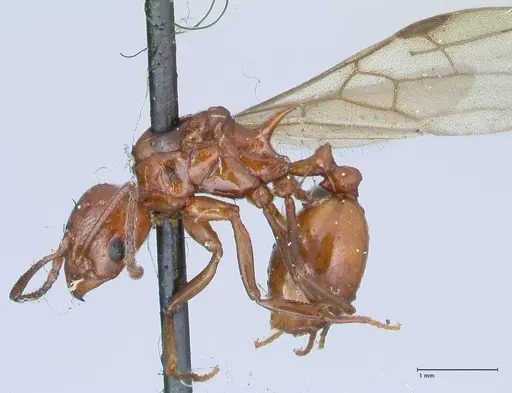
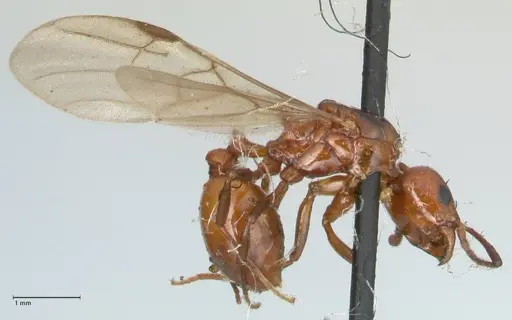
Aphaenogaster tennesseensis is a medium-to-large woodland ant native to eastern North America. Workers measure 4.5-7.2 mm and are dark reddish-brown with a distinctive smooth, shiny appearance - they completely lack the long erect hairs found on most other Aphaenogaster species . Their most recognizable feature is the pair of long, curved propodeal spines that sweep back toward the gaster [AntWiki]. Queens are unusual - nearly smooth with almost no sculpture, and they have distinctive blunt-tipped propodeal spines [AntWiki]. This species is a temporary social parasite; queens cannot found colonies alone and must invade nests of other Aphaenogaster species like Aphaenogaster fulva, A. rudis, or A. picea to establish their colonies . They nest in rotting wood, stumps, and standing dead trees in mesic woodlands from Quebec south to Florida and west to Oklahoma .
Quick Summary
- Difficulty: Expert
- Origin & Habitat: Eastern North America (Nearctic). Found in mesic woodlands, oak-hickory forests, and semi-open areas from Quebec to Florida and west to Minnesota, South Dakota, Nebraska, Kansas, and Oklahoma [1][4][6].
- Colony Type: Monogyne, single queen temporary social parasite. Queens invade and take over established colonies of other Aphaenogaster species. Colonies can reach several thousand workers [7][6][4].
- Size & Growth:
- Queen: size data unavailable, queens are described as unusually small with smooth bodies and blunt-tipped propodeal spines [1][2][3]
- Worker: 4.5-7.2 mm [1][2]
- Colony: up to several thousand workers, colonies tend to be large and populous compared to other local Aphaenogaster species [6][4]
- Growth: Moderate
- Development: timeline depends on host colony acceptance and seasonal conditions, queens cannot raise workers alone (As a temporary parasite, the queen depends on host workers to raise her first brood. Development timing depends on when she is introduced to the host colony and ambient temperature.)
- Antkeeping:
- Temperature: Keep at 20-25°C during active season. Provide hibernation at 5-10°C for 3-4 months during winter [1][6].
- Humidity: Moderate to high humidity. Nest substrate should mimic rotting wood conditions, damp but not waterlogged, with moisture gradients available [6][1].
- Diapause: Yes, required. Hibernation from roughly November through February based on temperate range and late summer alate production [1][6].
- Nesting: Naturalistic wood setups with rotting wood, stumps, or Y-tong nests with wood-like chambers. They need wood fibers to chew and will plug cracks with wood granules [6][1].
- Behavior: Workers forage on tree trunks, logs, and the ground, collecting small arthropods and seeds [1]. They show aggressive defense behavior, when threatened, workers bend their abdomen beneath the thorax, raise their legs, and project their sting to reach attackers [7]. Colonies are active during summer months with alates present in nests from July through August [1][6].
- Common Issues: cannot be founded by a lone queen, you must provide a host colony of Aphaenogaster fulva, rudis, or picea for the queen to parasitize., host colony rejection or queen death if host workers are too aggressive or the queen is not accepted., wood nesting requirements mean standard plaster nests may be rejected, they need wood fibers to manipulate., hibernation is required for long-term colony health, skipping winter rest leads to colony decline., aggressive defense makes colony maintenance challenging, they will sting when disturbed.
Nuptial Flight Activity Analysis 108 observations
Flight Activity by Hour 108 observations
Aphaenogaster tennesseensis nuptial flight activity peaks around 13:00 during the late morning to early afternoon. Activity is spread across a 21-hour window (00:00–20:00). Times may be influenced by human observation patterns.
Temporary Parasitism and Colony Founding
You cannot start Aphaenogaster tennesseensis from a single queen in a test tube. This species is a temporary social parasite, meaning the queen must enter an established colony of a different ant species and take it over [4][5]. In nature, queens invade nests of Aphaenogaster fulva, A. rudis, or A. picea [4][2]. The host workers groom the invading queen and eventually accept her as their own [5]. She then uses the host workers to raise her first brood of workers. As her own workers mature and the host workers die off, the colony transitions to consisting entirely of her offspring. For captive founding, you must introduce a tennesseensis queen into a healthy host colony of the appropriate species. This requires experience with both species and careful monitoring to ensure the queen is accepted rather than killed.
Nest Preferences and Setup
In the wild, Aphaenogaster tennesseensis nests in rotting logs, stumps, standing dead trees, and the rotting heartwood of living oaks [6][1][2]. They prefer wood in early to mid stages of decomposition, hard enough to maintain structure but soft enough to excavate. Workers actively chew wood and use the granules to plug cracks and modify their nest chambers [6]. Brood chambers follow the wood grain and can be quite large, one documented chamber was 1/2 inch high, 1 inch wide, and 6 inches long [6]. In captivity, provide a naturalistic setup with rotting wood or a Y-tong nest that mimics wood cavities. Include pieces of hardwood or cork bark they can chew. The nest should offer tight spaces and galleries rather than open chambers.
Feeding and Diet
These ants are generalist foragers. Workers hunt small arthropods on the ground and on tree trunks [1]. They also collect seeds with elaiosomes (fatty attachments), particularly from plants like Carex laxiculmis [1]. Additionally, they forage on polypore fungi and accept fruit baits in the field [1]. In captivity, offer a varied diet including small insects (fruit flies, pinhead crickets, mealworms), sugar water or honey, and seeds such as dandelion or poppy seeds. They may also appreciate small pieces of mushroom or fungus. Remove uneaten protein within 24-48 hours to prevent mold in their wood nest environment.
Temperature and Seasonal Care
As a temperate species from eastern North America, Aphaenogaster tennesseensis requires seasonal temperature cycles. Keep colonies at 20-25°C during the active season (March through October). Alates develop in nests from July through August, with male alates appearing late July to late August and female alates early July to late August [1][6]. For winter care, provide a hibernation period of 3-4 months at 5-10°C. Gradually reduce temperature in late autumn and maintain cooler conditions until spring. Hibernation is essential for the queen's health and proper brood development cycles.
Behavior and Defense
Aphaenogaster tennesseensis shows distinctive defensive behavior. When threatened, workers bend their abdomen beneath their thorax, raise their legs, and project their sting upward to reach an attacker's body [7]. They are capable of stinging and will use this defense readily when their nest is disturbed. Workers are active foragers, traveling up tree trunks and across the ground in search of food [1]. They are also wood modifiers, you will see them carrying wood granules to plug small openings in their nest, a behavior that helps maintain humidity and security [6]. This species is considered very uncommon and is not well-represented in ant surveys using standard methods [8][9].
Frequently Asked Questions
Can I keep Aphaenogaster tennesseensis as a beginner?
No, this species is suitable for expert antkeepers only. They are temporary social parasites, meaning you cannot found a colony from a single queen. You must provide a host colony of another Aphaenogaster species (such as Aphaenogaster fulva, A. rudis, or A. picea) for the queen to invade and take over [4][5].
How do I found a colony of Aphaenogaster tennesseensis?
You must introduce the queen into an established host colony of Aphaenogaster fulva, A. rudis, or A. picea. The host workers must accept and groom her. She will then use the host workers to raise her first brood. This process requires experience with both species and careful monitoring to prevent the queen from being killed by host workers [4][2][5].
Do Aphaenogaster tennesseensis ants sting?
Yes. Workers possess a stinger and use it readily when defending the nest. They characteristically bend their abdomen beneath their body and project the sting upward to reach attackers [7].
What do Aphaenogaster tennesseensis eat?
They are omnivorous generalists. Workers forage for small arthropods, collect seeds with fatty attachments (elaiosomes), feed on polypore fungi, and accept fruit and sugar sources [1].
Do Aphaenogaster tennesseensis need hibernation?
Yes. As a temperate species from eastern North America, they require a winter rest period of 3-4 months at 5-10°C. Hibernation is essential for the queen's long-term health and proper colony cycling [1][6].
How big do Aphaenogaster tennesseensis colonies get?
Colonies can reach up to several thousand workers. They tend to be larger and more populous than other Aphaenogaster species in the same area [6][4].
Can I keep multiple Aphaenogaster tennesseensis queens together?
No. Colonies are monogyne, meaning they contain only one fertile queen. Attempting to combine multiple queens will result in fighting and death.
What is the best nest type for Aphaenogaster tennesseensis?
Naturalistic setups with rotting wood, stumps, or Y-tong nests that mimic wood cavities work best. They need wood fibers to chew and manipulate, and they prefer nesting in pre-formed cavities rather than digging in soil [6][1].
How long until first workers for Aphaenogaster tennesseensis?
There is no standard timeline because queens cannot raise workers alone. The timeline depends entirely on when the queen is accepted by a host colony and when the host workers raise her first brood. This process depends on seasonal timing and host colony health [4].
Why are my Aphaenogaster tennesseensis dying?
Common causes include attempting to found without a host colony (the queen will starve), lack of hibernation leading to queen burnout, incorrect humidity (they need damp wood conditions, not dry setups), and aggression from host workers if the parasitic introduction failed.
When is the nuptial flight of Aphaenogaster tennesseensis?
The nuptial flight of Aphaenogaster tennesseensis typically occurs From March to September.
What time of day does Aphaenogaster tennesseensis fly?
The nuptial flight of Aphaenogaster tennesseensis peaks around 13:00 during the late morning to early afternoon, with most activity between 00:00 and 20:00. Times may be influenced by human observation patterns.
Report an Issue
The current care sheet is based fully on literature. See inconsistencies, or something that's incorrect? Please , it will be resolved after review from an admin. Contributing to the blogs tab also helps providing information, to make us be able to further improve the caresheets. Thank you for your support!
References

This caresheet is licensed under CC BY-SA 4.0 .
Community Blogs
ANTWEB1041737
View on AntWeb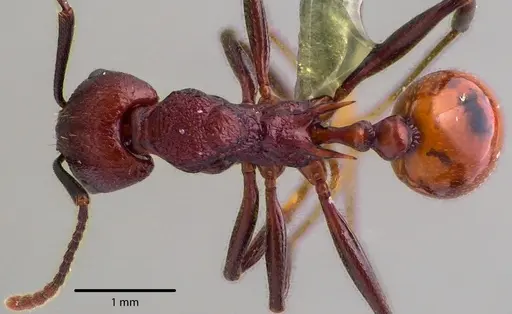
ANTWEB1041744
View on AntWeb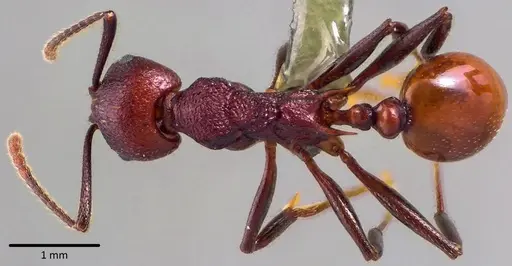
CASENT0103600
View on AntWeb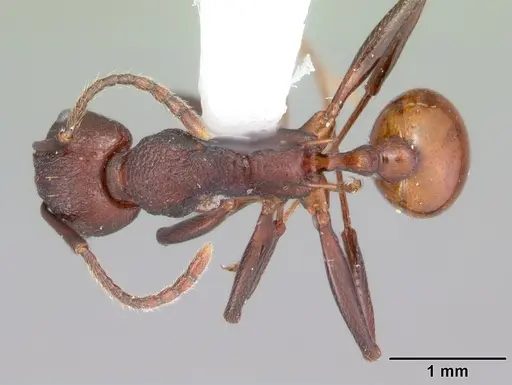
CASENT0103602
View on AntWeb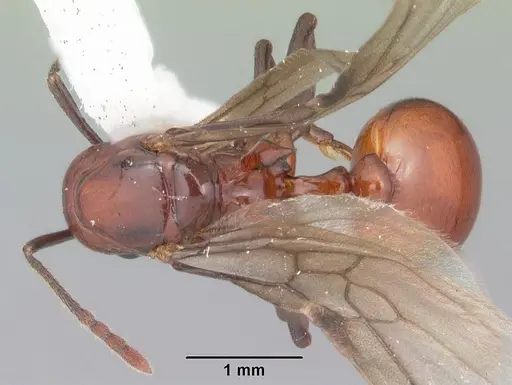
CASENT0105672
View on AntWeb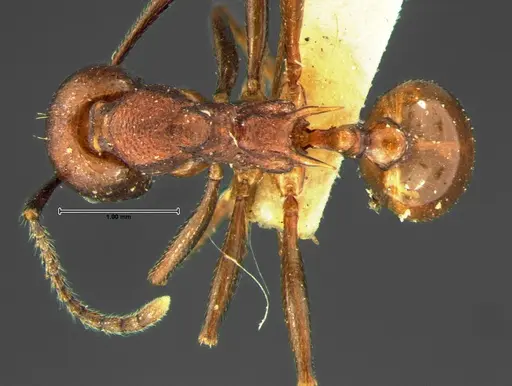
CASENT0914479
View on AntWeb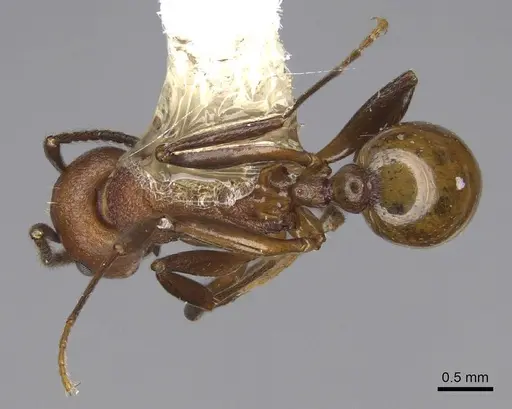
CASENT0916081
View on AntWeb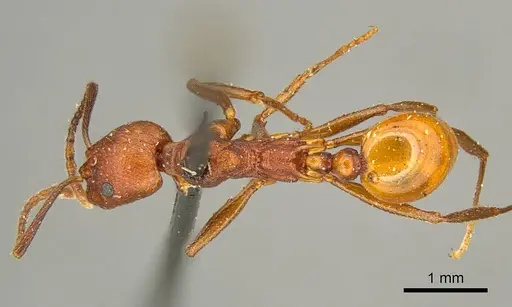
CASENT0923070
View on AntWeb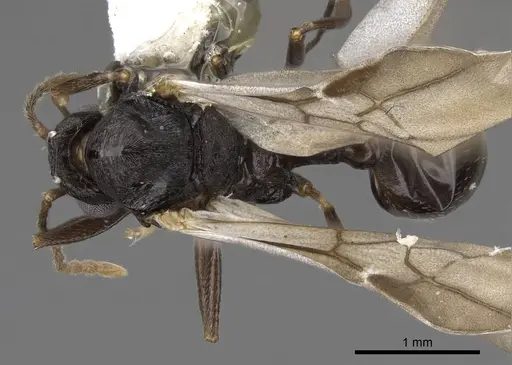
FMNHINS0000062930
View on AntWeb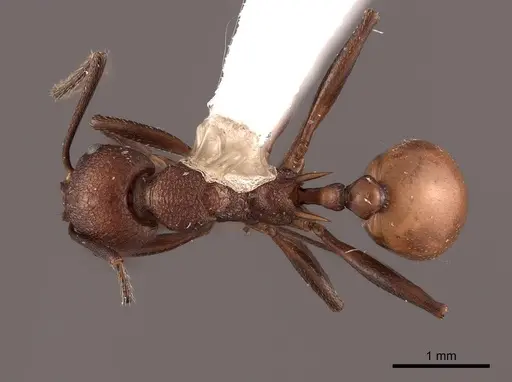
FOCOL1230
View on AntWeb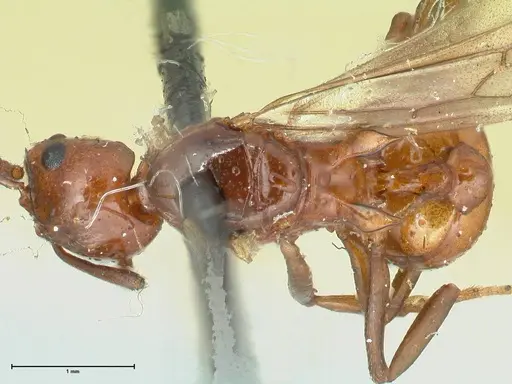
Literature
Loading distribution map...Loading products...