
Aphaenogaster subterraneosplendida
- Sci. Name
- Aphaenogaster subterraneosplendida
- Tribe
- Stenammini
- Subfamily
- Myrmicinae
- Author
- André, 1883
- Distribution
- Found in 1 countries
Introduction
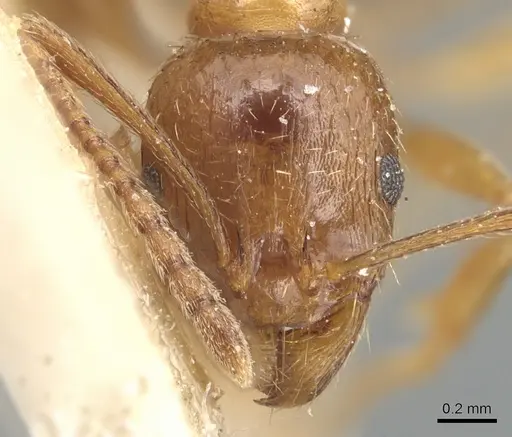
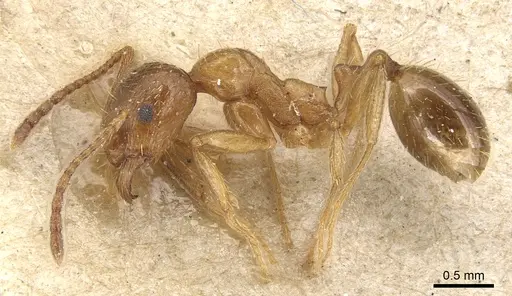
Aphaenogaster subterraneosplendida is a small Mediterranean ant with a two-tone appearance: workers have ferruginous (rusty red) heads and thoraxes that contrast with dark brown to black abdomens . Queens share this contrast and have short, thick propodeal spines . This species is endemic to Sicily and southern Calabria, Italy . Until recently, it was known as Aphaenogaster sicula, but studies confirmed it as a distinct species . Unlike many woodland Aphaenogaster, it specializes in open, sunny habitats with clay soils, such as meadows and Mediterranean scrubland between 35 and 840 meters elevation . Wild colonies are strictly monogynous, with only one queen per colony .
Quick Summary
- Difficulty: Medium
- Origin & Habitat: Sicily and southern Calabria, Italy, clay soils in open meadows, garrigues, and degraded Mediterranean maquis at 35-840 m elevation [1][4]
- Colony Type: Strictly monogynous, only one queen per colony detected in the wild [1]
- Size & Growth:
- Queen: Size unknown, inferred from Aphaenogaster genus (~5-7 mm)
- Worker: Size unknown, inferred from Aphaenogaster genus (~3-5 mm)
- Colony: Unknown, likely moderate based on similar Aphaenogaster species
- Growth: Moderate (estimated)
- Development: Unknown (No specific data on development timeline)
- Antkeeping:
- Temperature: Keep warm, roughly 20-25°C during activity season, based on Mediterranean habitat [1]
- Humidity: Keep nest substrate consistently moist but not waterlogged, mimicking clay meadow conditions [1]
- Diapause: Unknown, no specific data on hibernation requirements
- Nesting: Clay-rich soil nests or Y-tong with narrow chambers, avoid tall open spaces [1]
- Behavior: Active ground-foragers, moderately fast but not aggressive, small size requires excellent escape prevention [1]
- Common Issues: escape prevention is critical, workers are small and can squeeze through tiny gaps [1]., clay-rich substrate is preferred, pure sand or acrylic nests may stress the colony [1]., growth is moderate, avoid overfeeding or disturbing the colony excessively.
Identification and Appearance
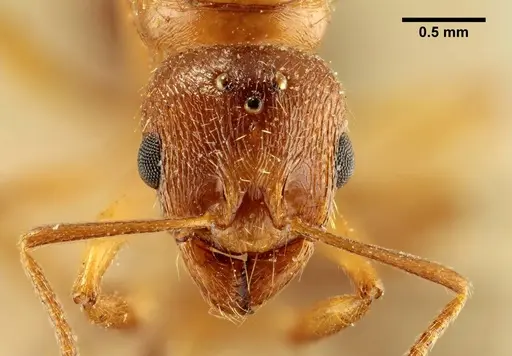
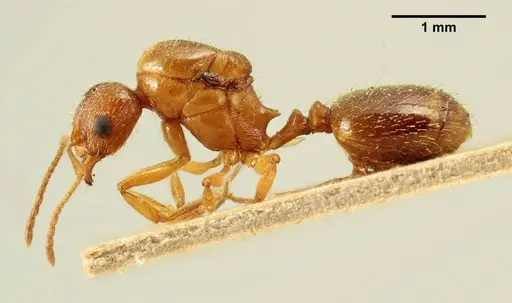
Aphaenogaster subterraneosplendida displays a distinctive color pattern that sets it apart from similar species in the crocea group. Workers have ferruginous heads and thoraxes that contrast sharply with very dark brown to black abdomens [1]. Their heads are subrectangular with slightly rounded sides, and the body sculpture is relatively weak and shiny compared to relatives like Aphaenogaster trinacriae [1]. Queens possess uniquely short, thick propodeal spines with a wide base [1]. Males are brown with an elongated thorax that has a gibbous front portion and a flatter rear section [1].
Distribution and Natural Habitat
This species is endemic to the Italian island of Sicily and a small area in southern Calabria on the mainland [1][2]. It inhabits the whole Sicilian territory wherever suitable ecological conditions exist, specifically clay soils in open habitats [1]. You will find them living in meadows, garrigues, degraded maquis, and even in pine afforestations at low altitudes [1]. They are strongly associated with open, sunny conditions rather than dense forest, and collections have been made between 35 and 840 meters elevation [1].
Colony Structure and Reproduction
Wild colonies are strictly monogynous, meaning they contain only one queen [1]. This makes them single-queen colonies by nature, and attempting to combine multiple queens will likely result in fighting and mortality. In captive colonies observed by researchers, sexual ants (males and new queens) began leaving the nest from the second week of July to the first week of August [1]. However, these captive colonies did not attempt actual nuptial flights. In nature, flights likely begin with the first heavy rains at the end of summer [1]. The founding behavior of new queens has not been directly observed, so it remains unconfirmed whether they seal themselves in or must forage.
Seasonal Care and Hibernation
No specific data on diapause or hibernation requirements for this species is available in the research context. Based on genus patterns and Mediterranean habitat, winter rest may be beneficial, but this is unconfirmed [1].
Housing and Nest Setup
In nature, these ants specialize in clay soils, so you should provide a nest that mimics these conditions [1]. A naturalistic setup with clay-based soil, or a Y-tong (aerated concrete) nest with clay-rich substrate, works better than pure sand or acrylic setups [1]. Because workers are small, you must use excellent escape prevention. Fine mesh barriers and tight-fitting lids are essential, as they can squeeze through small gaps [1]. Provide narrow chambers scaled to their small size rather than tall, open spaces.
Feeding and Diet
Based on typical Aphaenogaster patterns, these ants are generalist scavengers that accept both protein and sugar sources [4]. Offer small live or dead insects such as fruit flies, springtails, or small cricket pieces. They will also take sugar water or honey water. Feed protein twice weekly and keep a sugar source available constantly. Because of their small size, ensure prey items are appropriately tiny.
Frequently Asked Questions
Can I keep Aphaenogaster subterraneosplendida in a test tube?
Yes, you can start a founding queen in a test tube, but ensure the setup includes some clay-rich soil or substrate since they naturally inhabit clay soils [4]. Move them to a proper soil nest or Y-tong setup once the first workers arrive.
Do Aphaenogaster subterraneosplendida need hibernation?
No specific data is available on hibernation requirements. Based on Mediterranean species patterns, winter rest may be beneficial, but this is unconfirmed [1].
How long until Aphaenogaster subterraneosplendida get their first workers?
The exact timeline is unknown. No development data is provided in the research context.
How big do Aphaenogaster subterraneosplendida colonies get?
The maximum colony size is unknown. Based on similar Aphaenogaster species, they likely reach moderate sizes, but this remains unconfirmed.
Can I keep multiple Aphaenogaster subterraneosplendida queens together?
No. This species is strictly monogynous (single-queen) in the wild, with only one queen ever detected per nest [1]. Multiple queens will likely fight to the death.
What is the ideal temperature for Aphaenogaster subterraneosplendida?
Keep them at roughly 20-25°C during the active season, based on their Mediterranean habitat [1]. Provide a heat gradient so they can regulate their temperature.
What do Aphaenogaster subterraneosplendida eat?
They are generalist scavengers. Offer small insects for protein and sugar water or honey water for carbohydrates [4]. Prey should be small due to their size.
Are Aphaenogaster subterraneosplendida good for beginners?
They are medium difficulty. Their small size requires excellent escape prevention, and their specific preference for clay soils makes housing slightly more complex [1].
Do Aphaenogaster subterraneosplendida ants sting?
Their stinging capability is unconfirmed. Most small Aphaenogaster species cannot penetrate human skin, but they may bite if threatened.
Why did my Aphaenogaster subterraneosplendida colony die?
Common causes include using inappropriate nest substrates (they need clay-rich soil, not pure sand), poor escape prevention leading to workers drying out, or overfeeding causing mold in their small nests [1].
Report an Issue
The current care sheet is based fully on literature. See inconsistencies, or something that's incorrect? Please , it will be resolved after review from an admin. Contributing to the blogs tab also helps providing information, to make us be able to further improve the caresheets. Thank you for your support!
References

This caresheet is licensed under CC BY-SA 4.0 .
Community Blogs
ANTWEB1041229
View on AntWeb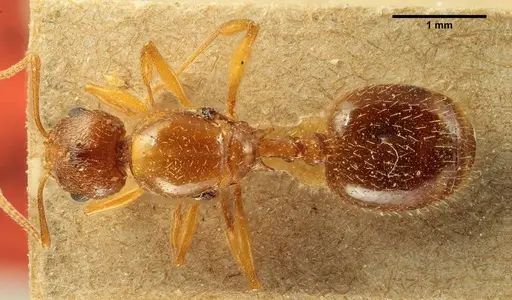
CASENT0904177
View on AntWeb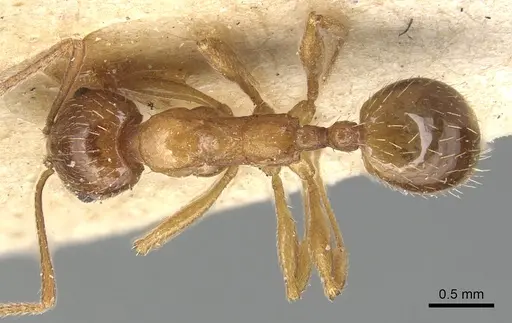
Literature
Loading distribution map...Loading products...